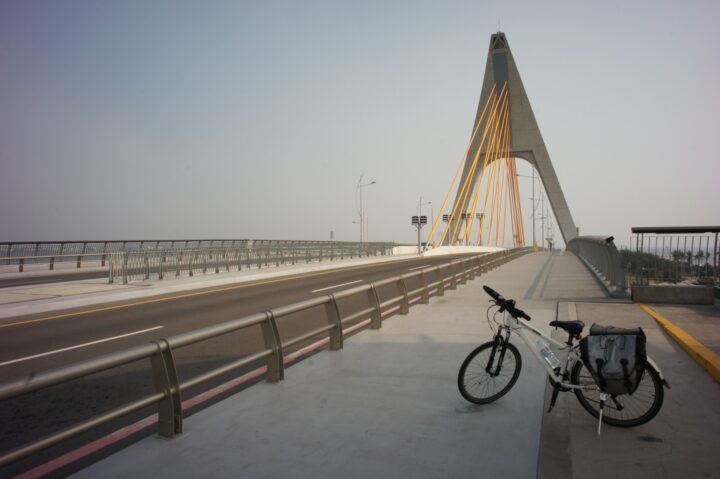
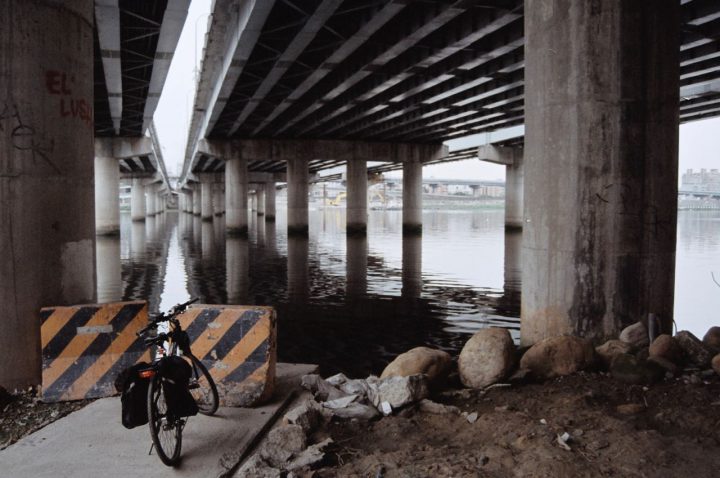
Tag: Around-the-island

  • My First Cycling Trip in Taiwan Day 2

    My First Cycling Trip in Taiwan Day 2

    16 April 2009

    I hate cycling among busy traffic but we decided to stay in this busiest city of Taiwan the next day just in case there were any issues with the bikes. We also needed to buy SIM cards and go to the bank. These were the days when mobile data has not yet become as important as oxygen. I was traveling with my TREO 650 and film camera Nikon F801s. I had nothing to share instantly on social media. But we still needed to be able to call the hotels for room reservation and stay connected with each other. Today, if you need mobile data, you can buy a SIM card at the airport with a package of unlimited data within a fixed period. These are tailor-made for tourists  and the procedure is quick and easy. It took only 5 minutes to complete the transaction. And Nope! It’s not more expensive. It’s actually a real bargain. Your only concern is whether your flight is arriving too late and those shops will be closed already. 

    We roamed in Taipei city on our bicycles with the overwhelming scooters, which made me feel like traveling with massive groups of hornets. Our touring bikes have drawn some attention from passersby.  “Jia You! (add oil) some shouted at us with smiles. They probably thought we were making the 1,000km-around-the-island trip and wanted to give us some big pushes. Although Taiwan is home to the world’s two biggest bicycle manufacturers and has been making bikes for the world for decades, people here prefer their scooters for daily commute. Then there was this movie Island Etude released in 2007, about a hearing impaired college student making the round-the-island tour in Taiwan. The idea has been so impressive and inspiring that people started doing the tour themselves. It has kind of become a coming of age ceremony or a pilgrimage. No wonder we received so much encouragement. To me, it’s like giving a salute to the place. 

    Slowly we discovered some special rules for scooters and bicycles (機慢車). For those who don’t read Chinese characters, it might be tricky to figure it out. The following are some general ideas that I hope you may find useful. Click on the links of Chinese Characters to see the signs. 

    The Free Ways 國道 (sign: white, five-petal flower with a number inside), the red badge Provincial Highways (Express Ways, sign: red badge with numbers) and Urban Express Ways are not for scooters and bicycles. 

    Everyone can use the Provincial Highways with blue badges (省道),  County or City Highways (縣道), Township and District Roads (鄉道) and Industrial Roads (產業道). In those rural areas, it’s perfectly OK to use the overpasses, bridges or tunnels on these roads. Remember to turn on your lights in the tunnels.

    Rural Tunnel
    A rural tunnel meant to be shared among cars, scooters and bicycles

    Sometimes, the lanes close to the centre (left) are not for slow vehicles. You would see the yellow Chinese characters 禁行機車 (No Scooters) arranged vertically on the tarmac. There are also lanes built for slow vehicles (機慢車道). In front of some traffic lights, there are boxes for slow vehicles to wait for the green light. Bikes are slower especially on starting; stay close to the sidewalks to give way to the others. On most intersections, slow vehicles should follow the two-stage-left-turning rule (二段式左轉), i.e. after going through a green light (the first stage), go to the left turning waiting zone, another box (左轉待轉區). You would be looking at a new traffic light. Wait for the new green light and go (the second stage). When you are not so sure, follow the scooters.  

    The bikes turned out to be in perfect condition. There were showers of rain but we were ready! Nous étions prêts!
  • My First Cycling Trip in Taiwan Day 1

    My First Cycling Trip in Taiwan Day 1

    15 April 2009

    It’s been a decade since I first set foot on the island of Taiwan in 2009 for my first cycling trip in an attempt to Cycle around the Island. Why am I bothered to write a travel log about it now? Well, I made a lot of rookies’ mistakes that I was not aware of at that time.  After visiting Taiwan for so many times afterwards and finally moving here for good in Taipei, I have accumulated many valuable experience. And now we are running this company to promote and facilitate bike touring in Taiwan. I am hoping I can share with you some tricks and ideas so that you can make the most of your precious holidays here.

    Taiwan was referred to as Formosa by the Spanish, the Portuguese and the Dutch in the 1580’s. Some said the name was given by Portuguese sailors when they discovered the island in early sixteenth century. They were awestruck by the island’s beauty and exclaimed “Ilha Formosa”, literally “Beautiful Island”. Then the name stuck.

    Taiwan had not been a complete stranger to me even before I first set foot in here. At around ten and living in Fujian, I watched Taiwanese puppet shows and romantic soap operas written by Chiung Yao on my mother’s 14-inch TV. Life was so boring there back then. People in our village would spent the whole afternoon trying to tune the antenna in order to pick up the faint TV signal from the other side of Taiwan Strait. We would settle for anything with sporadic bursts of white noise. Language is not a problem. People in Taiwan and Southern Fujian share the same dialect. 

    Then there I was in Taoyuan International Airport ready to embark on an adventure on bicycle with my friend, John. The airport MRT was not in operation yet at that time but there were many coach and bus companies competing for travelers bound for Taipei City, especially Taipei Main Station. You could find one departing every 5 minutes most of the time. But no, we were special travelers and we had a special destination, Songshan (Railway) Station. Our well-equipped bicycles were ready to be picked up at a bicycle shop there. We decided to take a bus to the closest train station, Zhongli Station, and then took a train to Songshan. It’s better, right? Wrong! It actually takes the same amount of time to get to Zhongli Station and Taipei Main Station. While Taipei Main Station is just one stop away from Songshan Station, it takes another hour to get to Songshana from Zhongli Station. And neither did we save any money by taking a “less touristic” path. Here’s one takeaway for you. 

    Eventually we collected the bicycles and the shop owner helped us set the check points on the GPS leased to us. At least we would know the way to get back to the shop. I got information overloaded with a long list of must-go’s and a crash course on  how to replace the inner tube in the case of a punctured tyre. Not sure if I could do it. But there’s one thing worth remembering: find the culprit with patience and make sure it’s removed. Otherwise, the spare tube would be punctured again in no time. 

    We found a small hotel around the corner with only double rooms and very small twin beds that, even if we don’t mind sharing, couldn’t accommodate two grown men. We wondered if it might be a special kind of hotel, like a stripped-down love hotel or something. So, two rooms please. We are straight guys and I might have some amazing romantic encountering in Taipei like the Brit Colin Frissell did in the US in the movie Love Actually. I’m serious; I do speak mandarin with a heavy accent. 

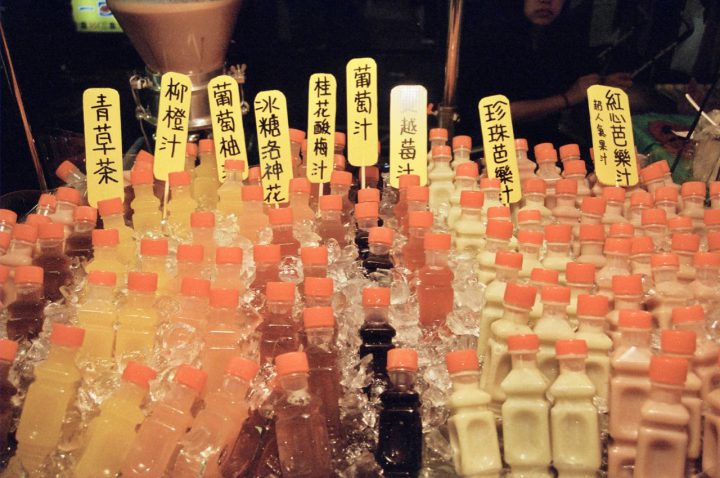
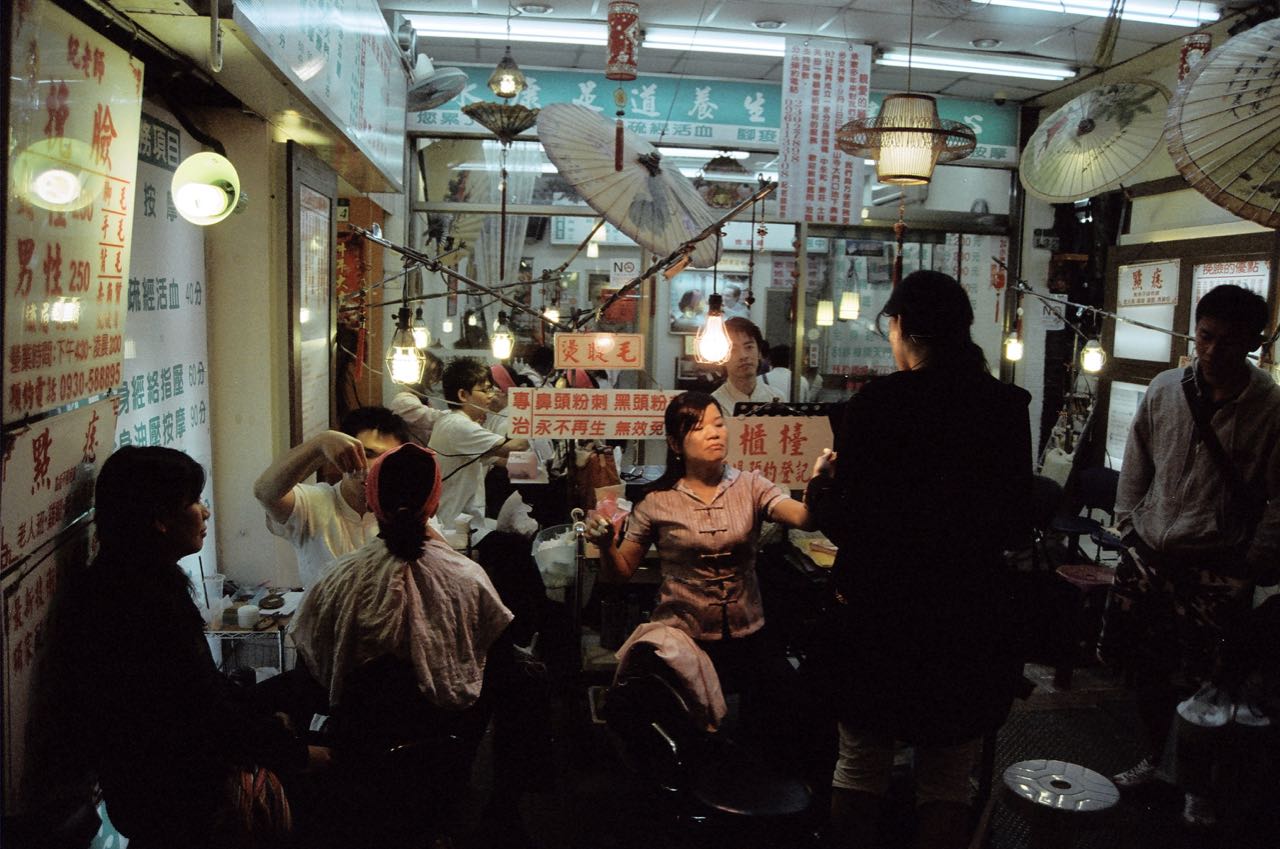
    Then we headed to the nearby night market, Raohe Night Market, for dinner. There were so many enticing Xiaochi to offer. But Oops! We were running low on cash. We could only get some Stinky Tofu and Beef Noodles. I could not even buy a drink for any ladies if I got the chance. I used to believe that everything sold in the airport had a huge markup, including NTD. So, in the airport, we just got enough cash for the first day and planned to change the rest of our money to NTD at banks in the city. Banks here usually open 9:00 to 15:00, Monday to Friday. But after travelling to Taiwan for so many times, I have found a cheaper and more convenient way to get NTD. Viola! The 24-hour worldwide ATM networks like Cirrus, Plus and UnionPay. Although there will be a small handling fee (HK$40, ~ US$5, in my case) for each withdrawal, the exchange rate is more favourable than buying NTD with other currencies from a teller. Banks do not like physical banknotes. It involves the risks of getting counterfeit ones and there are costs for safe keeping and transferring the notes. 

    Now I always withdraw NTD 20,000 (the maximum) and saved enough of money from the ATM exchange rate to pay for the handling fee and several drinks in the night market. Of course you should check your bank’s handling fee first. 

    Talking about Raohe Night Market, the Ciyou Temple sitting next to its entrance had also left an impression on me with its friendly atmosphere. We were free to take a tour of the six-storey building and appreciate the decorations. It was also very handy to be able to use their toilets after feasting in the night market. It isn’t hard to find toilets in Taipei after leaving you hotel, like in shopping malls, MRT stations, train Stations, and some convenience stores. But those are not always easily found after leaving Taipei (or other major cities), while temples are ubiquitous in Taiwan. Cyclists could usually use their toilets. Sometimes, we could even help ourselves with some instant coffee at their drinking machines. 

    So, that’s my first day in Taiwan. The small hotel turned out to be perfectly fine. No weird noises came from other rooms

  • Cycling Around Taiwan (4): Ningbu to Hualien

    Cycling Around Taiwan (4): Ningbu to Hualien

    • Where: Kaohsiung (高雄) to Kenting (墾丁), Taitung (台東) to Hualien (花蓮)
    • When: 18 Dec – 27 Dec 2012
    • Who: Peter and Lois (our first cycling trip)
    Image grid showing cyclists travelling to Hualien Valley via Yuchang Tunnel from Ningpu
    • Humbled by mother nature and with the sea views eluding us, we decided to seek protection from the wind by getting into the Hualien–Taitung Valley (花東縱谷) to continue our journey towards Hualien. We were lucky to have the Provincial Highway No. 30, which cuts through the Costal Mountain Range (海岸山脈), laying in front of us. This is one of the four passages connecting the valley and the coastal route through the Costal Mountain Range. There are cyclists who find the coastal route and the valley route too easy for them that they zigzag between the valley and the coast making their way through all the four passages (花東四小橫). Again, not for us. The road is rather steep that we did not bother to cycle, and instead pushed our bikes, until we reach the entrance of the 2.66km-long Yuchang Tunnel (玉長隧道), elevation 370 metres. We made sure our rear lamps were on and pedalled through the tunnel carefully. It was even more depressing when we reached the other side. The air was even chiller. Someone was burning wood outside of a dilapidated hut to keep himself warm. However, as we descended slowly into the valley, it got warmer and more pleasant. There were hot spring resorts along the way. We should have made a stop there.
    Image grid showing the rooms of QianCaoYuan and the dinner sets they served.
    • The Costal Mountain Range did shield the valley from the harsh chilling wind. We switched from survival mode to leisure mode immediately. We detour to bikeways and enjoyed the charming pastoral scenes. There were much more towns and shops in the valley. I bought a jacket for the cold wave and Lois a pair of leggings in Yuli Township (玉里鎮). The valley has a railway running from Taitung to Hualien. Train stations could be found every 5km-10km. With more towns scattered along the route, less than 10km away from each other, there’s no more pressure on how far we need to to go before we could make a stop. We cycled 42km that day and found this nice homestay named QianCaoYuan (The Garden with Thousand Plants 千草園) run by a plant lover in Ruisui Township. It is decorated meticulous with numerous pots of plants. Our stay there made us realize it did make us happier living with more plants. When we got home, we started to grow our own windowsill garden. The homestay also served nice dinner sets. We had three sets between the two of us to celebrate Christmas Eve.
    Image grid showing the road condition of Hualian Taitung vallue route and a lunch with lobsters
    • We roamed leisurely in the valley for two days. We had been to tea farms, old sugar refineries. We rode so slow that a restaurant owner said we were even slower than walking. But we still had time to take a detour to the coastal route (the Provincial Highway No. 11) as we were approaching Hualien. The roads are wider and flatter compared to the Taitung end. We had lobsters for lunch in Yanliao Village (鹽寮村). Most of the restaurants we’ve been to in Taiwan are reasonably priced, but it’s always a good practice to ask for the menu with price listed before ordering.
    image grid showing cyclists on Coastal Route to Hualien, a special homestay and bums.
    • The coastal route on the Hualien end is more appealing. There are vast unblocked panoramic views of the Pacific Ocean. More homestays with special themes could be found along the way. In retrospect, it may be a good idea to leave Taitung on the valley route and then switch to the coastal route in-between.
    • We reached Hualien in the afternoon and planned to spend the whole next day there before we take the train back to Kaohsiung in the evening. Unfortunately and shame to ourselves, we had not make bookings in advance and all the tickets were sold out (8 trains per day) except for the one leaving at 6:00 am. Not Smart! Lesson learned: Hualien is a very popular vacation destination among the Taiwanese. Train tickets are notoriously hard to get during weekends and local holidays. Be careful when you are planning your holiday there.
    Conclusion:

    Hualien and Taitung have the most beautiful cycling routes between them. There are much more to see and we should definitely come back. When planning a cycling trip next time, I must take the wind direction seriously. We can cycle in the rain, in the dark, in the chill or under the scorching sun but we should always avoid doing it against the wind.

  • Cycling Around Taiwan (3): Taitung to Ningbu

    Cycling Around Taiwan (3): Taitung to Ningbu

    • Where: Kaohsiung (高雄) to Kenting (墾丁), Taitung (台東) to Hualien (花蓮)
    • When: 18 Dec – 27 Dec 2012
    • Who: Peter and Lois (our first cycling trip)
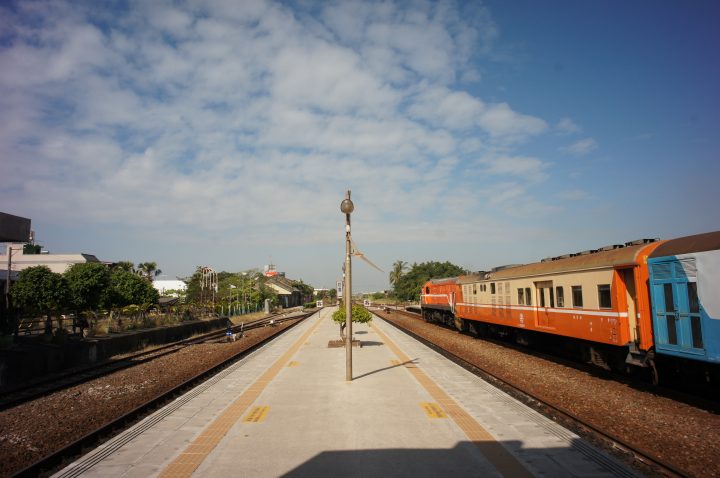
    image grid showing the Fangliao station platform, orange train and the seats of a train to Taitung.
    • So, we were back to Fangliao from Kenting by coach and then hopped on to a train towards Taitung via the South-link Line (南迴線). We had bought train tickets when we were there 2 days ago. Smart! Many cyclists could just cycle to Taitung directly from Kenting. It’s a 160km journey with accumulated elevation gain of 2,250m. The peak is at Shouka (壽卡), 460 metres above sea level. But no, not for us! We were lazy novice cyclists who just wanted to use bicycles to burn the calories we took in. This route looked barren with no prospect of delicious food. Besides, it was my first cycling trip with Lois, and I would not want it to be the last one.
    image grid showing the front door of a homestay, a woman having a supper, a man in a pub and the road conditions from Taitung to Hualien costal route.
    • On the east side of the island facing the Pacific Ocean, the sunny fine weather was gone. Clouds were gathering like a gigantic thick curtain to hide the blue sky. “The sky is flipping (變天)”, said the locals. We hit the road as soon as we left the platform of Taitung train station. Wind was blowing strong against us. We used the rest of the day to cover 25km and reach a small village, Dulan (都蘭). The village was called by the aboriginal Amis people as A’tolan / E’tolan, meaning a place with lots of rocks and hit by earthquake frequently. The school bags with the name of the local primary school (都蘭國小) printed on it is very popular among Taiwan people. It’s a long and interesting story I won’t share here but may do some day.
    •  
    • We had a simple meal and found a homestay operated by a retired couple. We saw their advertising note on a lamp post. The mister came riding his motorbike to lead the way. They used to live in Taipei with cramped spaces. Therefore when they were building the house for their retirement, they got too excited and made the rooms so so big.
    Image grid showing a beach, Donghe bums with hot bitter melon ribs soup, two cyclists in the rain, their silhouette.
    • Bleak weather with some showers the next day. We got our reward for our ordeal by having the famous, delicious Donghe bums (東河包子) with hot bitter melon ribs soup to warm our body. There were some great sea views along our route but otherwise the sea was blocked by trees. The wind kept on challenging our endurance. We were soaked and tired. I had to fend off the idea of quitting in my mind and avoid mentioning it to Lois. We made it to Chenggong Township (成功鎮, literal meaning “Success Township”), hoping to find a place to stay. But there were few shops open, let alone a homestay. We had lunch there to gather our strength. We did not bother to take a detour to the scenic spot Sanxiantai (三仙台). After riding for 19 km more in the rain, we finally reached a small village called Ningbu (寧埔), where we found some place to stay for the night. The problem was that there was no restaurant nearby. “Even a bird won’t lay eggs here (鳥不生蛋)”, said the homestay owner. He kindly drove us to a restaurant in another village that we had just passed by so that we could have dinner, and made sure the restaurant owner would drive us back after that. We learnt later from the TV news that a cold wave had just hit Taiwan that day.

  • Cycling Around Taiwan (2):Fangliao to Kenting

    Cycling Around Taiwan (2):Fangliao to Kenting

    • Where: Kaohsiung (高雄) to Kenting (墾丁), Taitung (台東) to Hualien (花蓮)
    • When: 18 Dec – 27 Dec 2012
    • Who: Peter and Lois (our first cycling trip)
    Image grid showing Fangliao station, a stone owl and the street in the evening
    • We left Dapeng Bay (大鵬灣) and cycled for another hour and decided to find a place to stay for the night. We found a small homestay in Fangliao (枋寮) on Google Maps.
    • This little town was formed by loggers from Fujian during the Qing dynasty (1683-1895). Its train station was built, as the terminus of the Pingtung Line (屏東線), when Taiwan was under Japanese rule (1895-1945). The South-link Line (南迴線) was then opened on 1991, connecting the east side of the island to the west. And that was how we would travel to Taitung after we had cycled to Kenting and then returned here by coach in 3 days. It became a small hub connecting Taitung, Kenting and Kaohsiung.
    image grid showing night scene of fishing boats moored to the FangLiao fishing port
    • We took a 15-minutes stroll from the train station and found this fishing port. It was peaceful and quiet.
    Image grid showing a bike shop, the road condition from Fangliao to Kenting and Mobile seaside cafe
    • The homestay is part of a bicycle shop, with the guest rooms located on the second floor. It is actually quite convenient for getting maintenance, bike parts and supplies. We bid farewell to Fangliao the next day and headed to Kenting. The road is wider and flatter with less traffic. There were mobile cafes along the way on the sea side. We couldn’t help taking longer breaks and detouring a lot. But this left us little time and strength for the remaining trip, and there were quite some slopes in the last 10km. That was really exhausting.
    Image grid showing Kenting Sea Wall Homestay at sun set and evening, window view and bicycle speedometer
    • We finally made it to the hotel we had booked, the Seawall Inn in Kenting, after riding 120km from Kaohsiung in two days. We were so proud of ourselves and were not at all embarrassed by the fact that many cyclists could do this within one day. Actually, in one day, some can even make it to Kenting from Fuguijiao Lighthouse (富貴角燈塔), the northernmost tip of the Taiwan island, in a cycling challenge called One-Day Twin Tower (一日雙塔). The total distance is 520km. Mr. Ko Wen-je, the mayor of Taipei, completed the challenge in 2016 at the age of 57. Although we were exhausted, we ran out to take pictures of the sunset after dropping our luggages in the hotel. We would be staying here for two days to let our muscles recover and do some tourist things.
    Image grid showing the Eluanbi Light House, Seaside walking trails, Southernmost Tip of Taiwan and an E-bike.
    • This is Eluanbi Lighthouse (鵝鑾鼻燈塔), the other ‘tower’ besides Fuguijiao Lighthouse in the One-Day Twin Tower challenge. First constructed in 1882 during the Qing Dynasty to guide the ships away from the hidden reef nearby, it was the only armed lighthouse in the world to fend off frequent raids by local aboriginal tribes at that time. It had been damaged and rebuilt twice during the First Sino-Japanese War and World War II, respectively. What you see in the picture now was re-built in 1962. We took a break from the bicycle pedals and hired electric scooters to explore the peninsula and visit the southernmost tip of the Taiwan island.
    image grid showing the Houbihu Fishing Port, the Chuhuo Special Scenic Area, clams soup and Sashimi
    • We have been to a lot of fishing ports and beaches in Taiwan, including the Houbihu Fishing Port (後壁湖漁港) in Kenting. The clam soup never fails to impress us with its sweet freshness. After moving to Taipei in 2017, we were astonished to find that those vacuum-packed clams on the chilled shelves of the supermarkets are actually alive and will wake up from their long sleep when put in water. Sashimi can be found in many restaurants, big or small, which is probably the legacy of 50 years of Japanese rule. One of the tourist spots in Kenting is called Chuhuo Special Scenic Area (出火景觀). Fire fueled by natural gas has been burning for more than 40 years . We borrowed some heat from it and made ourselves some popcorns. There are tombs scattered around in the area and may horrified some unprepared eyes. One lady who shared a car with us was so scared that she had returned to the hotel immediately. Well, it wasn’t that bad. Don’t worry.

  • Cycling Around Taiwan (1): Kaohsiung to Fangliao

    Cycling Around Taiwan (1): Kaohsiung to Fangliao

    • Where: Kaohsiung (高雄) to Kenting (墾丁), Taitung (台東) to Hualien (花蓮)
    • When: 18 Dec – 27 Dec 2012
    • Who: Peter and Lois (our first cycling trip)
    • Goal: To ride on the Southern part of Taiwan and the sea route of Taitung-Hualien. Two legs separated by a two-day rest in Kenting. As traffic in Taiwan moves along the right side of the road, we planned our route anti-clockwise in order to get closer to the sea, even though we would have to ride against the prevailing North East wind from Taitung to Hualien.
    • Accommodation: We reserved hotels or homestays in the first and last stops of the two legs. In between those, while we were on the road, we would find places to stay by checking out Google Maps or try our luck with the small advertising flyers stuck to bare walls or lamp posts by homestay owners nearby.
    • Mobile Data: Prepaid SIM card
    • Navigation: Google Maps
    Different roads in Kaohsiung City
    • Kaohsiung city is the 3rd most populous city of Taiwan with around 2.77 million people. Its airport, which is the 2nd largest international airport in Taiwan, is connected to the Kaohsiung Rapid Transit, which will bring you to the city centre within 30 minutes at a fair price. It’s our first time in the city. We spent the first half-day roaming around the city. Most bicycle shops open after 11:00 am. We were not able to get our bicycles earlier and embark on the journey. So, we decided to spend the night in the city.
    image grids showing various food sold in Kaohsiung night market
    • Night markets are one of the highlights of traveling in Taiwan. While most restaurants are closing down at 9:00 pm, business of those tiny stalls selling various xiaochi (literally means bite-size snacks) in the night markets is peaking. The food is tasty while the price is cheap. The only problem is our stomach is not bottomless. Our strategy? Take a walk to check out all the stalls first. Make a list of all the items you want to try. Evaluate and eliminate, then start munching! My personal favorite: stewed pork legs.
    Image Grid showing Walkie-Talkie setup on a bicycle.
    • We brought a pair of walkie-talkies for communicating with each other when cycling. Are we going to turn right or turn left? Should we detour to check out that seemingly interesting site? Would you like to stop for some snacks or take a toilet break? All these can be discussed and decided without having to stop. We don’t need to hit the brake, wearing the braking pads thin, and let our momentum turn into wasted heat just to get a simple yes or no. We found two headsets with talk buttons that we can attached to the handlebar. That way we could keep our hands on the handlebar while we wanted to talk. Safety comes first.
    Image grid showing bikeways in Dapeng Bay
    • Sea views! We love sea views! However, even cycling on the roads closest to the sea doesn’t necessarily guarantee that you can see the sea. Usually, it was blocked by levees or buildings. We followed Google Maps and mainly rode the Provincial Highway No. 17 from Kaohsiung city to Fangliao Township. Most of the time when one sees the bikeway signs, like the one here in Dapeng Bay (大鵬灣), it’s worth the trouble to check it out. The sea view was most welcomed.