Tag: Around-the-island

  • Cycling Around Taiwan in Multiple Stages (3): Taitung, Hualien, Yilan

    Cycling Around Taiwan in Multiple Stages (3): Taitung, Hualien, Yilan

    This is the stage 3 of our Cycling Around Taiwan in Multiple Stages. We were to cover Taitung, Hualien and Yilan.

    Designing the Trip

    Here are some considerations when I was planning this part.

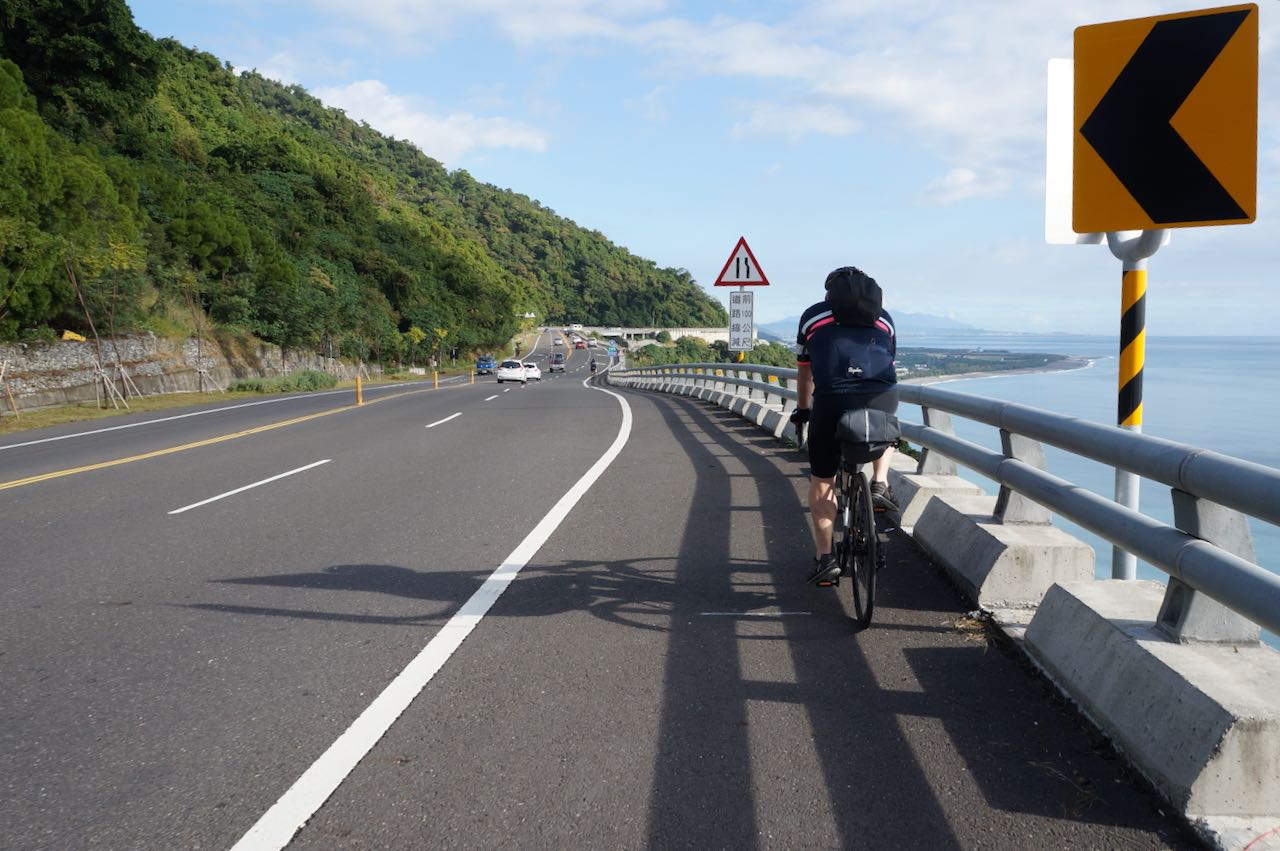
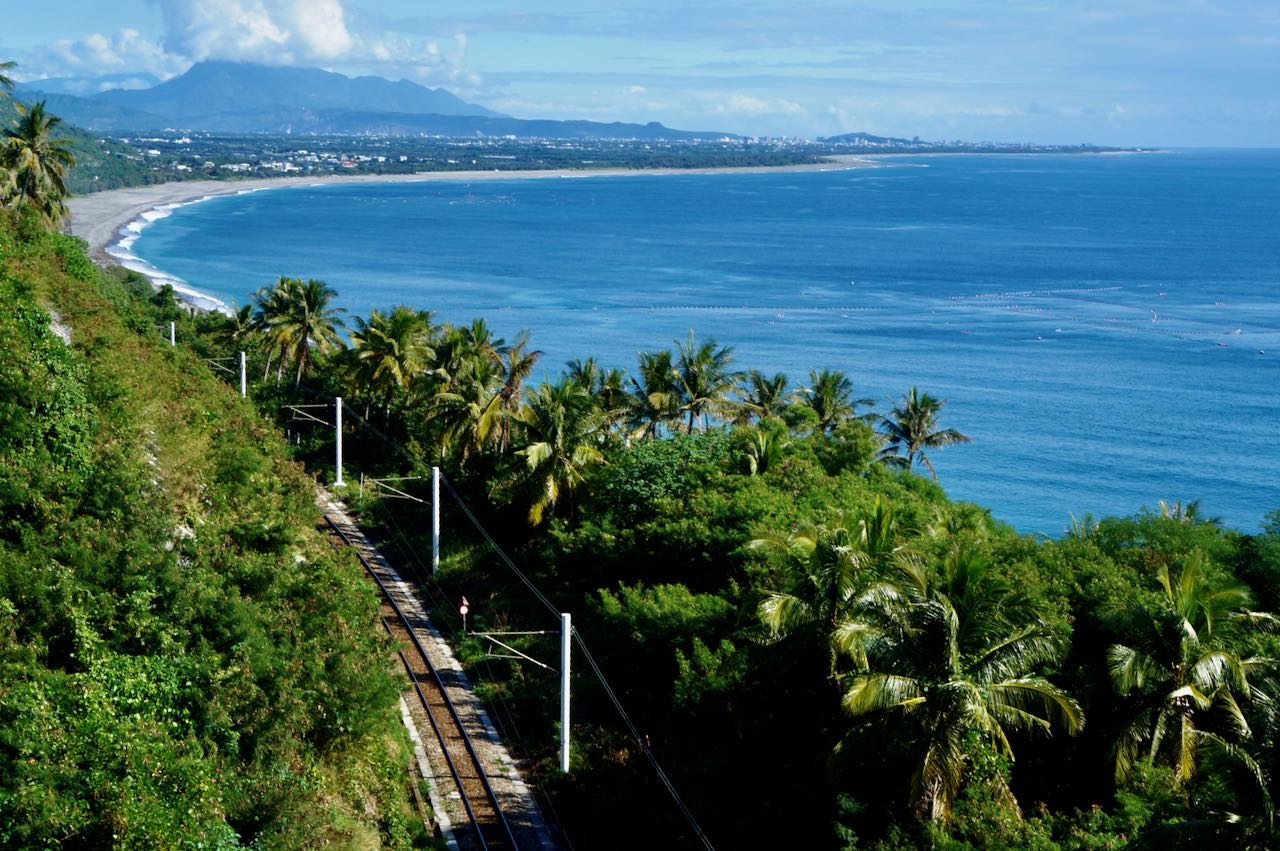
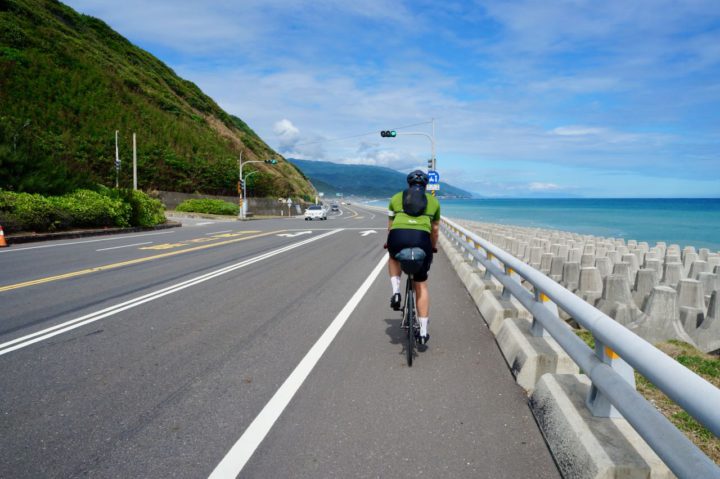
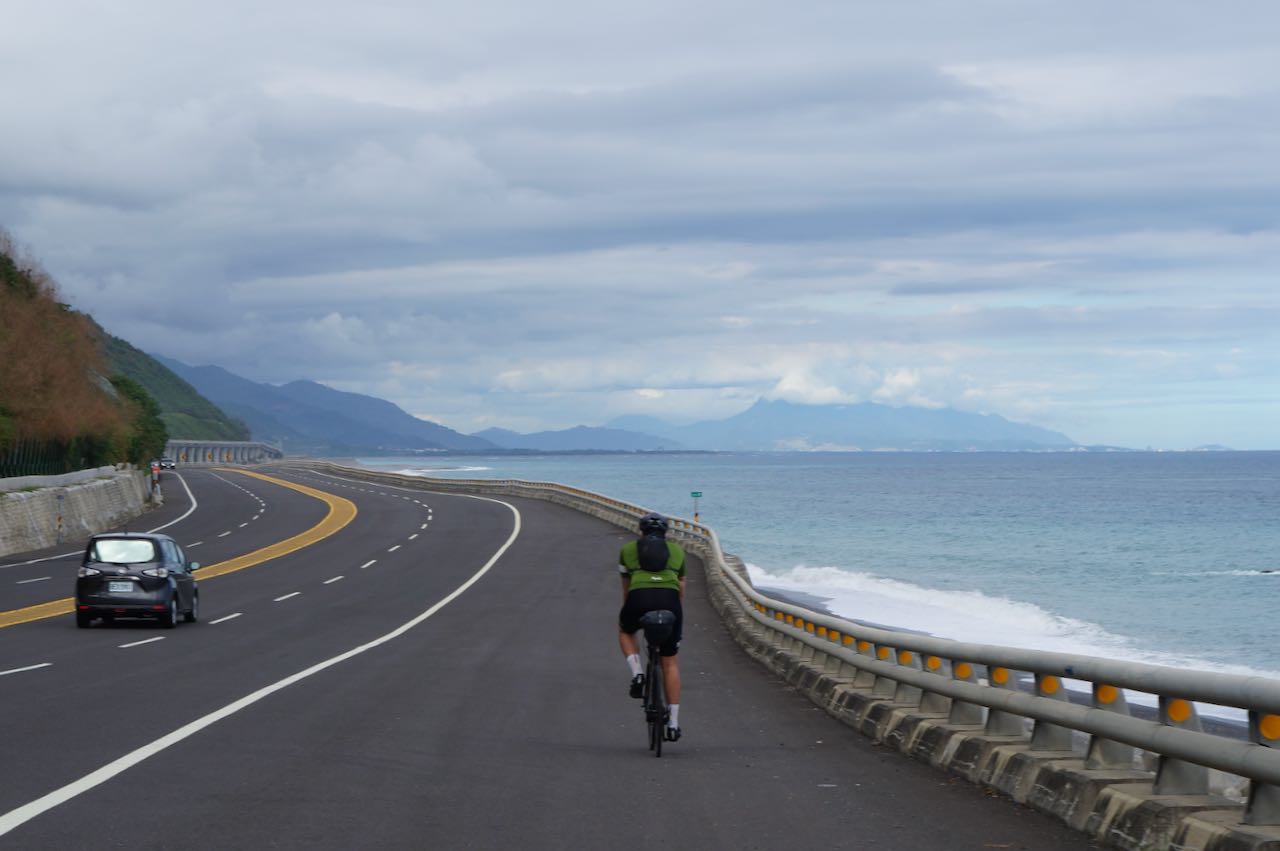
    From Taitung to Hualien, there are two routes to choose from, the rift valley and the coastal route which sandwich the Coastal Mountain Range. The rift valley is more populous with vast paddy rice fields and many interesting places to visit. Supplies and places to stay over are easier to find. But the coastal route offers stupendous views of the Pacific Ocean which shouldn’t be missed. In a perfect world, I would plan the route to cover both the rift valley and the coast by starting from Taitung heading north to Ruisui in the rift valley and then switch to the coast using the Ruigang Industry Road (花 64 or HL64). By doing so, you will get the best part of the rift valley and the coastal route. The most famous part of the rift valley is found on the Southern half of the rift valley and the best views of the Pacific Ocean are found on the northern part. And the direction is important, too. By travelling northwards, you find yourself closest to the sea because we drive on the right side of the road. Most interesting stops are on this side making it safer to visit the places without having to cross the road.

    Then after Hualien City, there is the Taraoko Gorge, the starting point of the Central Cross-Island Highway transversing the Central Mountain Range which brings you to the altitude of 3,275 metre at the Wuling Pass, the route for Taiwan Kom Challenge. I would plan a short detour climbing to Tian Xiang Recreational Area (Altitude 485m) to get a taste of the challenge before heading north to tackle the tricky Suhua Highway which brings you to Yilan. 

    The Suhua Highway

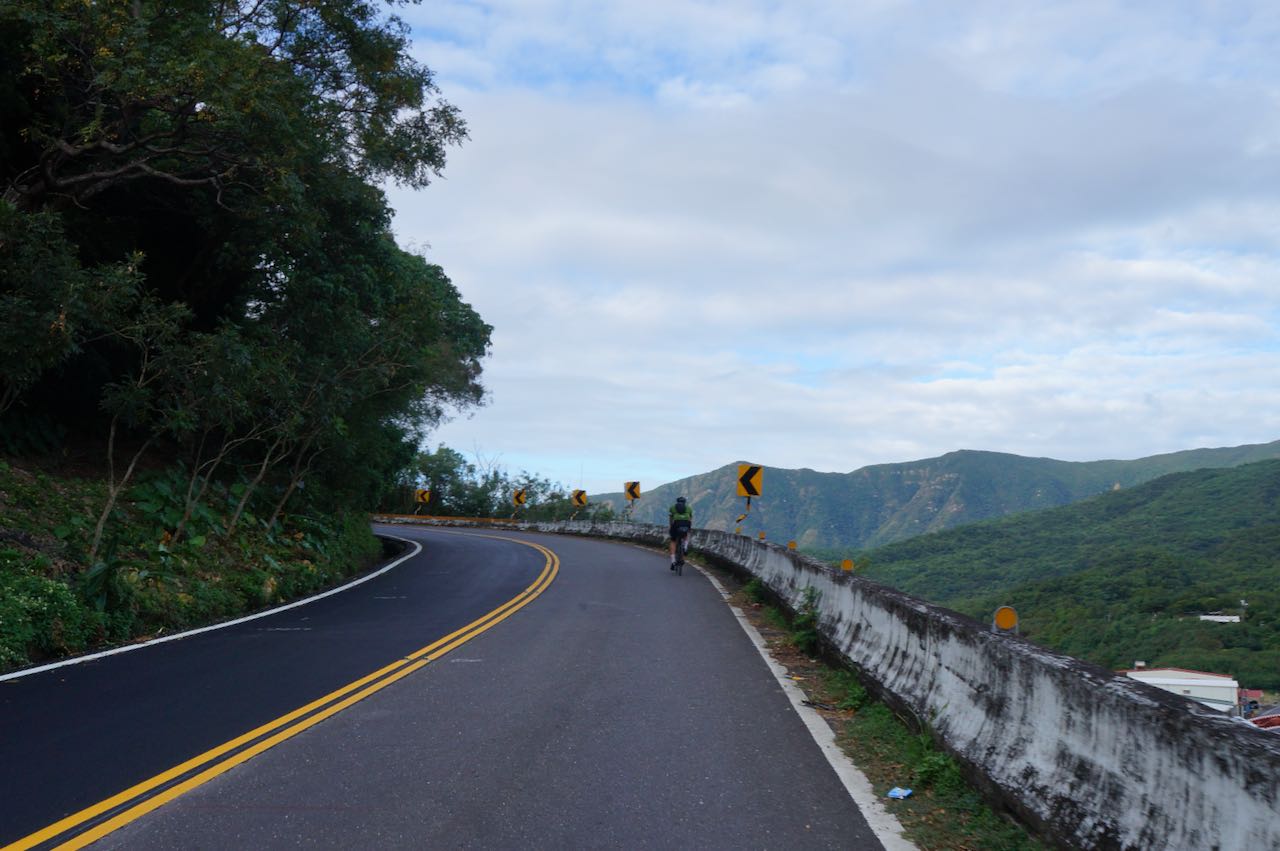
    Why is the Suhua Highway so tricky? It’s a topic not to be taken lightly whether to cycle on this section or not. Not only does the route have a total ascent of 1,451m in 78km from Xincheng to Su’ao, many parts of the highway is built right next to a cliff with the width merely enough for two vehicles to pass. High steep slopes are found on your left to the peak of the mountain. Frequent earthquakes loosen the rocks on the slopes making them ready to fall onto the road. There could be landslides to block the whole road after heavy rains or typhoons. Besides, there are around 9 tunnels to cycle through which means poor air condition and visibility inside. And noises produced by the motorised vehicles are trapped inside to blast your eardrums non-stop. 

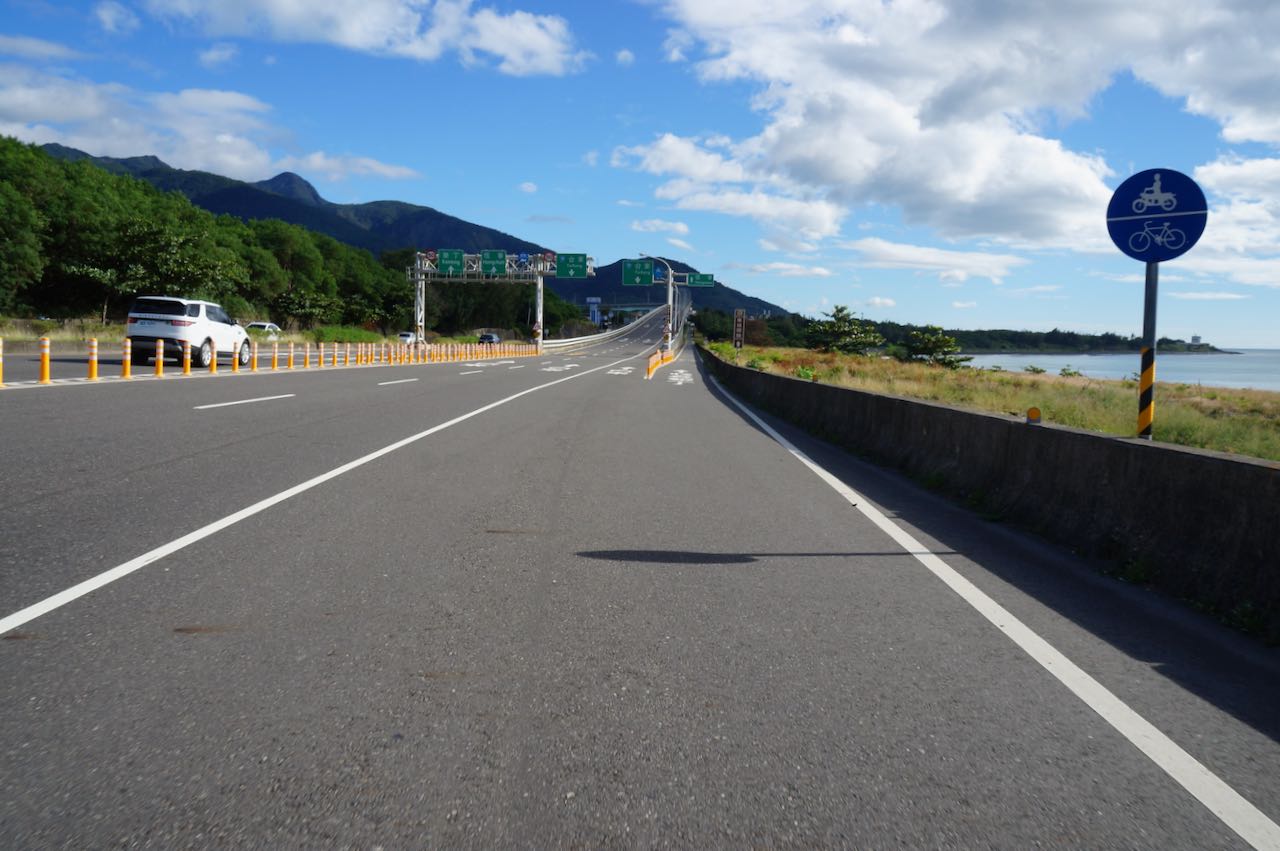
    Nonetheless, most people who have done it would say that it is worth the risk. I myself have not done it yet but I had goosebumps just by looking at the Street View on GoogleMaps when researching for this itinerary. And there has been a good development. The traffic condition has improved a lot after the Suhua Highway Improvement Project is completed in 2020. New wider segments are built to straighten the highway. Travelling time is reduced. Bikes are not allowed on these new segments but those heavy vehicles and cars would then be drawn to the new route (Provincial Highway 9), making the old one (Provincial Highway 9丁 or 9D) less busy, more enjoyable to cycle. In fact, big trucks are not allowed on the old route. But please note that there are still segments where the old Suhua Highway and the new one overlaps.

    So, In favourable weather conditions, I would do it when I cycle around the island. If you want to skip it, you can take a train from Xincheng Station to Suaoxin Station. Here is more details on this post: Cycling the Suhua Highway: Evaluating Challenges, Experiences, and Factors to Consider.

    Heading north on the old Suhua Highway, after climbing the 5th peak of Suhua Highway, we would then descend to the plain of Yilan which is an alluvial fan formed by the Lanyang River. There are lots of hot spring hotels in Jiaoxi. It would be nice to plan a longer stay to chill out there by having a day with less distance to cover. Most people would then head north east and climb two peaks on the Beiyi Highway (北宜公路 Also a segment of Provincial Highway No. 9) to get back to Xindian in Taipei to finish the whole trip. But the coasts on the north and north east are too good to be skipped. I would just head north to Fulong and stick to the coasts. 

    Isn’t it a nice plan?  But this is exactly what we did not do. This is only good for those who do it from May to September when the wind is not coming from the north. Or for those who don’t mind cycling against the wind. 

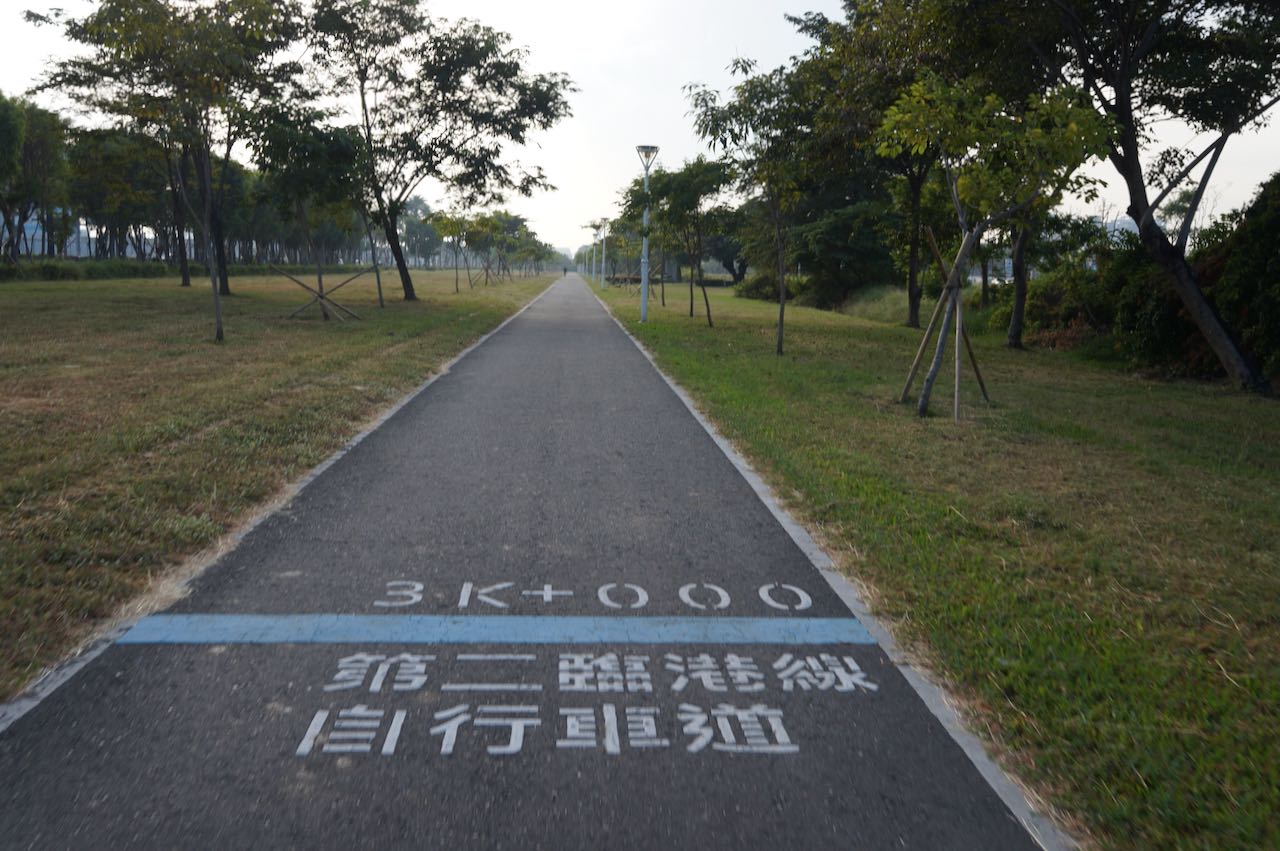
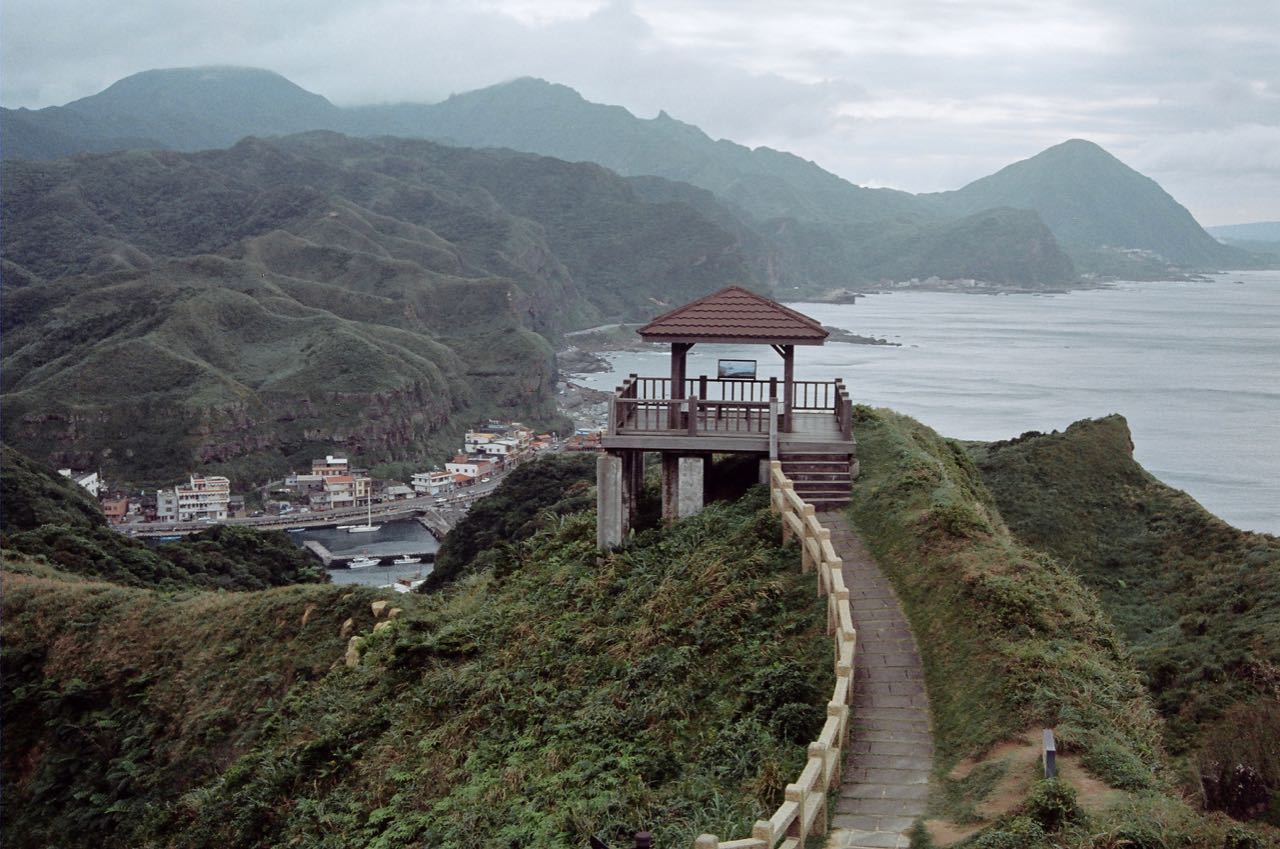
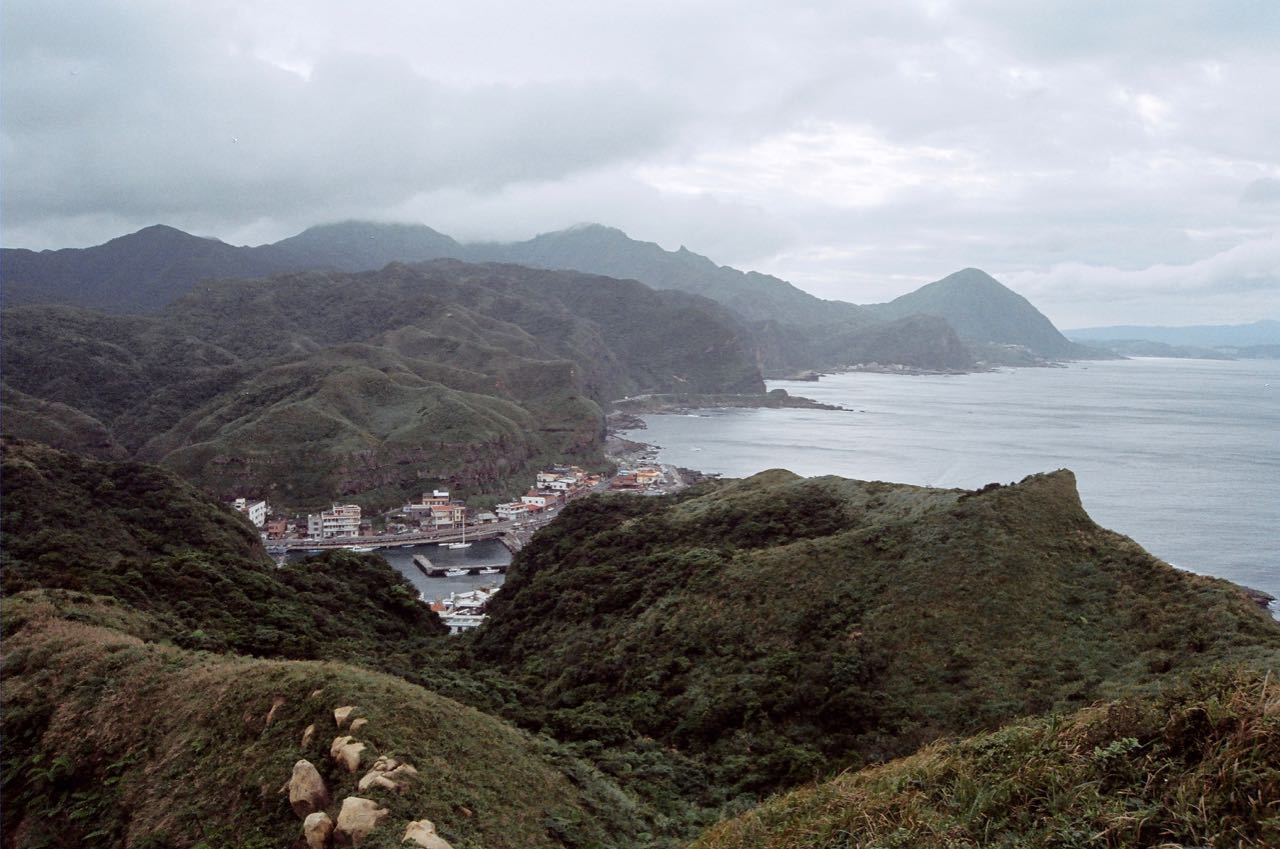
    We did this stage in January when there was the prevailing wind coming from the north. We needed to head south to make the wind work for us. We started from Fulong, the north east tip of the island, and spent the first day covering Yilan. Then, we skipped the Suhua highway by taking the train to Hualien from Suaoxin Station. Since we were heading south, there were not many benefits of cycling on the coast route. We stayed in the rift valley the whole time from Hualien to Taitung. Here are the details of the itinerary

    Day 1 Fulong to Xincheng Taroko, Hualien (54km, Ascent 143m, Descent 128m with a train ride from Suaoxin to Hualien)

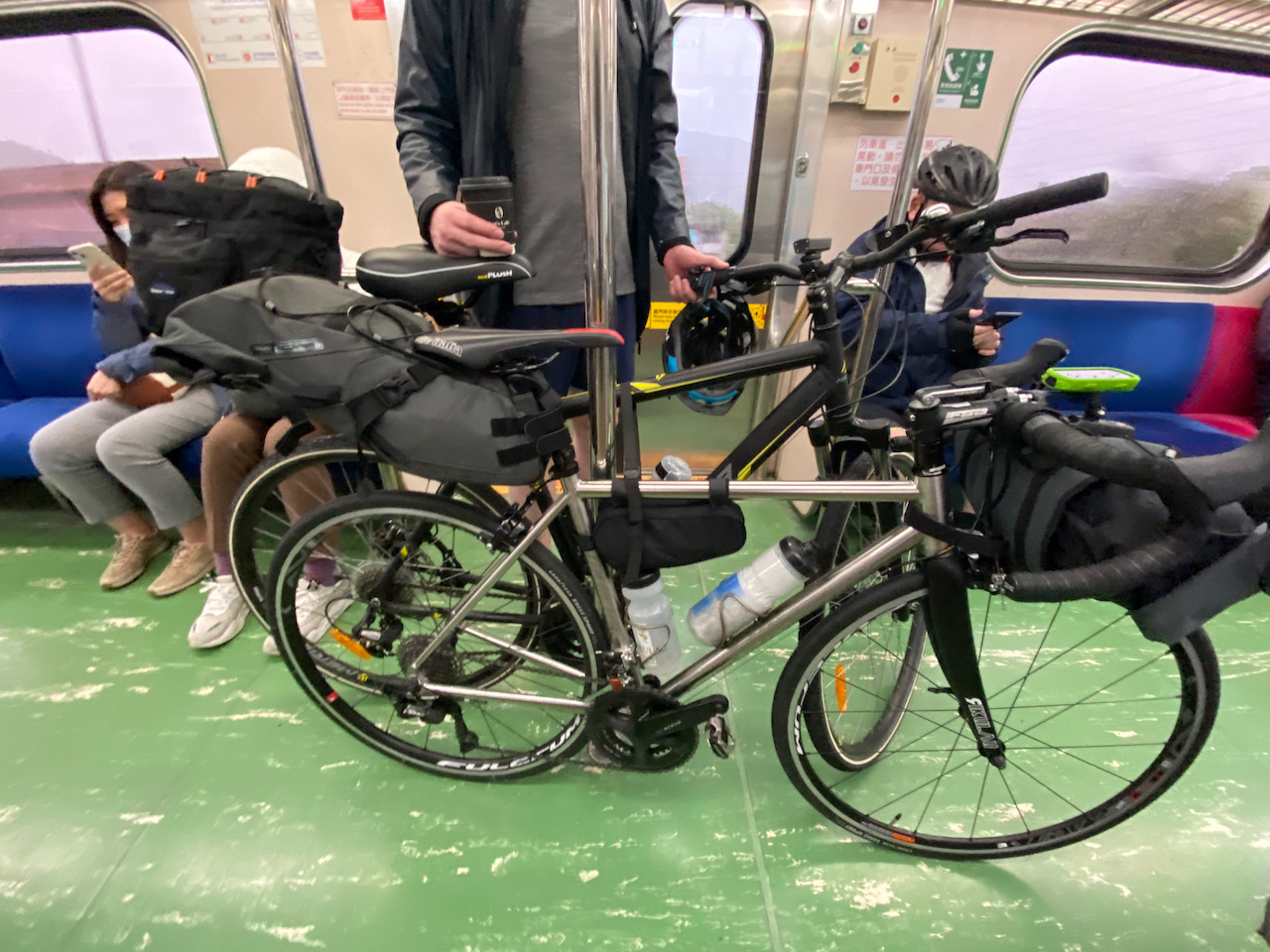
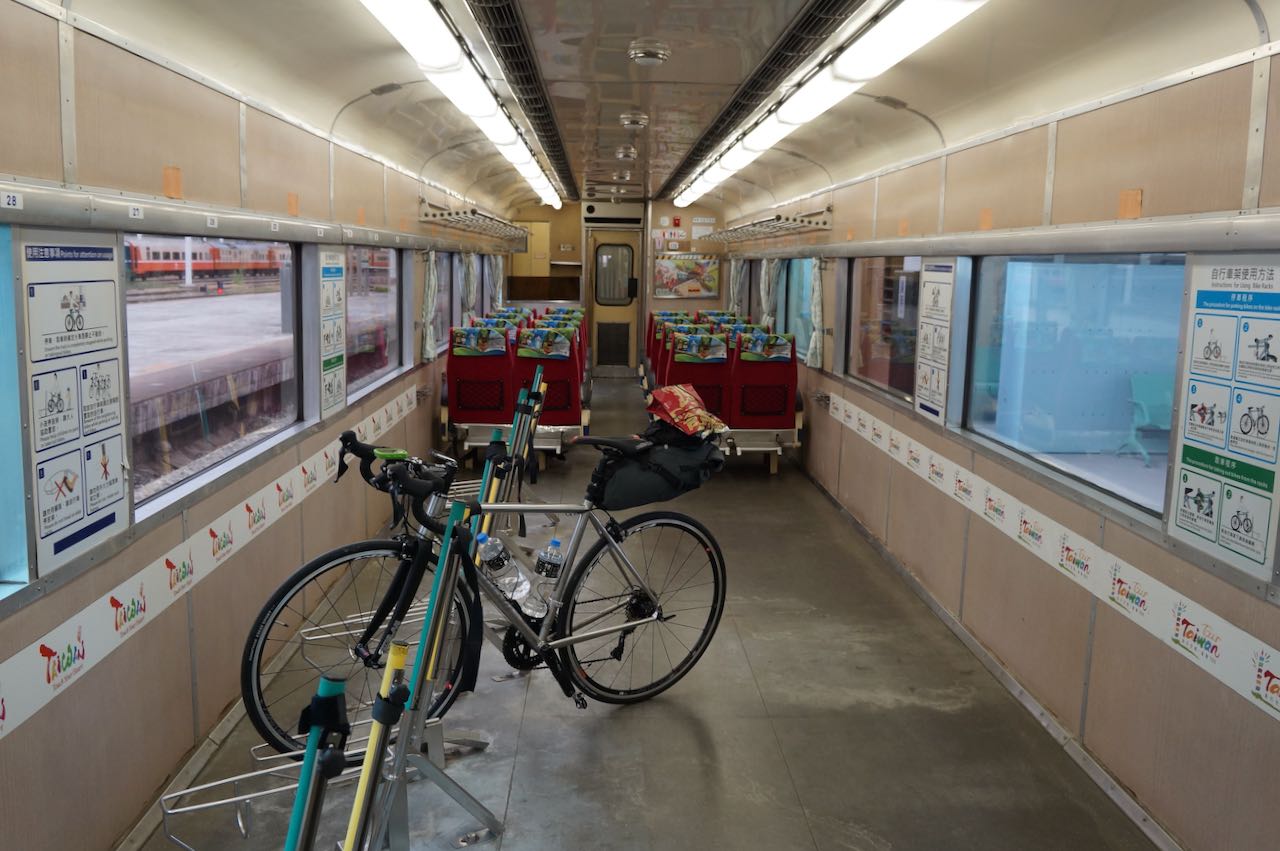
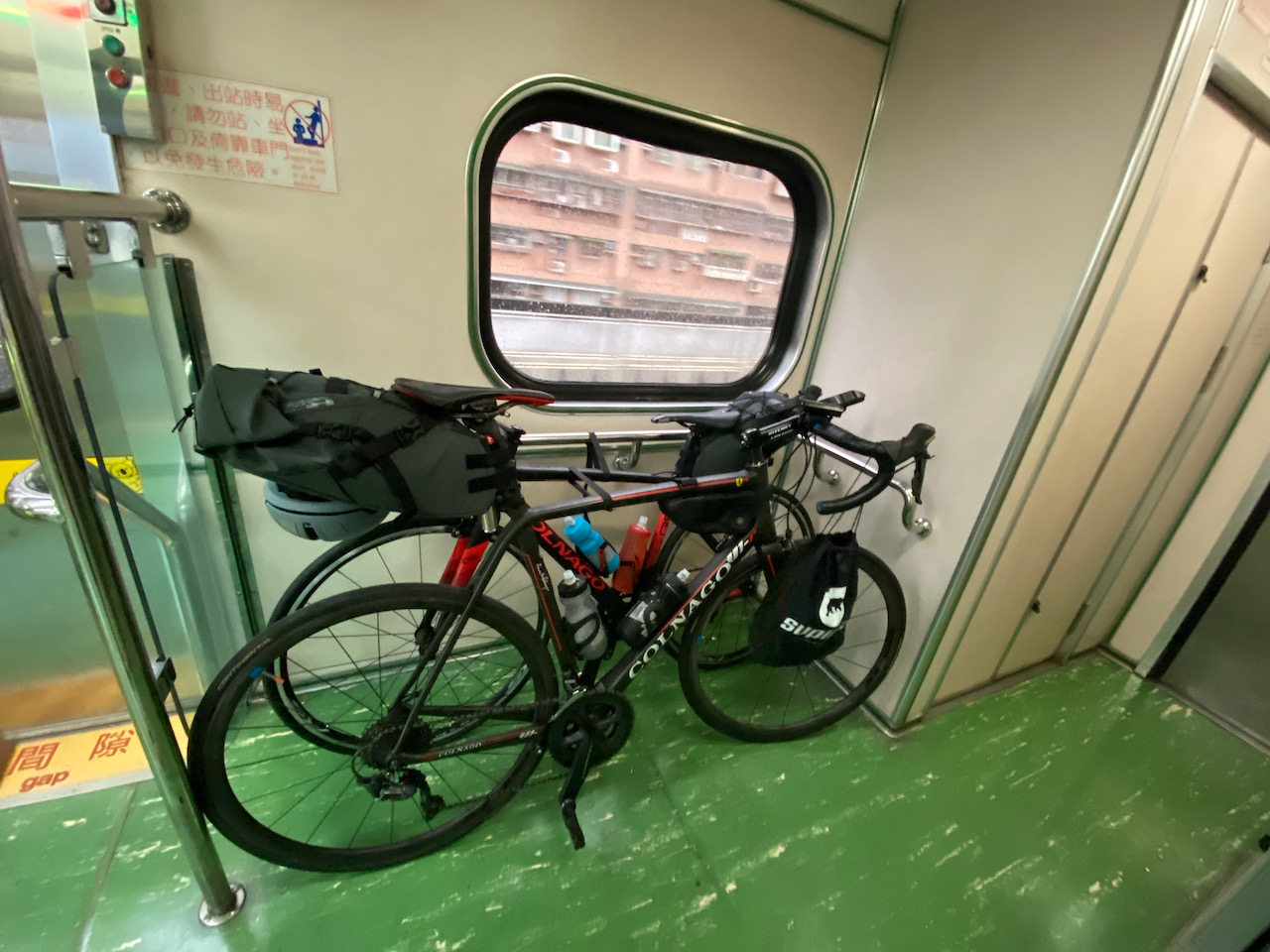
    To get to Fulong from Taipei, we took a 1.5 hour early train (No. 4148), which allows whole bikes on board. Two of my friends boarded from Wanhua station first. On that weekday morning, it was so packed that it required some courage to force into the train with such big pieces of luggages. Then it got much better on the next station of Taipei Main Station where more passengers would get off. When it’s my turn to board at Songshan station, we have even much more space. There are 900,000 commuters to Taipei each day. When the train is leaving the city, it gets empty. It may be a good idea to use Songshan Station or Nangan Station for trains heading north. Please refer to this post for more info about taking bikes on public transportation in Taiwan.
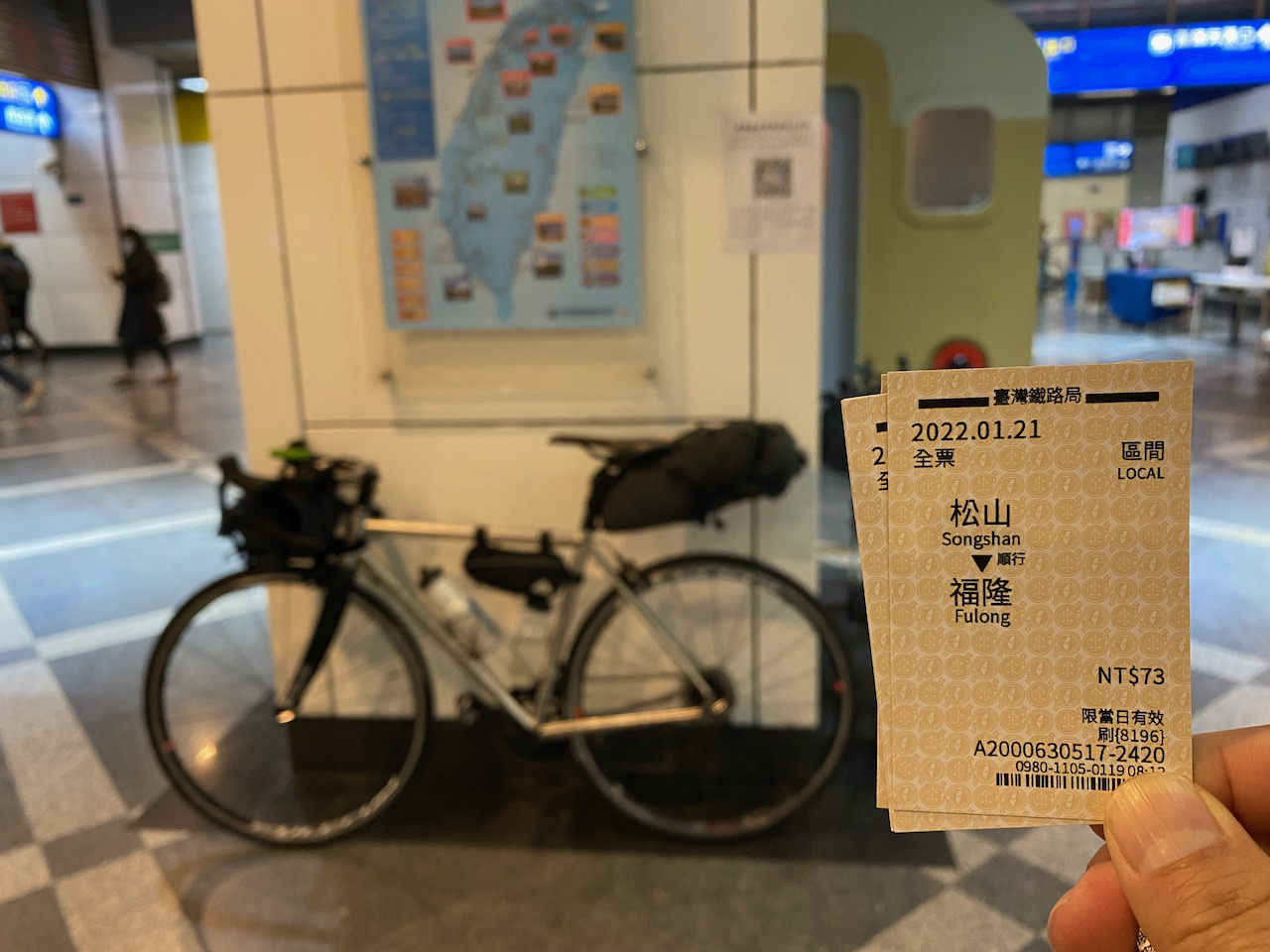
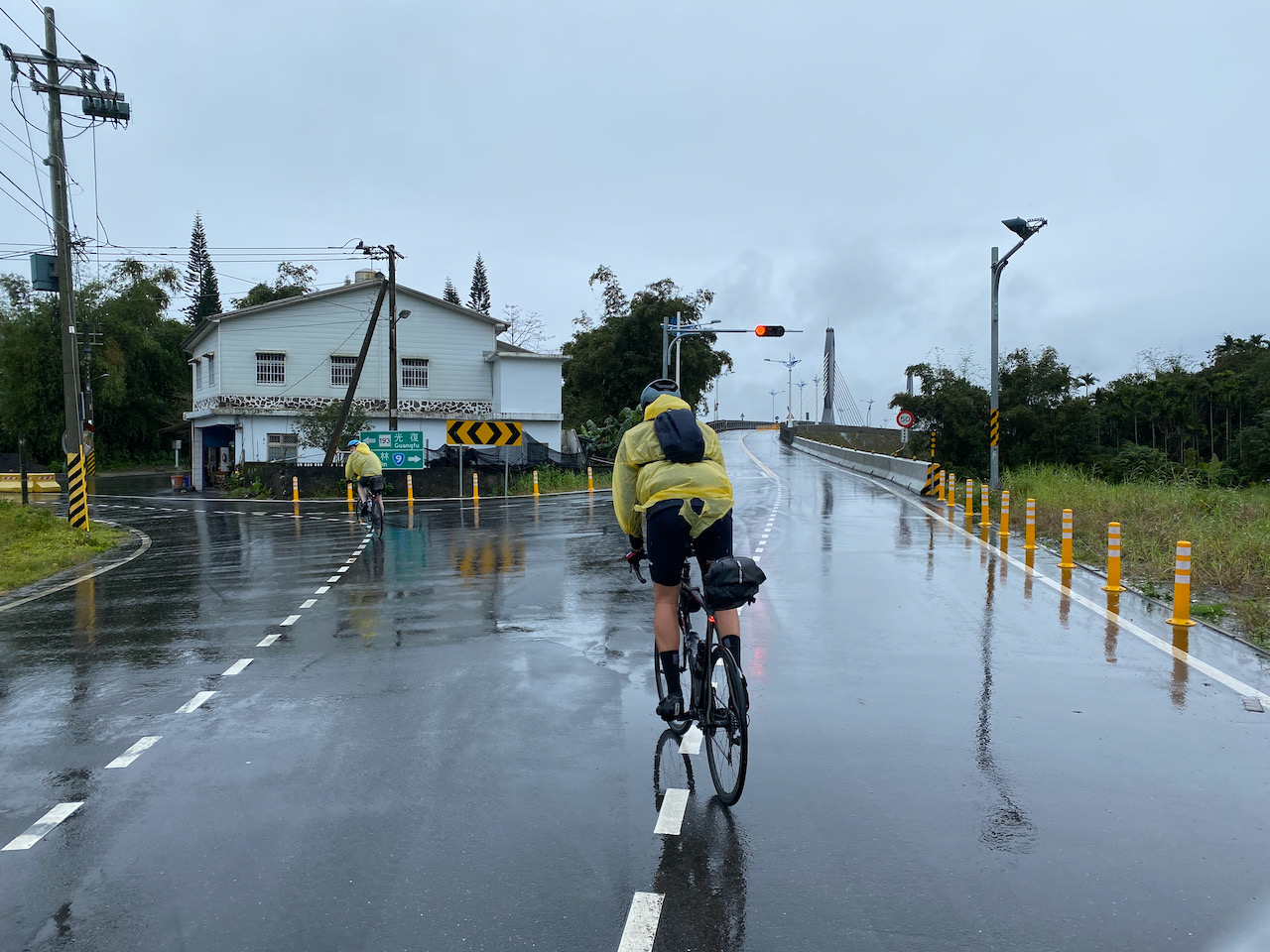
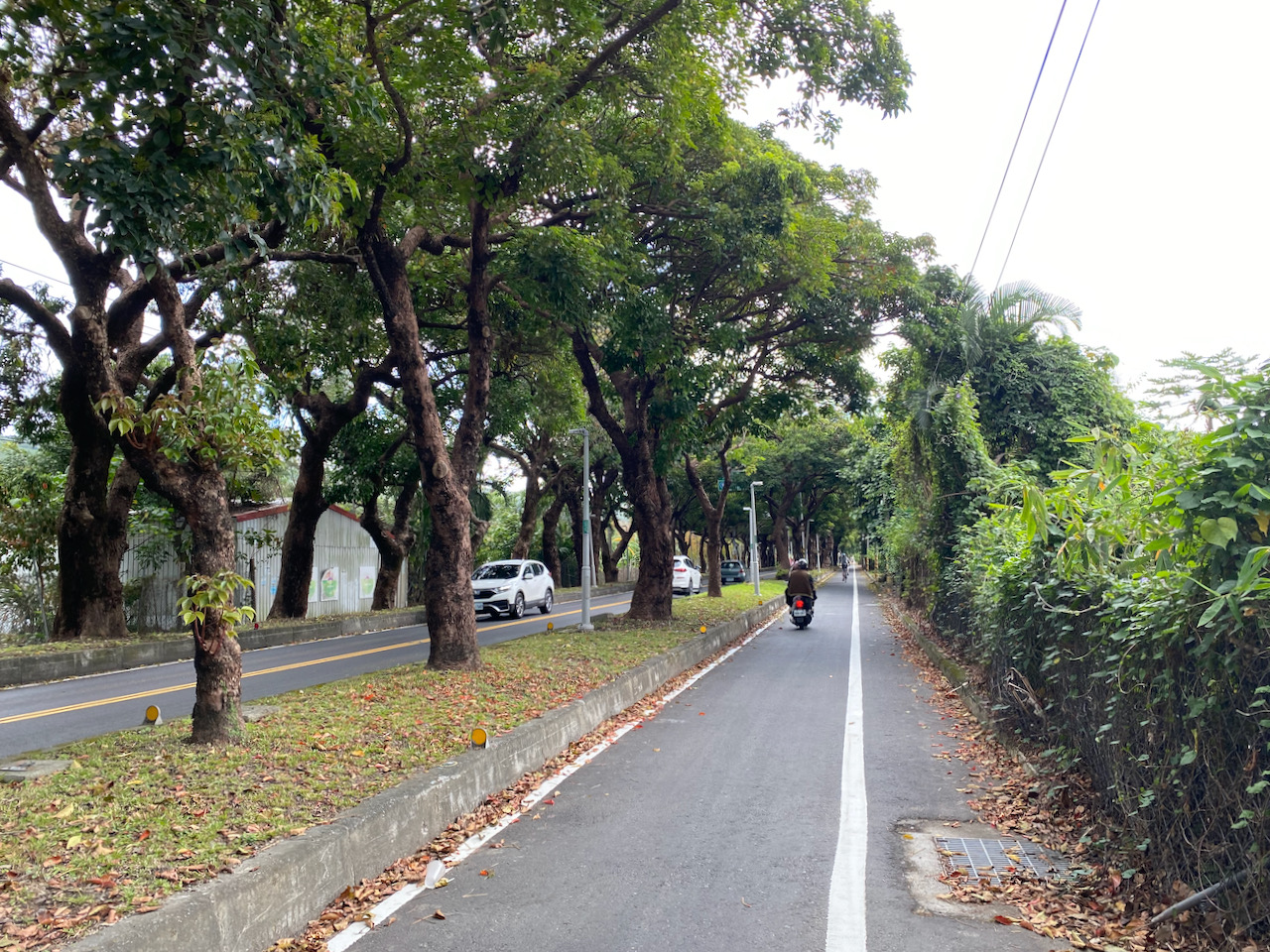
    Everything went perfectly well except the rain. Not pouring down but enough to wet everything and flood all the potholes. We decided to complete the trip as soon as possible. I tried to lead the group to some dedicated bikeways but they seemed muddy. It’s better sticking to the main road. Water was sloshing in my friend’s shoes (I wore slippers). Each time we stopped for a break, they had to take off their shoes and shocks and pour the water. They have waterproof jackets but once water got hold of the internal layers sticking outside on the sleeves or waist, it seeped inside and drenched everything. All the clothes in the bags were drenched too. A disposable raincoat sold in the convenience stores would solve the problem, though it is thin and torn easily.

    We made it to the Suaoxin Station early. There weren’t any shops inside the station. Neither there were any shops around the area except for a 7-Eleven and several food stalls we missed 1 km away. We swapped the tickets for an earlier train and got back to the 7-eleven for lunch.

    This train ride was nice. We had the whole car to ourselves. We did not stay in Xincheng because we did not plan to have a detour to climb to Tianxiang and the hotels around Xincheng Taroko Station are a little pricier. I planned our stay further south, the Beipu Station. My friend realised their clothes in the bags were drenched too after checking into the B&B and getting ready for showers. Those bags claim to be water resistant or waterproof are destined to leak after a couple uses. So, I always pack my clothes in zip lock bags. I don’t mean to be gleeful but just to let my readers know the differences. We then ended up spending the afternoon in a coin operated laundry to wash and tumble dry the clothes (and ahem… shoes). 

    Routes:

    NOTE: To use the routes, please install the App on your smartphone. The App will launch and load the route automatically after you tap the above links on your smartphone’s browser. For Garmin Connect, you can then use the APP to send the route to your garmin device. If your Garmin device is not purchased in Taiwan, you will also need make sure you have the Taiwan map on your device. Here is our blog post on this topic.

    Day 2 Xincheng Taroko to Guangfu (72km Ascent 530m, Descent 435m)

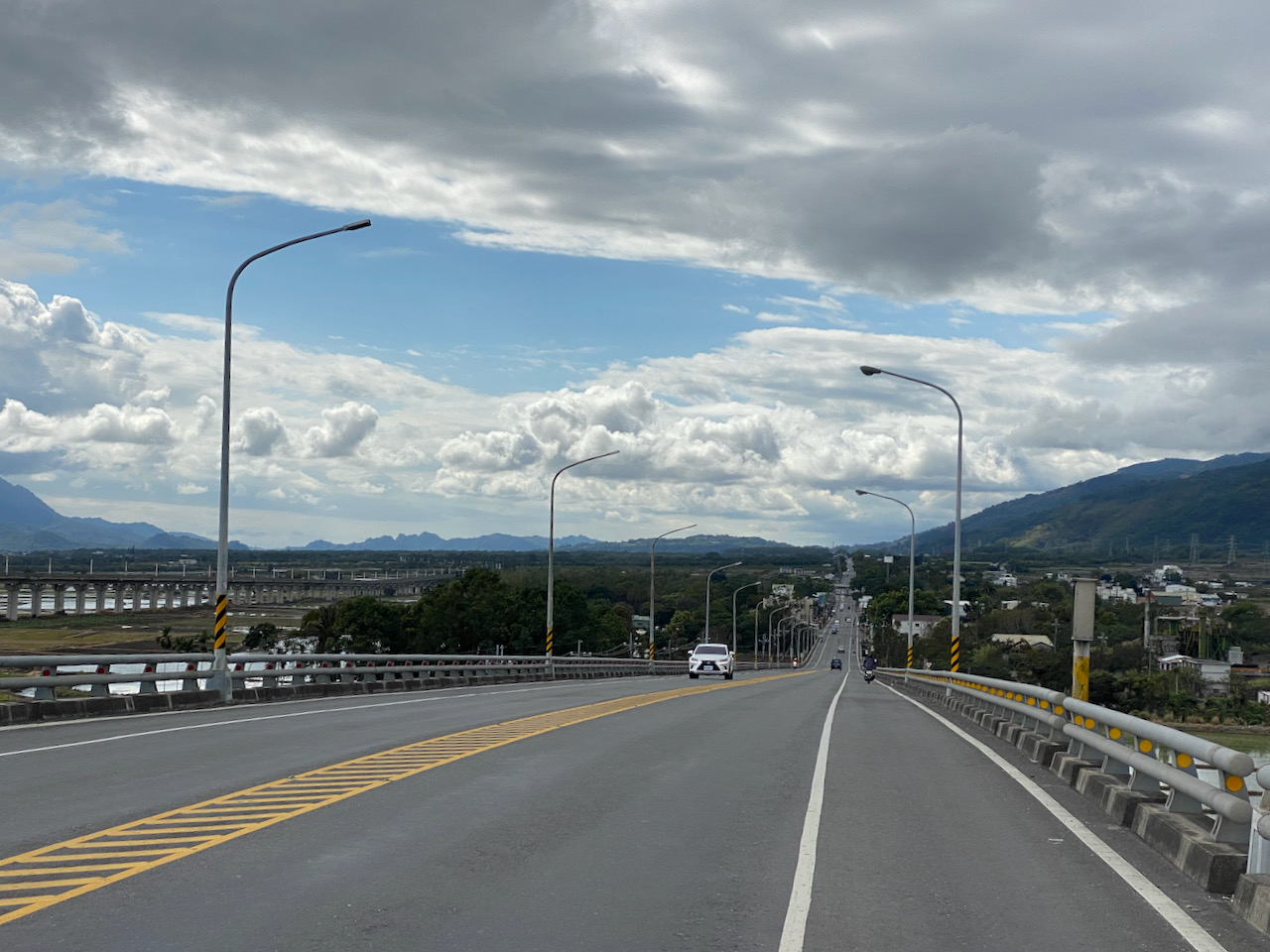
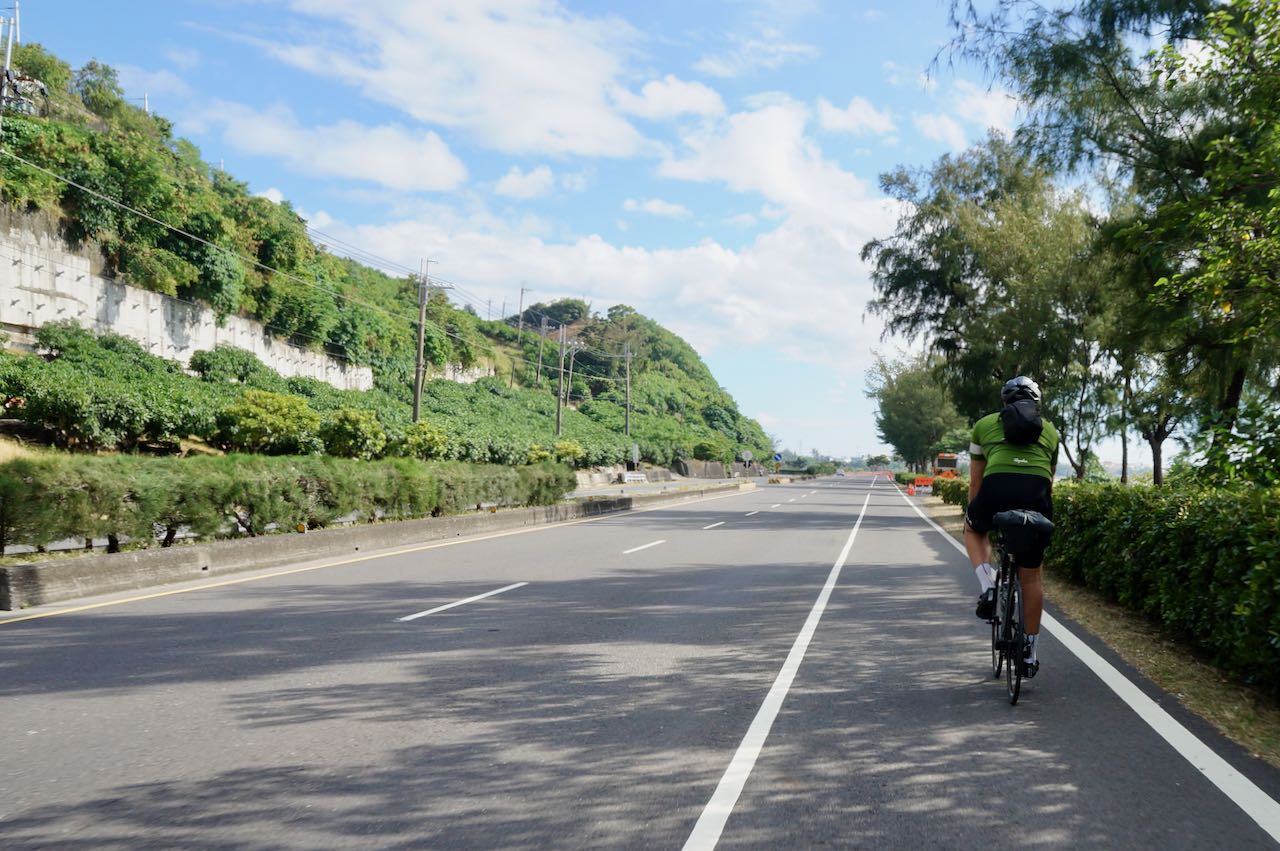
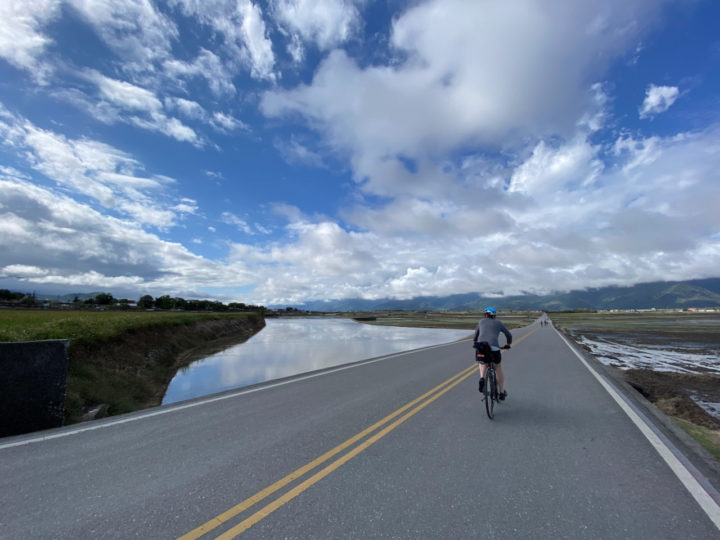
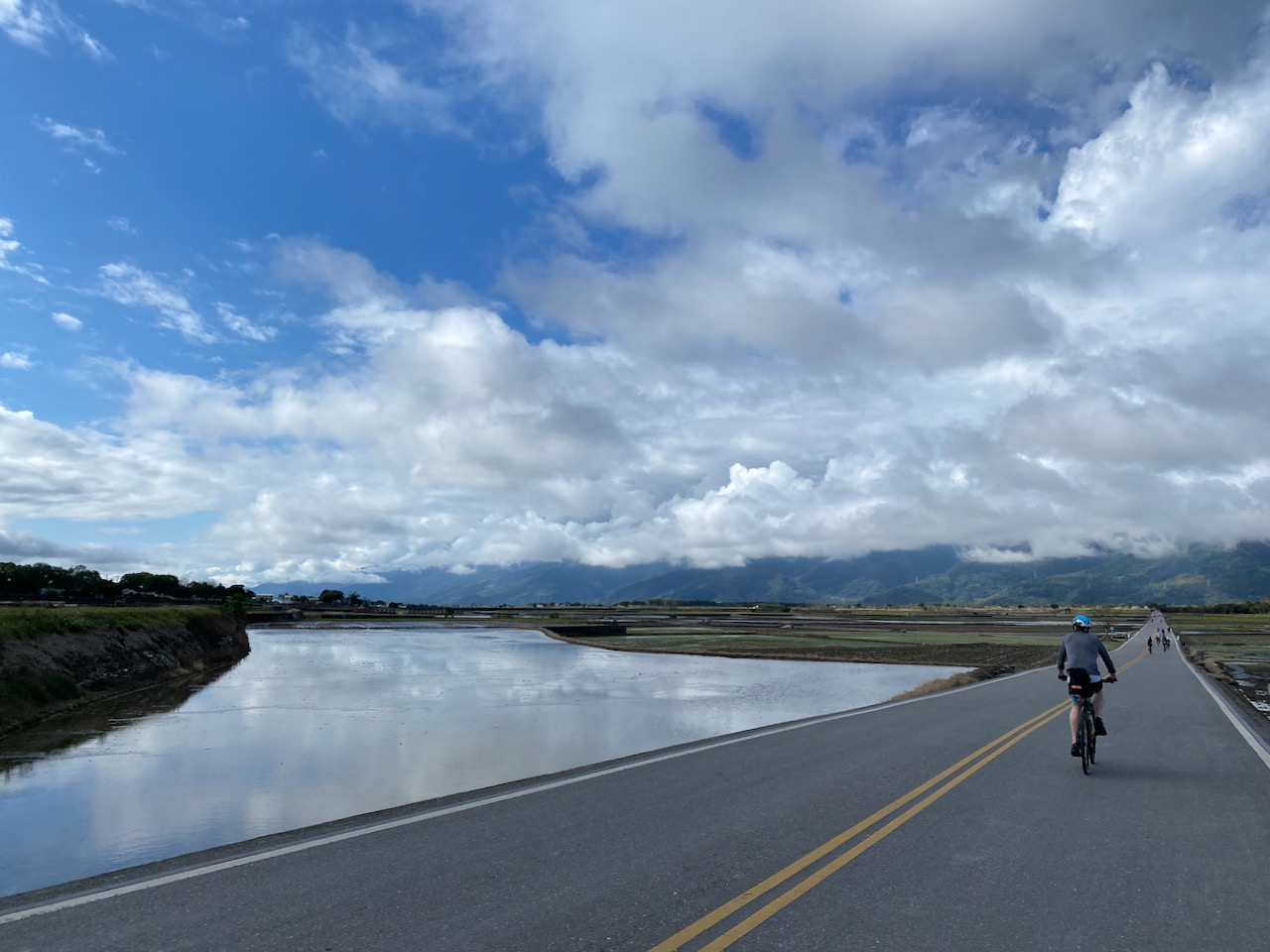
    We were sticking to the rift valley route instead of the coastal route in Hualien. But there are two routes in the rift valley to choose, the Provincial Highway No. 9 and the County Highway 193. The former one is wider, flatter but with more traffic. There are more supply stops. The latter one is smaller, some short climbs but quieter with less traffic. We voted unanimously to cycle on County Highway 193, which turned out to be a great choice. Once we left Hualien and turned into County Highway 193, we had the whole road to ourselves. It was so quiet and we could chat relaxly while cycling. It’s still raining on the 2nd day. The surface is totally wet but there were no other vehicles to splash muddy waters on us. The only inconvenience was that there were only some small grocery stores along the route. Not quite probable to get a decent meal and choices of snacks are very limited if you find one that’s open. 
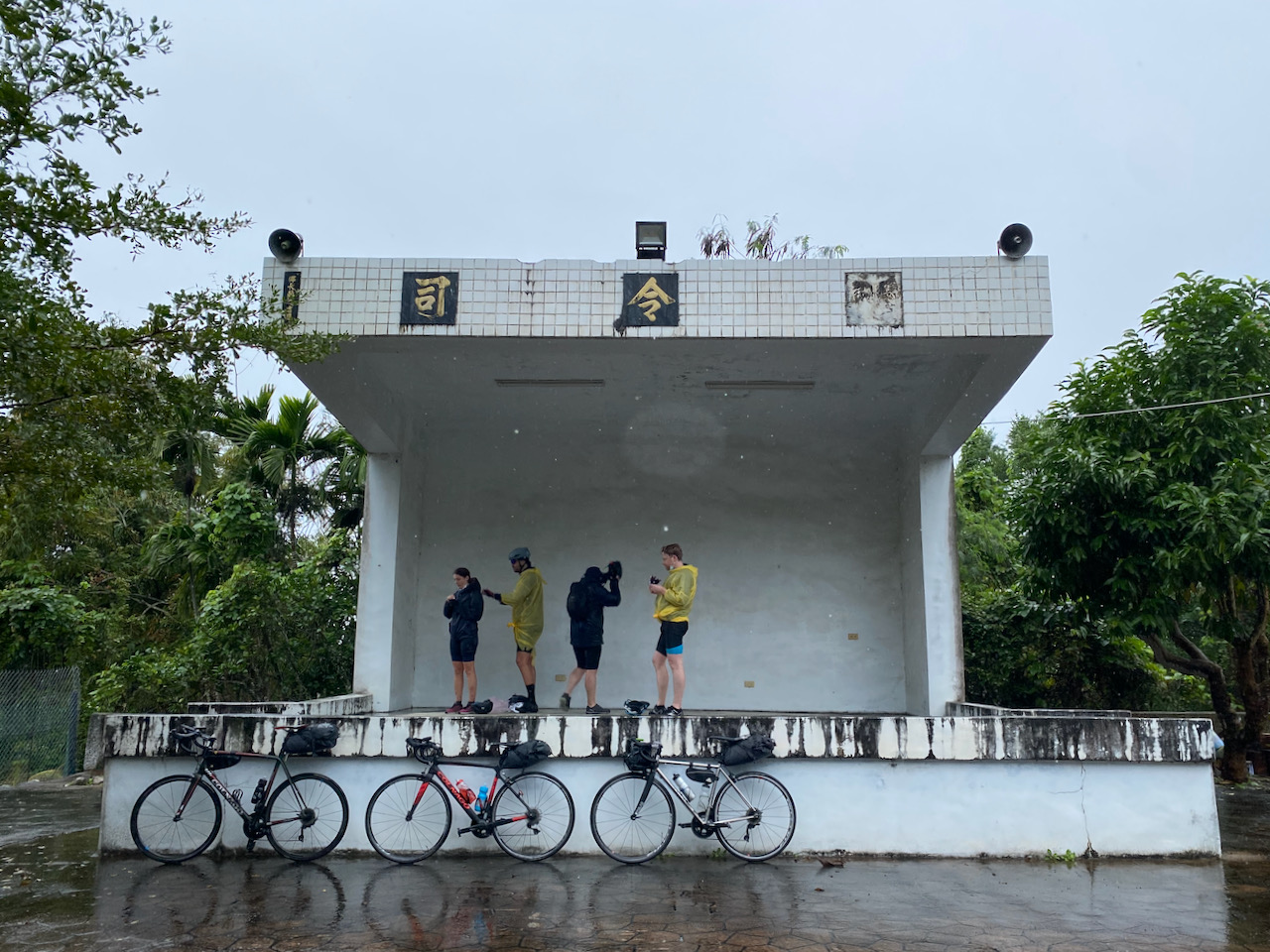
    We reached the B&B late after lunch with empty stomachs but we needed to clean our bikes first.  Lucky that the B&B has a big yard with a hose for us to rinse the dirt from our bikes. Then everyone rushed to their rooms for shower and I went for a quick lunch with another member who had the same priority as mine: food. 

    That evening, we managed to find a fancy restaurant serving really nice meals.

    Routes:

    NOTE: To use the routes, please install the App on your smartphone. The App will launch and load the route automatically after you tap the above links on your smartphone’s browser. For Garmin Connect, you can then use the APP to send the route to your garmin device. If your Garmin device is not purchased in Taiwan, you will also need make sure you have the Taiwan map on your device. Here is our blog post on this topic.

    Day 3 Guangfu to Fuli (65km Accent 424, Descent 310m)

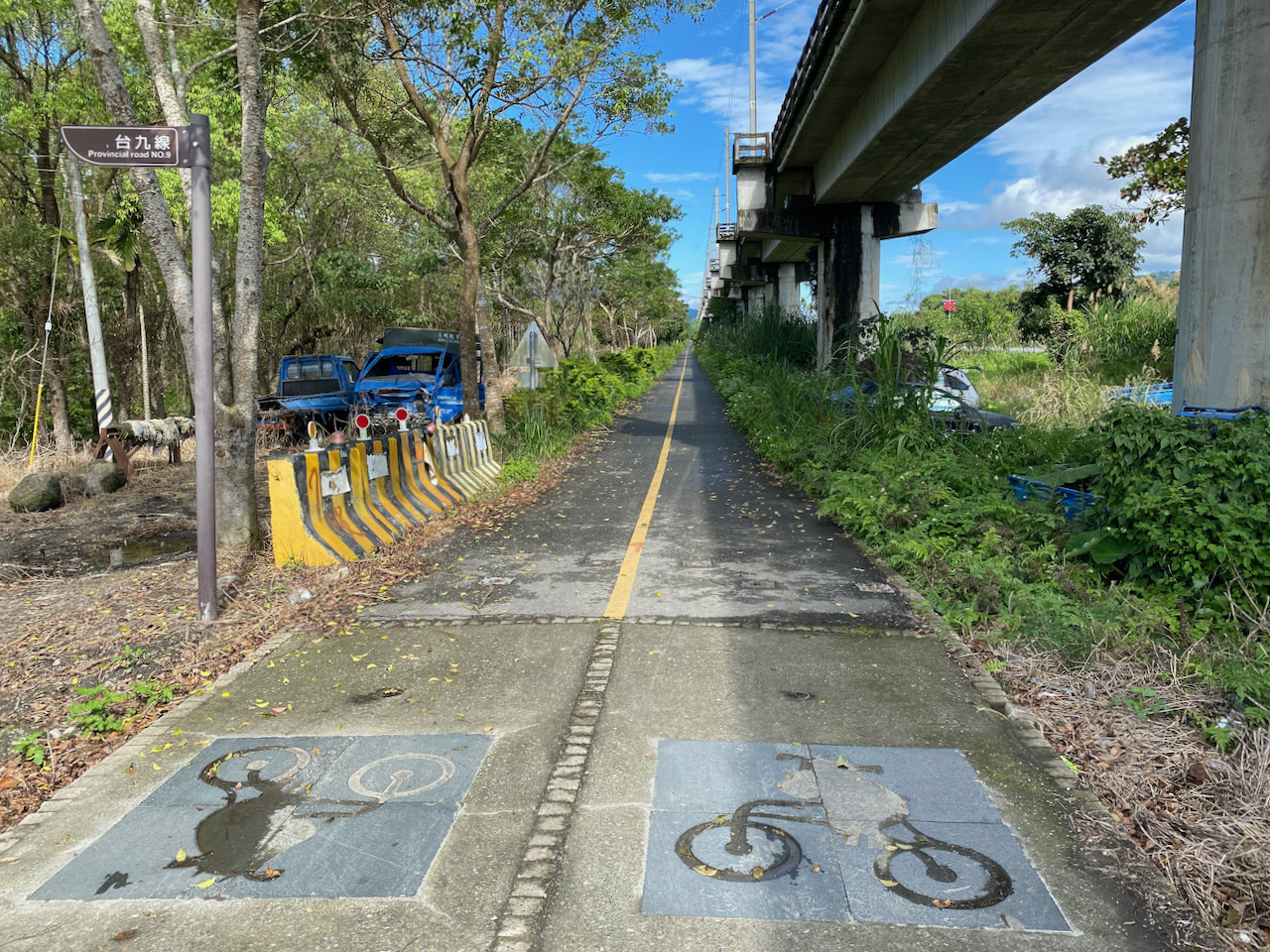
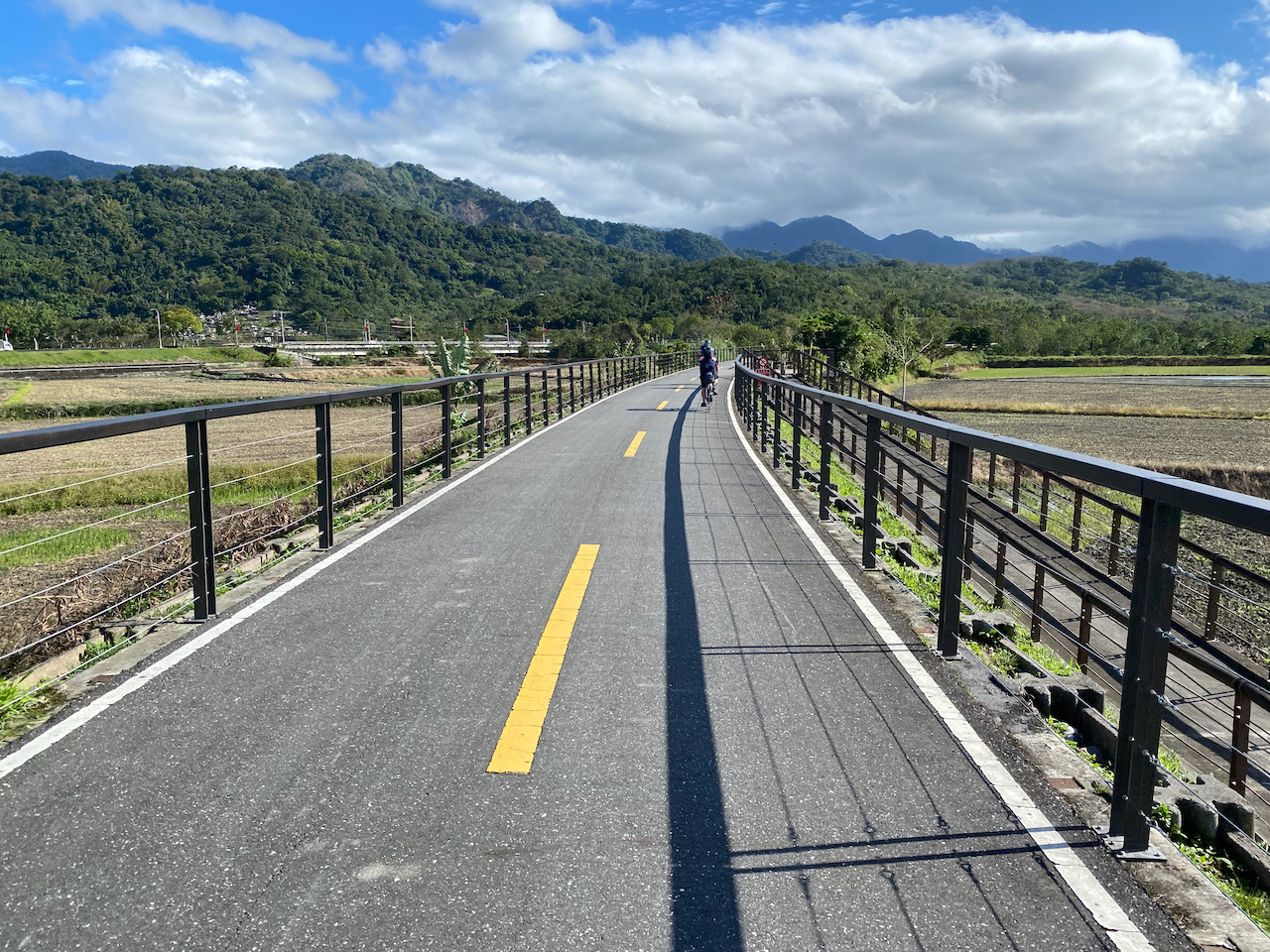
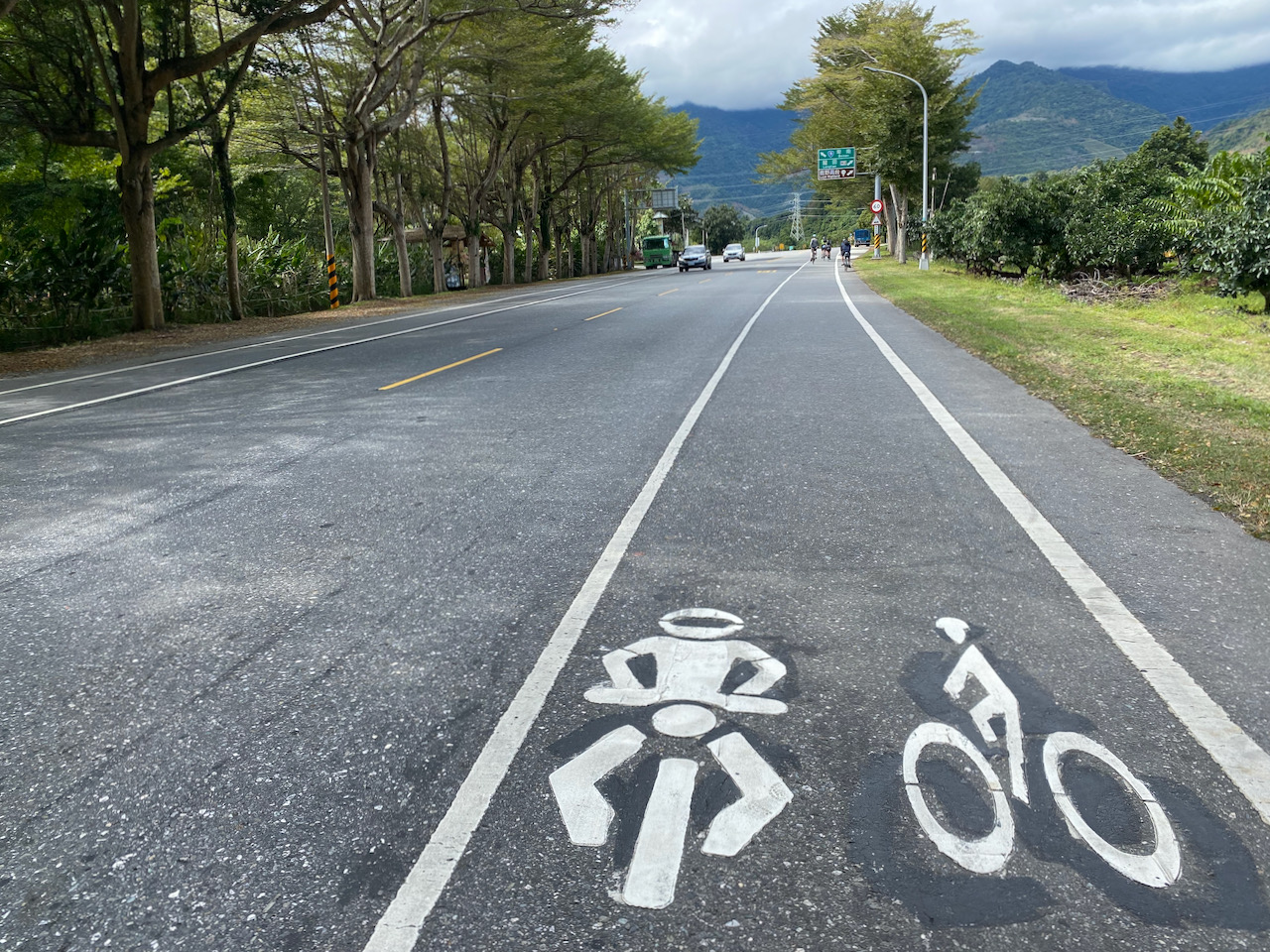
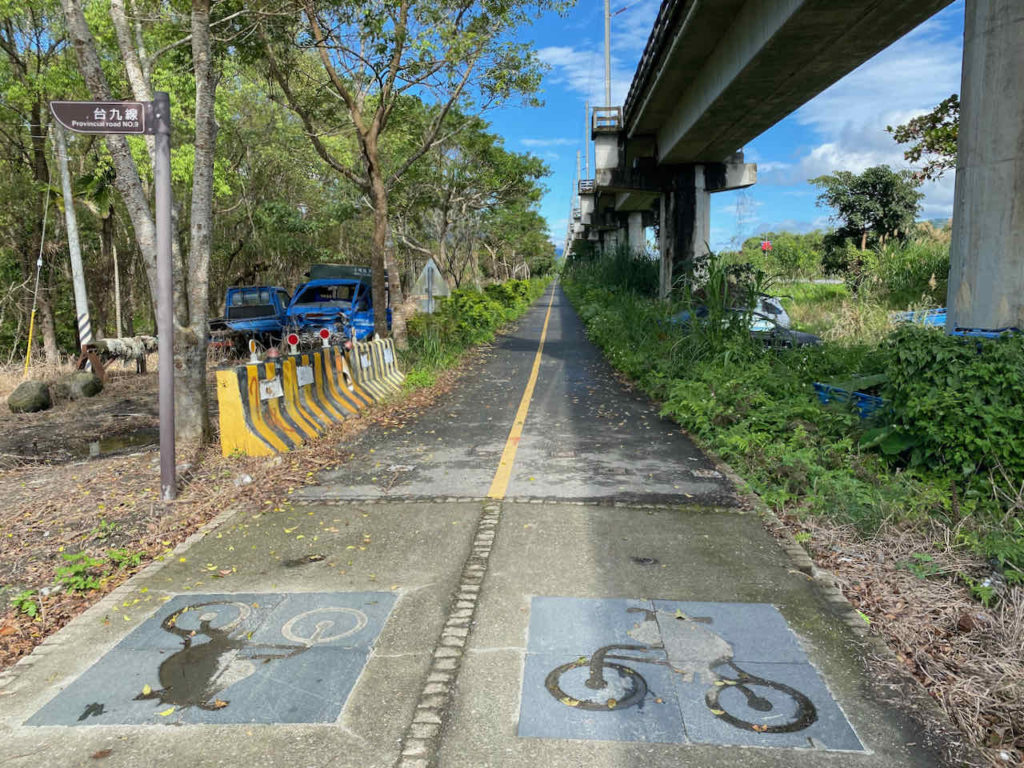
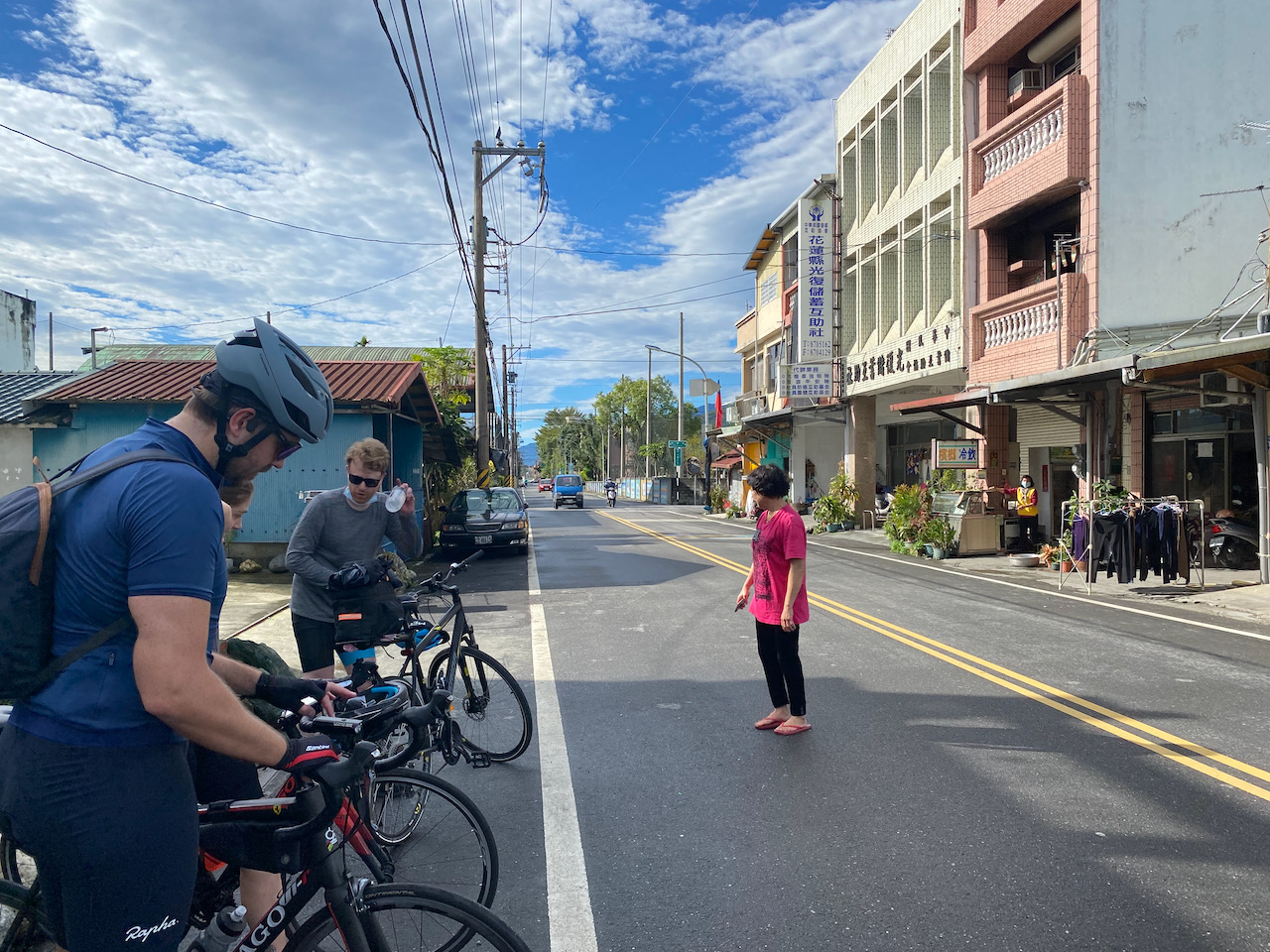
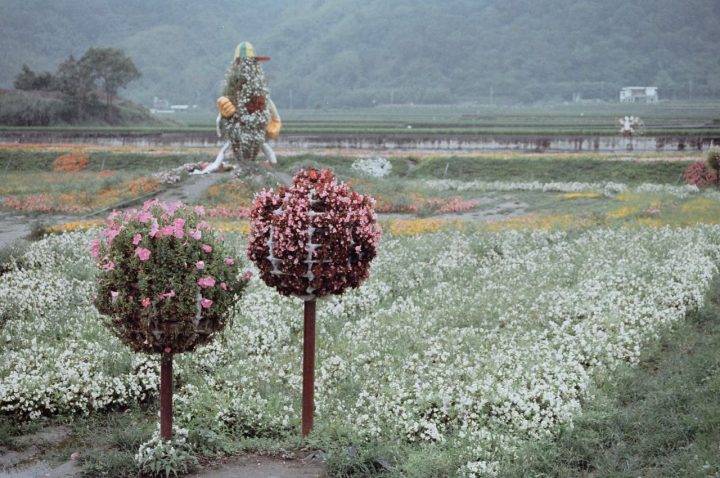
    Sun finally came out. We stayed on Provincial Highway No. 9, which is flat and wide, except there is a short climb of 150 metres to the Wuhe Terrace where you can find some tea shops and a Tropic of Cancer Marker. After descending from this terrace,  there were two bikeways running parallel to our route. The first one, Fuyuen old railway bikeway 富源舊鐵路自行車道, started from the Fuyuan Station running southwards. It is converted from the old railways after a new one was built elevated. Then there was this  Yufu bikeway  (玉富自行車道) brought us from Yuli to Old Dongli Train Station, a place for chill out and taking pictures. Apart from the two bikeways, we cycled on Provincial Highway No. 9. It’s a wide flat road with a shoulder dedicated for scooters and bicycles. After leaving the 2nd bikeway, there is a farmer’s association outlet selling local products on the Provincial Highway No. 9. Sometimes you would find some sculptures made of the hays after the rice is harvested here. This was an easy day. We checked into the B&B early and drank some beer before sunset. Fuli is a very small town. There was only one restaurant with dine in option.
    Routes:

    NOTE: To use the routes, please install the App on your smartphone. The App will launch and load the route automatically after you tap the above links on your smartphone’s browser. For Garmin Connect, you can then use the APP to send the route to your garmin device. If your Garmin device is not purchased in Taiwan, you will also need make sure you have the Taiwan map on your device. Here is our blog post on this topic.

    Day 4 Fuli to Taitung (60km Ascent 324m, Descend 517m)

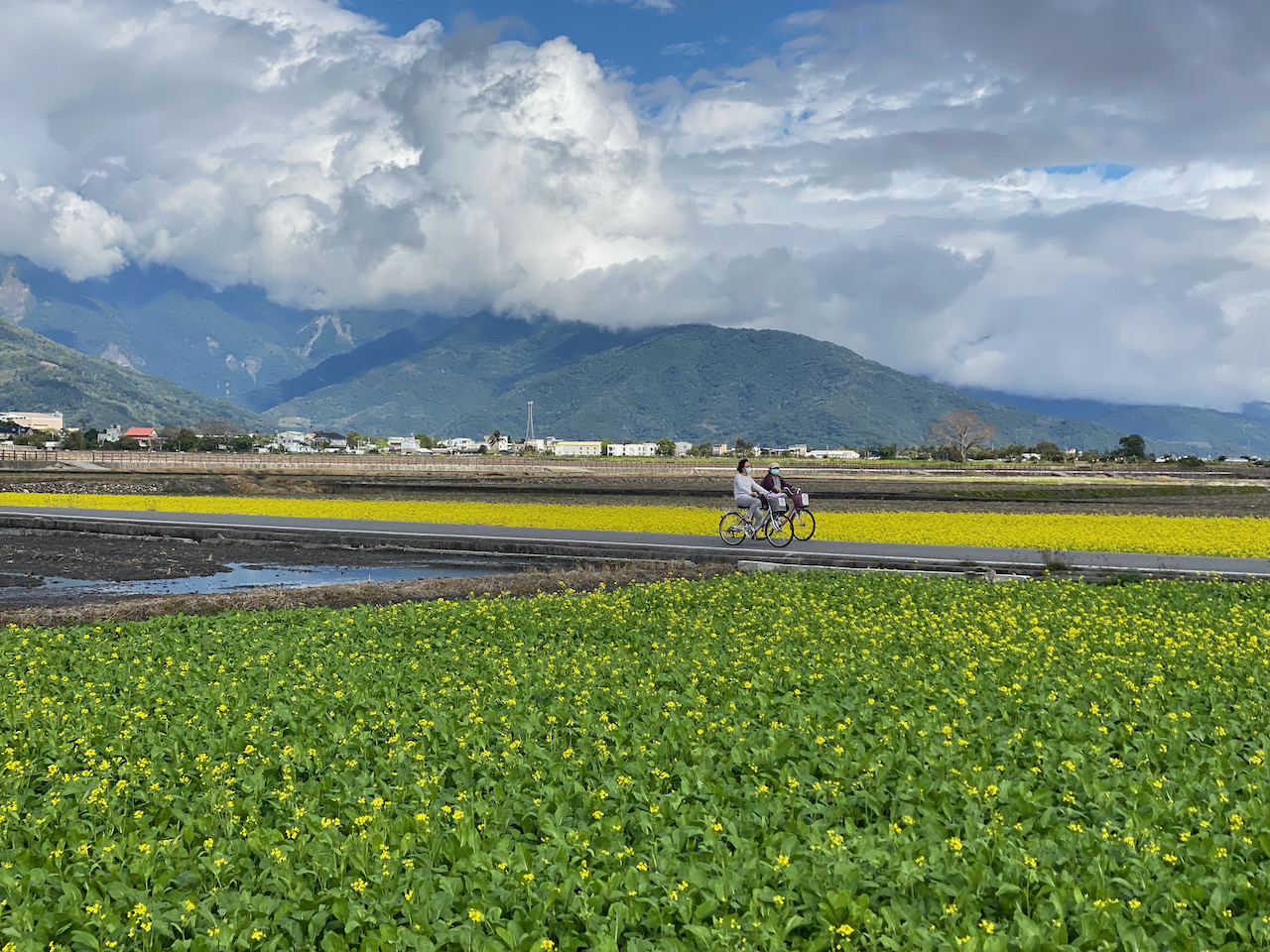
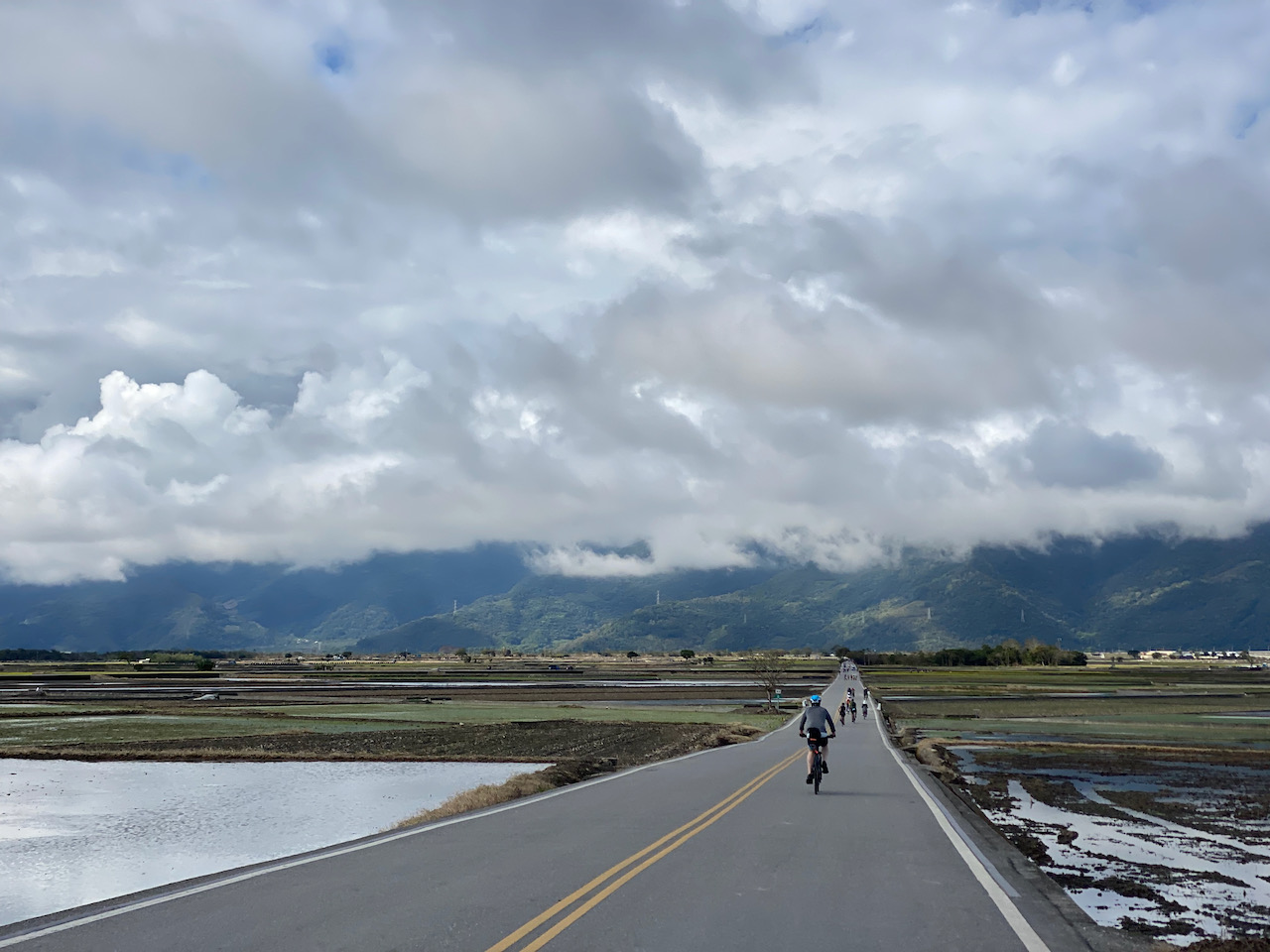
    This is the last day of our trip. Only 60km left to cover. There was this famous Brown Boulevard laid ahead of us in Chishang where the finest rice of Taiwan is cultivated. The part of Provincial Highway No. 9 was equally great. After a little climb of around 100m, we descended to the Taitung Train Station to have our bikes shipped back to Taipei. We managed to find a SPA that lets us use their staff’s shower room if we spend some money for their services. It was so nice to get refreshed before boarding a plane there to get to Taipei.
    Routes:

    NOTE: To use the routes, please install the App on your smartphone. The App will launch and load the route automatically after you tap the above links on your smartphone’s browser. For Garmin Connect, you can then use the APP to send the route to your garmin device. If your Garmin device is not purchased in Taiwan, you will also need make sure you have the Taiwan map on your device. Here is our blog post on this topic.

    Conclusion

    After completing this stage, we’d still need to cycle from Taipei to Fulong to complete the loop of around the island but my friends were already claiming that they had accomplished the challenge because they had cycled to Fulong by themselves for some weekends. So, that’s it for the around Taiwan trips. But there is still more to explore on the island, especially in the mountains.
  • Cycling Around Taiwan in Multiple Stages (2): Kaohsiung to Taitung

    Cycling Around Taiwan in Multiple Stages (2): Kaohsiung to Taitung

    We did multiple trips to cycle around Taiwan because we did not have time to do it in one go. The downloadable GPX file of the cycling route is at the end of each section.

    This is the 2nd stage of our Around Taiwan in Multiple Stages trip. We were to cover Kaohsiung to Taitung in this stage. We would go from the west coast to the east coast by climbing over the 460m Shouka mountain pass or Shouka Biker Rest Stop. We started off from Kaohsiung 高雄 cycled to Checheng 車城. There are two routes to climb to the Shouka Biker Rest Stop, the Provincial Highway No. 9 or County Highway 199. Provincial Highway No. 9 has lots of traffic making it less enjoyable. So County Highway 199 is a better choice. We spent the 3rd night in Jinlun 金崙 where quite a number of small hotels to choose. Some even offer hotsprings. The last day was quite easy. It’s just 41 km to Taitung Train Station where you can have your bike sent back to Taipei (Wanhua Station or Songshan Station). Then you can either take a domestic flight back to Songshan Airport in Taipei or take a train home. For me, I have taken a special train with 40 bike racks in carriages for bikers. I can push my whole bike onto the train, the C.K. EXP No. 81 (Departs at 16:02) and had 5 hours to spare until I arrived at Songshan Station. C.K. EXP No. 81 is only available every Friday, Saturday, Sunday and Monday.

    If this stage seems too short for you, I have plotted an extra route by heading further south to the Eluanbi Lighthouse.

    Day 1: Kaohsiung to Checheng (99km, Ascent 310m, Descent 323m) 高雄至車城

    We only had 3 days to spare when we were having this stage. So, we started from Kaohsiung instead of Tainan where we left off to make it easier. We sent our bikes to Fengshan on Wednesday and collected them on Friday before 8:00 p.m. Then we spent the night in Kaohsiung and started as early as possible the next day. With hindsight, Nanzi is a better location to collect the bike as it’s closer to HSR and the luggage room is easier to locate. The other option is taking the earliest HSR with the bikes bagged on Saturday morning and start cycling right from Kaohsiung Zuoying HSR station. The earliest HSR to arrive at Zuoying, Kaohsiung is 8:40 am which makes you start late, though.

    Kaohsiung is the 3rd biggest city in Taiwan. When we started cycling from the city centre, it was a 4-lane main road. As we headed south further, a bikeway emerged making cycling more relaxing. Then the road got less busier when we reached the countryside. We had a broken spoke and were lucky to have a very helpful bike shop nearby in front of Fang-Liao station. While waiting, we had a 3-hour lunch break. Can’t complain. Carbon wheels are tricky to fix. But we still can make it to Checheng before 3:30. It’s quite an easy route and the wind at our back did make it much easier.

    If you have plenty of time, you may take a detour to the Pier 2 Art Center and then take a ferry to Qijin District, cycle south east along the narrow isle and get back to the main route by ferry at the Zhong Zhou Ferry Station.

    Route

    Alt Route

    NOTE: To use the routes, please install the App on your smartphone. The App will launch and load the route automatically after you tap the above links on your smartphone’s browser. For Garmin Connect, you can then use the APP to send the route to your garmin device. If your Garmin device is not purchased in Taiwan, you will also need make sure you have the Taiwan map on your device. Here is our blog post on this topic.

    Day 2: Checheng to Jinlun (78km, Ascent 650m, Descent 629m) 車城至金崙

    The first 37km in Day 2 is harder as it involved accumulated climbing of 530m. But once we reached Shouka pass, there would be a long thrilling descent to the east coast. The detour to Duoliang Railway Station, which is marketed as the most beautiful train station of Taiwan is to be found along Provincial Highway No. 9 right before reaching Jinlun.

    Route

    NOTE: To use the routes, please install the App on your smartphone. The App will launch and load the route automatically after you tap the above links on your smartphone’s browser. For Garmin Connect, you can then use the APP to send the route to your garmin device. If your Garmin device is not purchased in Taiwan, you will also need make sure you have the Taiwan map on your device. Here is our blog post on this topic.

    Day 2: Extra Checheng to Jinlun via Eluanbi Lighthouse (136km, Ascent 1170m, Descent 1148m) 車城至鵝鑾鼻至金崙

    Instead of heading east on County Highway No. 199, you can head south all the way to Eluanbi Lighthouse before switching northwards, enjoy the view on the east side and then  do the unavoidable climb to Shouka Pass. It would be a long long day of 136km distance with 1093m of Ascent, 1070m of Descent. Given that it’s also hard to get supply or stay over after turning north from Eluanbi Lighthouse, I would suggest inserting one extra night by staying over on Manzhou Township if you plan to use this route. You would have covered 45km there only but it’s better there for more choices of homestays with food stalls and convenience stores for meals and supplies. Or you may cover more distance on Day 1 and stay over in Kenting to make this day a little bit shorter. There are plenty of small hotels in the vicinity of Kenting Night Market. Whatever the plan is, Just don’t end up having to descend in the dark from Shouka Pass.

    Route

    NOTE: To use the routes, please install the App on your smartphone. The App will launch and load the route automatically after you tap the above links on your smartphone’s browser. For Garmin Connect, you can then use the APP to send the route to your garmin device. If your Garmin device is not purchased in Taiwan, you will also need make sure you have the Taiwan map on your device. Here is our blog post on this topic.

    Day 3: Jinlun to Taitung (41km, Ascent 263m, Descent 256m) 金崙至台東

    This is the last day of our stage 2. I make it much shorter for more slacks to ourselves. I don’t want to miss the train home in case we have any delays due to any issues. Taitung is one of the most remote cities on the Taiwan main island. Tickets for direct trains to Taipei are snapped up within hours when they are available for purchase. There are flights to Taipei Songshan Airport but seats are limited. If missed, we would have to take the train or coach back to Kaohsiung for HSR or coaches to get back to Taipei. 

    We cycled directly to Taitung Train Station. My friends drop their bikes at the luggage room and have them sent back to Taipei. We had a relaxing lunch at the city centre which is 5km from the train station. While they took a flight back to Taipei, I took a 5 hour train ride back to Songshan Train Station with my bikes on board. (Edit: this train is no longer in services. Now, the only train that takes naked bikes from Taitung to Taipei is Chu-Kuang Express 667 which departs at 22:45 every Sunday and arrives at 04:31 the next day.)

    Please note that there is not much public transportation in Taitung City. No Ubers either. There are plenty of taxis but most of them are queuing at the train station. So, it would be easier to have the restaurant booking a taxi for you while you are having a meal. 

    Route

    NOTE: To use the routes, please install the App on your smartphone. The App will launch and load the route automatically after you tap the above links on your smartphone’s browser. For Garmin Connect, you can then use the APP to send the route to your garmin device. If your Garmin device is not purchased in Taiwan, you will also need make sure you have the Taiwan map on your device. Here is our blog post on this topic.

  • Cycling Around Taiwan in Multiple Stages (1): Taipei to Kaohsiung

    Cycling Around Taiwan in Multiple Stages (1): Taipei to Kaohsiung

    Cycling around Taiwan in multiple stages is an itinerary I planned for my expat friends in Taipei who don’t have the luxury of taking 9 – 10 days off from work to do it in one go. For each stage, one can use a weekend plus 1 – 2 day(s) off before or after to make it a 3 – 4 days cycling holiday. The downloadable GPX file of the cycling route is at the end of each section.

    Planning the trip

    By dividing the route into multiple stages, we will get some extra bonus such as being able to visit different parts of the island in their best seasons. We can also incorporate some detours to visit more interesting places as we are more relaxed about time. For those who do it in one go, they are bound to cycle against the prevailing wind (North-East for winters and South-West for summers) on one side of the island. When doing it in multiple stages, we can change our direction for different stages so that we will always have the wind at our back.

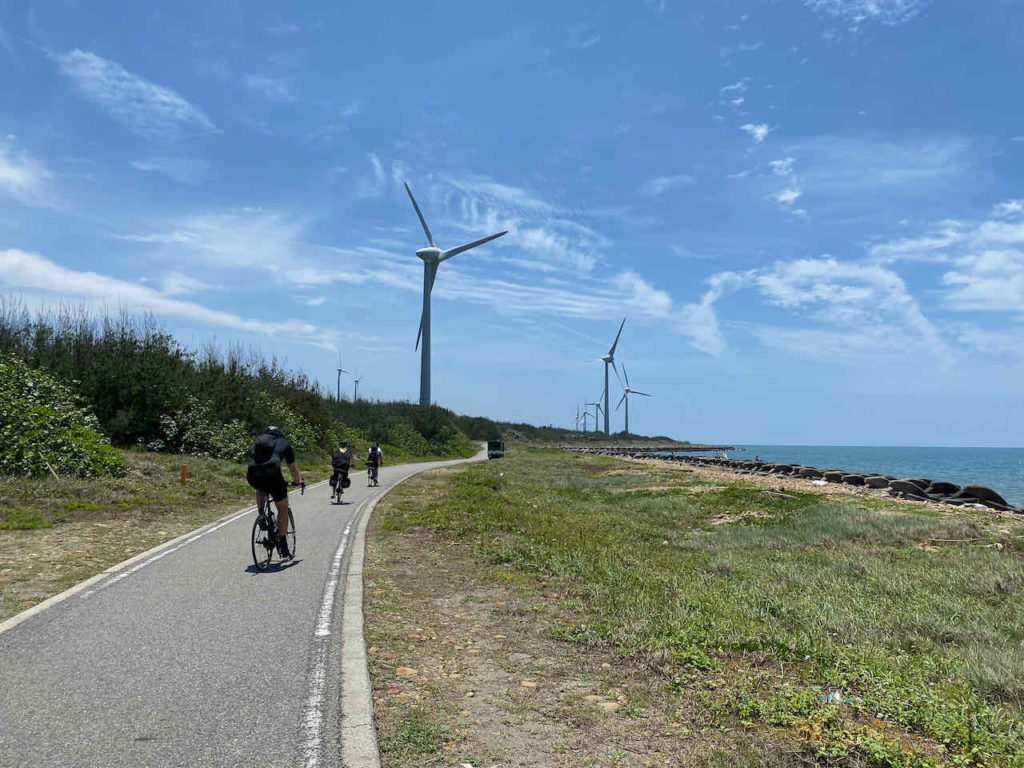
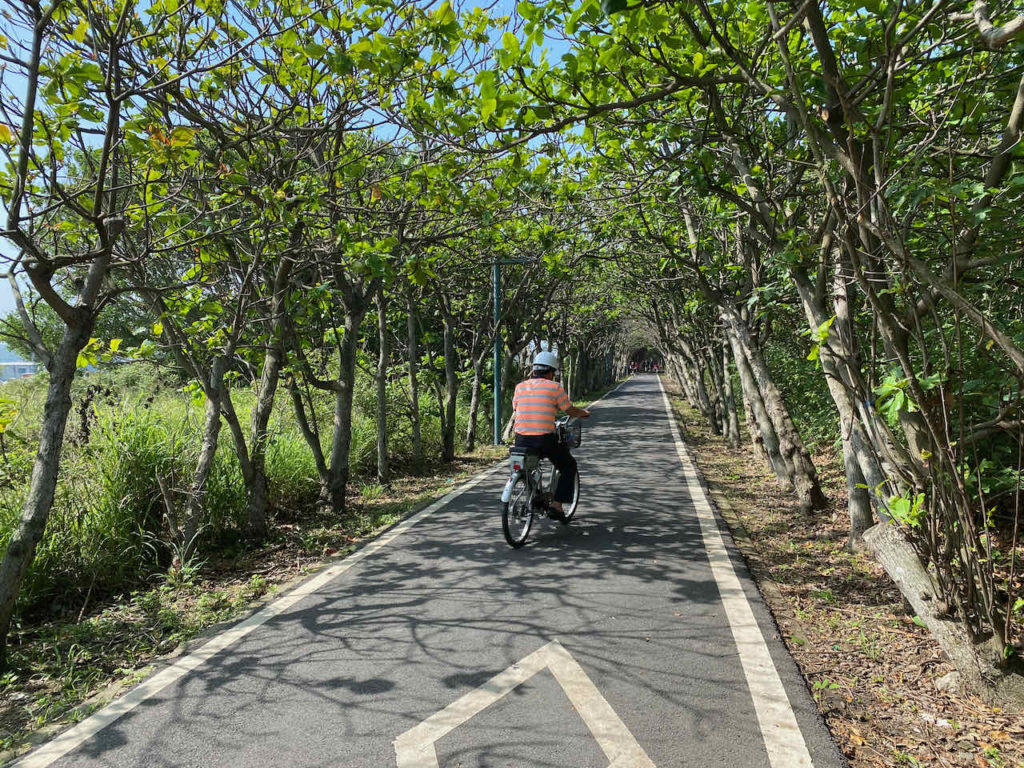
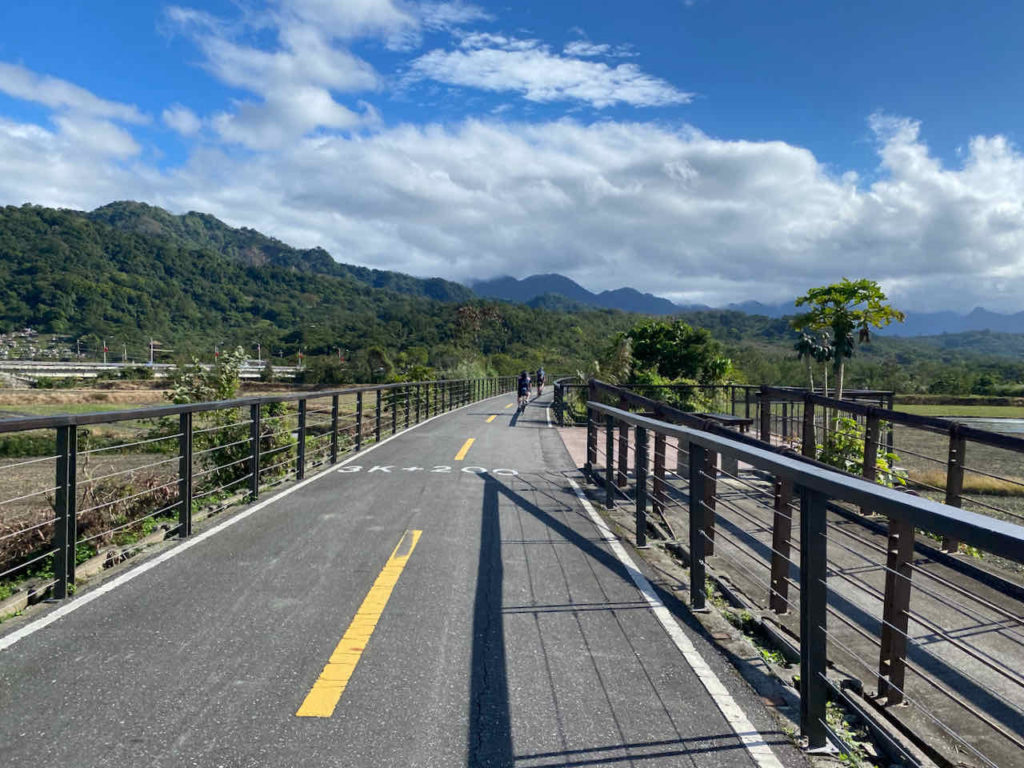
    In the detailed itinerary, I have provided an alternate GPS route plotted to maximise the use of the dedicated bikeways, which my friends found more enjoyable. These bikeways provide a break from the noisy traffic, well paved road surface and sometimes shades by trees. Some even offer us very pleasant views and lead us to interesting places. 

    However, these bikeways are usually narrower than regular roads, which means you could be slowed down by other users. Your rhythm could be hampered by those roadblocks built to stop other vehicles from entering. Please also note that the conditions on those bikeways could change drastically during unfavourable weather. Some can be flooded, populated by slippery mosses, blocked by sands or even completely destroyed by the natural forces. So, please observe and proceed with caution. When in doubt, switch to the main roads for your own safety. 

    I have marked some convenience stores on GoogleMaps for your reference. They are reliable supply stops as they mostly open 24 hours a day. But I‘d also like to support small businesses such as local grocery stores and betel nut stalls. They sell water at half the price we pay in the convenience stores.

    For my said trips with friends, we took public transportations to get to the starting point and return from the end of each stage outside of Taipei. Please refer to this post for details on how to travel with your bikes on public transportation. As lots if people in Taipei would spend their weekends away from the city, I highly recommend you avoid ending your trips on Sundays so as not to compete for tickets with the crowd, especially when you plan to carry your bike onto a train carriage/coach.

    Here are the details of what we did for your reference.

    For Stage One, there are 3 routes to go on the west part of the island: the coastal route, a route close to the mountains and a route in the middle. I picked the coastal route as it is wide and flat with sparse traffic lights. There are heavy vehicles occasionally passing by but most of the traffic is on the elevated highways, leaving us plenty of space on the ground level. There are less supply stops and not many choices of hotels, so we needed to commit to a longer day of cycling than wanted.

    Day 1: Taipei to Hsinchu City (89km, Ascent 165m, Descent 160m) 台北至新竹

    Suggested Lunch Break: Yongan Fishing Harbour 永安漁港

    Accomodations: Small hotels available right next to the route, more choices available in the city centre, 7km more.

    Route

    Alt Route

    NOTE: To use the routes, please install the App on your smartphone. The App will launch and load the route automatically after you tap the above links on your smartphone’s browser. For Garmin Connect, you can then use the APP to send the route to your garmin device. If your Garmin device is not purchased in Taiwan, you will also need make sure you have the Taiwan map on your device. Here is our blog post on this topic.

    Day 2: Hsinchu City to Lukang (110km, Ascent 205m, Descent 206m) 新竹至鹿港

    Suggested Lunch Break: Baishatun or Tongxiao 白沙屯或通宵

    If 110km a day is too ambitious, you can plan your stay in Wuqi District, Taichung 台中梧棲區 instead of Lukang, leaving the remaining 20km for Day 3. But I believe that extra 20 km should not impose much impact as the route for Day 3 is direct and flat. Gaomei Wetlands 高美濕地 is a nice place to visit. I have even pondered staying over in the small hotel there. But the dinner plan could be tricky. Wuqi District may be a better choice as it’s only 7km from Gaomei. 

    Lukang is a popular tourist destination. There are plenty of hotels to choose from but they can be fully booked during weekends.

    Route

    Alt Route

    NOTE: To use the routes, please install the App on your smartphone. The App will launch and load the route automatically after you tap the above links on your smartphone’s browser. For Garmin Connect, you can then use the APP to send the route to your garmin device. If your Garmin device is not purchased in Taiwan, you will also need make sure you have the Taiwan map on your device. Here is our blog post on this topic.

    Day 3: Lukang to Budai (91km, Ascent 80m, Descent 83m) 鹿港至布袋

    Suggested Lunch Break: Mailiao 麥寮

    For day 3, if you want to cover less distance, you may stay over in Dongshi 東石 which is 10km less. But choices of hotels are very limited.

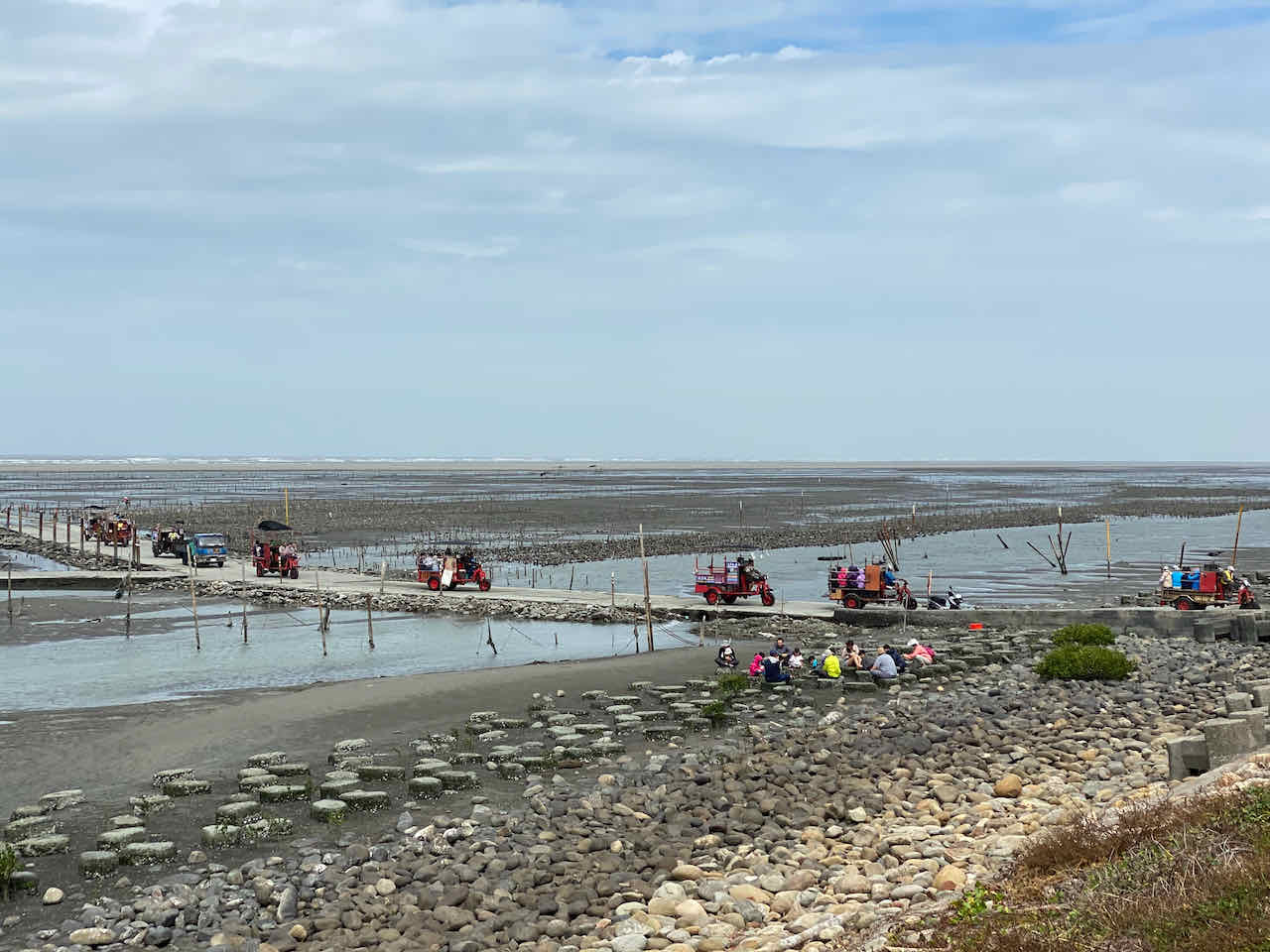
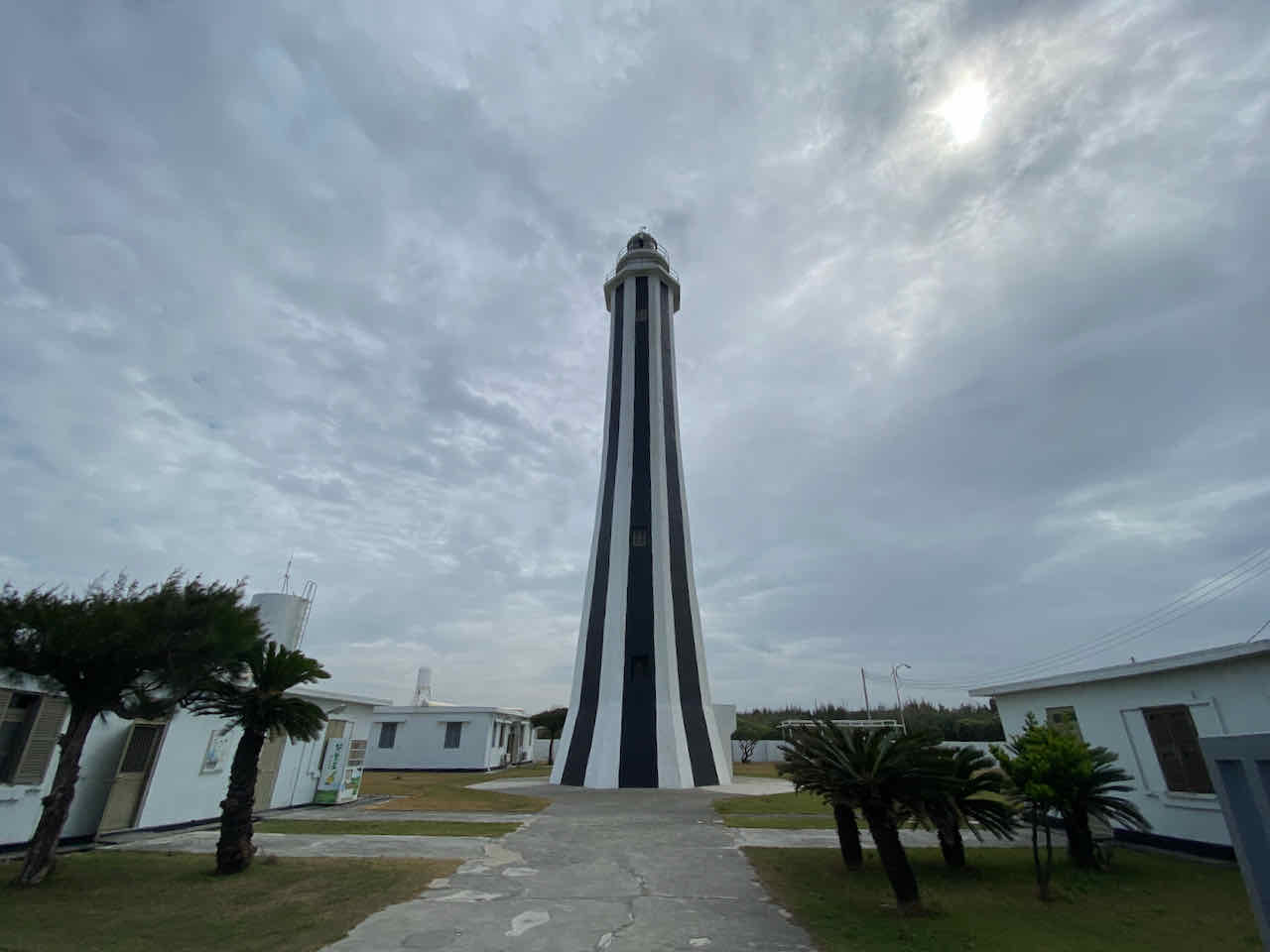
    A detour to Fangyuan Lighthouse 芳苑燈塔 is around 3km from the main route. The oyster farm nearby has become a tourist attraction where people can ride a cart out to the oyster field and dig some oysters.

    We stayed on the isle of Budai. There are plenty of hotels to choose from. The Budai Harbour Fish Market offers seafood with great atmosphere like in the night markets. If you have more days to spare, there is ferry service to bring you to Penghu County 澎湖 with your bike.

    Route

    NOTE: To use the routes, please install the App on your smartphone. The App will launch and load the route automatically after you tap the above links on your smartphone’s browser. For Garmin Connect, you can then use the APP to send the route to your garmin device. If your Garmin device is not purchased in Taiwan, you will also need make sure you have the Taiwan map on your device. Here is our blog post on this topic.

    Day 4a: Budai to Tainan Train Station (50km, Ascent 153m, Descent 142m) 布袋至台南火車站

    Suggested Lunch Break: Tainan

    This is the last day of our Stage 1. We dropped our bikes at Tainan Train Station Luggage Room to be sent back to Wanhua 萬華 or Songshan Station 松山車站 in Taipei. They were available for pick up the next day. The Tainan Station Luggage Room is hidden behind a private scooter parking. You need to get into the gate to find it.  Then we took the train to Shalun Station 沙崙車站 for the High Speed Railway. You can also take the train or inter-city buses to get back to Taipei. 

    I prefer having my bike shipped for less hassle. And we have an e-bike in the group which would be too heavy to carry. Another option is bagging your bike and carrying them onto the train or HSR but the carriage can be too crowded to take in such a big piece of luggage during peak hours. 

    Route

    NOTE: To use the routes, please install the App on your smartphone. The App will launch and load the route automatically after you tap the above links on your smartphone’s browser. For Garmin Connect, you can then use the APP to send the route to your garmin device. If your Garmin device is not purchased in Taiwan, you will also need make sure you have the Taiwan map on your device. Here is our blog post on this topic.

    If you want to cycle more on day 4, you can cycle to Kaoshsiung as shown in this Day 4b plan.

    Day 4b: Budai to Kaohsiung  (89km, Ascent 135m, Descent 112m) 布袋至高雄

    There are two train stations in Kaohsiung that provide bike shipping services, Nanzi Station 楠梓車站 and Fengshan Station 鳳山車站. Nanzi Station is more preferable as it is much closer to the High Speed Railway Station in Kaohsiung. I have used Fengshan Station before. The luggage room was very difficult to locate and it is hidden behind a construction site, the work of which seems to be unlikely to finish soon.

    Route

    Alt Route

    NOTE: To use the routes, please install the App on your smartphone. The App will launch and load the route automatically after you tap the above links on your smartphone’s browser. For Garmin Connect, you can then use the APP to send the route to your garmin device. If your Garmin device is not purchased in Taiwan, you will also need make sure you have the Taiwan map on your device. Here is our blog post on this topic.

  • Around-the-island: Taiwan Cycling Route No. 1 Map and GPX

    Around-the-island: Taiwan Cycling Route No. 1 Map and GPX

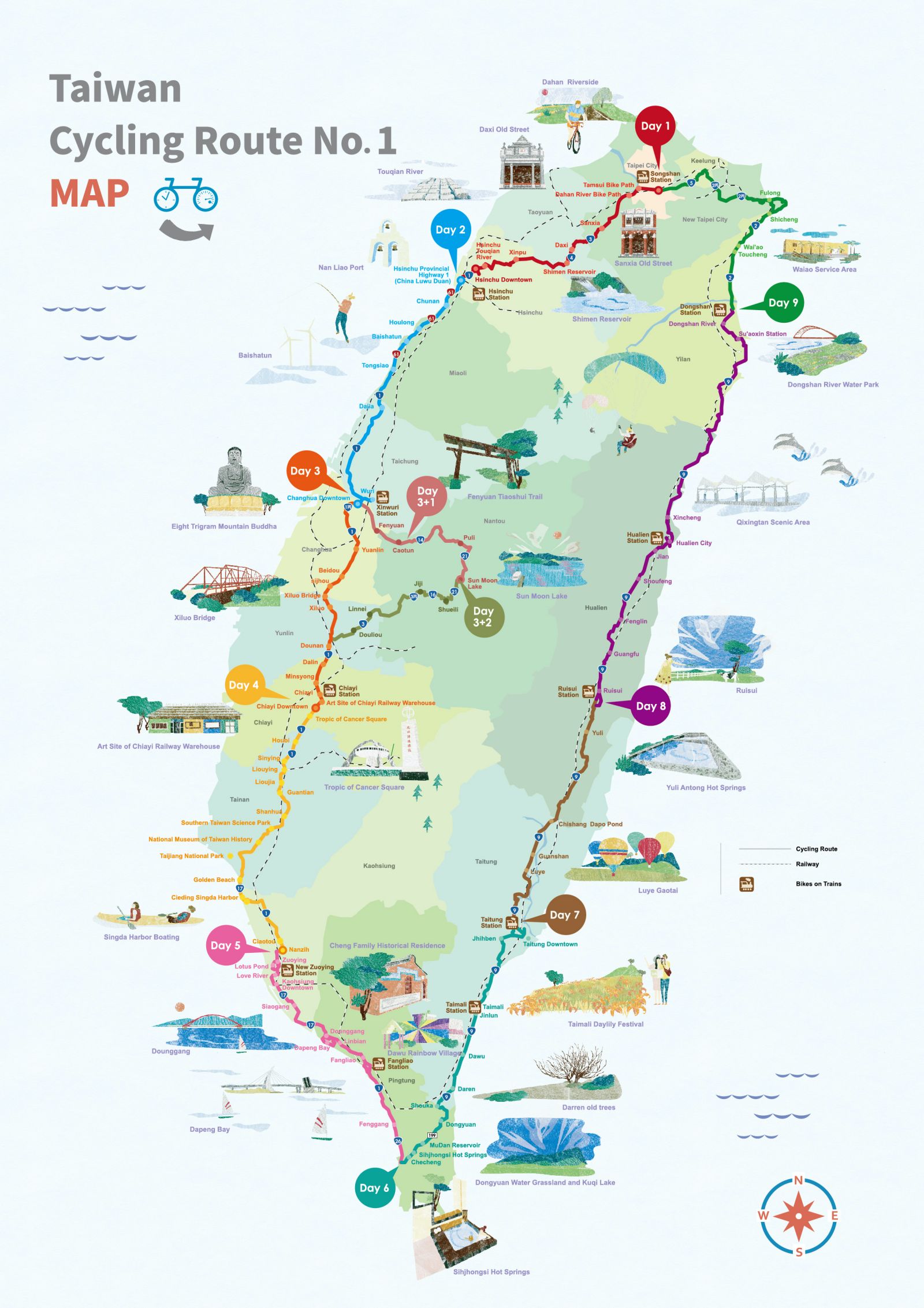
    Click on the pin marks on the map for detailed info and GPX files for each day, or

    Remarks

    • Although the official starting point is at Songshan Train station in Taipei, both the starting and ending point of the all-in-one GPX file above is at Dongshan Train Station in Yilan. But it does not pose any serious issue as the cycling route is meant to be a loop. On the other hand, for Day 5 and Day 6, there are discrepancies between the map and the two GPX files. For Day 8, it is recommended by the route planner to take the train in order to skip the Suhua Highway, infamous for its heavy traffic and occasional falling rocks.
    • If you have more time to spend, you may plan a longer ride by adding these branch routes and circular routes along Cycling Route No. 1.
    • We also have a day-to-day plan with our suggestions and alternative routes for doing the around-the-island in 9 days along Cycling Route No. 1.
    Disclaimer

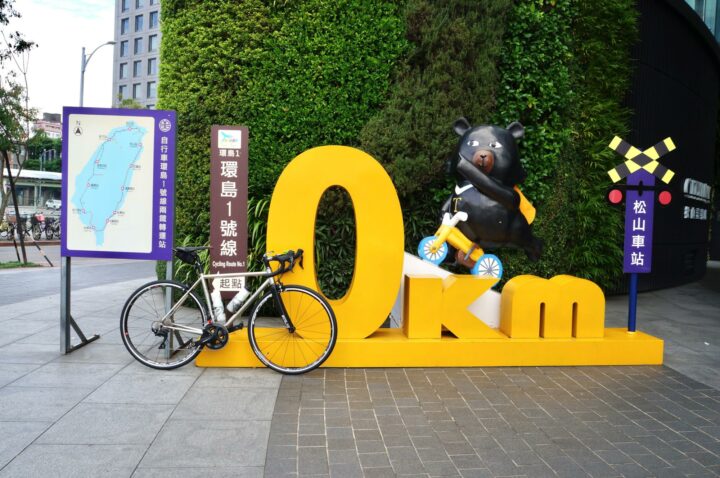
    We DO NOT own the graphic and information in this post – it all came from the Taiwan Cycling Single Portal built and maintained by the Ministry of Transportation and Communications of the Taiwan Government. This website is the authoritative source of information for all those who plan to do the around-the-island trip in Taiwan. It’s very useful, but unfortunately not very user-friendly in our opinion. Therefore, what we are trying to do here is to re-organize the information in a way that we find handy and mobile-friendly.

  • My First Cycling Trip in Taiwan Day 8

    My First Cycling Trip in Taiwan Day 8

    22 April 2009

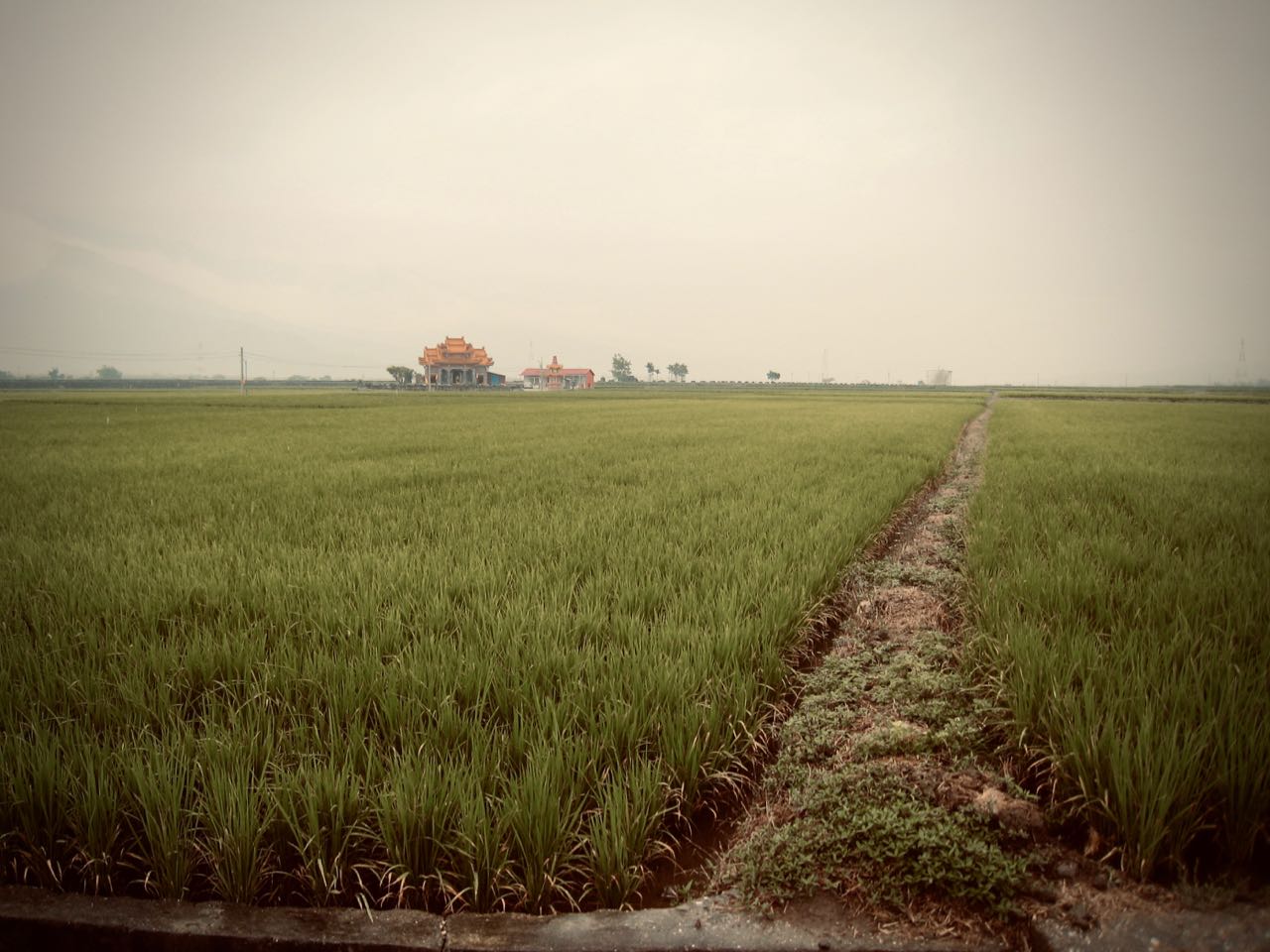
    We continued our trip and headed south along the Provincial Highway No. 9 in the southern part of the rift valley. Before long, we entered Taitung County officially but still needed to ride 50km before we would reach Taitung City. Townships in Taitung County, including Chishang, Guanshan and Luyeh, have been well known for producing the finest rice in Taiwan. There were endless views of paddy fields disappearing into the horizon. 

    The first township to see was Chishang (池上). If you have some knowledge of Chinese, you  would have recognized these two characters on many instances  because several chain stores selling bento (lunchbox) bear the name, eg. , 池上便當, 池上木片便當, 池上飯包. A perfect combination of climate, water, soil and altitude, together with farmers’ meticulous caring of the plants, rice grown in Chishang has been frequent winner in rice competitions. 

    Given that Chishang produces around 12,000 tonnes of rice annually, which is around 1% of Taiwan’s rice production, I wonder if there is enough rice for all those bento shops. Perhaps that’s why the township office is running accreditation programs for bento shops.

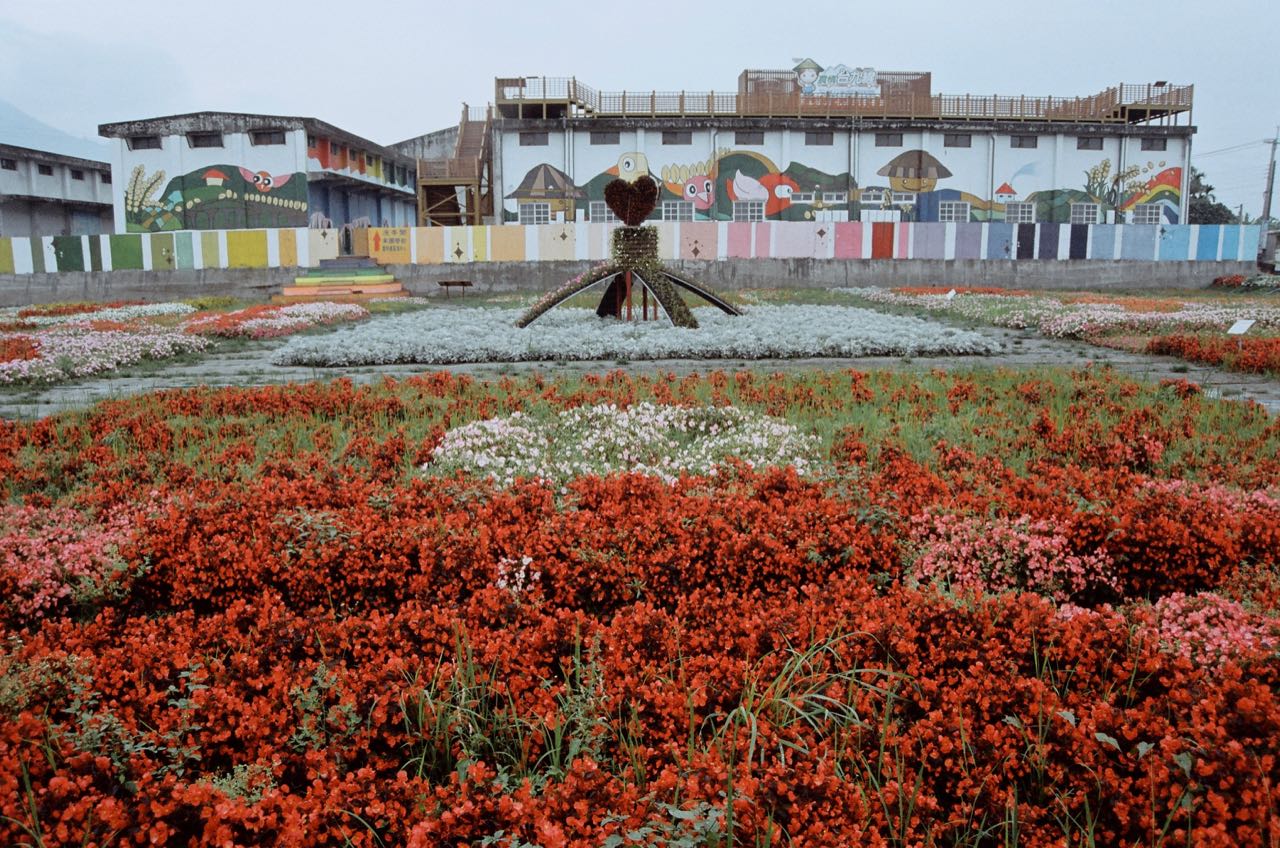
    Then after further travelling for 10 km, we stopped in front of a very colourful building with rice as cartoon characters painted on it’s facade. There was an enormous display of the word Guanshan Rice in Chinese (關山米) on the field, formed by crops of different colours. A platform was set up for visitors to take a bird’s-eye view of the display. The building used to be a rice mill and storage. The Guanshan Township Farmers’ Association had turned it into a tourist service centre. Visitors could sign up for a short demonstration of the process of rice milling. Rice produced in Guanshan used to be a tribute to the Japanese emperor during the Japan rule. But this legacy alone was not enough to ensure their products thrive in the market. We could tell that the Farmers’ Association had put in lots of efforts to polish their brand.

    We missed two famous tourist spots around Chishang because we did not know of them at the time: the Dapochi and the Brown Boulevard. They are definitely worth the trouble of taking a detour. It’s pretty easy when you have Google Maps. Just set the Destination to “Dapochi” when you are approaching Chishang Station. After you have enough fun there, use Google Maps again to guide you to “Brown Boulevard”. If you are travelling northwards, set your destination  to “Brown boulevard” when you are leaving Guanshan Township.

    We climbed a little bit to Luyeh Highland and then started a 20 km nice long descend from 240 metres to 40 metres above sea level towards Taitung City. It was awesome. We were moving like the wind. 

    And that’s it. It’s about the end of our trip. We found a random hotel to stay for the night and did some common tourist thing. The next day, we cycled to Taitung Train Station and shipped the bicycles to Songshang Station in Taipei. This simply is a wonderful service for cyclists like us who prefer travelling without a rigid plan. There are more than 50 stations scattered on the island with luggage rooms that allow you to drop off your bikes. Because of this, we can plan our routes with a lot more flexibilities. We can even send some personal belongs or souvenir we bought along the way to the next stop or the final destination in order to slim our saddle bags.

    Parted with our bikes, we completed the around-the-island tour by taking a train from Taitung to Kaohsiung and then the High Speed Rail to Taipei. We did some sightseeing in Kaohsiung and Taipei but it was kind of weird (cold turkey?) to switch from pedaling to bipedalism. I missed the bike, the mobility and freedom it brought me, and the encouraging smiles from strangers when I was breezing past their sides. 

    — End —

  • My First Cycling Trip in Taiwan Day 7

    My First Cycling Trip in Taiwan Day 7

    21 April 2009

    The next day we did exactly as the hostess told us the night before: leave by ourselves when we woke up. They probably had their own daily routines and did not want to put any time strain on us.

    Some intermittent drizzles again. We continued our tour southwards on the Provincial Highway No. 9 and got a chance to take a good look at the valley in broad day light. Roads were flat and straight and flanked by green paddy fields. It’s a very pleasant view.

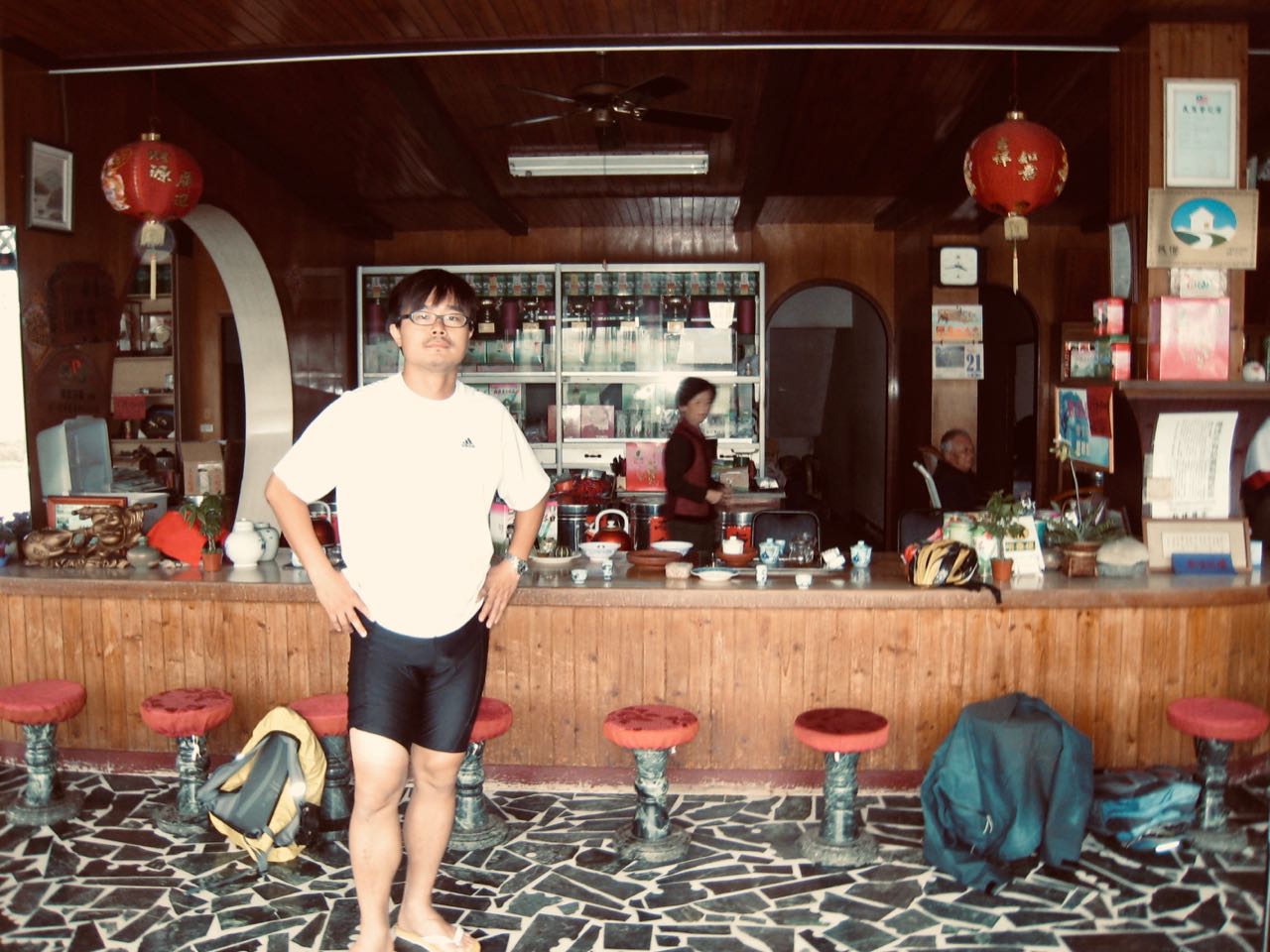
    After lunch, we needed to pedal harder. After some serious climbing, I finally reached the top of a slope and stopped in front of a tea shop in the Wuhe village, 210 metres above sea level. As I was waiting for John, who lagged behind me, the tea shop owner waved me in and later offered us lots of tea for tasting. There used to be more than 100 tea farmers with 200 hectares of plantation. In the1990’s, failing to compete with the high mountain (over 1000 metres) tea from the west coast, half of the plantation has gone out of business. 

    Meanwhile in Taitung, inspired by the Oriental Beauty Tea, Chen Huicang (陳惠藏), a specialist of the Tea Research and Extension Station (茶葉改良場, an institute under the Council of Agriculture, Executive Yuan), has developed a special kind of tea that, among other aromas, carries a natural signature flavour of honey.

    Some research findings revealed that, when bitten by tea green leafhoppers, tea plants would secrete some chemicals that, even at an extremely low level, could attract a special kind of spider, Evarcha albaria, which is a predator of the leafhoppers. It seems after hundreds or thousands years of evolution, tea plants has developed a way to call for help. And those chemicals are the sources of that signature flavour.

    A tea farmer from Wuhe village, Gao Zhaoxu (高肇昫), went to consult Chen Huiceng and returned home with the tea processing technique. But he still needed the leafhoppers to bite his plants.

    He adopted the eco-friendly farming practices, including suspending the use of pesticide, as promoted by the government of Hualien Township. After years of development and improvement, the tea produced in Wuhe village has regained its competitive advantage and tea farms started to stand on their own feet again. Until 2007, the total area of tea plantation has returned to 160 hectares.

    Live in harmony with the nature and we will be rewarded with something precious. This is something I learned there.

    A cyclist standing in front of a tea shop
    One of the tea shops in Wuhe

    I did like their tea but I could only buy two bags because of the limited space in my saddle bags  and my reluctance to carry too much weight. Actually, if you find something you really want to buy during a cycling trip, you could send it back to Taipei using the railway system. Unfortunately I did not know that at the time.

    We left the tea shop and started descending to Yuli. There were small road signs put up by homestays to advertise themselves. It started raining. We picked one homestay at random and followed the direction on the road sign to to somewhere quite far away from the town centre. It was closed. That sucked, especially after the climb we had to do to reach that homestay. But then even if it’s not closed, we might still end up with a fully booked one. So, you should always call to check before actually committing any time and strength to get there. Homestay owners might not be able to communicate well in English over the phone. Again, the Bike Express Taiwan team is happy to do the job for our clients.

    John used the GPS to find the closest hostel. It must be up and running for some time to have its information stored in the GPS database. We did not have Google Maps back then. Anyway, we could finally take a good rest and wash our soaked cloths.

  • My First Cycling Trip in Taiwan Day 6

    My First Cycling Trip in Taiwan Day 6

    20 April 2009

    We started cycling in drizzles. Without the fenders, soon I had two big vertical stripes on my chest and back, painted by the wet dirts thrown up by the wheels. We reached Toucheng Station (頭城車站) in no time. Some fellow cyclists told us that we could try our lucks here to  board certain trains (without bagging the bikes) to skip the hair-raising Suhua Highway and reach Hualien safely. The next train available was around 4:00 pm. Rain stopped. We headed South (8km) to the hot spring town Jiaoxi to munch on a whole chicken roasted in a kiln fuelled by the wood of litchi or longan. We even had enough time to take a dip in some hot spring before returning to Toucheng Station to board the train.

    In fact, Toucheng Station is no longer an ideal station to board a train with your bikes now. At the time of writing, there are only three trains a day that would carry naked bikes. That one we took has been cancelled. Instead, Luodong station (25km southwards) or Su’aoxin Station (33km southwards) have 9 trains a day, stretching from early morning to around 11:00p.m. You would also skip the most part of Yilan if you board the train at Toucheng as it locates at the northern part of Yilan. Here’s where you can check for relevant information but it’s in Chinese only: TRA Bike Trains. Clients of Bike Express Taiwan need not worry about this; we are happy to check it for you. (Note: The Taiwan Railways Administration has launched their official website on spring of 2019 with the options of Chinese, English, Japanese and Korean)
    Back to my trip. Again, we found ourselves in the dark when we arrived at Hualien and prepared our bikes outside the train station. A woman approached us and tried to persuade us to stay at her hostel. She appeared to be horrified by our idea of cycling in the dark. A man joined in to help. He claimed that he could predict the weather precisely after being a sailor for decades. He sticked one finger into the air and tasted it. “It’s sweet! it’s going to rain soon!”, he concluded and announced loudly. Sorry man! The north and north east coasts had made us experienced cyclists specializing in riding in the rain and in the dark. And please don’t be so sure. It’s very difficult to make predictions, especially about the future! I thought to myself.

    We turned down the woman’s offer and headed into the 180 km longitudinal valley connecting Hualien and Taitung, the Huadong Valley. It was created after the Eurasian Plate and the Philippine Sea Plate kept pushing each other for many many thousand years. It is believed that the Philippine Sea Plate crept above the Eurasian Plate and formed the Hai’an Range or Coastal Mountain Range (海岸山脈). And they are still doing it. That’s why the frequent earthquakes in the area. 

    The valley was more populous than the northern coast. We had a local person cycling with us as he was heading home. He told us that the valley was so full of homestays that we needed not worry about finding a place to stay. Then, we decided to stop for the day after passing several townships at a leisure pace. And nope! Mr. Sailor, there wasn’t a single drop of rain. 

    John, who speaks better mandarin, asked a cashier at a convenient store if there were any homestays around. He came back with a look of disbelief on his face while I was looking for some snacks. Turned out a young lady with a baby in her arm overheard the conversation and invited us to stay in their place, which was just a couple blocks away and where she lived with her husband. For free! Wow! what could I say? I did have a split second of wary thoughts but how could we turn down such a generous offer? If she did not worry about safety issues of having two strangers staying at their place, neither should we. So we accepted her invitation and followed her home. Her husband was a young jade carver. He was appreciating (evaluating?) several pieces of raw jade stones on his desk while we chatted. We were told that Yuli Township (玉里, translated literally as Jade Township) in the valley used to produce a special kind of jade with fibre patterns.
    Even though I could barely participate in the conversation with my broken Mandarin, I gained a new perspective on the Japanese rule in Taiwan (1895 – 1945). I used to think the older generations of Chinese must have all harbored a feeling of hostility towards the Japanese, who had been frequently in war with the Chinese in the past centuries. Being a former wartime foe of KMT and notoriously brutal during World War II, Japan was commonly thought to detest by the older Chinese from the other side of Taiwan strait.I was surprised to learn that some people in Taiwan had a nostalgic view of Japan’s colonial period. Like in all other colonial economies, human and natural resources were used to aid the development of Japan. But firstly, roads, railways, schools, clinics, water supplies, etc. had to be built to facilitate the extraction. After half a century of ruling, the Japanese had left behind numerous valuable infrastructures, historical buildings, sake breweries, sugar mills, logging railways and some intangible assets like agricultural technologies. Of course, the subjects weren’t treated equally. After we moved to Taipei, one of our neighbours told me that Chinese were not allowed to study law and politics during that period. The only prestigious profession left for those Chinese elites to pursue was medicine. This somehow became a convention within the Chinese community and that’s why people in Taiwan are enjoying superior medical services today. The living standard and population had grown significantly when Japan left Taiwan in 1945. Many old Taiwanese have a fondness towards the Japanese. I guess some people in Hong Kong share the same sentiment about the British rule (1841-1941, 1945-1997).
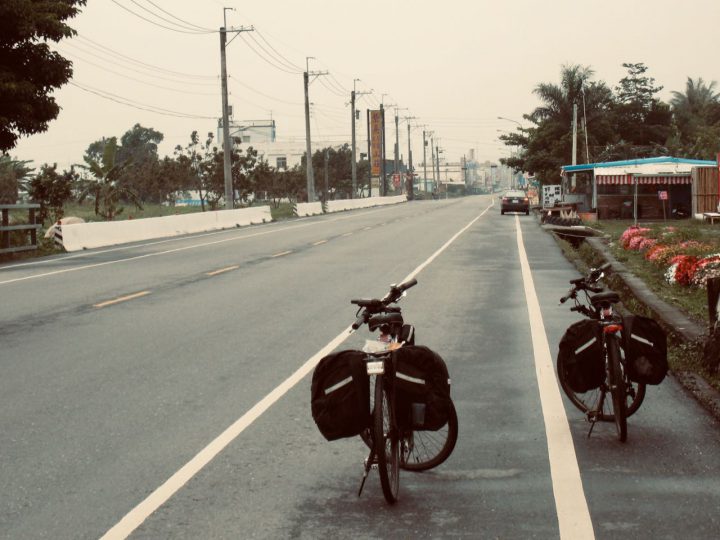
    That was an unforgettable day. 

  • My First Cycling Trip in Taiwan Day 5

    My First Cycling Trip in Taiwan Day 5

    19 April 2009

    We started late this day at around 10:00. Weather turned wet and cloudy but there’s not much rain. Leaving Keelung and heading eastwards, there were quite a number of brown road signs showing the directions to some tourist spots. But we did not bother to stop and check. Cycling per se was just too enjoyable.  By 1:00 pm, we had covered 25km and arrived at a cape called Bitoujiao (鼻頭角, literally meaning cape nose tip). Lunch break. John seemed to be doing an experiment of spending his money as frugally as possible. He picked the smallest food stall at the fishing harbour, which served  only bowls of noodles. If you want to reward yourself with some delicious food, there are certainly some seafood restaurants.

    Little Fishing Harbour on a coast

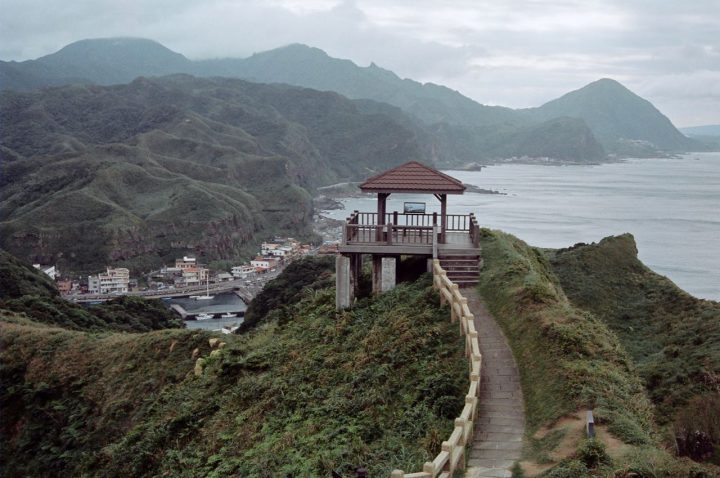
    In spite of our meager lunch there, I had a great time in Bitoujiao. One of Taiwan’s most beautiful primary schools sits on the cape’s cliff with a view of the vast Pacific Ocean in different shades of blue. Like allother public schools in Taiwan, the outdoor area is open to public after school and during weekends. There are three hiking trails in Bitoujiao, all exalted by visitors. We picked the one along the ridge and found a great location where we could look back at the coastal line we had just cycled. Of course I would not miss the trail leading us to the Bitoujiao Lighthouse. (Sadly, this part is closed now because the cliff there has been cracking. Hopefully it will be fixed soon.) Then, we finished the walk with some coffee at the small hut (opens only on Saturday and Sunday) next to the entrance of the primary school. 

    The trails actually form a circuit that links with the fishing harbour. You may leave your bikes at the restaurant and come back in a loop.

    We spent more than 3 hours in Bitoujiao. It was getting dark when we started cycling again. Definitely not a problem; we have done that before. Slowly, we reached Fulong, a small resort village, before 7:00 p.m. The small area right outside the Fulong Train Station is packed with bento (lunchbox) shops. The Rustic Bento (鄉野便當) has been there since 1958. I think I had two of this for dinner. We were not ready to call it a day yet. We were about to reach the easternmost point of Taiwan main island, the Cape Santiago or Sandiaojiao (三貂角). An old train tunnel has been converted to a bikeway and forms a 20 km loop with the route around the peninsula. The Old Caoling Bikeway Loop (舊草嶺環狀線自行車道) was a dedicated bikeway separated from lanes for motor vehicles. With a big beach nearby, this small village does make a good place for families to spend a day or two. The tunnel, which became a short cut through the peninsula to the next village, was closed after 5:00 p.m. No problem at all.  I always have the desire to reach the “extremes” and certainly would not miss the easternmost point of Taiwan.  I would not have used the tunnel even if it were available. The Sandiaojiao lighthouse  is sitting on the peak of Cape Sandiaojiao, casting light onto the sea. We did not go up there as it involved some climbing and it was already too dark. In hindsight, we should have stayed the night at Fulong and visited the lighthouse. Instead, we found a small homestay run by an old lady at the next village, inside a small building with a light-box signage outside. She collected the fees and told us that she would need to go to the temple early the next morning. We could just leave by ourselves. Read: No breakfasts.

  • My First Cycling Trip in Taiwan Day 4

    My First Cycling Trip in Taiwan Day 4

    18 April 2009

    The next morning, I woke to a rural village surrounded by paddy fields and ponds in the Jinshan District. Breakfast, steamed meat buns, were ready on the table. I guess most homestays in Taiwan would serve breakfast. We were so refreshed and ready for another day of pedalling. But no, not yet! I did not remember having a proper dinner the previous day. We went to the Jinshan Old Street to buy some brined duck meats. 

    As I was leaving the homestay, I was so impressed that the trails were well maintained and laid with asphalt. The garbages were taken care of properly. The government has put in a lot of effort to deal with this since 1989. Visitors to Taiwan must have heard a loud, raw electronic melody every evening. These are garbage trucks summoning garbages. Recyclable items are collected free of charge. Kitchen wastes are diverted to pig farms. And the rest, before collected by the truck, must be put inside a certain kind of bags sold by the local government with levies to fund the operation. So, we should always ask for permission to use the garbage cans in some small shops. I was quite embarrassed that I had to discard the duck meat packing in a 7-Eleven. 

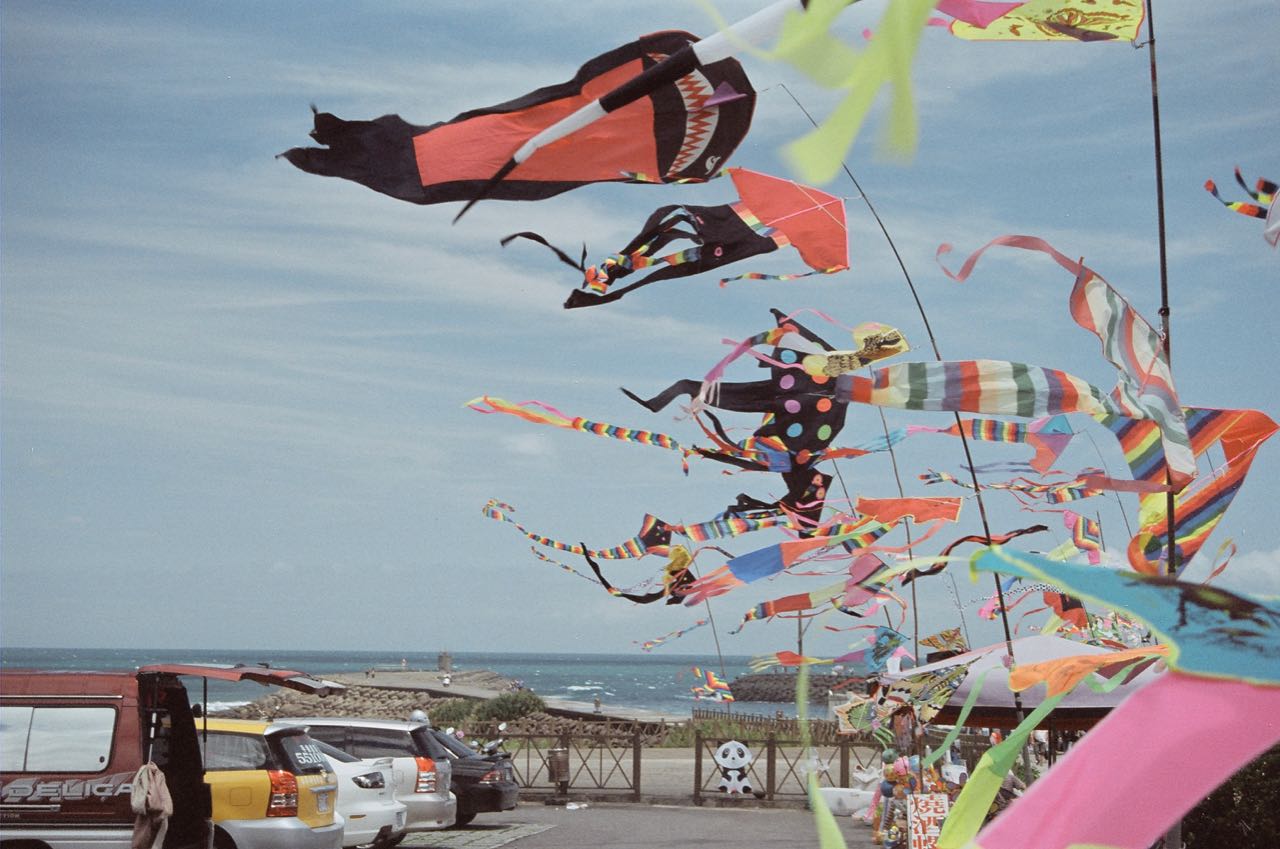
    Gone was the dull sky. We had a sunny day with clear blue sky on the second day of our cycling trip. It looked particularly great with the colourful kites flying over a pier and the orange sandstone formations in the Yeliu Geopark in Wanli. There is this famous Queen’s Head inside the paid area which resembles the profile of Queen Elizabeth I at a certain angle. I used to think it’s Queen Millennia that they are talking about. Back in the 1960’s, the sculpture did look like a queen in real life. After half a century of erosion,   her neck got chipped thinner and thinner, making her look rather like Yukino Yayoi (雪野 弥生) in the manga, Millennial Queen. Given the speed of erosion, the neck won’t be able to support the head for another decade, not to mention a thousand years. After taking a poll in which more than 60% of the voters agreed to take proactive measures to save the sculpture, the Tourism Bureau has tested various methods on other pedestal rocks in the vicinity to stop the erosion process. The results were unsatisfactory. Nothing can help save the queen yet.

    After cycling in solitude for so many hours, Yeliu was a great place to hang around for its lively atmosphere. But we did not buy tickets and get inside the Geopark. We were in the biking mode. We would rather stick with our bikes and spend more time on the north coastal line and then head to the port city Keelung. We did not know how long it would take. We were told during lunch that there was a flat costal bikeway to Keelung. But this nice path has eluded us. We ended up climbing 180m with the busy traffic and breathed in lots of exhaust fumes from the cars and scooters before reaching the top. If you want to know how to find the easy path from Wanli to Keelung, check out my post here.

    Keelung city is home to the third biggest port of Taiwan. It has been the northern gate for the island and strategically important for the past century. Numerous forts were built to guard the city against invaders and there are more than ten remains open to public. With two freeways and two railway lines starting there, the city is supposed to become even more prosperous. But its development has been limited by the surrounding hills. Narrow streets and old buildings are squeezed into the small area around the port, the others scattered in the hilly suburbs which consists of 95% of the city. Lacking space for renewal, Keelung remains more or less unchanged overtime. It’s like going back in time as we descended into the city centre. We checked into a small hotel and asked for a place to keep our bicycles. A staff member kindly brought us to their underground parking lots and let us use one of their mechanized parking systems. So much effort to squeeze more cars into an underground place. 

    Street of Kee Lung

    While John was taking a rest in the hotel room, I took a walk and had the most delicious squid soup I have ever had at a food stall in an alley. I recommended it to John but I was not able to find the food stall again. The night market in Keelung has many great snacks to offer but nothing could compare to that squid soup. I even tried to find the store the second time when I was bike touring with Lois but also to no avail. 

    That was our two-day ride on the north coastal line. The next day, we would head east and cycle on the north east coastal line from Keelung to Yilan. 

  • My First Cycling Trip in Taiwan Day 3

    My First Cycling Trip in Taiwan Day 3

    17 April 2009

    The third day, we started our cycle around the island tour in the drizzle. The preferred/recommended route was supposed to be cycling to Bali Old Street at the left bank of Tamsui River and then take the ferry from the Bali Ferryboat Wharf to the Tamsui Old Street. But we couldn’t. Why? Not my fault. We had a GPS with the proper check points set but it was not mounted on my bike. I just followed John. We made it to a wharf but there was no ferry. We thought that those ferries might only be in services on particular days. But that is not true. The ferries run daily. We just went to the wrong wharf. Anyway, we managed to bike to Tamsui around lunchtime as the drizzle became showers. We scurried into a seafood restaurant for shelter and for lunch. In order to boost up my morale, I ordered one of my favourite dishes, sautéed crab. It was expensive and tasteless. Oh no! I forgot to pick the crab by myself from the tank. They must have cooked a dying one for me. Sigh……!

    cyclist on a wharf and Guandu bridge
    Wrong wharf, no ferries. the red bridge behind has a lane especially for bikes connecting Bali to the north coast.

    After our disappointing lunch, at least the rain stopped. And as we reached the outskirts of the city on the Provincial Highway No. 2, swarms of scooters and speeding cars disappeared. (Actually, Taipei is a great place to cycle if one can find the bikeways on the riverbanks.)  There were some cafes and interesting spots. We just stopped briefly because we did not know where to stay for that night.

    Township Road
    Township Road 北11 Chexin Road, a detour from Provincial Highway No. 2. Even less traffics

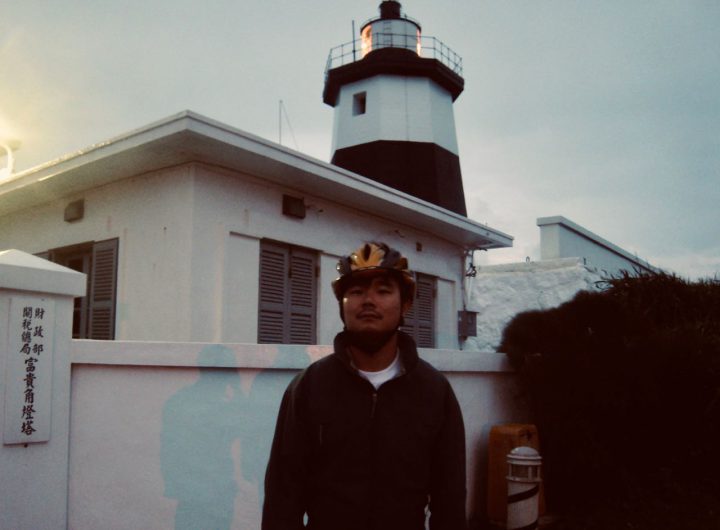
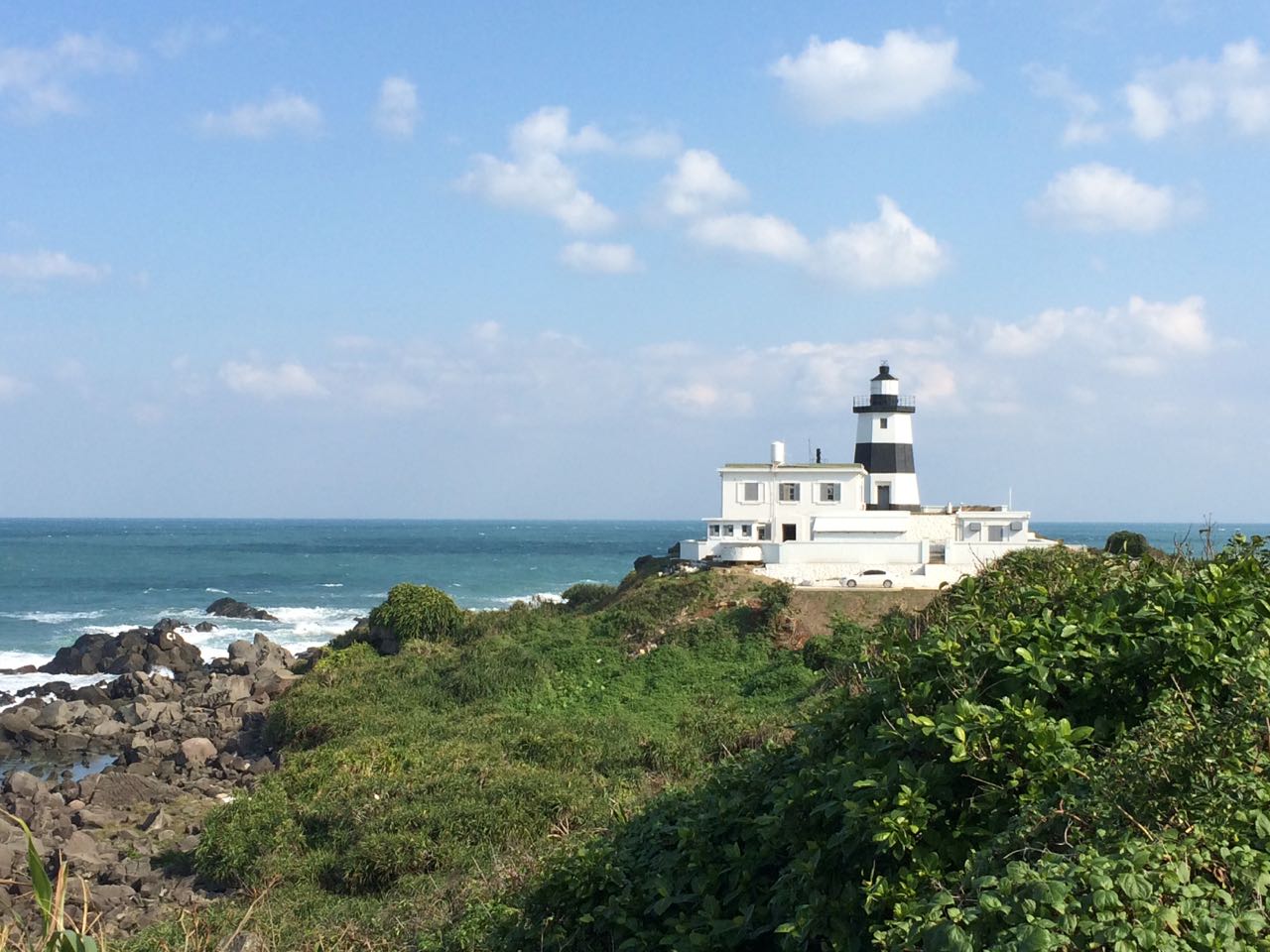
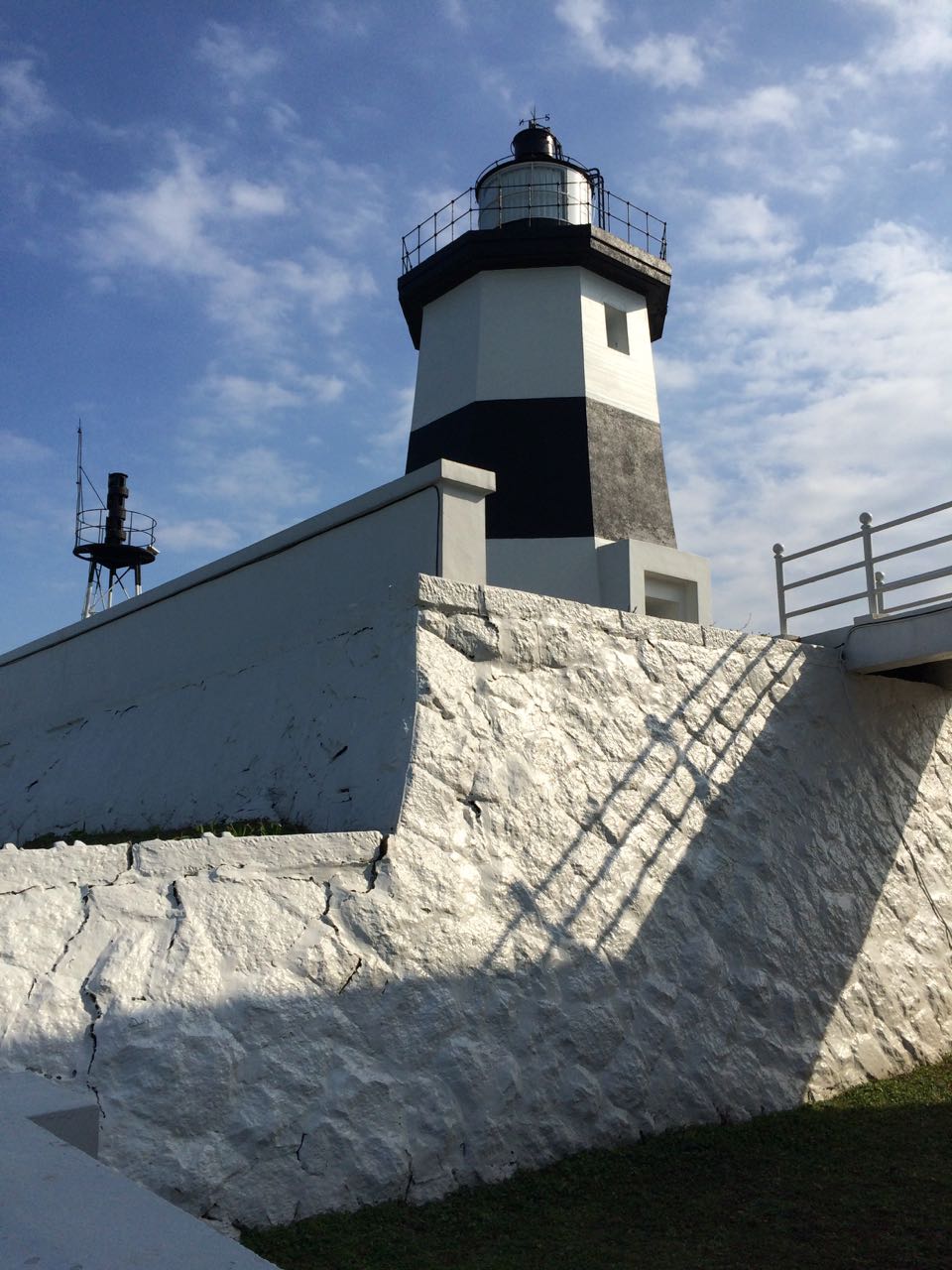
    Then we reached the northern tip of the island, Fugueijiao Lighthouse (富貴角燈塔), when the sun was setting. I love lighthouses. They are altruistic, beautiful, committed and lonely. In the past, there were lighthouse keepers who would play chess with their colleagues on shore by flashing morse codes to the clouds. Read this story, The Fastnet Lighthouse on the Economist. The life of Fugueijiao Lighthouse keepers (if any) should be easier. The lighthouse sits next to a fishing port and some tourist spots and within an hour’s drive from the city. 

    I didn’t care that it’s going to be dark soon. I wanted to take a good look at the lighthouse. We followed the pleasant foot path to the lighthouse and then the pristine buildings appeared with a perfect angle for taking pictures. The lighthouse is a 14.3m octagonal structure with black stripes, which is supposed to improve the visibility in the thick fog. I could only look at it from outside the gate because it was not open to public until 2015.  It opens Tuesday to Sunday, 09:00 – 18:00 (summer), 09:00 – 17:00 (winter).

    Leaving Fugueijiao, we found ourselves cycling in total darkness. It was perfectly safe but we still had not found a place to sleep yet. After 14km of pedalling on the dark coastal highway, I saw a shimmering light. It wasn’t Hotel California; it’s a coffee shop looking like a traditional building on the Greek island Santorini. We loaded up chunks of calories-rich cheese cakes and coffee into our stomachs there and then a kind staff member offered to help us finding a place to stay. She called a homestay owner nearby and told us to meet him at the next 7-eleven. The owner, riding a scooter, led us to his place. That’s the first night of our cycling tour. We had a good chat and played snooker with the owner before having a sound sleep in a clean bedroom big enough to house 6 people.