カテゴリー: サイクリングイベント

  • Taming the Two Towers: Conquering a 520 km Cycling Challenge in 26 Hours

    Taming the Two Towers: Conquering a 520 km Cycling Challenge in 26 Hours

    このブログ記事の翻訳を進行中です。もうすぐ完成しますので、後ほど再度ご確認ください。ご不便をおかけして申し訳ありません。現在は、こちらで提供されているGPXルートや地図などの情報を自由にご利用ください。
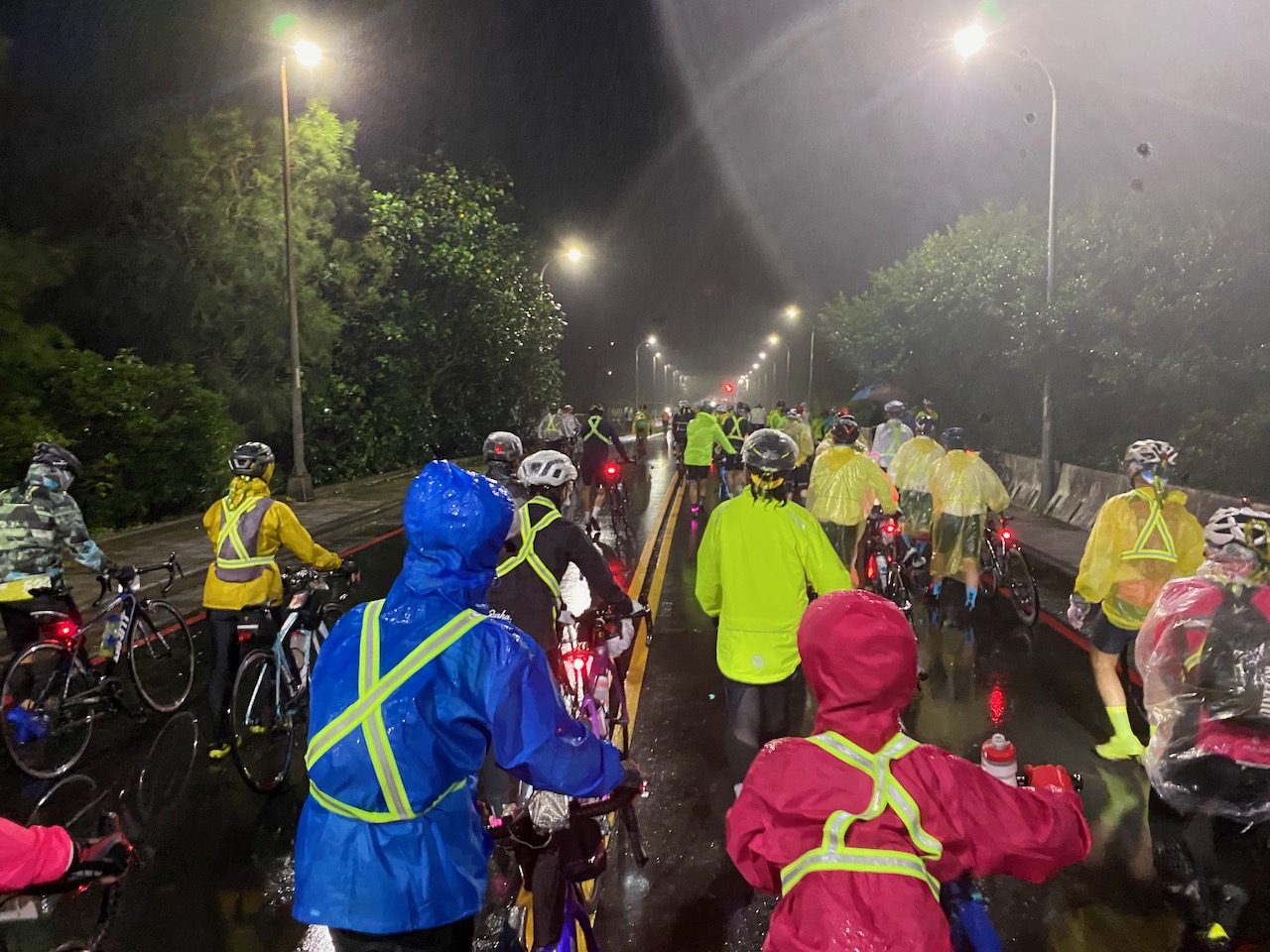
    I signed up for the Two Towers in One Day Challenge in Taiwan again in 2022 and successfully completed the 520 km challenge in 26 hours.  Here is how I did it.

    Setting a Very Firm Target

    I’ve set a very firm target for myself this year. I aim to complete the ride, regardless of how long it takes. If I can finish within 28 hours, I’ll be awarded a trophy, but that’s not my main focus. My primary goal is to finish it this year, even if it takes 35 hours or more. At the very least, I’ll have a record on Strava. I anticipate getting sleepy towards the end of the challenge in Pingtung but quitting is not an option. In the worst-case scenario, I might have to take a short nap in those convenience stores.

    Supporting Services

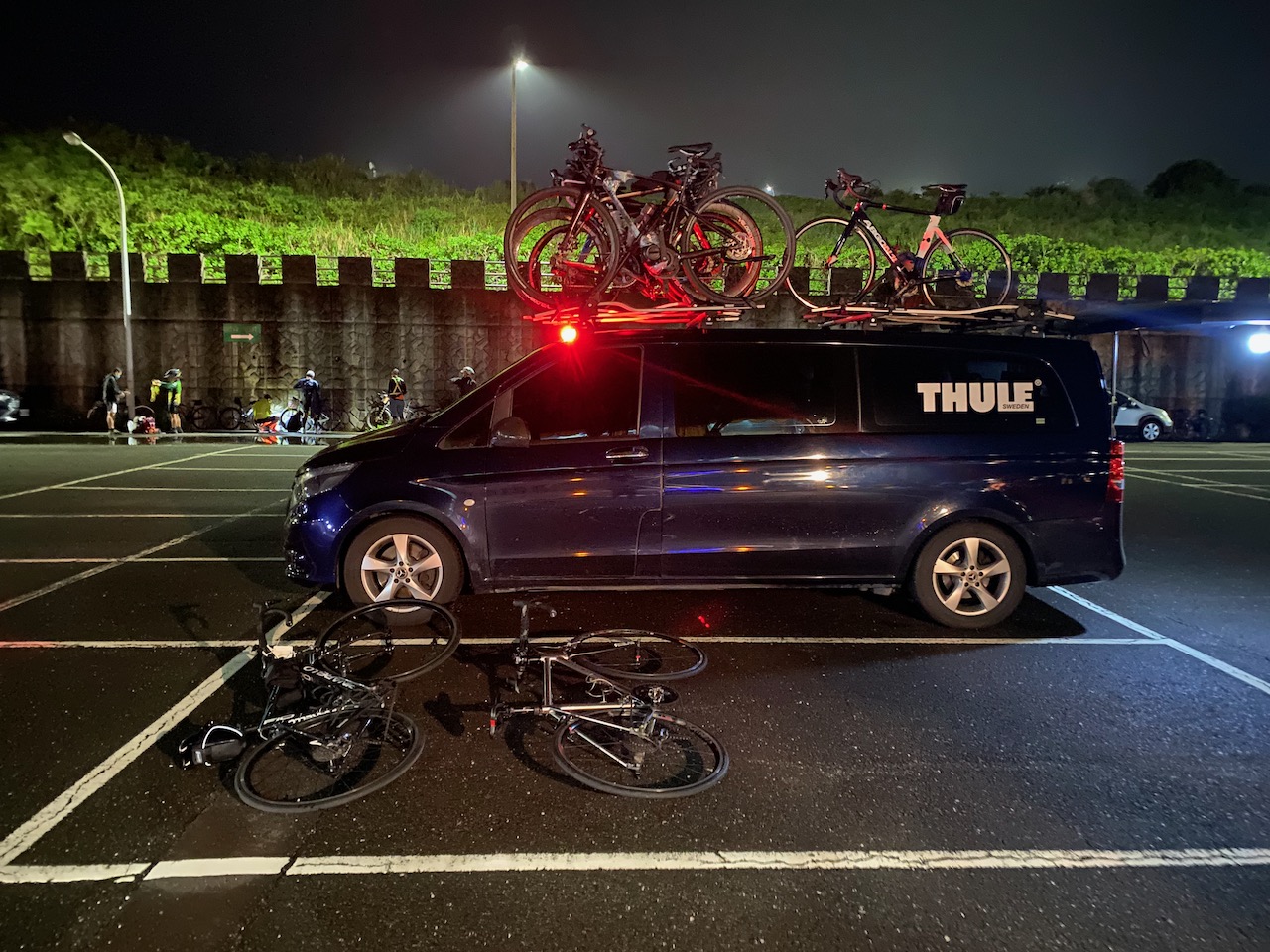
    To enhance my focus on cycling during the challenge, I opted for a support service package offered by XiaoChu, a friend who operates a company providing cycling tour services. This comprehensive package covers logistical aspects such as reaching the starting point before the event, supply stops during the ride, and the return trip to Taipei. Additionally, in the unlikely event that I cannot complete the ride, there’s the option to safely transition to the hotel at the destination by hopping on one of the support cars. I’ll delve into more details on how these support services played a crucial role in helping me complete the ride later.

    A Proper Bike Fitting

    Last year, I only made it to Tainan, and some issues emerged after long-distance cycling. My shoulders and elbows hurt because I relied heavily on them to support my body weight when fatigue set in, causing my posture on the bike to deform. Additionally, I experienced persistent lower back pain after cycling for more than 70 km. My forefeet were squeezed to the point where I couldn’t feel my fourth toes. Long-distance cycling serves as a stres test on my bike fitting. 

    As for the lower back pain, I initially attributed it to my own mistake of over-inflating the tires after a pinch flat from a pothole. However, after delving into more research, I identified the main causes and their solutions. According to a video by the Road Cycling Academy, it was a pair of muscles in my lower back, the Quadratus lumborum, that became victims of overloading. According to Neill Standury, the bike fitting expert in the video, I learned that these muscles play a crucial role in stabilising the pelvis during pedalling. Excessive rocking of the pelvis, caused by factors such as the saddle set too high, cleats positioned too forward, crank arms too long, or the Q-factor of the pedals being too narrow, can lead to overloading of the Quadratus lumborum. This can be confirmed by having eh pain subsided quickly after getting off from the bike and allowing these muscles to rest.

    In my case, the culprit was the saddle height. Since lowering it, the lower back pain issue has significantly improved. It tends to occur only when I exert more effort for increased speed over an extended period. However, the discomfort fades away if I ease up on the pedalling without the need to a complete stop. By managing my pace, I can delay the onset of the pain.

    Lowering the saddle also addressed another issue — the problem with my forefeet being squeezed disappeared completely. With the saddle too high, my toes had to point towards the ground beyond the 3 to 4 o’clock position with each pedal stroke. Unintentionally, I was pushing my feet into the toe box of my shoes, squeezing my toes together and restricting blood flow into my fourth toes. The lower saddle rectified this, ensuring my feet are more level and can rest on the pedals at a proper angle without any discomfort or squeezing of my toes. 
    But what about the power output? Does lowering the saddle mean sacrificing power? Not necessarily. Interestingly, a higher saddle doesn’t guarantee a better position for maximising power output. Our muscles contract to pull our bones and exert force on the pedal. As illustrated on this page – Force of Muscle Contraction, the maximum tension of our muscles is found at the middle of the contraction. As a muscle contracts to its end of range, the tension decreases rapidly. Therefore, to achieve the maximum force, we want our muscles to operate at the middle range of contraction. A higher saddle does not necessarily translate to increased muscle power output.

    For my elbows and shoulders, their role is solely for steering, not supporting my body weight. It’s crucial not to cock my elbows, as doing so would transfer all impacts directly to the joints, especially on uneven roads. Keeping the arms slightly bent allows the tendons and muscles to absorb most of the impacts. Lowering the saddle has the added benefit of shifting my center of weight away from my arms. This adjustment makes it easier to maintain my position with comfortable bent arms.  

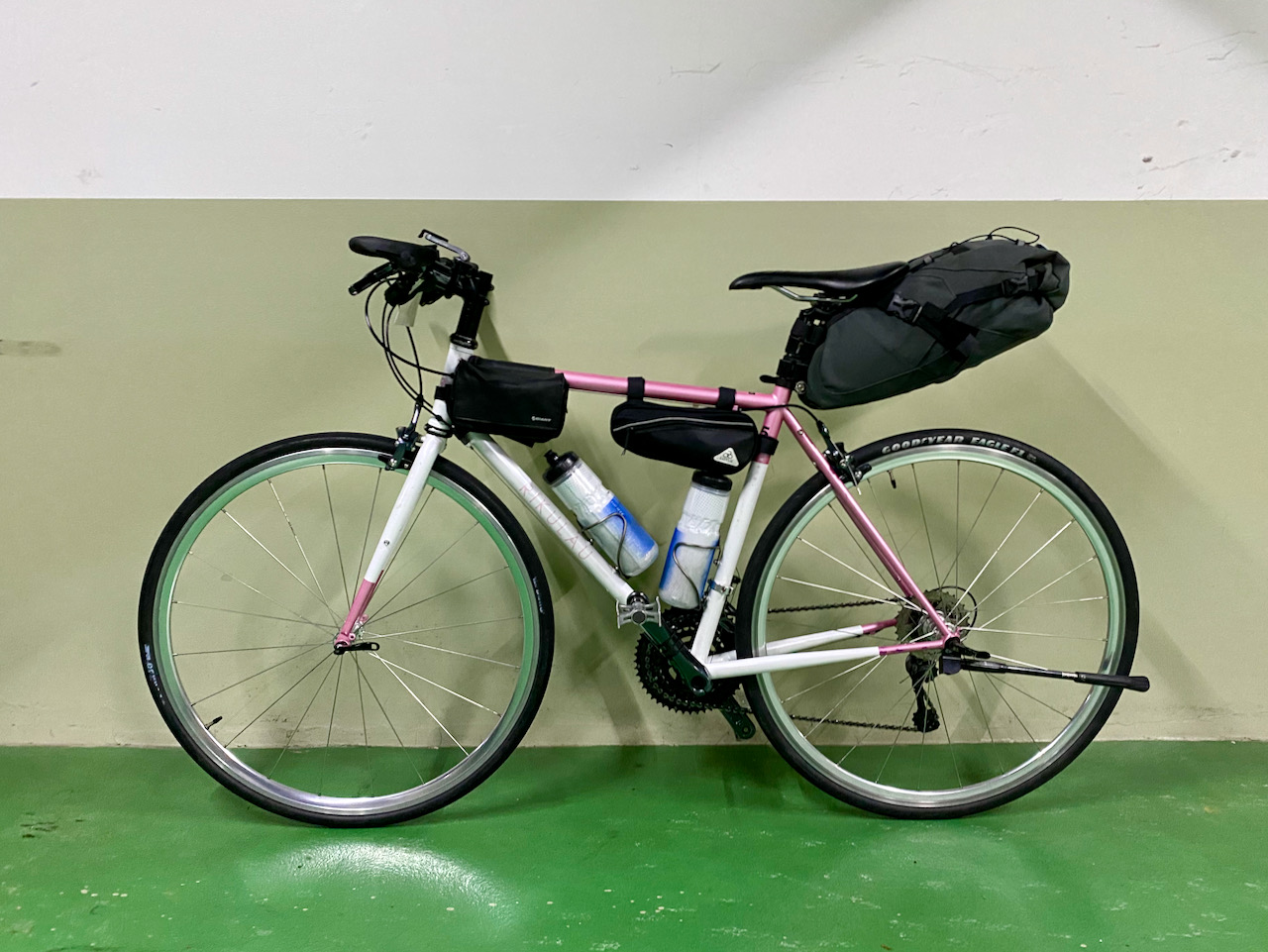
    The Rikulau Master V9
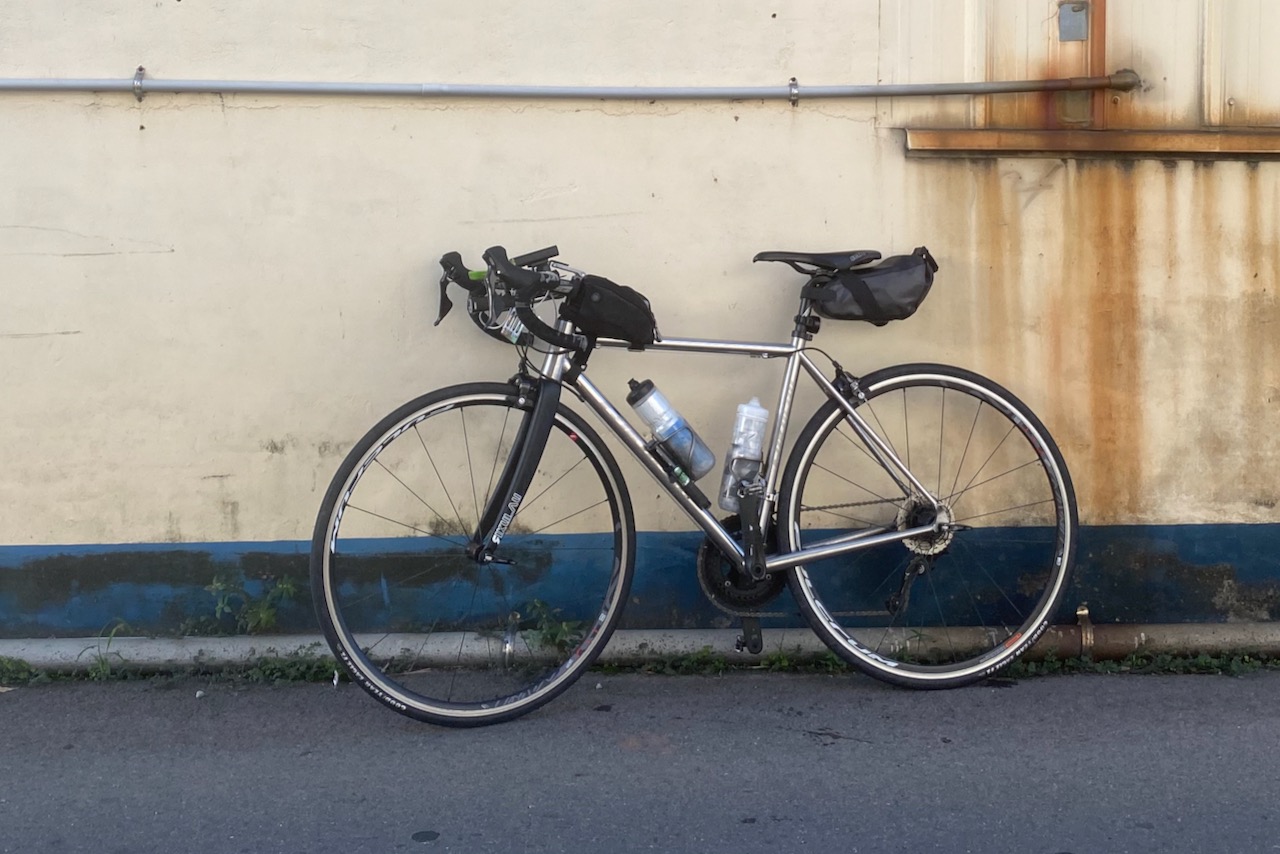
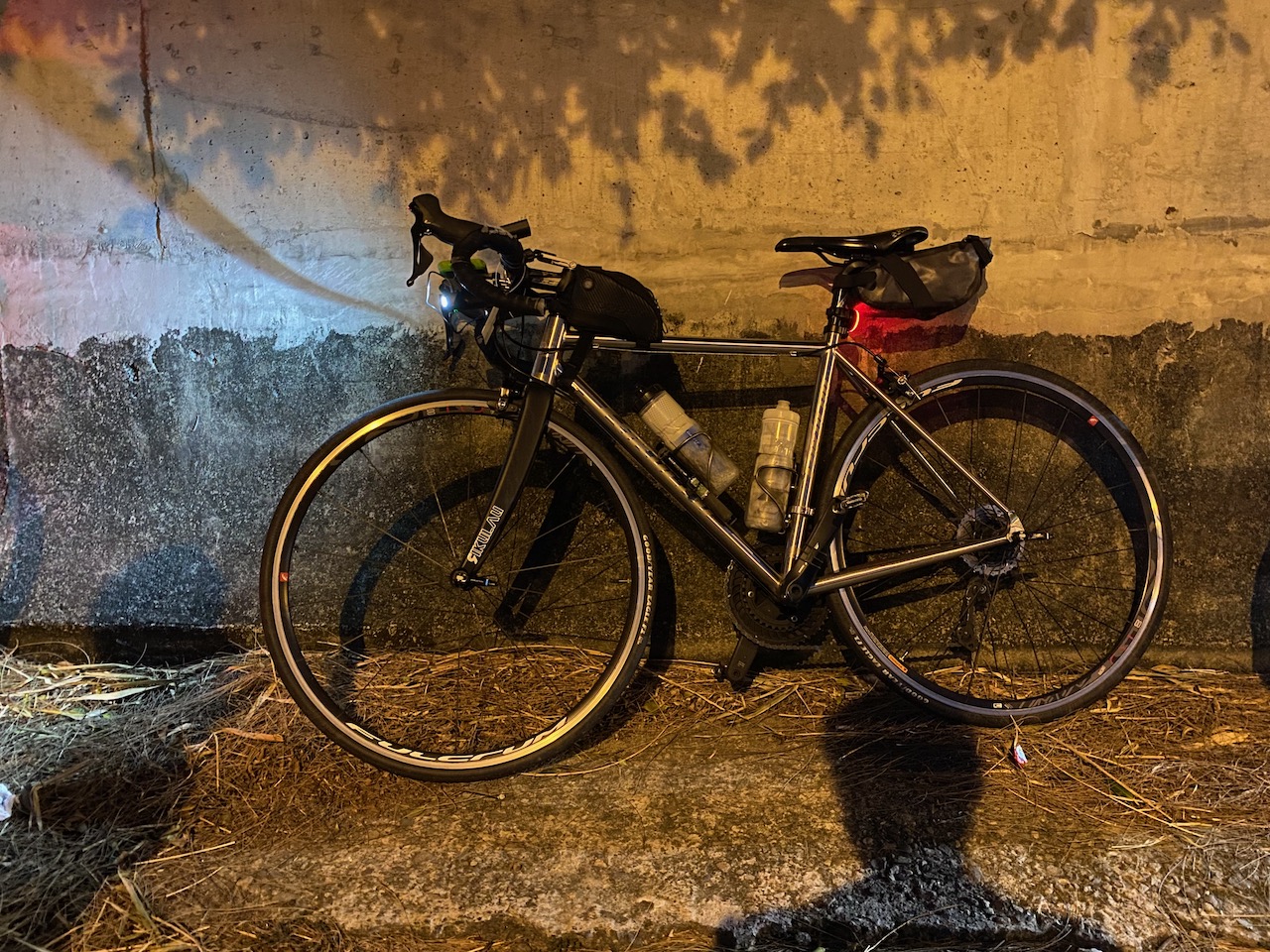
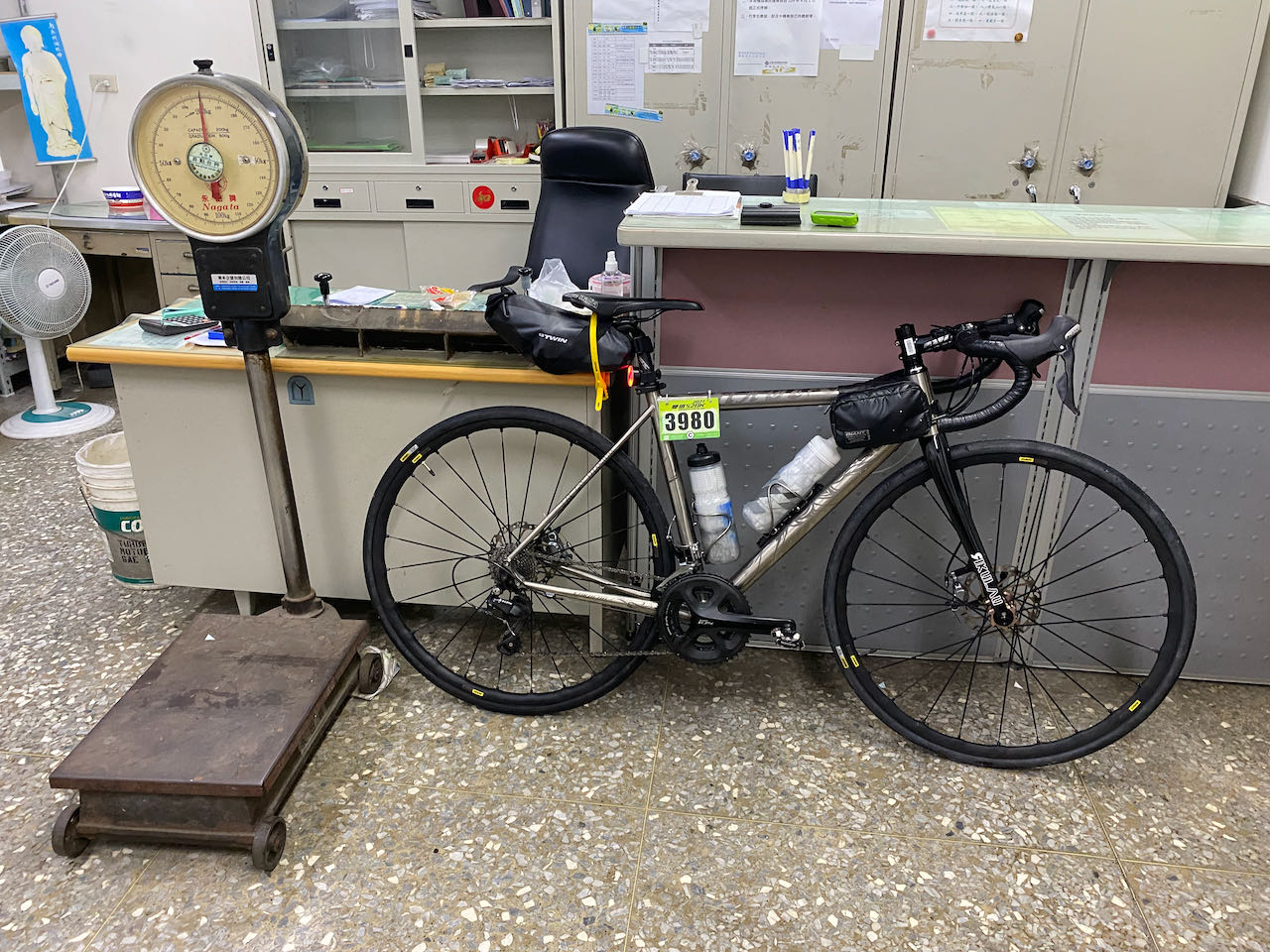
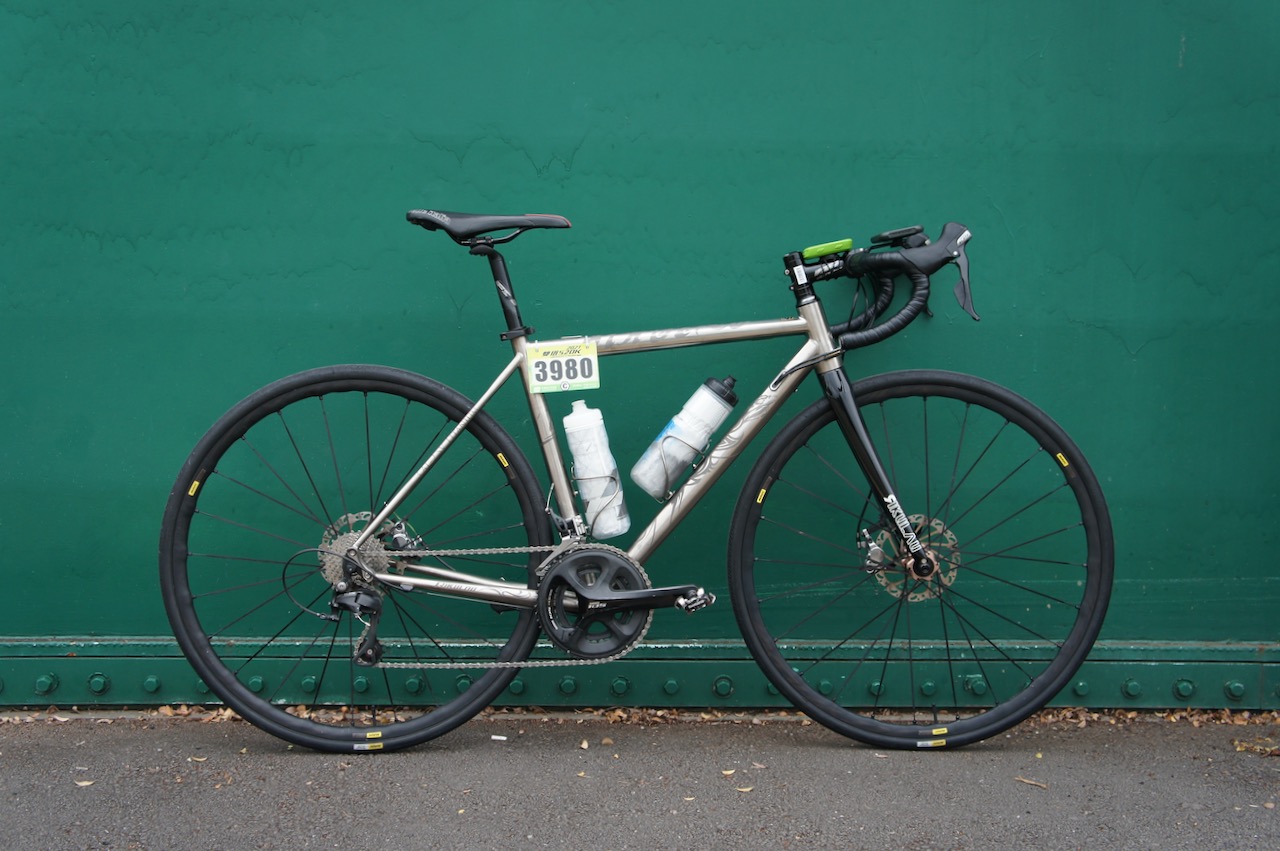
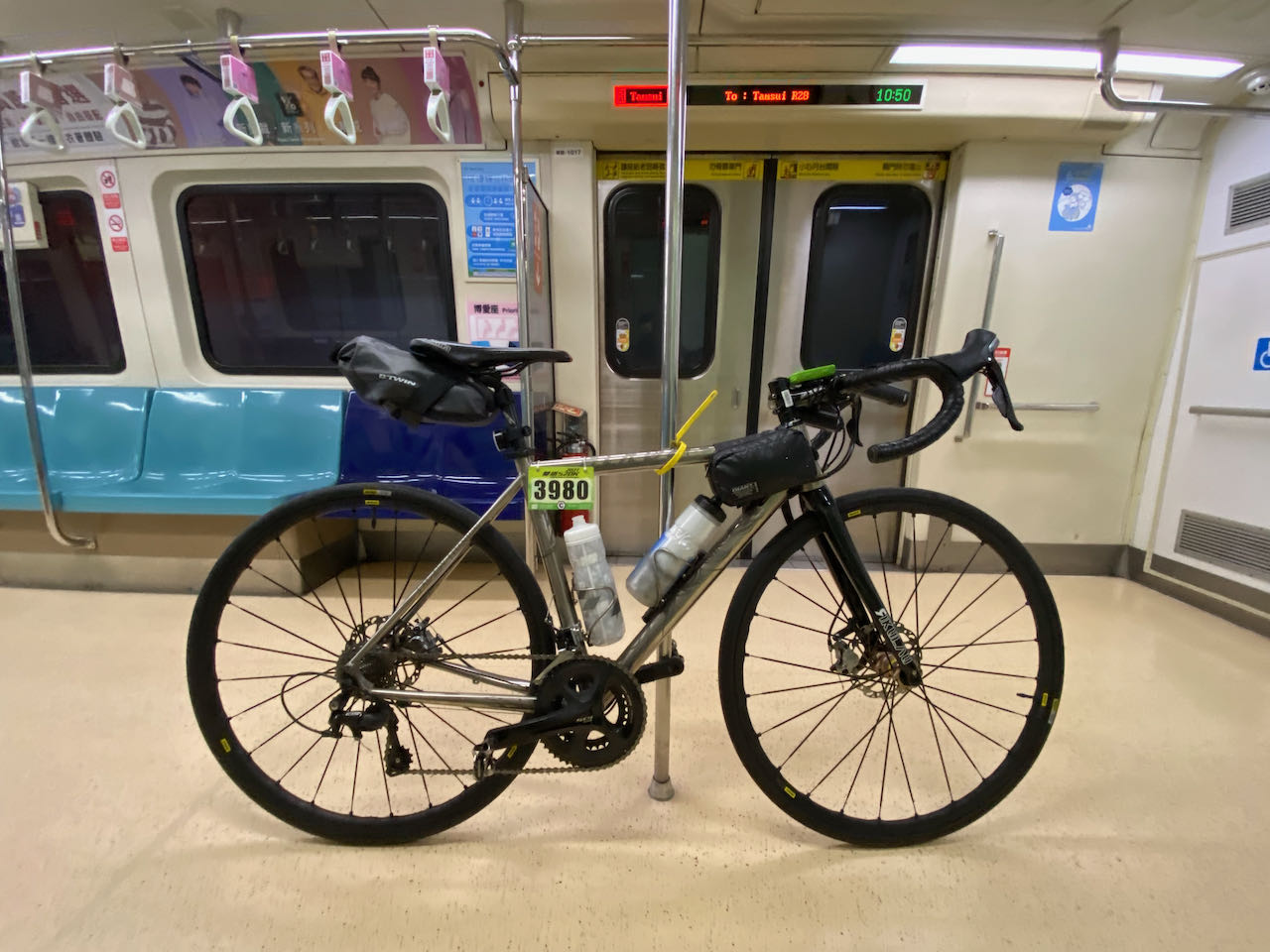
    This year, I used the Rikulau Master V9, The V9 (Vulcan) features Rikulau’s proprietary seamless tubing made with Custom C465 stainless steel by Carpenter Technology, USA. Custom C465 stainless steel is specifically developed for aerospace and marine applications. The general corrosion resistance of the alloy, tested with exposure to 5% neutral salt spray at 35°C, resulted in no corrosion after more than 2,000 hours of exposure. 

    The tube-making and heat treatment processes are conducted in Taiwan. Achieving a balance in tensile strength (approximately 1800MPa) and good ductility is accomplished by selecting the appropriate age-hardening heat treatment temperature according to Rikulau’s introduction to this bike. 

    This is the first road bike I intend to own and ride for decades. I have travelled with it to many places in Taiwan and have already developed some emotional attachment ot it. 

    I believe a well-maintained drop-bar road bike with proper sizing should be sufficient. While a flat-bar road bike might be acceptable, it offers only two holding positions at best, limiting our ability to rotate our position. This inflexibility may lead to overworked muscles, especially considering we’ll be spending more than 24 hours on the bike.

    Logistic Preparation 

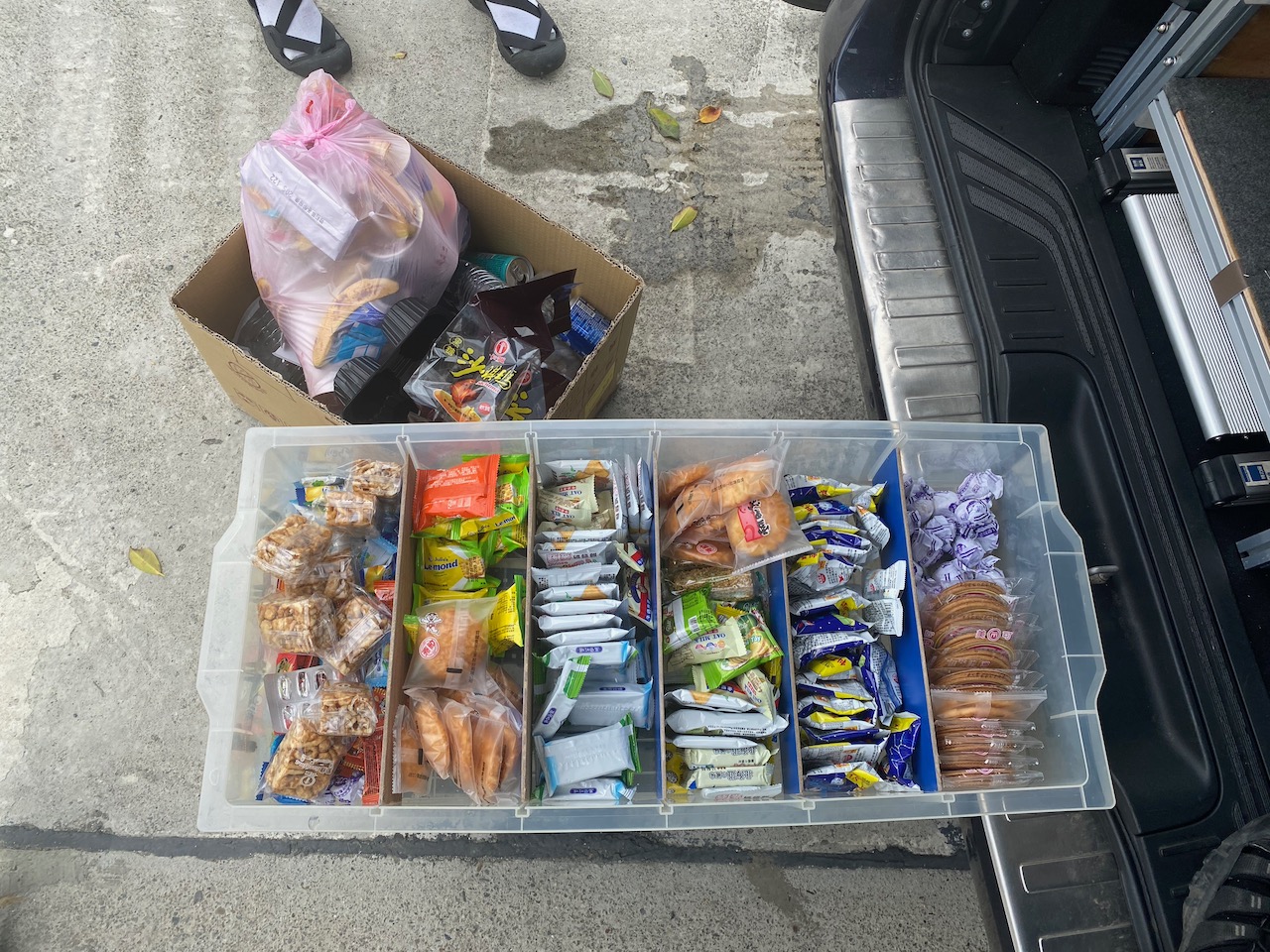
    The challenge began at midnight at Fugui Cape and was expected to last around 24 hours, encompassing two night periods. To optimise sleep opportunities, Xiaochu booked a hotel in Tamsui for us to rest after dinner. We were then transported to the starting point around 11:00 pm. Xiaochu strategically set up supply stops every 70km, allowing us to refill our bottles and snack pouches. Maintaining a consistent intake of food is crucial, as we’re expected to burn around 8,000 Kcal during this endurance period. After cycling for  40 km, I already felt so hungry and I found myself eating a piece of bread, on the saddle, that I had saved from the afternoon.

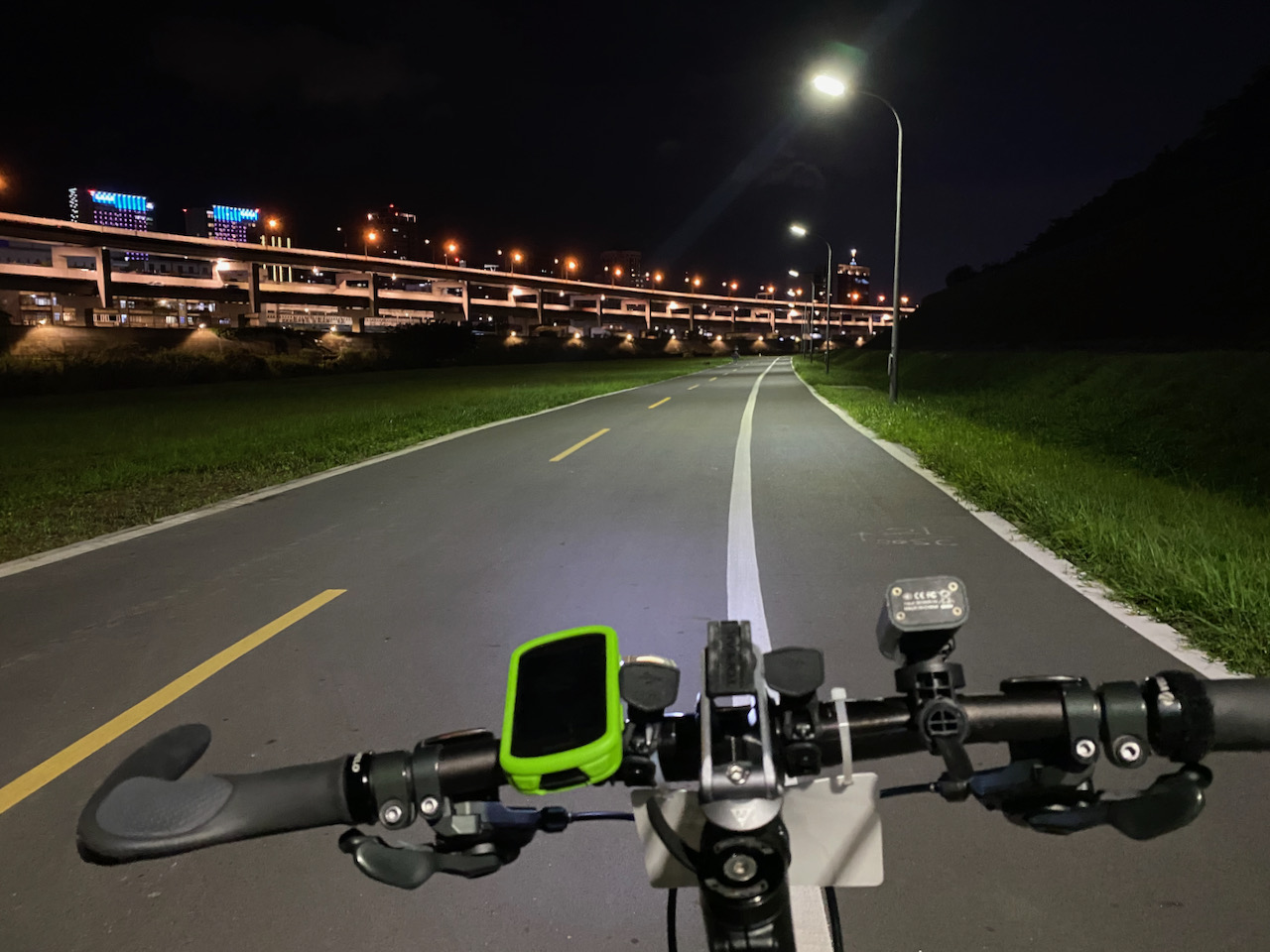
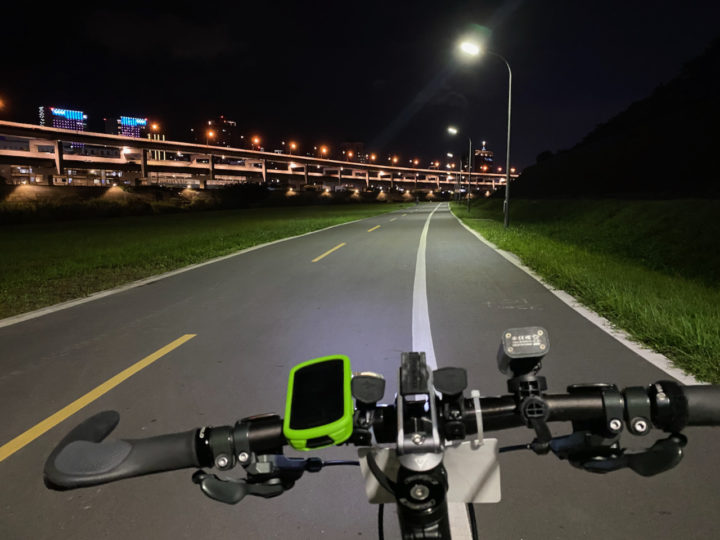
    In the darkness, spotting our own supply cars became a challenging task. Xiaochu addressed this by broadcasting the supply cars’ live locations on Velodash, proving to be immensely helpful, especially when they couldn’t park at the exact planned locations due to occupancy by other supply cars. When I was approaching the supply stop, I could just launch the app to spot them among all the support cars or the other teams. 
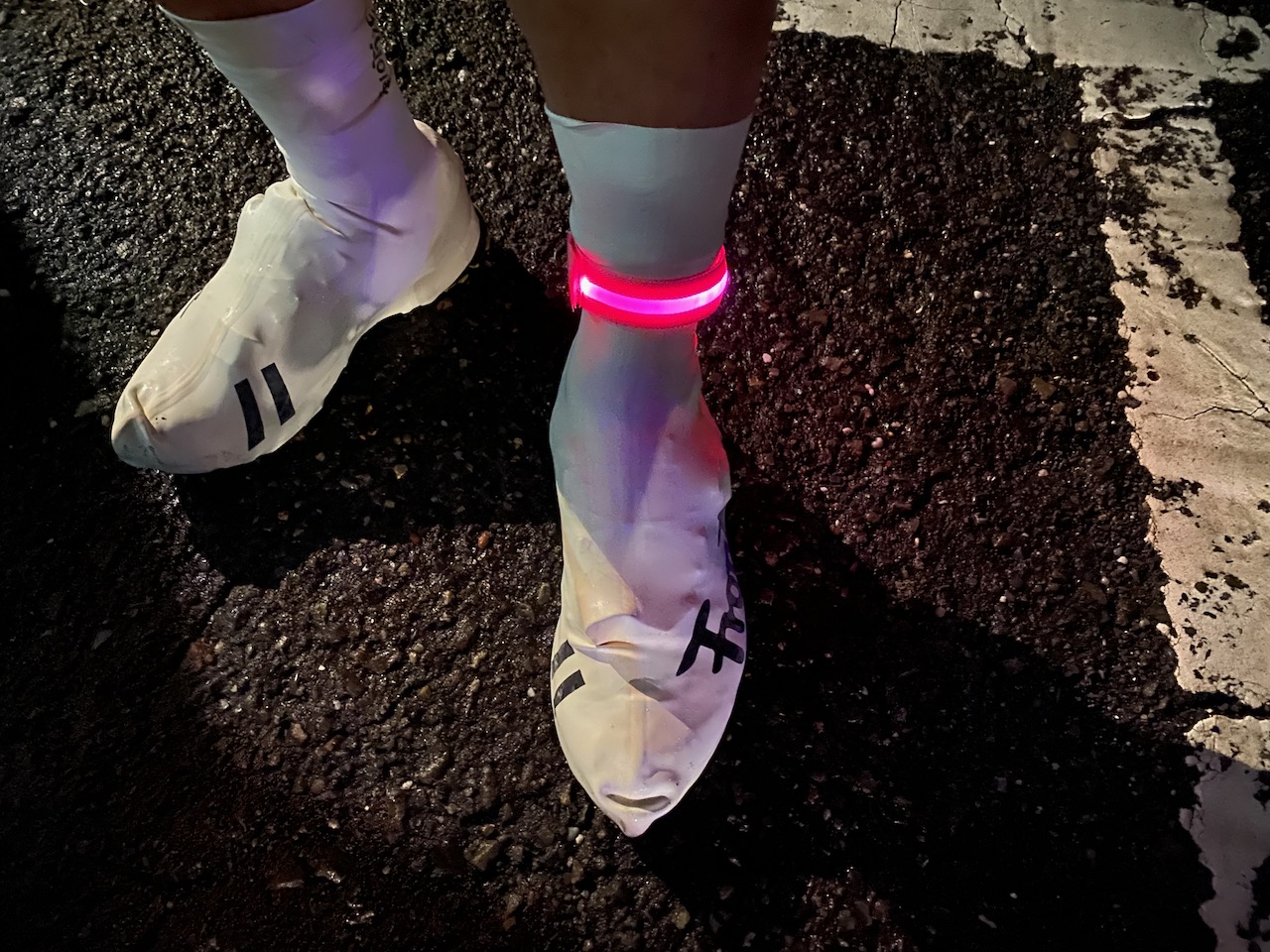
    Xiaochu provided glowing bands for us to wear on our ankles or arms. This simple measure ensured that the supporting staff could easily identify us from a distance and guide us to the cars at each stop.

    The Starting 

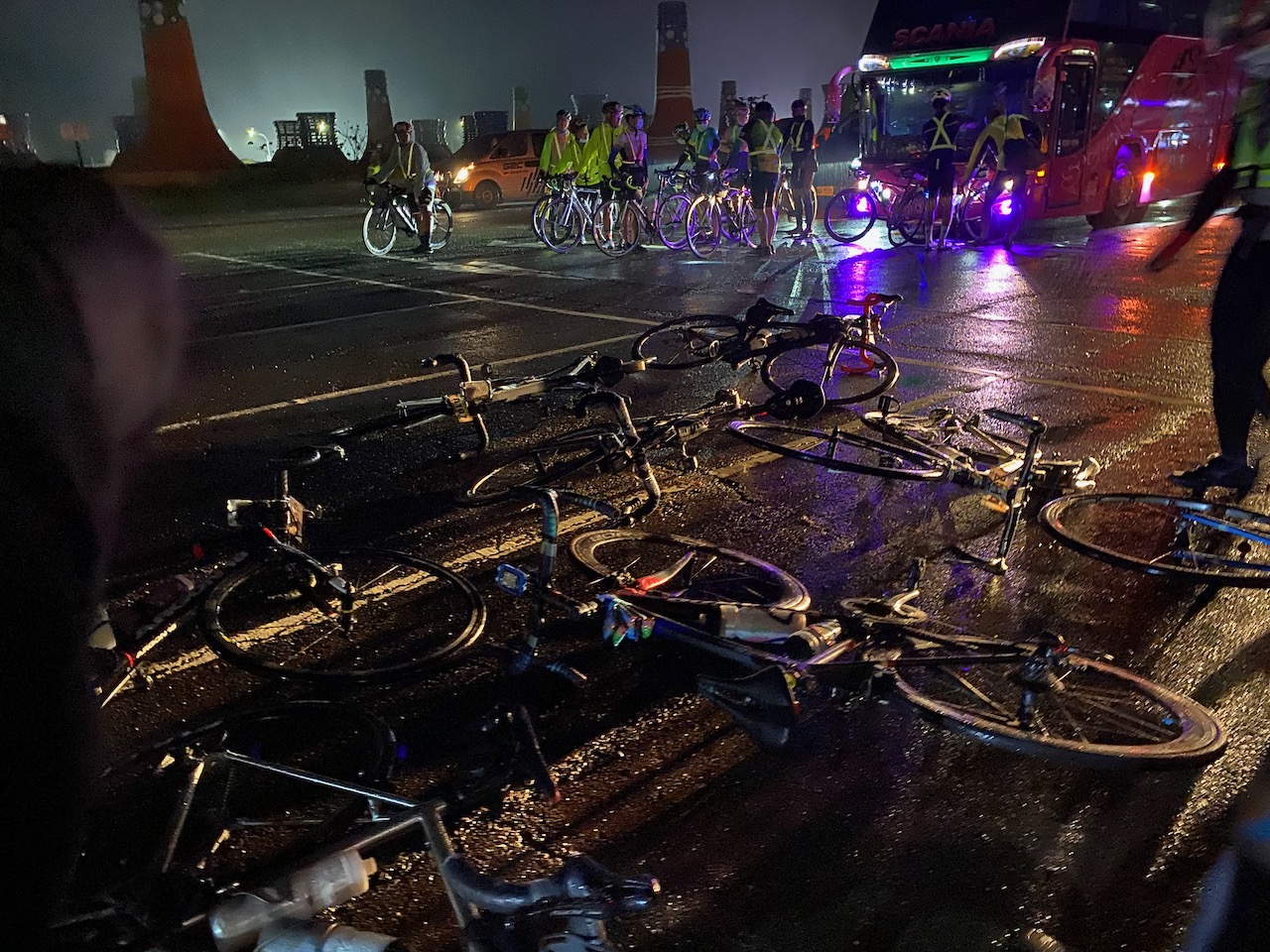
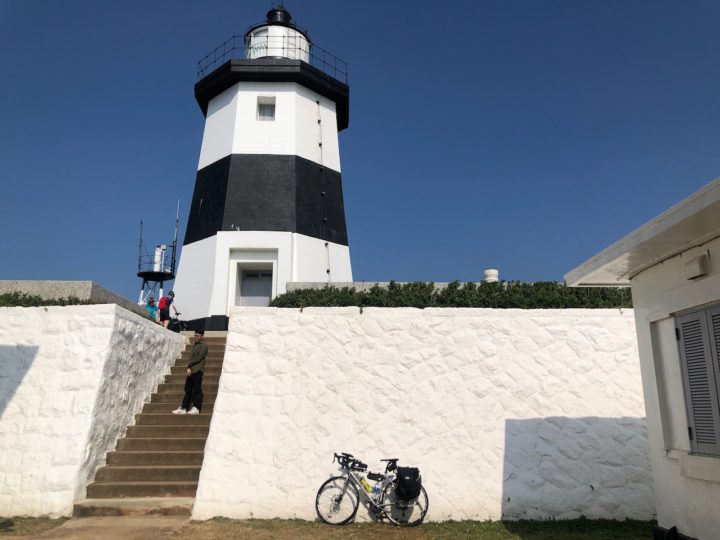
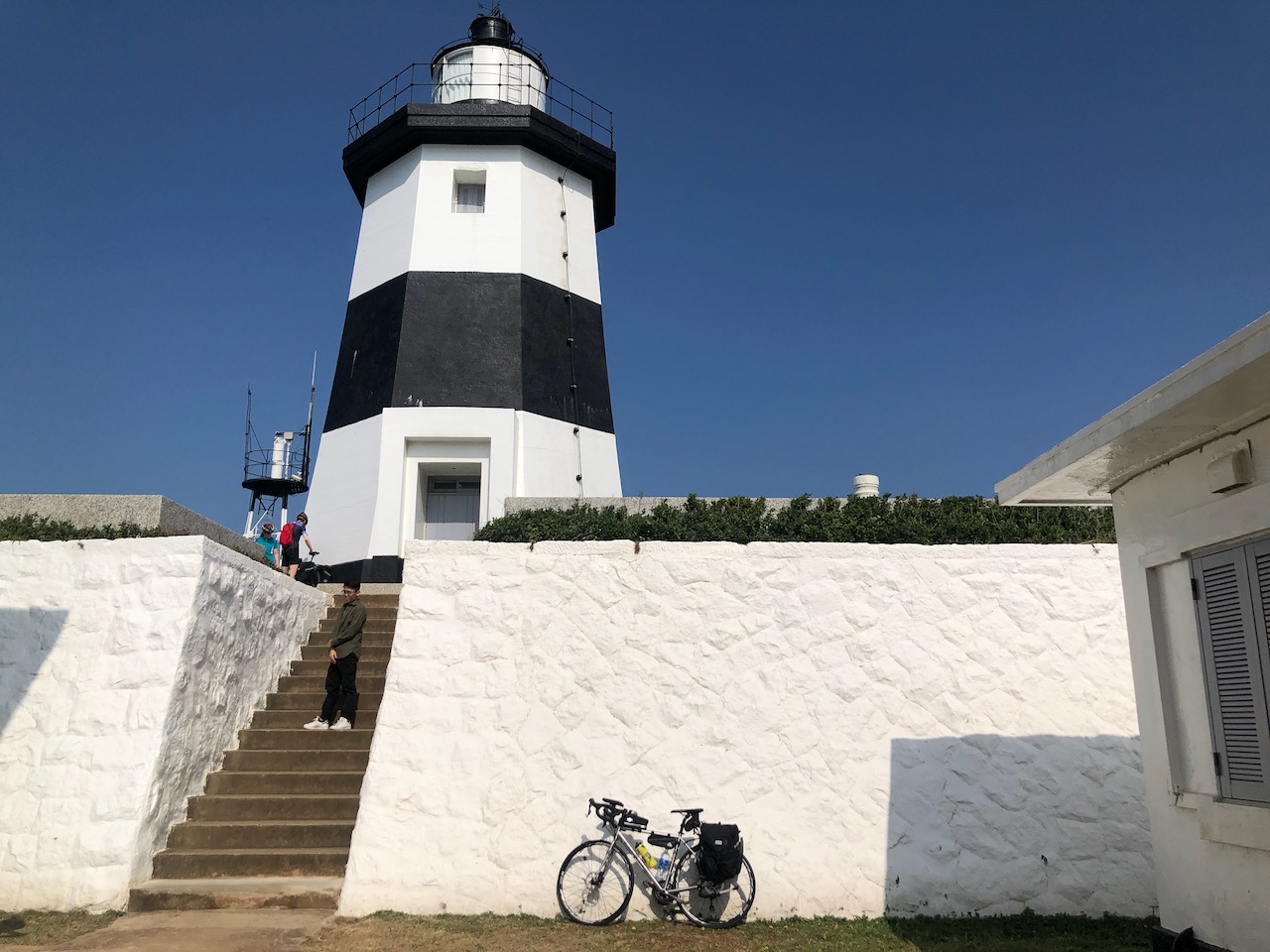
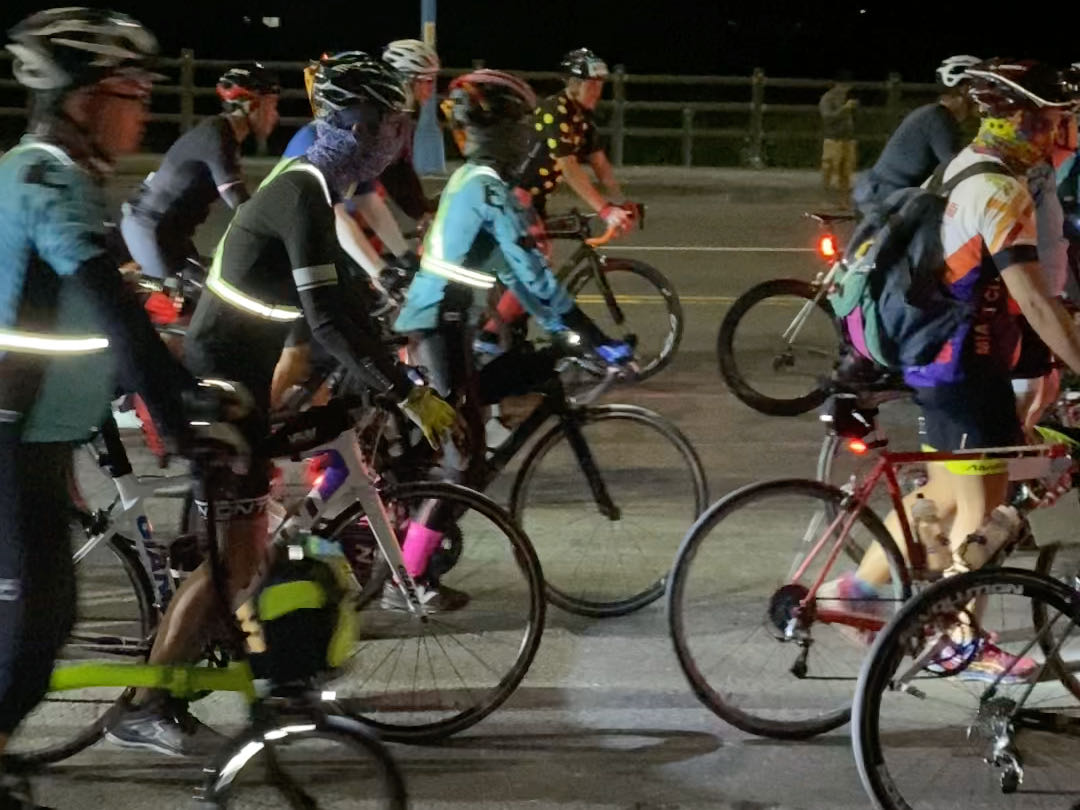
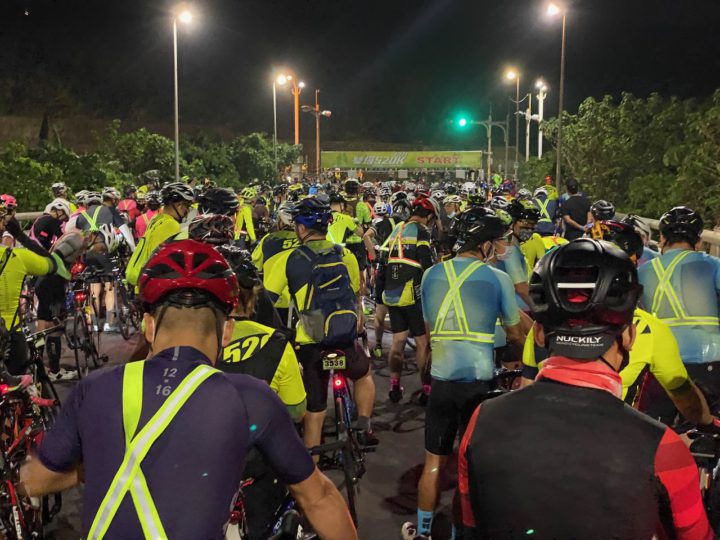
    We encountered some drizzles at Fuguijiao Lighthouse. Fortunately, my jacket was sufficient to keep my body core dry. The roads were wet, with a long stretch of participants occupying the entire lane. I proceeded cautiously, aware that even a small accident could potentially trigger a mass crash, leading to the premature retirement of many participants from the race.
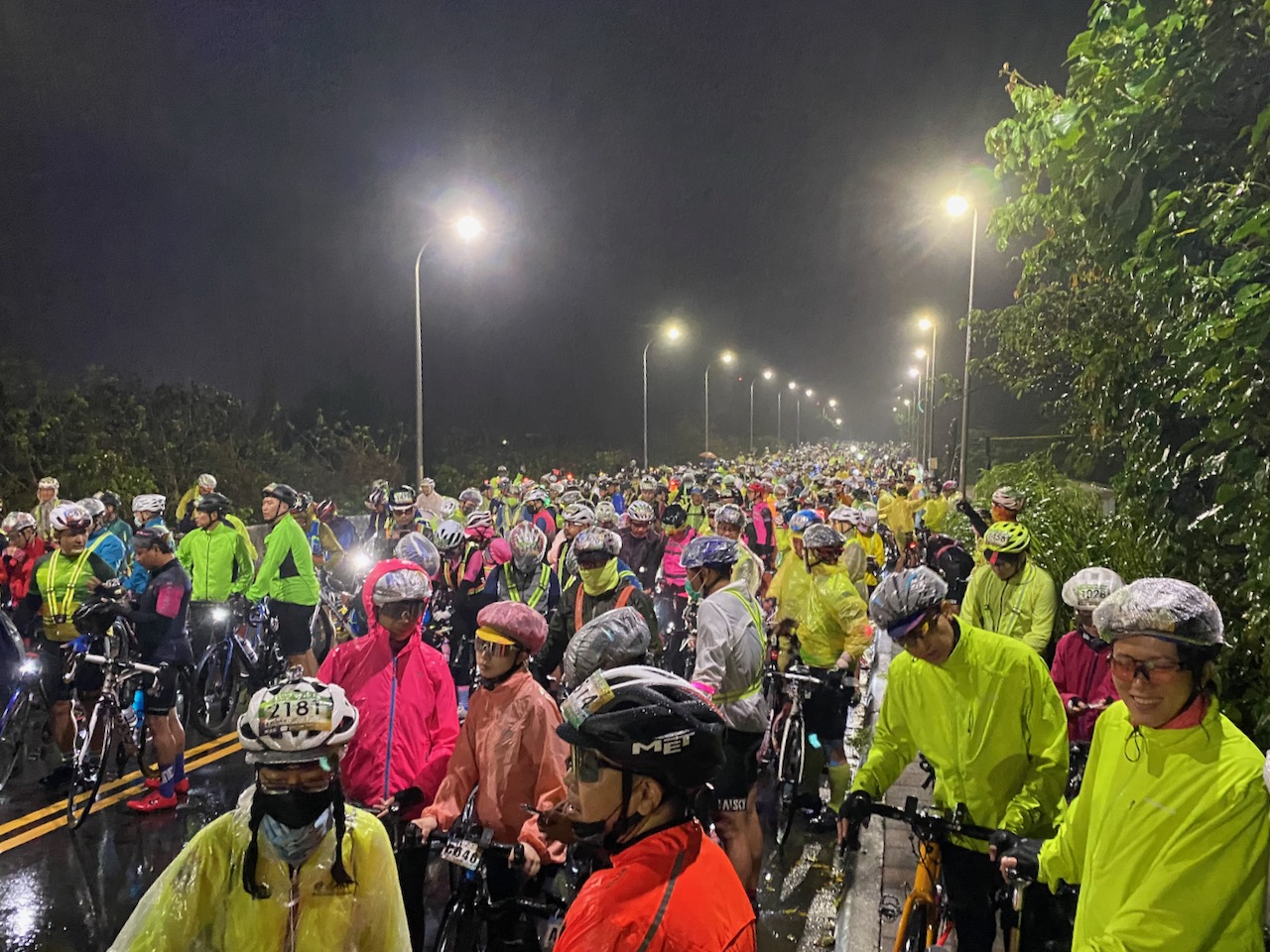
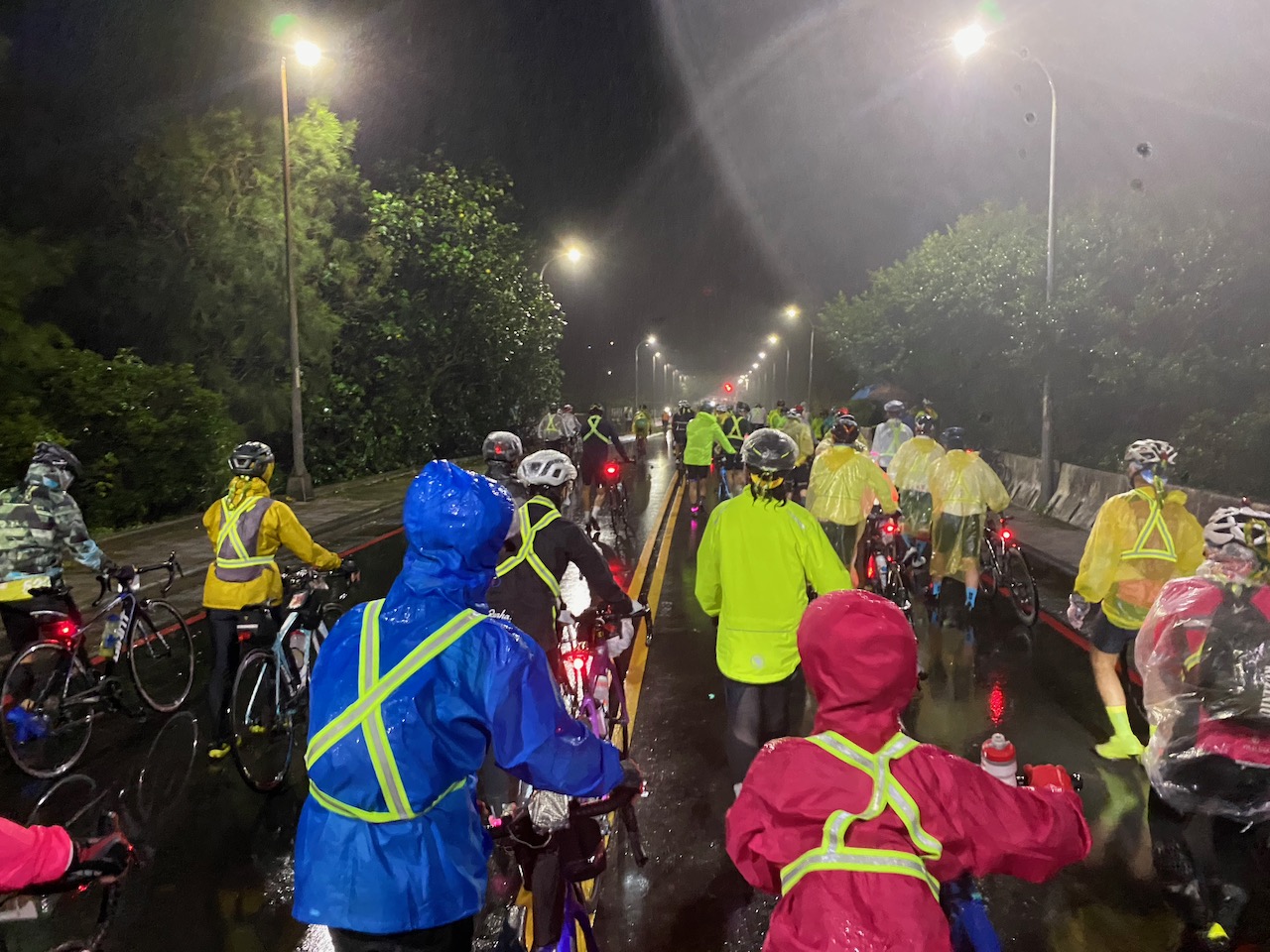
    A Spontaneous Team Formed

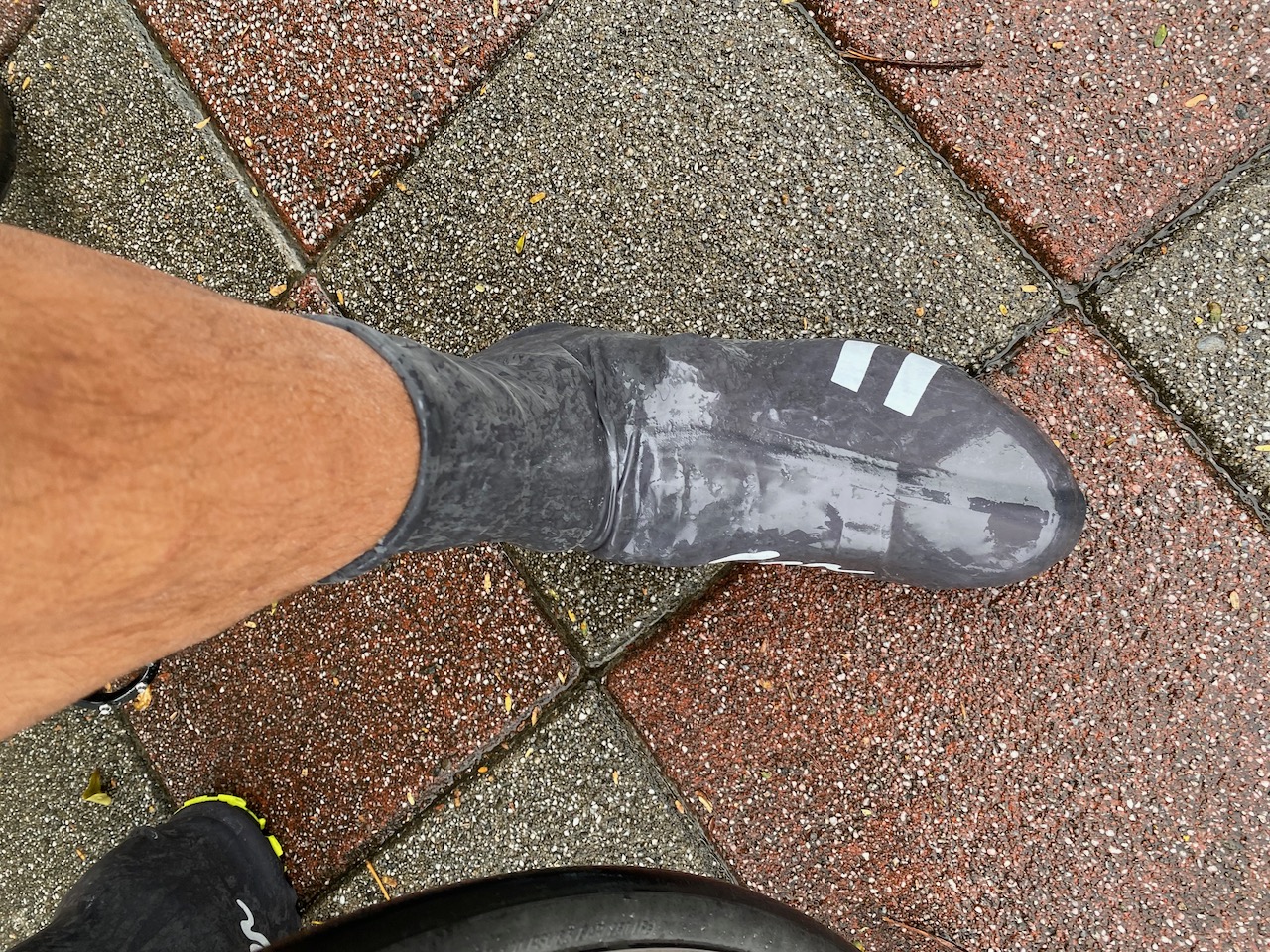
    It became completely dry when we reached Bali District at 40 km. I made a brief stop to remove my shoe covers, which I had worn to prevent rain from wetting my feet. Surprisingly, they were wet inside, but not from rain. Instead, it was the sweat from my feet condensing on the shoe covers, which were made of the same material as swimming caps. Fortunately, I was able to remove them before my feet got drenched by my own sweat. Soon, the moisture was whisked away by the wind, and I continued cycling comfortably with dry feet.

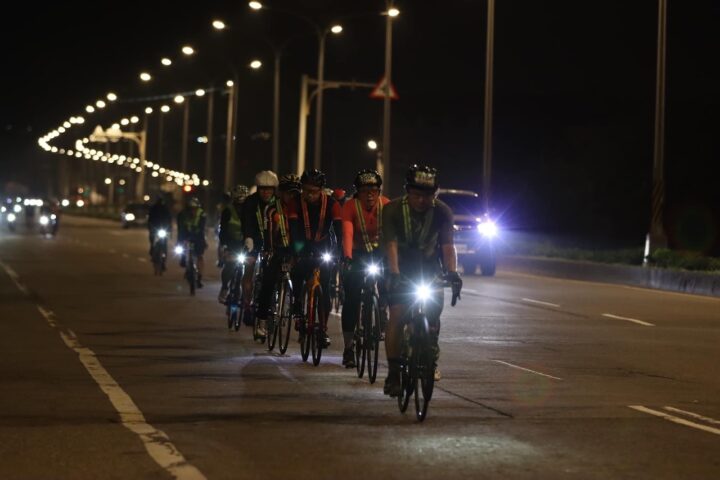
    I must say, we were blessed with the best weather conditions this year. A very strong tailwind propelled us, and everyone was cruising at over 40 km/hour, making the ride exceptionally enjoyable. Soon, I recognized my friends Jeff and Hsunyi, along with their friend Abby, all identified by Xiaochu’s glowing bands as participants in the support services. Realising our paces were quite similar, we decided to stick together and took turns leading the group.
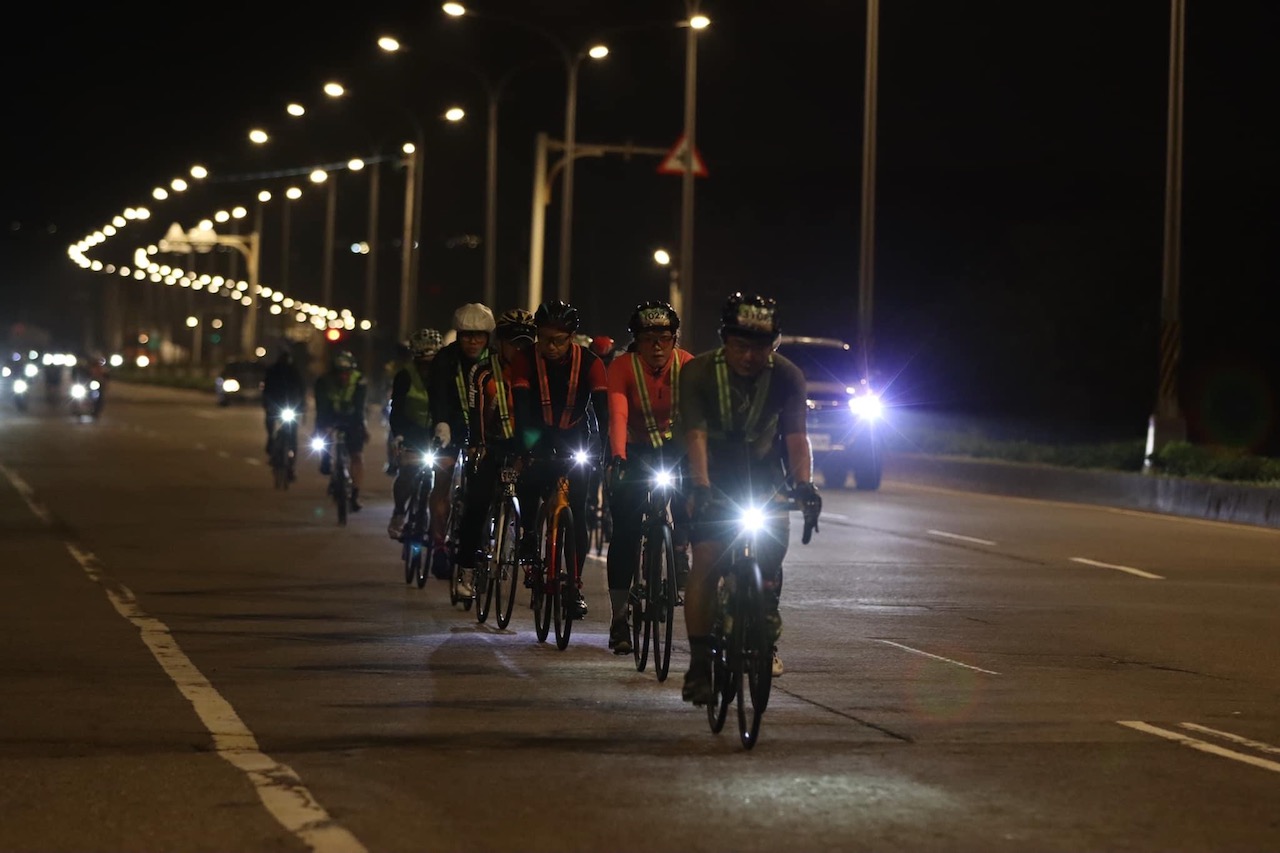
    BCAA to Rescue 

    At the 2nd supply stop, my legs started to show signs of cramping. xiaochu offered some BCAA pills, a type of amino acid that our body uses to build proteins. It worked like magic; I never experienced muscle cramps again. Additionally, there was an unexpected benefit: my lower back pain. Despite adjusting the saddle height, I had only managed to delay its onset. I expected it to resurface at some point, but to my surprise, it never occurred throughout the entire ride. I attribute this relief to the BCAA. If you are facing a similar problem, it’s worth considering trying BCAA supplements — they’re just supplements,  after all.

    Every Minute Counts

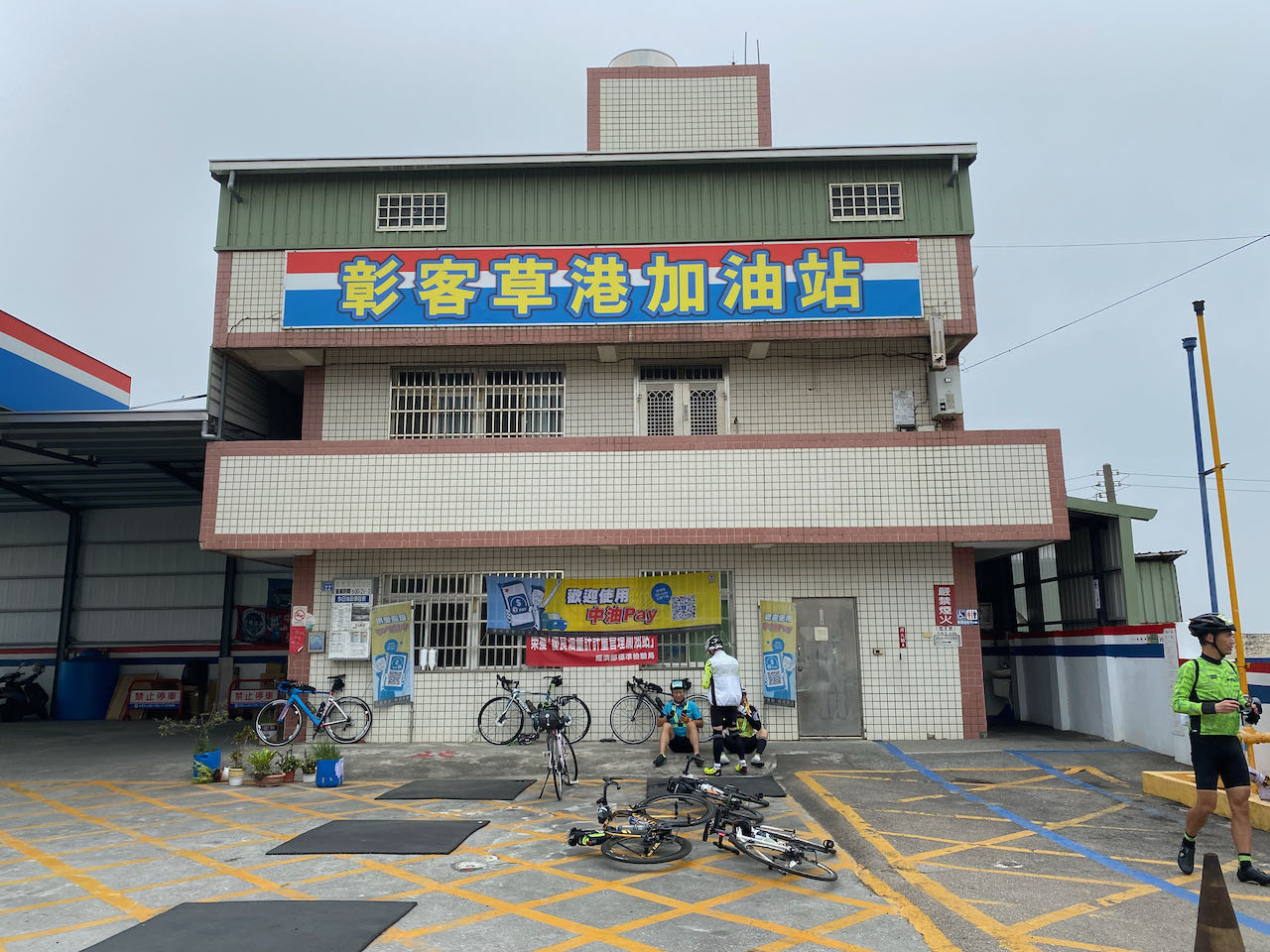
    As the morning broke, we decided to take an extra breakfast top stop due to our good progress. Approaching the Wuqi district of Taichung, known for its numerous traffic lights, we opted for a longer route to the coast to bypass the lights and potentially increase our speed. Upon meeting Xiaochu at the Wuqi stop for the planned breakfast, he informed us that it was a wrong call, as other participants who maintained a similar pace had already passed by sticking to the official route. Anyway, the breakfast the team prepared for us was delicious. Nothing extravagant — just some soybean milk with a sandwich from a local food store. The variety of tastes provided a welcome break from energy gels and lifted our spirits.
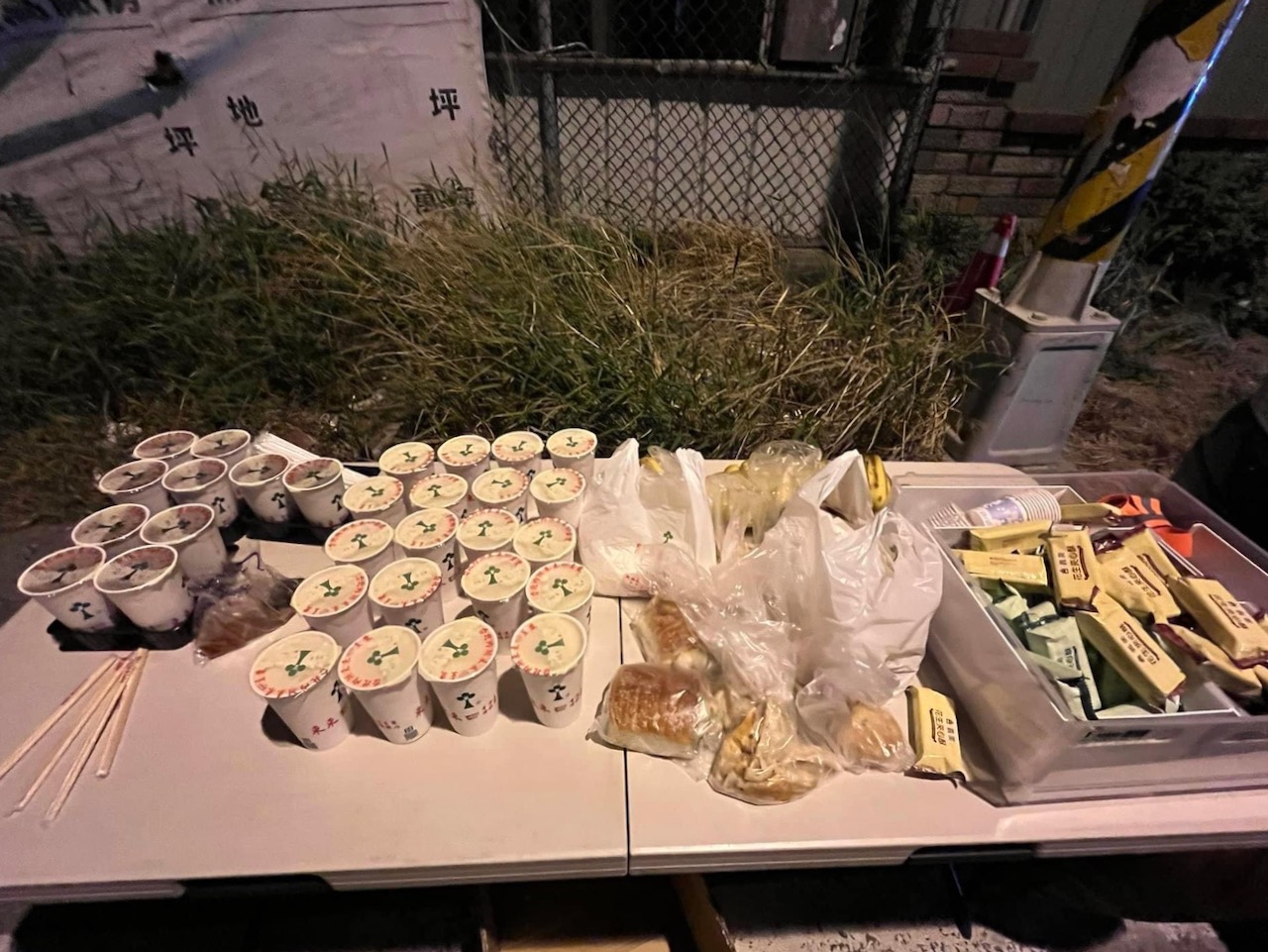
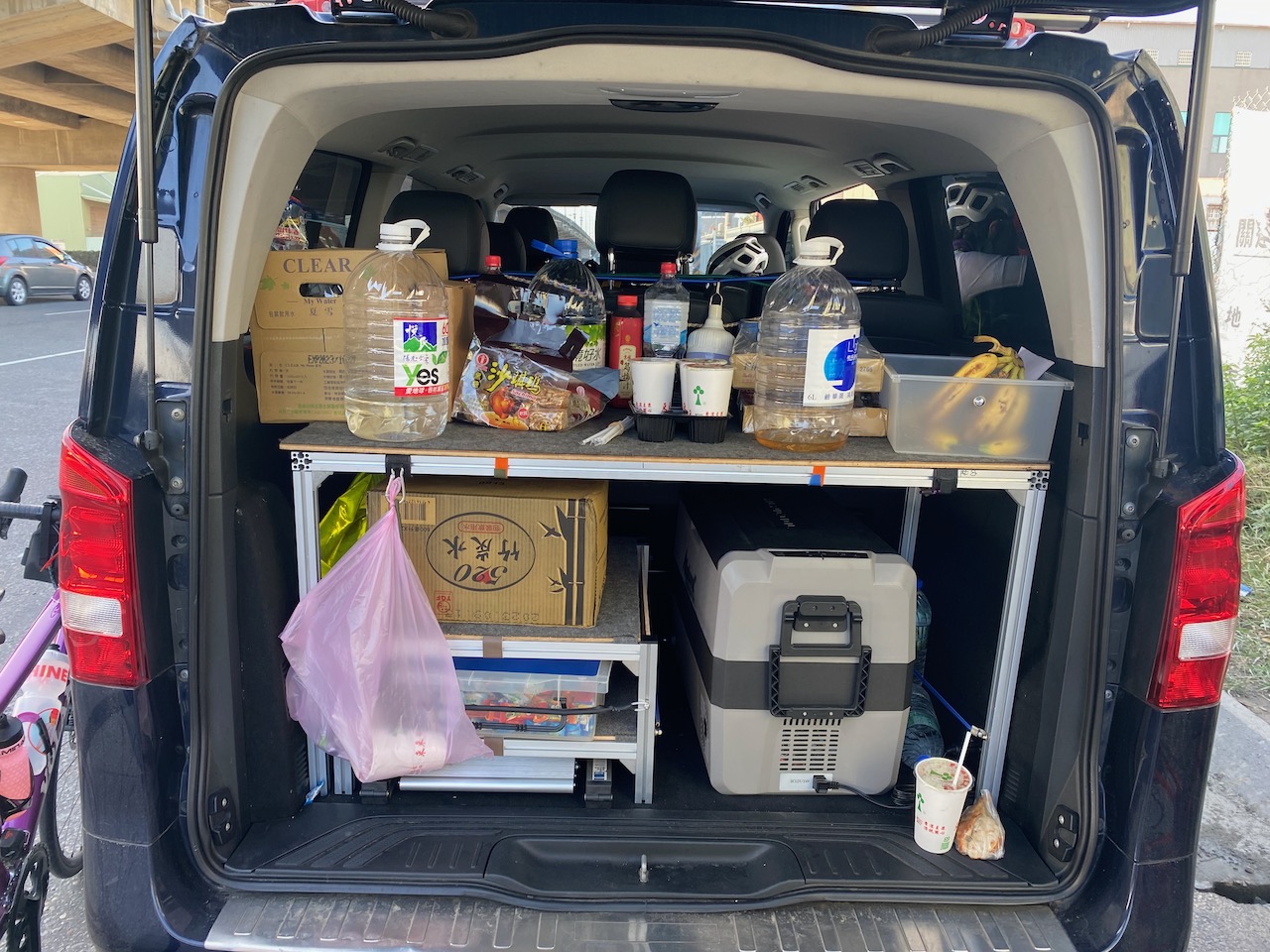
    He also delivered another piece of news: our chance of finishing this challenge within 24 hours was slipping away. While it wasn’t our initial target, Xiaochu’s support team was coordinating with participants aiming to reach Eluanbi within 24 hours. This meant our windows for supply stops would become smaller. If we were still on the road after 24 hours, we would have to rely on convenience stores for supplies. I found this to e a very reasonable arrangement, considering the support team’s need to take us back to Taipei the next morning after working for such a long hour. They deserved some good rest.

    Cadence at Natural Frequency

    It is said that we exhaust the carbohydrate stored in our body after two hours of exercise, and our gut might not be able to digest food quickly enough to replenish the sugar in our body. To tap into my ample body fat reserves, I cycled at lower gears with a higher cadence, maintaining over 100 rpm.

    Something fascinating occurred. It seemed as though my legs were moving on their own, requiring minimal effort to pedal. While lower gears naturally result in lower resistance from the pedals, I could also feel that my legs were lighter at this cadence. In hindsight, I believe I was cycling at the natural frequency of my legs. 

    Ever wonder why a mechanical metronome can swing for such a long time after just a couple of windings? It’s because it swings at its natural frequency, requiring very little energy to keep it going. The same principle applies to our bodies. Another example is when we walk; our legs move like a pair of pendulums at their natural frequency. However, when we run, our legs have to move at higher frequencies, working against the natural frequency and causing more fatigue after covering the same distance. Pedalling is also a periodical motion, and I discovered the existence of a natural frequency during this long ride. When can leverage this phenomenon to achieve maximum energy efficiency especially when our muscles are tired.

    Companion and Support Make a Difference

    At Tainan, Abby and I were still maintaining the same pace, but we had dropped Jeff and Hsunyi. We decided to treat ourselves to some snacks at the first 7-Eleven we spotted in the city. The shopkeeper generously provided each cyclist with an extra hard-boiled egg for free to accompany the instant noodles. 

    Last year, I felt lonely and struggled with lower back pain, wasting a lot of willpower on meaningless self-talk. Questions like,

    ‘Is it a good time for a break?’, 

    ‘Should I stop at this 7-Eleven for some snacks?’,

    ‘What should I buy?’,

    “Maybe not this one because there are too many people.”, 

    “But what if the next one is too far away?”, 

    “Maybe it’s going to be the same so why not just take a break while I have one around?”, “Should I worry about the last leg from Kaohsiung to Eluanbi?”, 

    “What if I collapse?”. 

    This year, it was wonderful to have someone to chat with, especially when sharing the same goal. With Xiaochu’s well-planned supply stops, I could focus my willpower solely on cycling. The next stop is 70 km ahead, so I just didi ti. The food he provided wasn’t extravagant, but it felt good to have someone prepare for me, and I was pleasantly surprised with some local delicacies. Xiaochu also briefed us on our progress, providing crucial information even though it was a simple calculation. In 2020, during the Taipei to Kaohsiung Challenge, I got my progress and the maths wrong when I was alone. I almost failed to make it within the time limit. 

    The Real Start in Kaohsiung

    By Around 19:00, we reached Pingshan Elementary School in Kaohsiung, the designated destination for the Taipei to Kaohsiung Challenge. Xiaochu’s team had prepared a simple yet delicious dinner awaiting us. Despite my continuous eating on the saddle, I devoured the meal and even went for two refills.

    Having already covered 400 km with 130 km left to go, it felt like a real start to me. This marked the first time I ventured further south in such a long ride. 

    Kaohsiung, with its numerous multi-lane roads, resembled a maze to me, especially in the darkness. The organisers had some helpers stationed at significant junctions to guide us, but having your route loaded onto your navigation device is advisable.

    We navigated through Kaohsiung smoothly, reuniting with Xiaochu at another supply stop. The excitement was palpable as everyone realised how far we had come. Another group of participants joined our ride for a while, as they weren’t entirely sure about the route. We welcomed the additional companionship. 

    The Confrontation by the Downhill Winds

    As we approached Checheng, I felt my strength fading. The wind shifted as we headed southeast on the Pingtung Peninsula, making it harder to keep up with Abby, and soon I lost sight of her. Abby and I met Xiaochu again at a 7-Eleven, where they were ready to head directly to Eluanbi. It was our last chance to get in the car, but we both decided to press on with the ride. I advised Abby to ride at her own pace for a better time. Soon, I was dropped again.

    The low hills of the Pingtung Peninsula directed the northeast wind upward and then funnelled it down at the west side from all directions – The notorious Downhill Wind – confronting us at the last 50 km. After enjoying a tailwind for so long, it was time to pay the price.

    Slowly, I made it to Hengchun and Kenting Street. People in the Kenting night market cheered for us. A guy with a beer in his hand even gave me a push on the back. Oh, that was nice, even if just for a second. 

    Then came the last 8 km, and I found myself all alone. The Downhill Wind intensified. To add to the eerie effect, before the wind pushed you sideways, it gave you a warning with the rattling of the trees. Once, I almost got pushed to the opposite lane. In preparation for this part, I have undertaken a challenge from Taichung to Eluanbi a couple of months ago. Otherwise, I wouldn’t have had the nerve to continue. I knew the finishing line was there; all I needed to do was keep pedalling. However, the last 5 km seemed to stretch longer. I found myself speaking to myself, ‘Pedal! Pedal! Pedal!’

    The Finishing Line
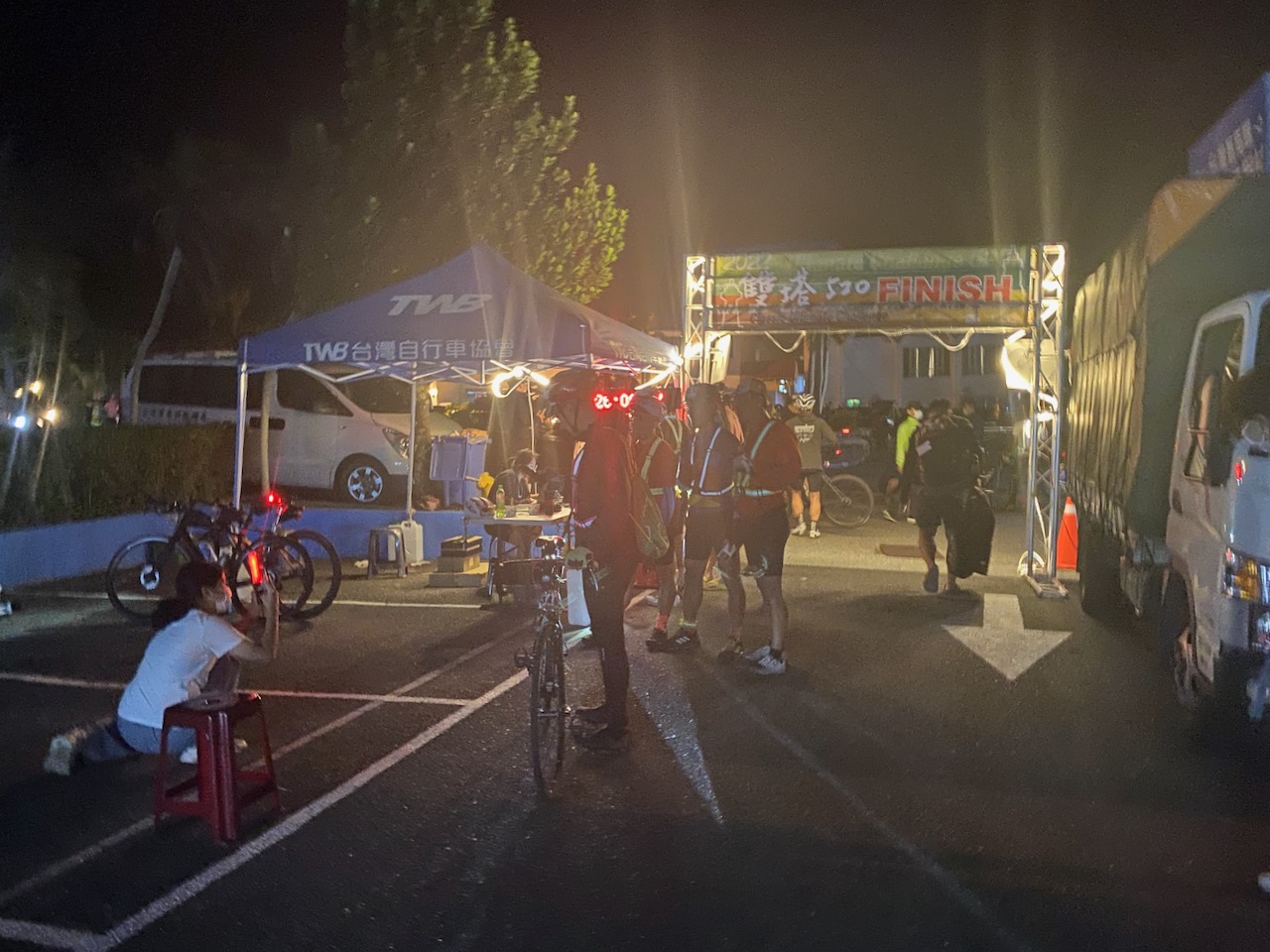
    After too many moments of self-talk, I finally caught sight of the finishing line, which I initially doubted was a hallucination. I rolled my bike into the finishing gate and heard the beep of the computer recording my finishing time. 

    Xiaochu was there to greet me and take pictures. I followed the procedures to receive my certificate and trophy. It was 2:00 a.m., and I managed to finish this ride in 26 hours. The next morning, when I woke up, I learned that Jeff and Hsuny had also made it within 28 hours.
  • “Two Towers in One Day” Challenge – Useful Info and Experience Sharing (2)

    “Two Towers in One Day” Challenge – Useful Info and Experience Sharing (2)

    このブログ記事の翻訳を進行中です。もうすぐ完成しますので、後ほど再度ご確認ください。ご不便をおかけして申し訳ありません。現在は、こちらで提供されているGPXルートや地図などの情報を自由にご利用ください。

    Execution

    Bad news: weather forecast said there wouldn’t be tailwinds for us. It’s very uncommon for this season and it happened to fall on the event day. It turned out that at some point, there would even be a 7km/h wind blowing against us and I had to join some groups for drafting. But on the bright side, the lack of north wind means that it would be dry and there would be no slippery, dirty road surfaces.

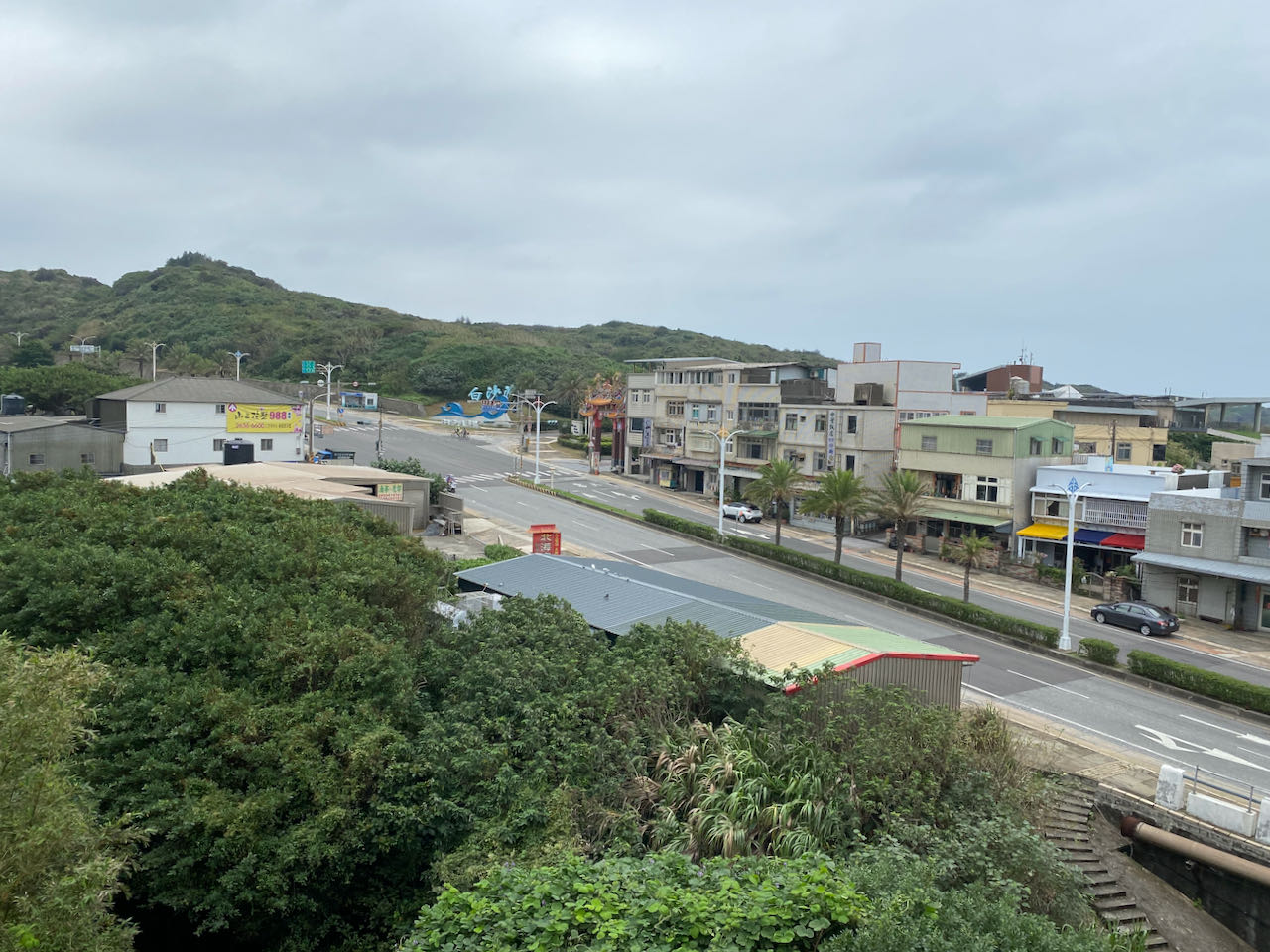
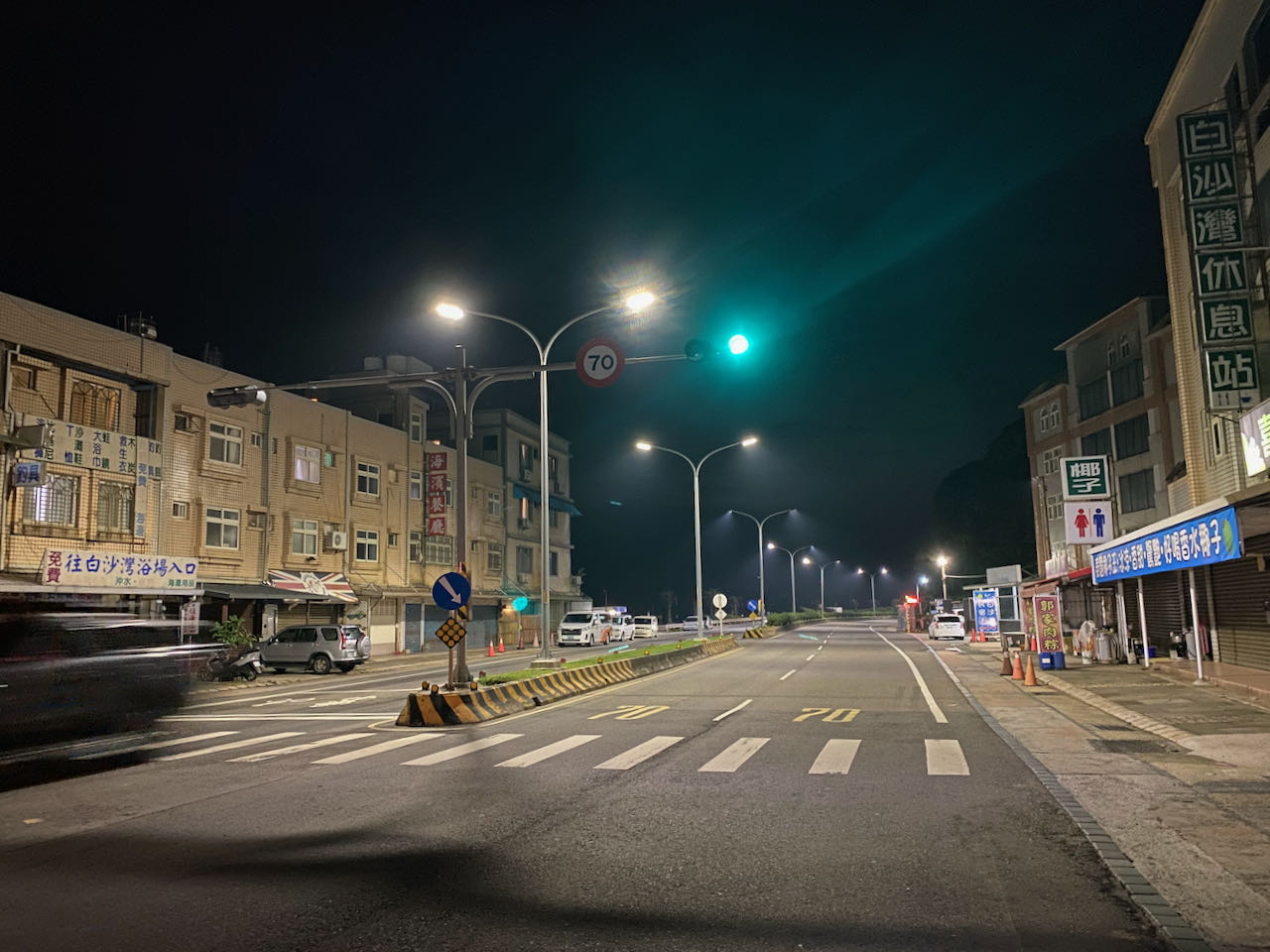
    On Friday morning, I took the MRT to Hongshulin Station and cycled 20 km to Baishawan where only three businesses were open: a pub, a grocery store and a food stall selling sticky rice dumplings and escargots. They only exist because of those visitors to the beach during summer. The atmosphere is completely different in November. I felt so lonely and regretted that I had only a simple meal from 7-eleven in Hongshulin. I should have treated myself to a decent one before getting to this small settlement. 

    Poor Choice of Hotel

    I checked into a small hotel I booked a couple weeks ago. It was clean with a good view. But the mattress was too soft for me. There was no support at all and it left my body in a strange posture. I missed my own bed already. I took a shower and had a beer with some escargots and two sticky rice dumplings for “dinner”. Around 4:00 pm, I was ready to go to bed. I estimated that I would have had 6 hours of sleep before my alarm went off at 10:00 pm. But I was woken up by the arrival of a group of cyclists who checked in around 6:00 pm. Soundproofing of that building was so poor that whenever the elevator moved, there was a squeal followed by a knocking sound when it stopped, which made it impossible for me to fall back to sleep. Though being frustrated and angry, I forced myself to lay flat and keep my eyes shut and wait for the time to pass. It’s going to be a long day. Gotta conserve every drop of energy. I learnt, afterwards, that some would even take sleeping pills but I wouldn’t go that far.

    9:50 pm, I could not do it any more. I jumped out of bed and ate 2 pieces of bread to top up the fuel in my body, also hoping to trigger some bowel movement soon enough so that it would save me the trouble of looking for toilets during the event.

    Takeaways: I could have booked a better hotel where I had stayed years ago. But somehow that hotel had a lower priority on GoogleMaps so that it didn’t show up when I was searching for accommodation in the area. The map even showed that the hotel was closed after I explicitly searched for it. That’s why I ended up experimenting with a new one. But I saw other cyclists heading into it that day so it was probably still in business. Maybe the hotel did not own or update their Google Business Profile actively. So, it’s always a good practice to make a phone call to make sure.

    Small homestays/hotels with less rooms should be better choices as there won’t be large groups of travellers making lots of noises. More homestays/hotels are available in Sanzhi District 三芝區 which is around 6 km to 8 km away from the starting point. 

    Starting

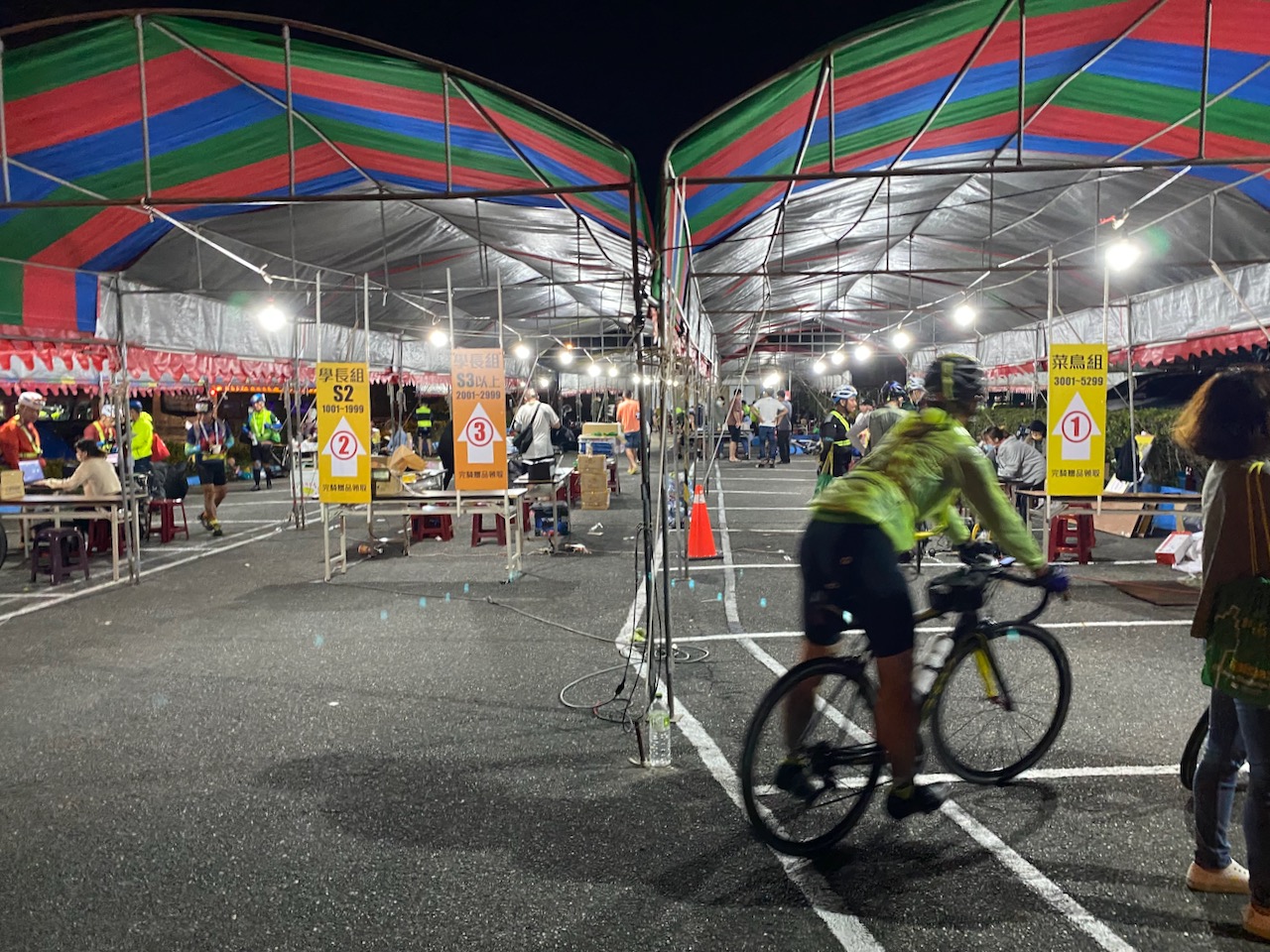
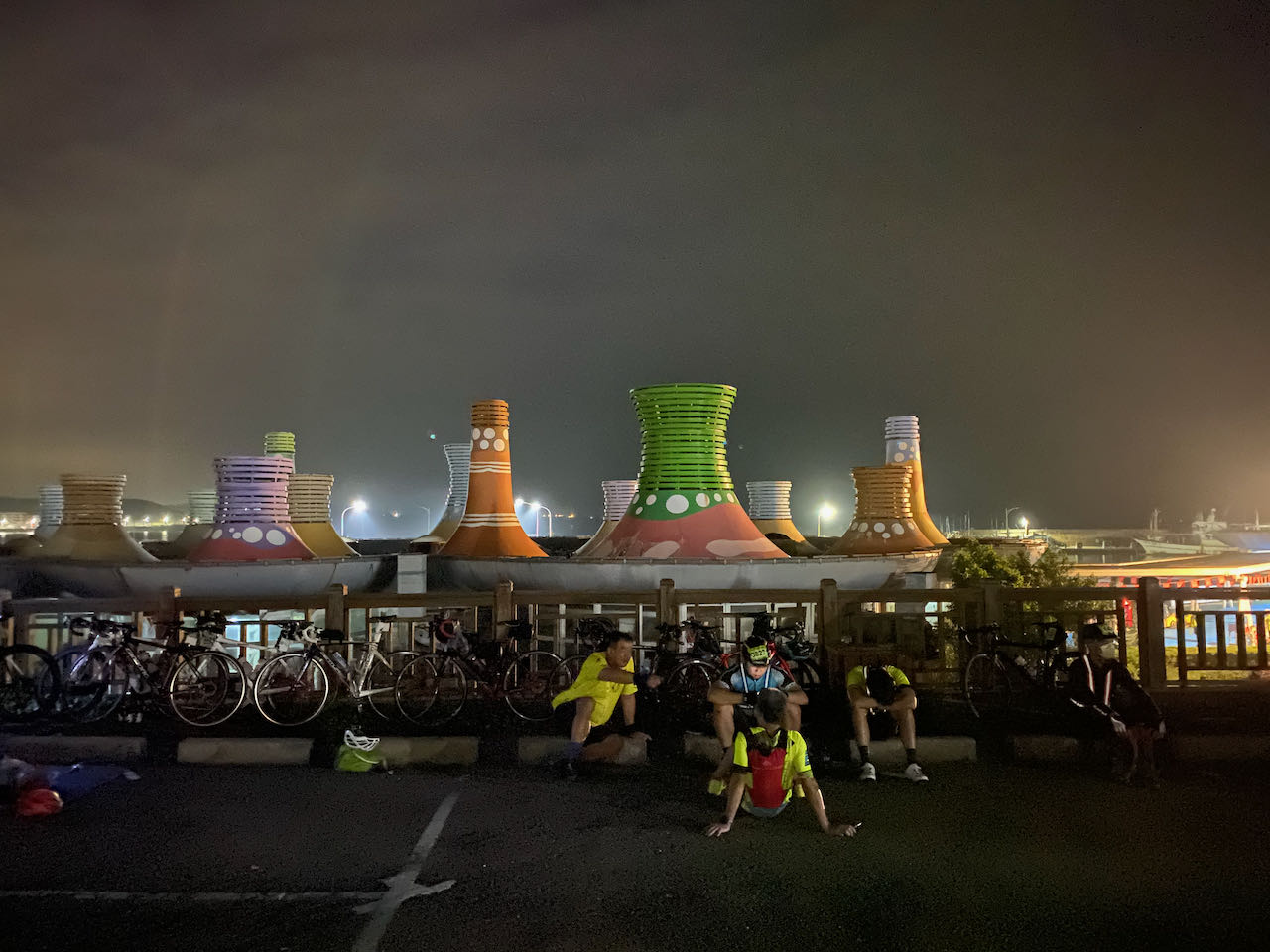
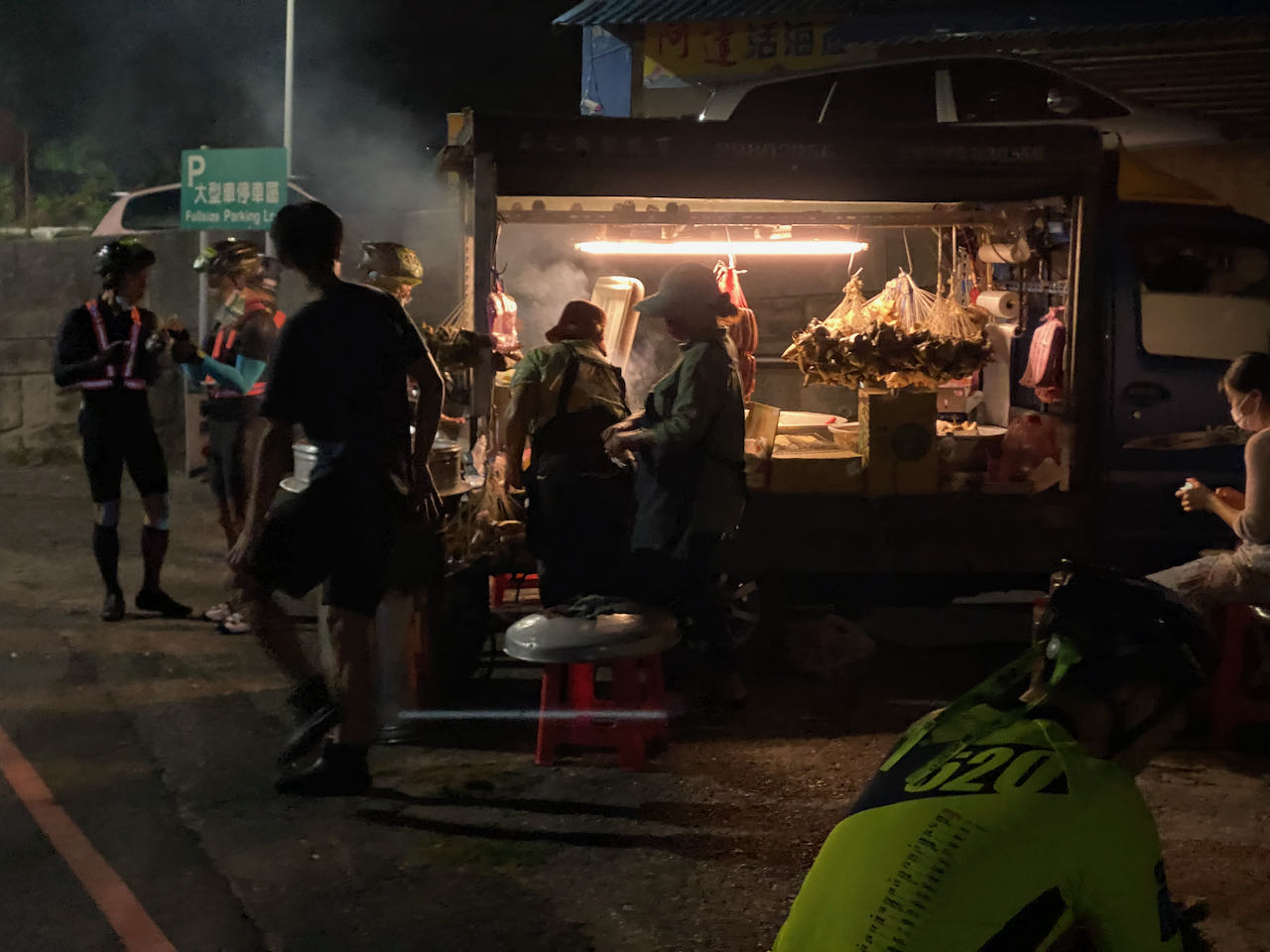
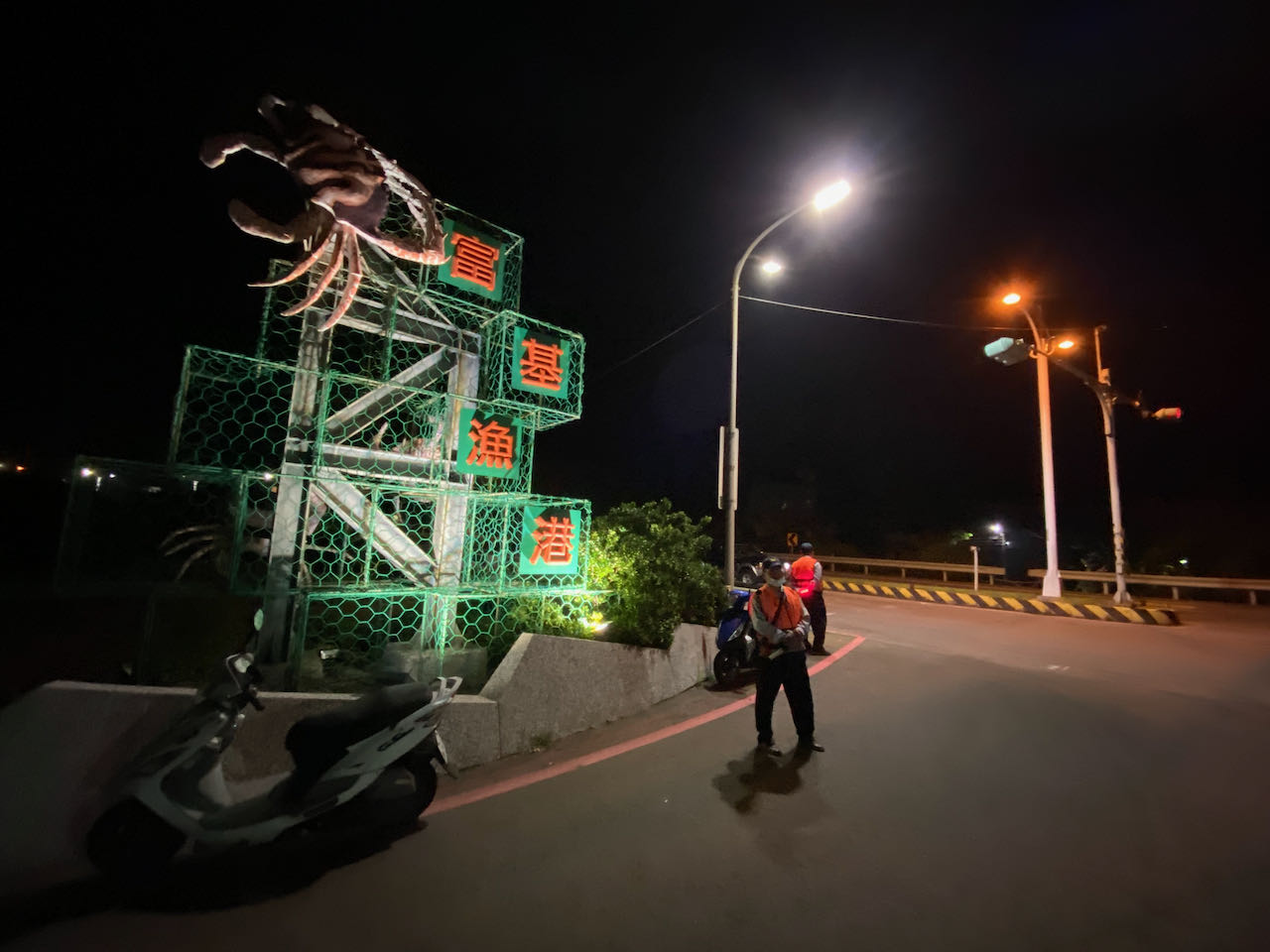
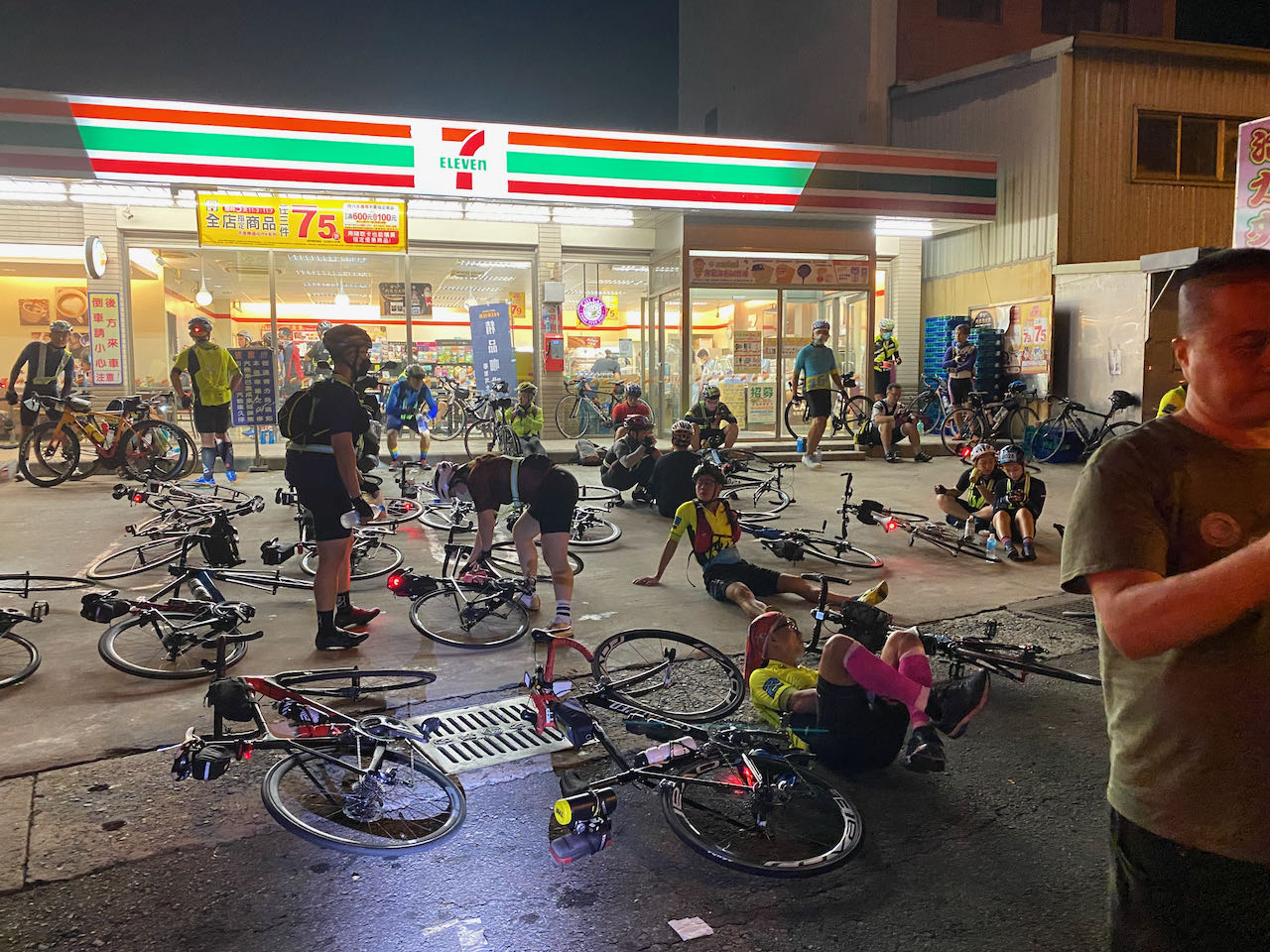
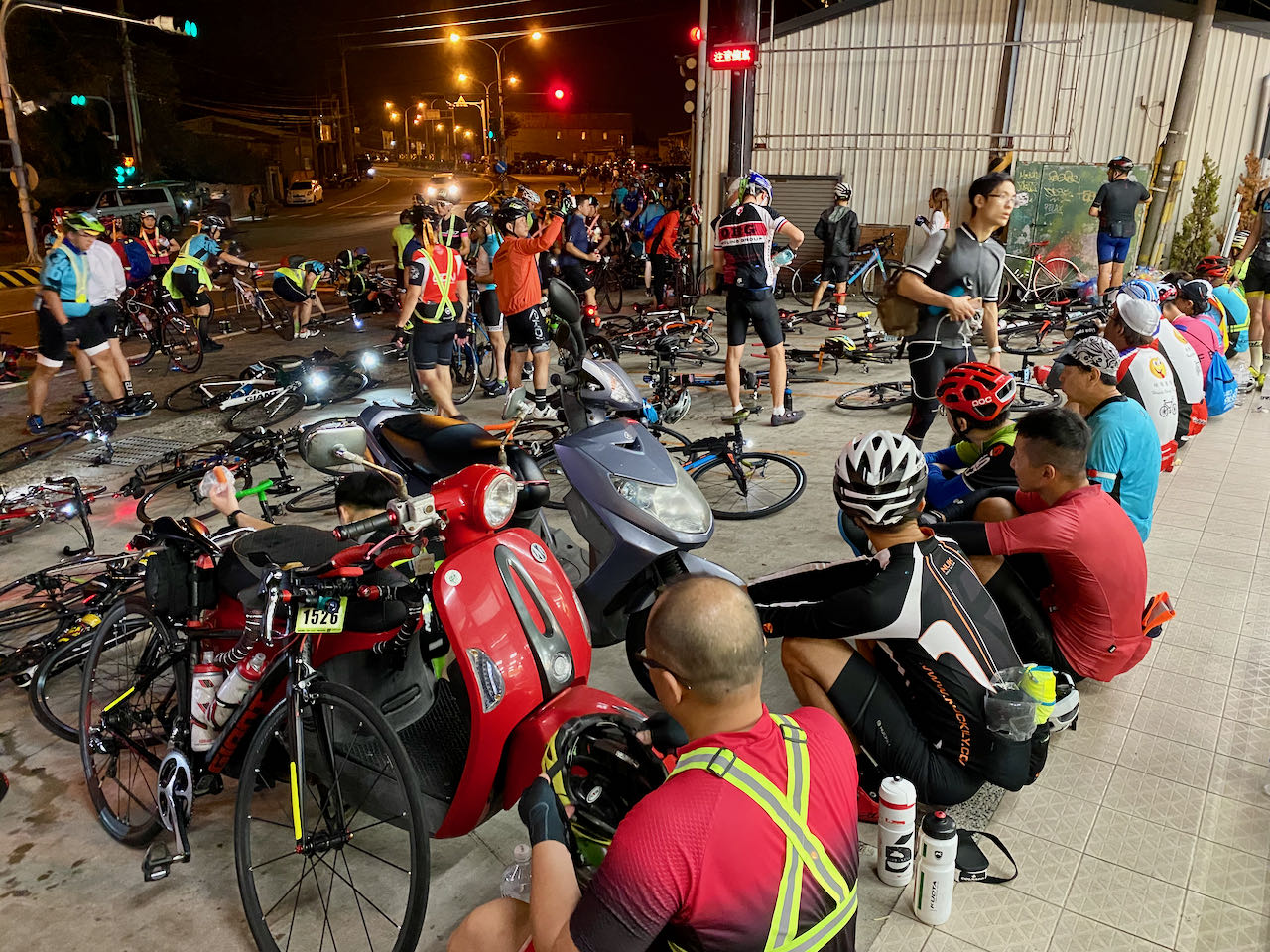
    It only took less than 5 minutes to cycle to Fuguijiao. There was a food truck selling sausages and sticky rice dumplings, one more chance to load up more fuel. At 22:30, there were already lots of participants waiting, most of them sitting in the big car park with their bikes. The big public toilet in the seafood market was open to the participants. No more administrative work required. We only needed to sign in by cycling through the starting gate with our number stickers on our helmets. It took a minute to deposit my backpack. 

    There were more than 1500 participants queueing up behind the starting gate. Getting bored waiting, I chatted up a guy in his fifties who was also doing the challenge alone. Turned out it was his first time, too. Not even had he done the Taipei to Kaohsiung in One Day Challenge before. He finished work that day, asked his daughter to drive and send him to Fuguijiao, took a brief rest and had dinner, then here he was. 

    The event started at 0:00 sharp. I saw the peloton unzipping itself and feeding through the starting gate. When it was my turn, it was more than a minute later. It was rather packed and we occupied a whole lane of the road. 

    We were supposed to follow the traffic lights. But there was really no good reason to stop for the light at those small junctions at a time like this. So, everyone just proceeded after making sure it was safe to go. At some important junctions, there were traffic controllers to guide the participants. 

    After passing Guandu bridge (27km), the peloton stretched much thinner and I was able to cycle at my own pace. I stopped to buy a bottle of water at the first convenience store after Guandu bridge. A couple passing by were surprised to see so many bikes in the small hours and asked me where we were going. I proudly said “Eluanbi Lighthouse” and then moved on, probably leaving them even more surprised/confused. 

    The wind was not particularly favourable to us but it was a nice ride on the west coast. In less than 3 hours, I had covered 85km and reached my first supply stop at Yongan Fishing Harbour. There were big boxes of energy gels stacked up in the convenience store. I ate two onigiris and one pack of energy gels, maybe a bit too much and too quickly. My stomach gave me a warning nudge with a reflex, almost creating a reflux. OK ok. Next time, I would be gentler.

    After taking a break and refueled, I was feeling refreshed and energized. I found myself overtaking a fleet slowly. But I soon realized the leader was cycling at a very steady pace, so I decided to tag along for drafting. Their pace was just right for me! For courtesy, I did not follow them too closely, leaving more than one bike’s length in front of me. But it was such a wonderful 20km ride. At the first official checkpoint in Hsinchu (107km), they stopped and I carried on. Then I saw them in front of me again as they had overtaken me when I was looking for a toilet. How lucky I was! I tagged along with the group again.

    I made it to my 3rd supply stop (148km) in Baishatun at 5:20 a.m., more than 1.5 hours earlier than planned. The group carried on and I stopped for a break. To be honest, I had almost worn myself out trying to keep up with them. I checked my iPhone and found that the battery was still 70% full. I had put it into Low Power Mode and only used it to play some music. The energy level of my first light also looked good. The sun would be rising soon. I was glad that I had decided not to bring two power banks with me.

    I set a timer for 15 minutes and sat on the ground for a break with my eyes closed. Then, I was ready to go again.

    A punctured tyre, and more

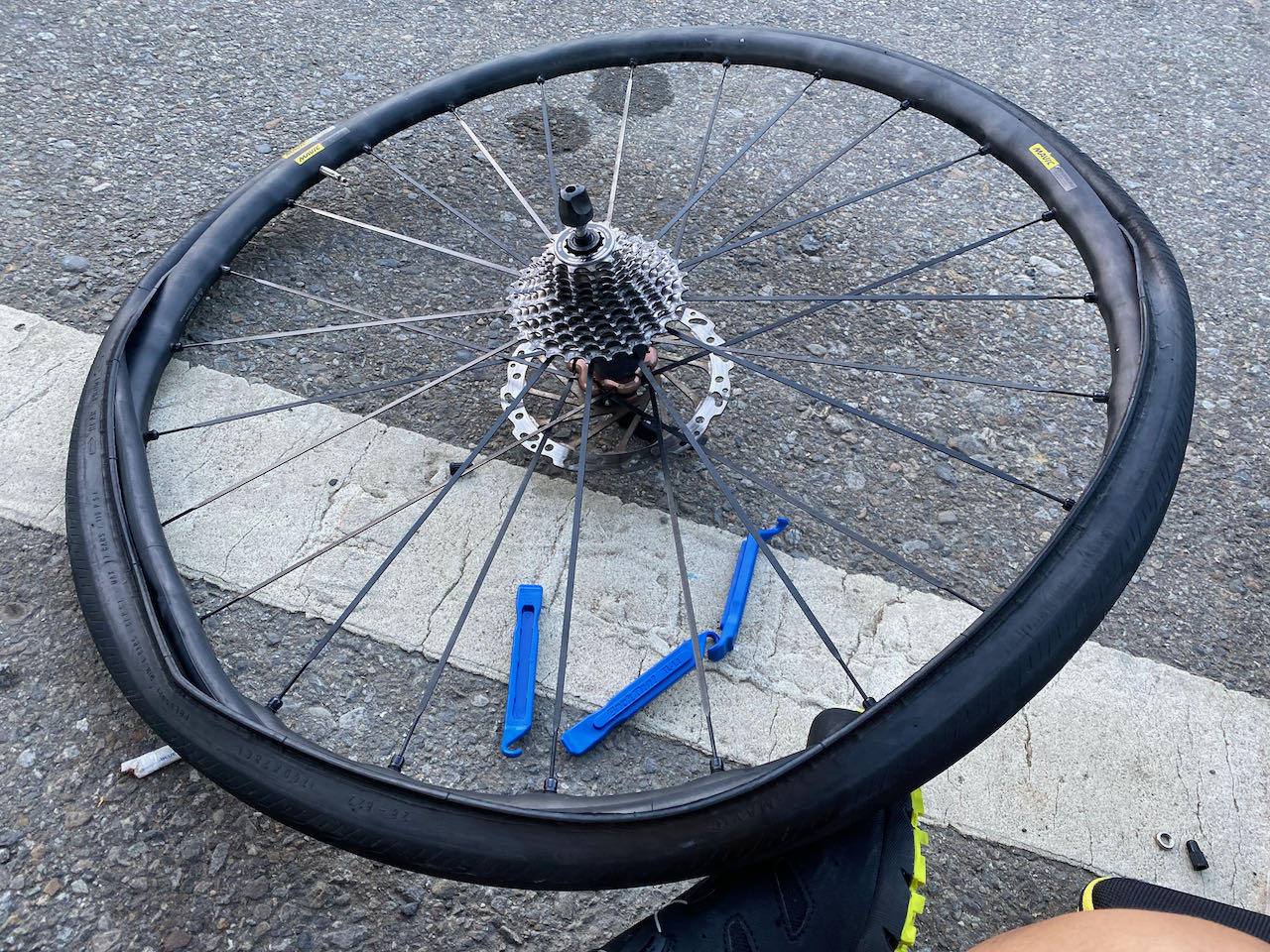
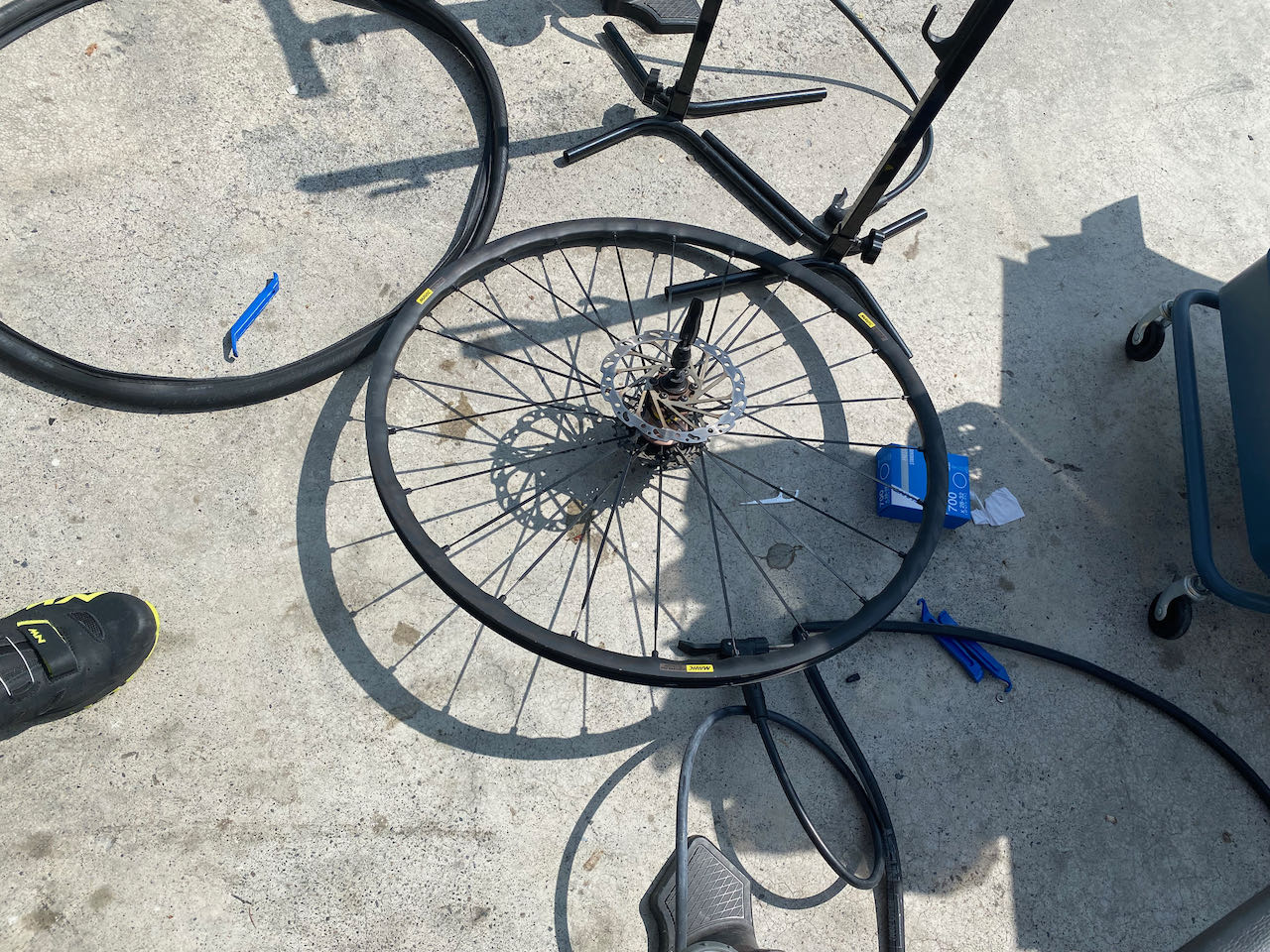
    At 6:15 a.m. I bumped into a pothole with very sharp edges. My rear wheel was flat. It must be a pinch cut. But no worries. I made good progress so far and I had a spare tire and a hand pump for occasions like this. Staying cool, I took a bite of some snacks and used 14 minutes to replace the tyre (I took pictures to keep time record). I did not want to spend too much time and effort on pumping. So, I started cycling after putting a decent amount of air into the tire. My average speed was well above the required 22 km/h for finishing the challenge in 24 hours and I wanted to keep it that way.

    So, I borrowed a floor pump from a supporting car to make sure the tyre pressure was high enough. It was only 60 PSI. In order to make sure the pinch flat wouldn’t happen again, I pumped it up to 100 PSI, 20 higher than what I usually use.

    As I entered the west fringe of Taichung city, there were lots of traffic lights with very long countdowns. My average speed was dropping to a low 23km/h. Then, the rear tire went flat again at 8:15 a.m. Shit! Did I do anything wrong when I fixed the tyre? I still had inner tube patches and I could fix a puncture. But if it was a pinch cut again, those wouldn’t work. Besides, it would add 15 minutes or more to patch the tyre. So I tried my luck by calling up a friend who was providing support to a participating team. He had told me he could help if needed as long as it did not interfere with his operation. He happened to be only 2km away from me and he would give me two more spare tyres. 

    We agreed to meet midway while he cycled towards me and I walked my bike towards him. Some truck driver saw me and offered to bring me to a nearby support station but I politely declined, believing I would be seeing my friend soon. But then we realized we were both heading in the wrong direction and away from each other! My rear tyre started to come off from the rim as it was rolling on the surface full of dirt. It got more and more difficult to push my bike forward. That’s when a man on a scooter with all kinds of bicycle supplies and tools saw me and stopped to ask about my problem. He was there to provide support to his friends. He gave me two inner tubes and ended up staying with me to fix the tyre. He refused to take any money from me. 

    It was a puncture that caused the flat. We found the sharp object and removed it from the tyre. It was pure bad luck, not that I had done it wrongly the previous time.

    Try to catch up, but…

    I had lost count of how much time it took us to fix this problem. I realised that my average speed had dropped to around 21km/h. I tried to make up for the time lost but my lower back got so stiff just like flying with economy class on a long haul flight. I needed to stop to take more breaks. It seldom happened to me when I was on this bike. 

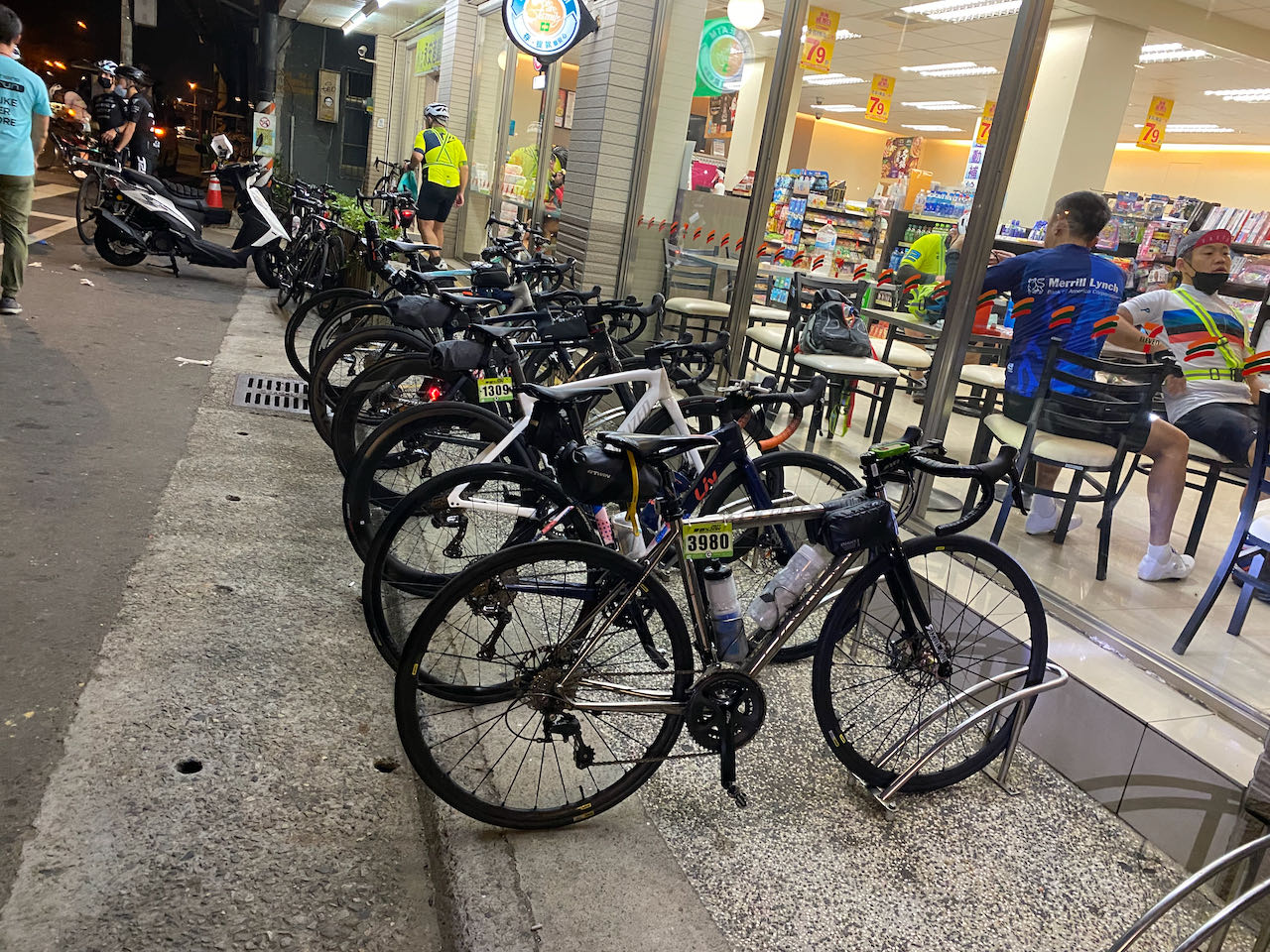
    I also found that my favourite energy gels were sold out in convenience stores. Only chocolates, cakes and breads were available. I stopped at a busy one for supplies. There were so many bikes that I had to lay mine down on the roadside. Just when I was ready to pick it up and continue my ride, I heard gas leaking. No way! It’s my bike again! The rear went leaking again after 45km.

    Well well well, no worries. The situation was far better than the previous time. I had two spare inner tubes (one from the man on scooter and one from my friend). Also there was a pop-up stall selling bike supplies and tools right beside the convenience store, from which I bought another inner tube because it was sold in a box. It gave me a bit more faith. The staff of that stall also let me use their floor pumps. Should it be necessary, I could even get new tyres from them. At this point, mine looked suspicious.

    I removed the inner tube and inspected it. The wheel was warm under the sun. The inner tube had a small hole facing the rim. It was neither a puncture nor a pinch. I concluded that it’s not my tyre that had caused the leaking. I decided to keep using it, partly as a proof of my reasoning capability and my sanity under this woeful situation. I was not defeated yet.

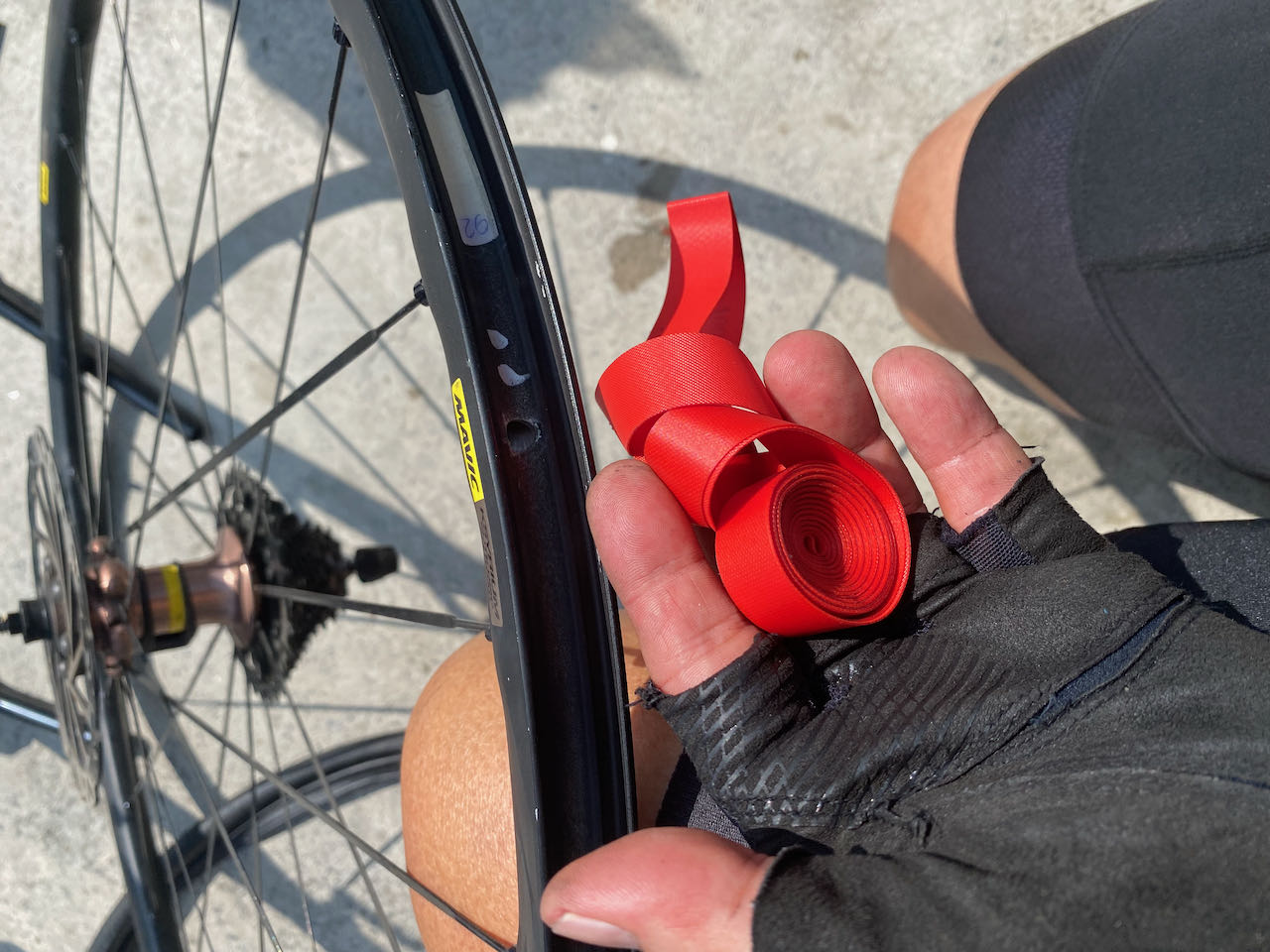
    From my past experience, when we have a hole like this, it means the rim tape is getting too old. But there was no rim stripe nor spoke hole on this wheel. I thought there must be something wrong with the rim surface and I had a rim stripe with me. So, I put it on the rim and installed the inner-tube-sold-in-box. I pumped it to slightly over 100psi. Worked just fine. 

     (When I told Chengnon about this afterwards, he said it was the tube that was defective.)

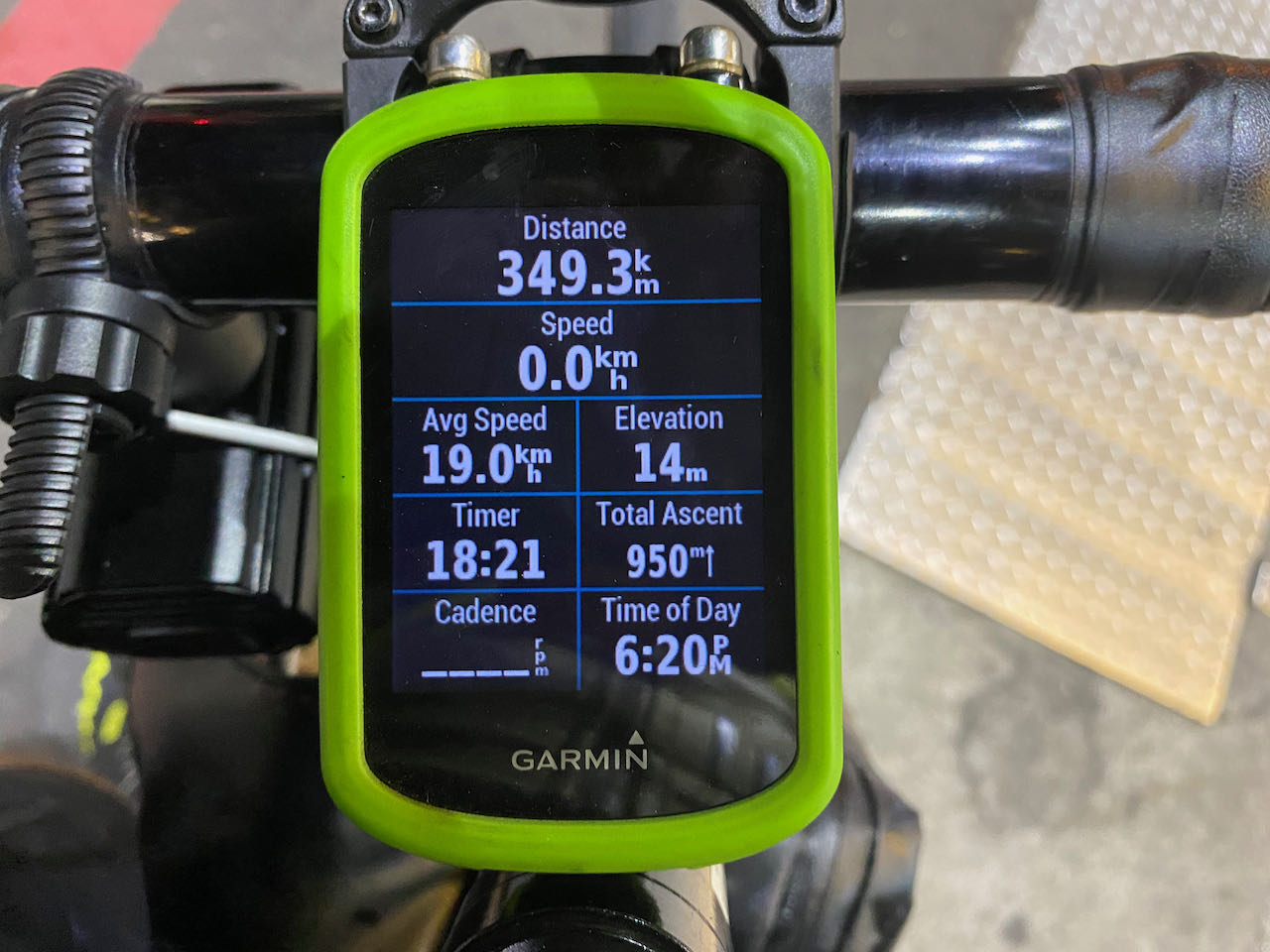
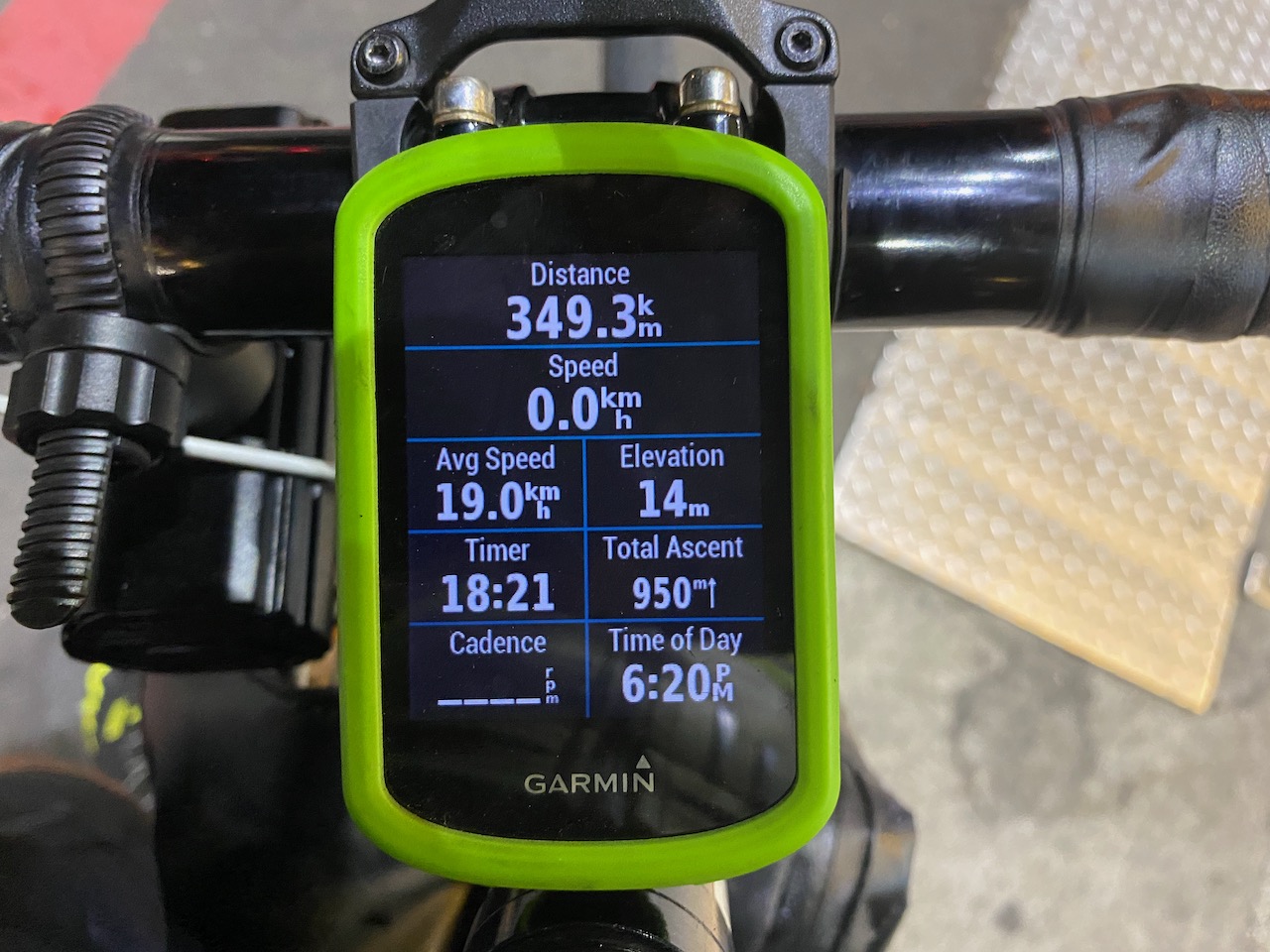
    When I was ready to go again, I checked my Garmin and found my average speed dropped to 19km/h, well below my target speed of 21.25km/h in order to reach Eluanbi Lighthouse by 0:00. My legs were still working fine although they felt weaker. My feet had swelled up but they were okay after I released the buckle to the extent that my feet could slip out from the shoes easily. I was glad I had bought a pair of oversized shoes. 

    Then, I realized I could ride at a speed of 30km/h more easily. There were dry leaves rolling alongside me on the road. Yes! The wind had changed. Now it was in my favour. My average speed climbed slowly to 19.4km/h. But the stiffness on my lower back had evolved into unbearable pain. I found myself putting more weight on my hands and my shoulders were tense. I had to stop more frequently to stretch. Ah… the tyre pressure was probably too high as it’s 25% higher than usual. It might have absorbed less shaking and rattling, which had been putting pressure on my spine since the first puncture. But I was hesitant to release some air because I did not have a gauge and I did not want any more flat tire.

    I had covered 300km. It was clear that I wouldn’t be able to finish within 24 hours. A part of me missed my comfortable bed back home while the other part was trying to convince myself to keep going. The game was still on. I was making progress despite all those setbacks. It would soon be 400km and I would be counting down from the last 100km to reach the finish line. I took some painkillers for my lower back pain, though not quite helpful. I decided to treat myself to a longer break with some real food when I reached Tainan city. 

    Time to decide

    The route was flat, the road surface was nice and the wind was in my direction. I managed to overtake some other participants. My cadence sensor went offline and the music from my earphones stopped. When I reached Tainan city centre, it was totally dark and the effect of lack of sleep kicked in. Or perhaps the effect of the painkillers too. My mind started to go blank from time to time. I bought instant noodles and coffee at the first 7-Eleven I saw. And then I found my iPhone was off. The battery had drained much sooner than I expected. This was the last draw. Technically I did not need my iPhone to keep cycling. I had my Garmin for navigation. My first light was still showing no sign of low battery and the second light was untouched. There was still some juice in the powerbank. But my will power was hit hard by yet another unexpected situation. 

    I could still push myself forward. If I arrived at Eluanbi Lighthouse by 6:00 a.m. the next day, there would be a nice hotel room waiting for me.

    But then the pain on my lower back was getting excruciating. I would have to stop more frequently and rest longer. The time I stayed on the bike would get shorter. It would be harder and harder to estimate my arrival time. In case I arrived late, I was not quite sure where to collect the hotel room key. My backpack and bike bag would be shipped back to my home the next day. Without a bike bag, I would not be able to board the bus with my bike… More importantly, beyond Kaohsiung, there would be no escape route and I would have to keep going until I reached Eluanbi Lighthouse or turned around. I was feeling a little bit dizzy and sleepy already. The risk of falling off the bike was not nonexistent. If only I had subscribed to my friend’s supporting team! I could have supporting vehicles waiting for me and bringing me to the hotel in case I exhausted myself before reaching the finishing line.

    The Tainan Train station was 15km from me. It was still open. I could cycle there, drop my bike at the luggage room for shipping back to Taipei, then board the next train to Tainan HSR station for a 2 hour ride home. The next exit option would be Kaohsiung. But I wasn’t sure if I could make it there before 8:00 pm when the luggage room closed for the day. So, I decided to retire from the challenge in Tainan City. By 10:00 pm, I was home for a good shower and hugs with my wife and kids.

    As to the guy I chatted up at the starting line, I happened to have his sticker number in one of my photos. The record showed that he finished in 22 hours 26 minutes. Bravo!

    Self Evaluation:

    The main reason why I could not continue with the challenge is my lower back pain. Here are some factors I think may have contributed to the problem.

    Wrong mattress. My lower back, shoulders and neck would get stiff after sleeping on a soft mattress. This is what I found in that small hotel I had stayed. It may not be a major issue in other circumstances, but for a day with more than 20 hours’ ride on a bike, the issue is bound to be magnified. 

    Tyre pressure. I had increased my tyre pressure quite significantly since the first pinch flat. A tyre with high pressure will transfer more rattle and shaking from the road surface to my body, my spine particularly in the case of a rear tire. In fact, right before big events, one should not experiment with new settings, including positions of the cleats or saddle.

    Lack of long distance training. I finished the Taipei to Kaohsiung Challenge in 2020 without any issues like this time. But I was using an Audax Hercules back then, which was made for long distance cycling. This year I was doing it on a bike with more aggressive geometry. I should have done at least one long distance training and observed the reaction of my body. All those pains and discomfort can be avoided with proper posture. You can refer to this post from Sheldonbrown.com for more details.

    Ineffective painkillers. And I suspected that they had also contributed to my dizziness when I was reaching Tainan.. 

    Unfamiliar route. I had not prepared for the last 100km from Kaohsiung to Kenting. I thought it was just another 100km along the route. But it turned out that this had undermined my confidence and willpower quite significantly especially during stress events.

    Lack of food varieties. I was planning to sustain myself by drinking energy gels because it’s easy to swallow and digest, so that I could spend less time on eating and more time on cycling. But this proved to be harder and less fun than I thought. I regarded the breaks more like an obligation than a chance to relax, both for my mind and muscles. This had backfired. It’s a long challenge. We should reward our mind and body from time to time. The taste of real food would definitely boost morale, even if it’s just a bowl of instant noodle.

    Lack of support. Being an introvert, I did enjoy cycling alone. But for an event like this, the importance of mutual support from teammates and the aids from supporting cars could not be overlooked. I believe my unfortunate experience in the Execution Section has made this clear. 

    So, that’s it. I hope you are going to enjoy the “One Day Two Towers” Challenge and finish it in time.

  • “Two Towers in One Day” Challenge – Useful Info and Experience Sharing (1)

    “Two Towers in One Day” Challenge – Useful Info and Experience Sharing (1)

    このブログ記事の翻訳を進行中です。もうすぐ完成しますので、後ほど再度ご確認ください。ご不便をおかけして申し訳ありません。現在は、こちらで提供されているGPXルートや地図などの情報を自由にご利用ください。

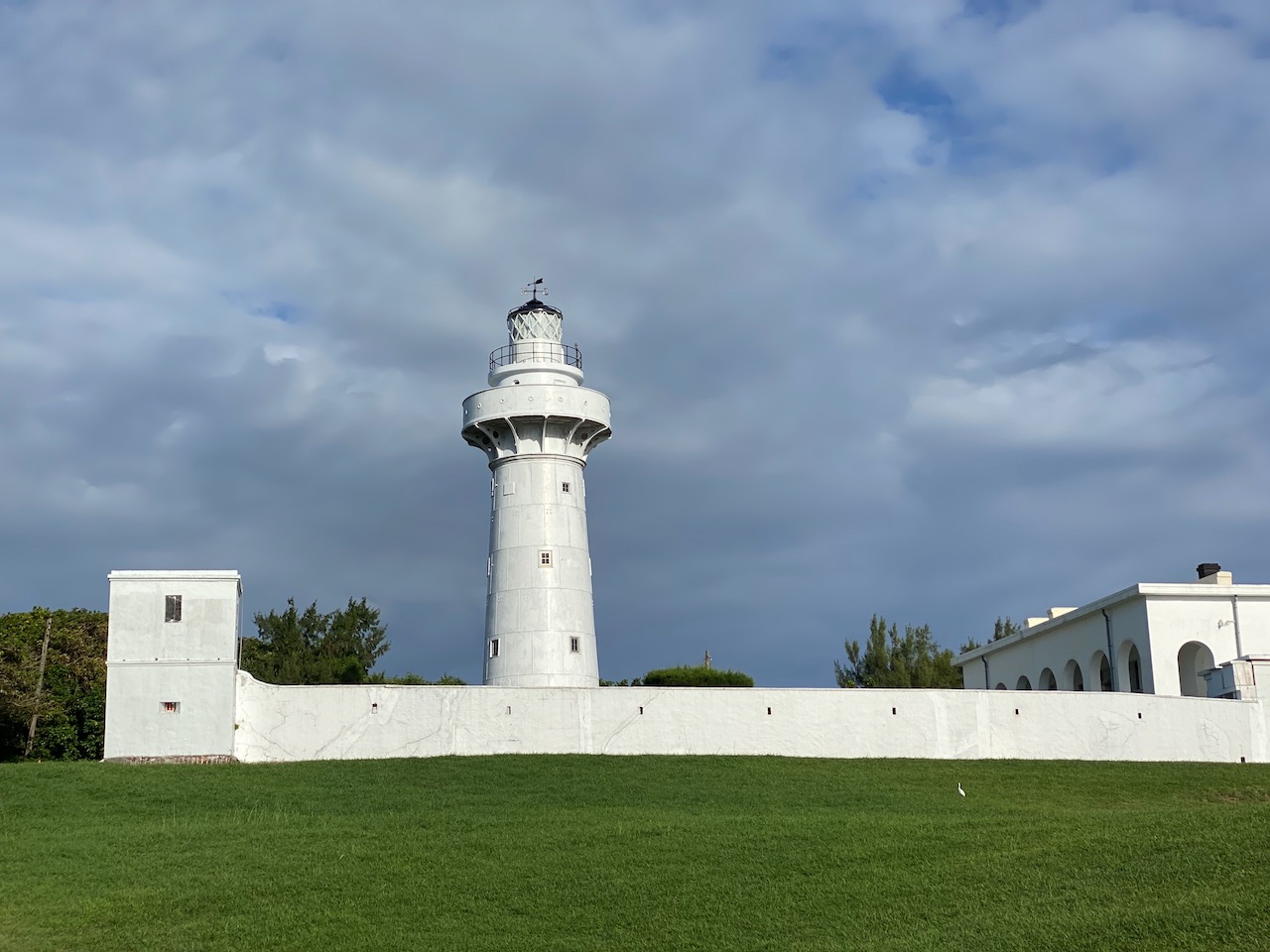
    The “Two Towers in One Day” Challenge 一日雙塔 is another popular cycling event in Taiwan held early November each year. In this event, participants need to start cycling from the northern tip of the island of Taiwan to its southern tip to cover a total of 520km within 28 hours. Two lighthouses, Fuguijiao Lighthouse and Eluanbi Lighthouse, mark the starting point and finishing point respectively, hence the name “Two Towers in One Day”.
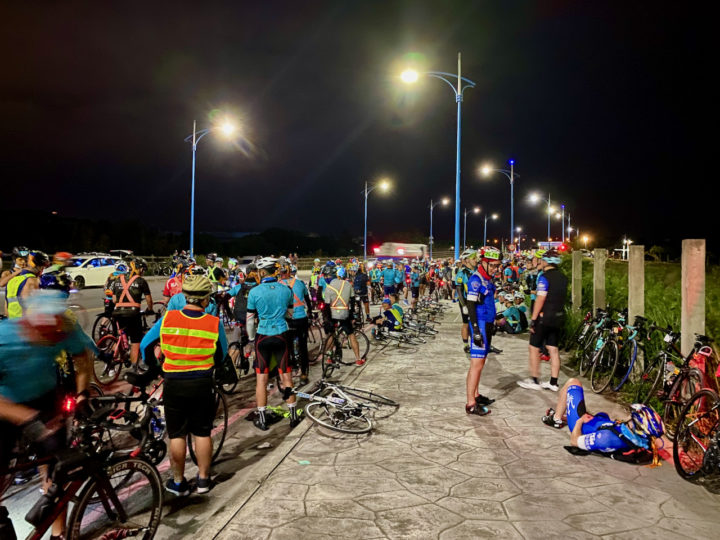
    Those who would like to try a less challenging one can instead sign up for the “Taipei to Kaohsiung in One Day” Challenge 一日北高, which will be held on the same day and cover 360km in 20 hours.

    After completing the “Taipei to Kaohsiung in One Day” Challenge in 2020, I decided to take up the “Two Towers in One Day” Challenge in 2021. Unfortunately I could not make it to the finish line this time. In this post is some experience I would like to share. Please refer to this post for more information about Support, Rules and Administration.

    My Plan and Strategy

    28 hours is a very long stretch of time and I doubt I would be able to stay awake and keep cycling. So I had aimed to finish it in 24 hours. I believed I would be able to stay sharp and focused for that long if I had enough sleep beforehand. With this target in mind, I would need to achieve an overall average speed of 21.66km/h. To allow 4 hours for breaks, my average moving speed would need to be around 26km/h. This looked reasonable, given that there should be prevailing wind coming from the north east in the winter that would give us a push.

    I used to mistake the impact of lack of fuel as tiredness when my legs went soft after cycling for around 2 hours. Then I learned from my experience last year during the “Taipei to Kaohsiung” Challenge that our legs never get tired and all I need is fuel. As long as we keep fueling our muscles by taking in carbohydrates, our legs will keep pedalling. Along the route of the “Two Towers” Challenge, there are numerous convenience stores where we can find all kinds of carbohydrates, including my favourite energy gels. Their locations are marked on the GoogleMaps in the next section of this post. Since supplies are very easy to get, I decided not to join any teams nor hire any supporting vehicles.

    The Challenge starts at 00:00 Saturday (midnight). I took a day-off on Friday, booked a hotel around 2km away from the starting point with the hope to get as much sleep as possible right before the event. Participants could drop their night pack with the organizer at the starting point and it would be sent to the finishing line for collection when the participants arrive. The organizer could also help book a hotel room right next to the finish line if needed. This is what I had opted for. I could take a good rest when I finished. For the return trip, there are coaches bound for Kaohsiung HSR station. I could bag my bike, hop on one of the coaches and then take the HSR back to Taipei.

    Contingency Plan: In case I needed to retire early from the Challenge, there are numerous train stations along the route. Some train stations would take my bike and send it back to Taipei for me to collect later. I could then travel like an ordinary passenger (though with filthy cycling outfits). There are also some coach stops. The tricky part is between Kaohsiung and Kenting. The population is sparser further down south and there won’t be much public transportation available in between. 

    The Route

    The organizer suggests a route (shown in blue on Google Maps) but we are not obliged to use it. We just need to pass the four checkpoints and reach the destination within respective time limits. I had done some research and modified the route (shown in green on Google Maps) a little bit to avoid a climb (100 metres of elevation) at Houlong Township (後龍鎮) and the traffic lights in Budai Township (布袋鎮) and Kaohsiung. The segment in Taichung also has quite a few long traffic lights but I have yet to see any tips on how to bypass it.

    The checkpoints and those convenience stores close to the route are marked on this map for your easy reference.

    Equipments and Accessories

    Bike

    I used a Rikulau Master 325Ti with a 11-28T, 11-speed cassette and a compact chainring (50/34T). With a narrower range of teeth numbers (instead of 11-32/34T), the 11 steps between the gears are smaller, which is easier to get an optimal gear ratio for my tired muscles to work with approaching the end of the Challenge. 

    The frame is made of Titanium alloy with 3% of Aluminum and 2.5% of Vanadium, hence the name 325Ti. Although 325Ti is considered to be less stiff than a 64Ti (6% Aluminum and 4% Vanadium), I was surprised to find it much stiffer than I had expected on my first ride. It is so light and stiff that the 28-tooth cog is enough to handle all of the climbing I usually do. I have no problem climbing with my friends who use big cogs with 32 or 34 teeth on their cassettes. This bike has boosted my confidence.

    A short chat with Chengnon Hsu, co-founder of Rikulau, gave me a better idea about how they achieved such an efficient bike. The titanium tubes were shaped by hydroforming to make them structurally stiff, strong and lightweight. Instead of being built with a simple round top tube and down tube, the Master 325Ti was built with round hexagonal tubes swaged to match the size and shape of the head tube and the bottom bracket shell for broader structural support. 

    Lights

    Lights are vitally important. There are segments with no street lamps at all and there are about 18 hours in which we need to cycle in the dark. One of my friends lent me a powerful one with 1600 lumen. I did not need such a bright light but it comes with a big big battery, which proved to be a huge benefit. During the event, I only set it to half its brightness and it went on for 6 straight hours, showing no signs of exhaustion. It could probably last through the second night if I had continued with the Challenge. 

    Pedals

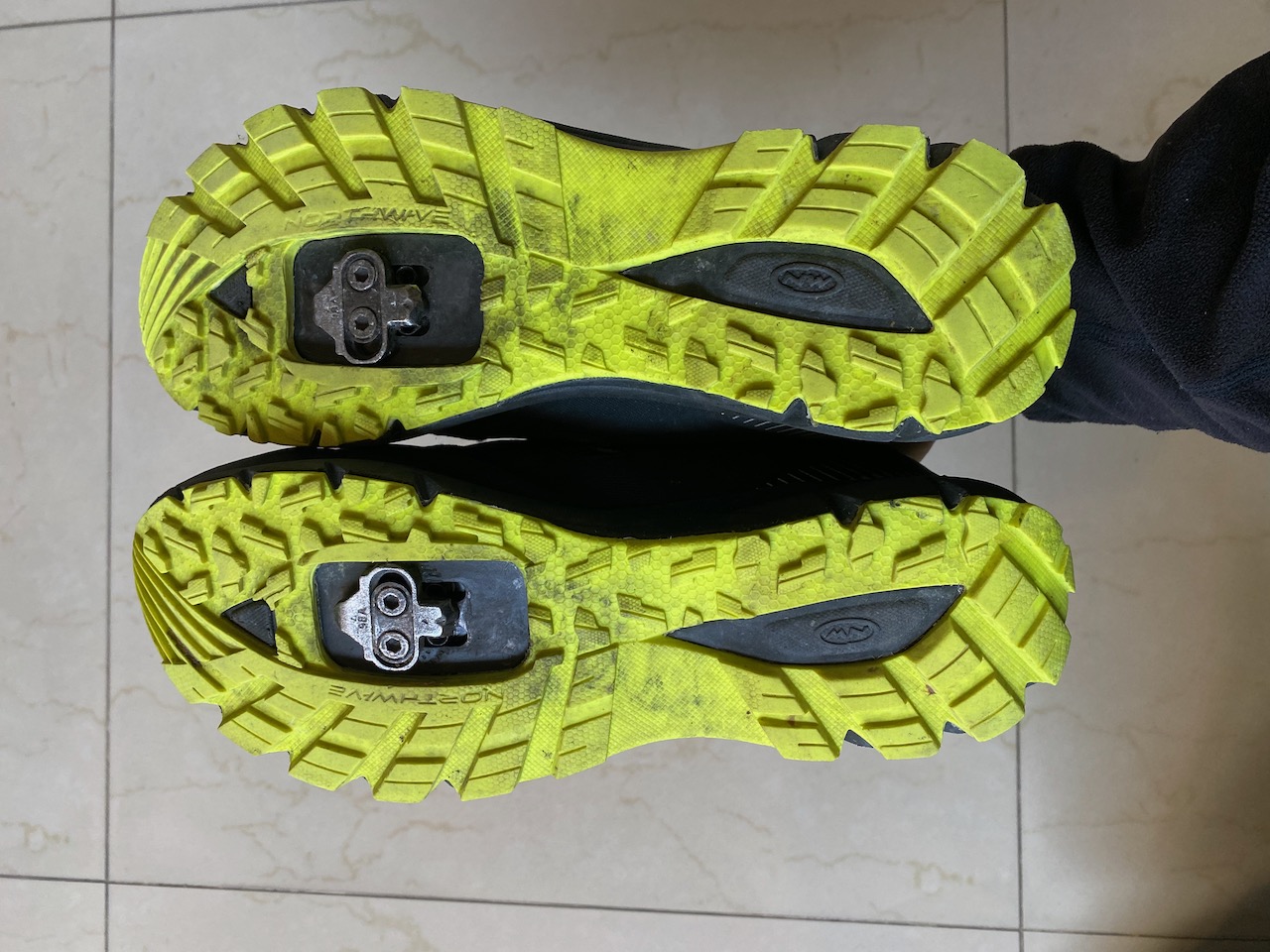
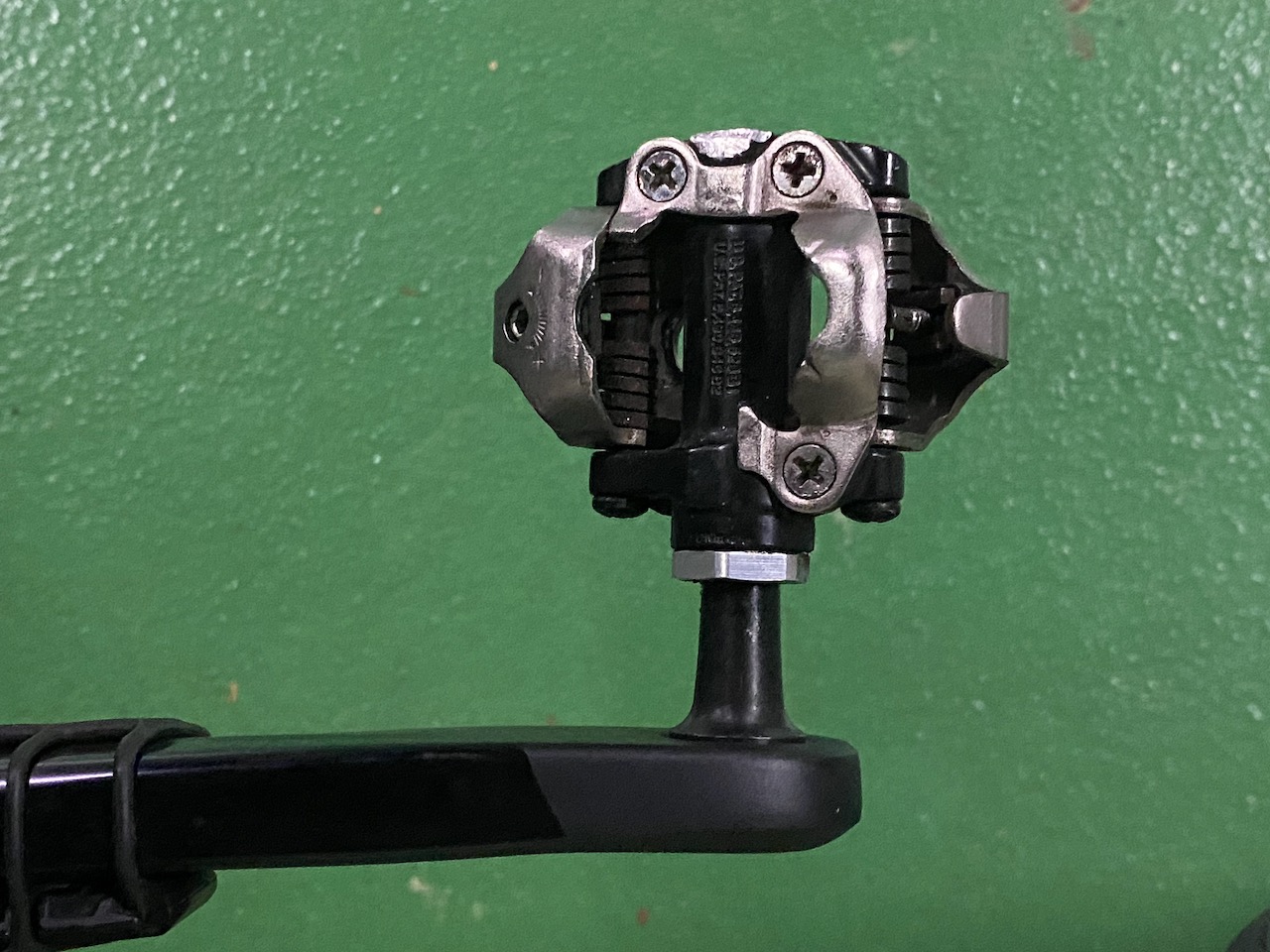
    I used Shimano SPD pedals (generally used on mountain bikes) because the cleats for these pedals are recessed into the shoe soles so that I can walk in them normally. I did not want to pack an extra pair of shoes for the return trip. Also, in case I could not ride on my bike, I could still walk.

    The route is rather straightforward but it would be a waste of time and effort if I miss a turn. So I loaded the route into my Garmin Edge 530. Smartphones could do the job but they consume much more power and are vulnerable to rain and rattles.

    Water Proofing

    It is likely to rain in winter in northern Taiwan. I have no problem cycling in the rain except I really hate it when my shoes are soaked. So I have got these velo Toze cycling shoe covers. They remind me of those latex swimming caps. It is really difficult to put them on but totally worth the trouble. I tested in the rain for more than an hour. My socks and shoes were as dry as they should be. 

    Electronic devices were sealed in water tight bags in case it rained.

    Repair Kits

    I packed a spare inner tube, tyre patches, a tyre boot, a hand pump, a chain tool and a quick link, a multi-tool, a rim stripe. I did not pack CO2 canisters and a second inner tube because the chance of getting flat tires was not high. One insurance policy should be enough (which proved to be not quite enough).

    Training

    In the few weeks before the event, I cycled more than 35 km every morning on weekdays. I had also done some long distance training when I was preparing for the “Taipei to Kaohsiung” Challenge (Ahem… last year). I believe it should be enough for me to complete the challenge. 

  • “Taipei to Kaohsiung in One Day” Challenge (2)

    “Taipei to Kaohsiung in One Day” Challenge (2)

    このブログ記事の翻訳を進行中です。もうすぐ完成しますので、後ほど再度ご確認ください。ご不便をおかけして申し訳ありません。現在は、こちらで提供されているGPXルートや地図などの情報を自由にご利用ください。

    Execution

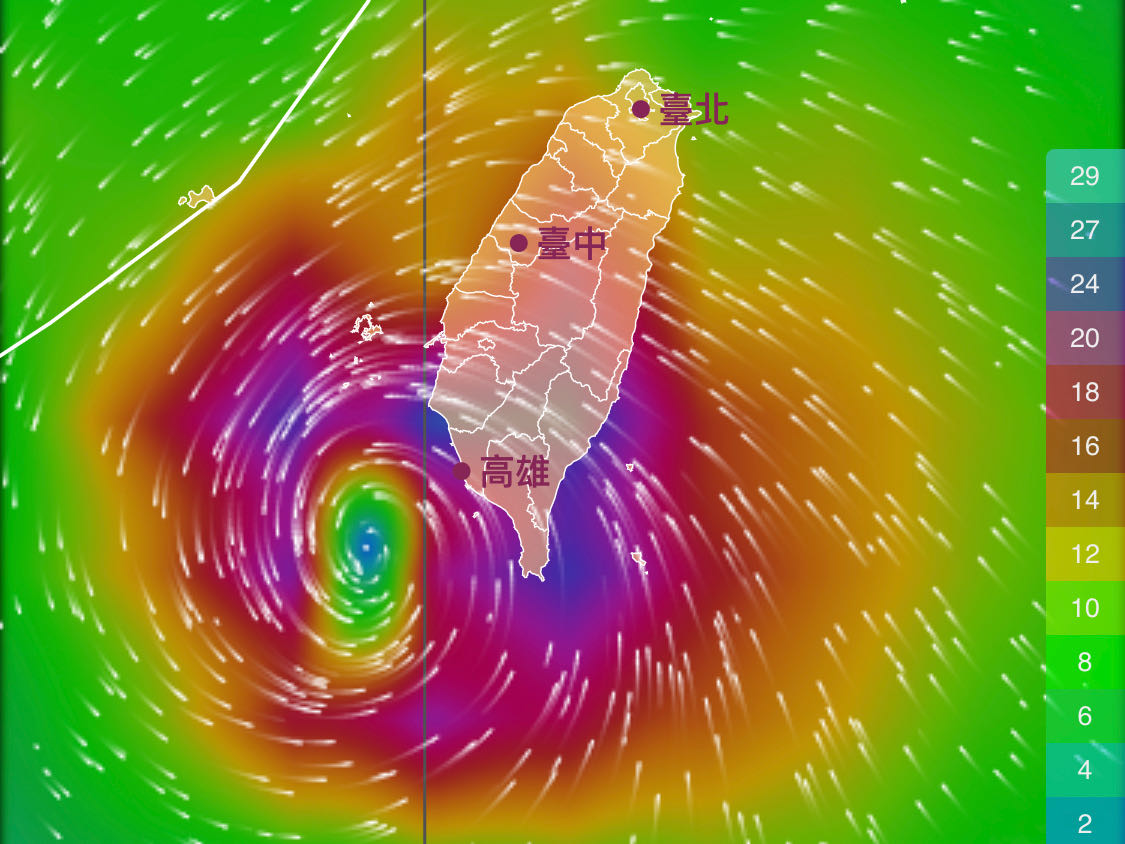
    In order to make sure I have a quiet place to sleep in the afternoon before the event, and also to welcome me at the finish line, Lois brought the kids to a resort in Kaohsiung in the morning of the event. I was left alone at home to prepare for the event. There had been a typhoon near the southern part of Taiwan but it left just in time. The event went on as planned. I had a big lunch to load up more calories before putting myself to sleep. Perfect! So I thought.

    Unfortunately, I was met with an unexpected issue. I woke up in the evening with a weird feeling in my stomach. My digestive tract must have shut down when I was asleep. It didn’t get a chance to deal with the food I ate and now the food was frozen up inside! Oh… I should not have eaten such a big meal before sleeping.

    I cycled 35km to the starting point from home. As I was approaching the gathering point, the convenience stores were getting more crowded. The weather was so fine and my stomach started to wake up. I stopped at a convenience store and ate microwave noodles to encourage my bowel movement. But instead I made it worse. My stomach froze up again. Well, anyway, now I had a full load of food inside my digestive tract. I wouldn’t need to stop to eat. 

    There were coaches and vans unloading bikes everywhere near the gathering point. Some of the participants were actually from Kaohsiung or the southern part of the island. They had already spent hours in the coaches just to get there. It must be harder for them as they had a much longer day on the road. 

    When it was about time, I pushed my bike to the starting line. There was already a long queue building up, occupying a traffic lane. But the crowd was quiet and orderly. There was no need to fight for any specific positions as individuals’ records would be taken when we passed the gates.

    The race started finally! The whole fleet moved forward slowly feeding into the starting gate. When it’s my turn to go through the gate, I heard through the PA system lots of beeping sounds and the organiser’s repeated announcements about the latest weather conditions. Then we were free to set our own pace as the road before us became wider. It was fun to have so many people doing something together. I took it easy, kept my effort constant and managed to keep up with my friends at the first stop, Yongan Fishing Harbour, at 50km. I had a full load of energy bars and energy gels in my bags but I did not eat much because I wanted to take this opportunity to burn some fat. And in any case, my digestive tract had not been moving.  
    At 100km, the 2nd stop Baishatun Gontian Temple, I could hardly keep up with my friends. I arrived just when they had taken a good rest and were about to leave. My average speed was 23km/hour. It was acceptable. But I was on my own from that moment onward.

    My energy level started to plunge and the typhoon, as it was heading west leaving the island, had driven the air to the opposite direction, making the wind blow against us on the southern part of the island. It took me longer and longer to reach my target speed again after each pause in front of the traffic lights. When I was about to cross a long bridge, a fellow cyclist, while catching up from behind, shouted to me telling me to follow tight with the group ahead to save some effort. But it was too late. The wind had nipped me away from the group. I had to press on against the wind all by myself on the bridge.

    Here is the link for the latest forecast

    Then I tried to follow those groups in double pace line. They were moving steadily ahead like a locomotive and radiating a spirit of determination. I could save myself some energy from the wind by joining them. But they were moving at a much faster pace than I could manage so I kept dropping off. I tucked myself in the wind shadows of some solo riders who were cycling slightly faster than I did. The benefit and help was noticeable. The resistance from my pedals was lower so that I could switch my gear one stop higher. I could pedal in a lower cadence with less effort. I kept scanning for other riders with speeds that suit me better, rather like a parasite jumping from rider to rider. But I felt no shame at all. I had seen others using their support vans to push away the wind for them at the front. After the challenge, I learned that not only the riders at the back could save energy as high as 30%, the riders being followed could also save 10% of power. I am glad I reciprocated their favor. 

    It began to rain. I did not bother to put on my rain jacket. It’s good to take away some heat from me. A driver in a support van at the traffic light rolled down his window and offered to give me a disposable poncho. 

    A friend of mine was running a supply stall as a way to promote their cycling App, Velodash. She invited me to get some food or drink when I was there. I asked nicely for a banana from a group of people sitting next to their banner. They enthusiastically offered everything they had. Then I realized I had mistaken them as the staff of my friend. They were actually just there to support their own friends. But they were so ready to help, like most people in Taiwan, who are always kind and generous. 

    I was not worried about my progress as my meter showed an average speed well above 23km/h. Then at around 15:00, I texted Lois to tell her about my progress. I had completed 263km already and with 97km more to go. It’s down to a two-digit figure now! But wait a minute! That meant my average speed for the 263km was only 17.3km/h instead of 23km/h! If I were to finish the whole trip within 20 hours, my average speed had to be well above 18km/h. I was misled by my meter. It was the Average Moving Speed. The timer would stop when I was not moving! 

    Just when I realized that I had to speed up, something magical happened: bowel movements. I discarded some significant weight of burden in the toilet and my body was more willing to take in energy bars and energy gels! I started to follow the experienced riders’ advice: eat before feeling powerless, at least once an hour.  

    I had packed lots of Snickers because of their high energy concentration of weight and volume. Each bar has 220kcal of energy, weighing only 47 grams. In case all the food was sold out or there were long queues in the convenience stores, I would still have enough kcal available with me. I could tear open the bag and eat it while I was cycling. Though it has to go down with lots of water, drinking water is easier to get. These are the upsides I found during the training sessions. But there are downsides. I almost choked on it when I was in a rush to finish it in front of a traffic light. And there are 10 grams of fats, corresponding to 90kcal, in each bar. I have a copious amount of fat in my body. If I wanted to burn my own fats, I should just eat pure carbohydrates, which are also essential to boost muscle power output. 

    There was no shortage of food as I was told by one of my friends who had participated in this event years ago. The convenience stores along the route are getting smarter. They knew that there would be lots of cyclists looking for supplies during the event. So they would load up much more food and energy gels in their shelves and storage. The only thing in short supply is toilets. The queue for toilets in the gas stations and temples were always shorter. They were very generous in letting the participants use their toilets.

    To my surprise, my legs were working afresh after I adopted this energy intake strategy. My speed was picking up and my legs never felt tired. Actually, they had not been tired the whole time. I had mistaken the feeling of lack of fuel as tiredness. It got dark but the rain stopped. I was cruising powerfully. No more wind shadow chasing. Instead, I was aiming at overtaking the others. I had the idea of taking a short break but shook it off my head. I knew there would be many traffic lights inside the Kaohsiung city before I reached the finishing line. I did not want to risk having the finish gate closed in front of Lois and my kids. 

    Finally, I made it to the finishing line at 19:50, 10 minutes before the cut off time of 20:00. 

    Along the way, I saw quite a number of bikes pulling over upside down, probably with flat tires. Lucky me! I had puncture resistant tyres. If there were any flat tyres, I probably would not make it in time. My Apple watch showed that my active calorie burned that day was 8319 CAL. I burned at least 415CAL per hour. So, It’s really important to keep eating to refuel the body.

    After finishing the challenge, my friends took the HSR back to Taipei right away. I went to the resort with my family for a good night’s sleep and a family day in Kaohsiung before returning to Taipei. For those who still want to cycle after finishing the challenge, how about heading to the east coast and completing the around the island? You have done half way anyway.

    Routes:

    This is a suggested route by the organizer. Participants can plot their own routes as long as they passed the gates/checkpoints.

    NOTE: To use the routes, please install the App on your smartphone. The App will launch and load the route automatically after you tap the above links on your smartphone’s browser. For Garmin Connect, you can then use the APP to send the route to your garmin device. If your Garmin device is not purchased in Taiwan, you will also need make sure you have the Taiwan map on your device. Here is our blog post on this topic.

  • “Taipei to Kaohsiung in One Day” Challenge (1)

    “Taipei to Kaohsiung in One Day” Challenge (1)

    このブログ記事の翻訳を進行中です。もうすぐ完成しますので、後ほど再度ご確認ください。ご不便をおかけして申し訳ありません。現在は、こちらで提供されているGPXルートや地図などの情報を自由にご利用ください。

    The “Taipei to Kaohsiung in One Day” Challenge 一日北高 is one of the most popular cycling events in Taiwan, organised by Taiwan Bike Association 台灣自行車協會 and held every November. In order to be awarded the certificate of completion, participants need to cycle from Taipei to Kaohsiung along the west coast within 20 hours. The total distance is around 360 km. There is actually another more advanced challenge held at the same time and along the same route, the “Two Towers in One Day” Challenge 一日雙塔,  which starts at the island’s northernmost lighthouse Fuguijiao Lighthouse and ends at the southernmost lighthouse Eluanbi Lighthouse, making it a 520 km route instead. To get the certificate of completion, you have to complete the route within 28 hours. These two Challenges are so popular that on average there are more than 3,000 participants signing up for the events every year. I was one of them in 2020. It was such a wonderful experience! I have learned a lot and I would like to share with you in this post.
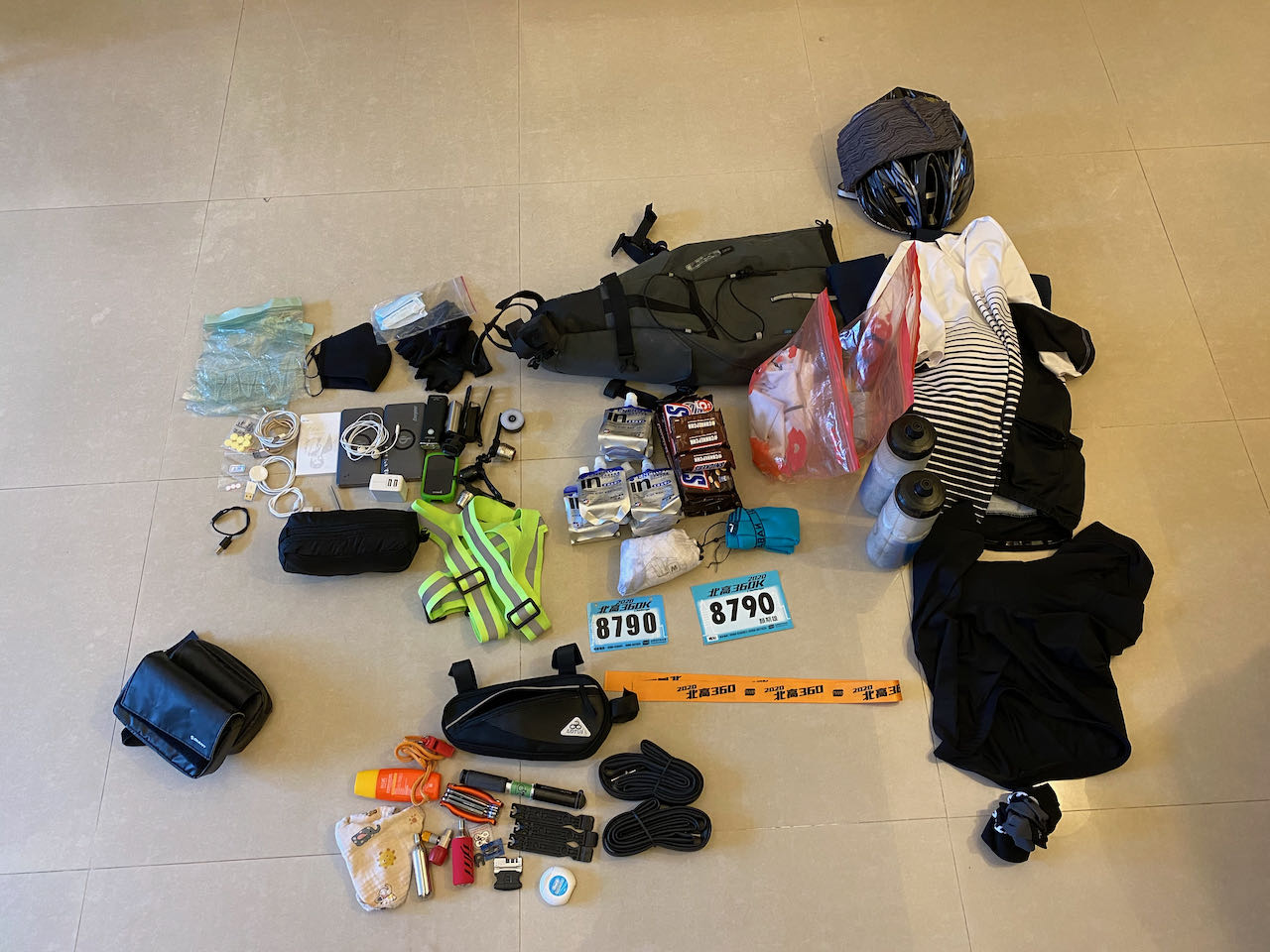
    Rules and Administration

    Participants can usually sign up and pay for the event online from 1 January to 30 June via the organizer’s website. Participant’s pack will be distributed 2 weeks before the event commences. A sticker with an IC chip will need to be stuck onto the helmet for the sensors at the starting point and finish line to mark your time. There are also 3 gates/checkpoints en route which the participants will have to pass by a certain time. As the roads won’t be closed for the event, participants will need to follow traffic rules like other normal road users. But there will be voluntary helpers stationed at important junctions to direct traffic.  A suggested route in GPS format is also available for download. 

    Supports

    The organiser provides essential support only, which includes transferring a small backpack for each participant from the starting point to the finishing point. No food nor drinks are served at checkpoints so you will have to prepare for your own. In case of emergency, participants can reach out to an emergency hotline for help. But everyone is responsible for arranging their own transportation home.

    The organizer recommends participating in groups so that it will become more affordable to hire support vehicles to provide services like supplies, repair and maintenance, luggage transportation, charging of phones and navigation devices, and the return trip home.

    But for a free soul like me, I prefer doing it at my own pace. I can get my own supplies from the convenience stores and small shops in the towns along the route. I am also able to fix any small issues with my bike if needed.

    Bike 

    Bikes used in this event were predominantly road bikes but there were also folding bikes like Bromptons. I think as long as your bike is comfortable for long rides, properly fitted and has enough gear ratio, it would be fine. 

    For me, I picked an Audax Hercules, a flat bar road bike from Rikulau specifically designed for long distance cycling. It is one of the most popular models in our rental fleet for multi-day rides. I could ride in a more relaxed posture on this bike for the long journey. And I wouldn’t need a drop bar for the benefit of aerodynamics as there would be prevailing winds from the north east to give me a push. 

    I supposed weight is not that important for this event as the route is mostly flat. Therefore I had packed everything I needed on the bike. 

    Accessories

    Lights were paramount. The event started at midnight and when we arrived at Kaohsiung, it would be dark again. We would need to cycle in the dark for more than 10 hours. The roads on the west coast are not well lit. Potholes and stones can ruin your bike or throw you off balance if you ride over them unexpectedly in the dark. I have a friend who crashed because of a small piece of stone when she was doing night training on that route. A big bright front light can provide you with better vision and help you go faster and safer. For safety’s sake, participants of the event are also required to wear reflective stripe vest when it’s dark.
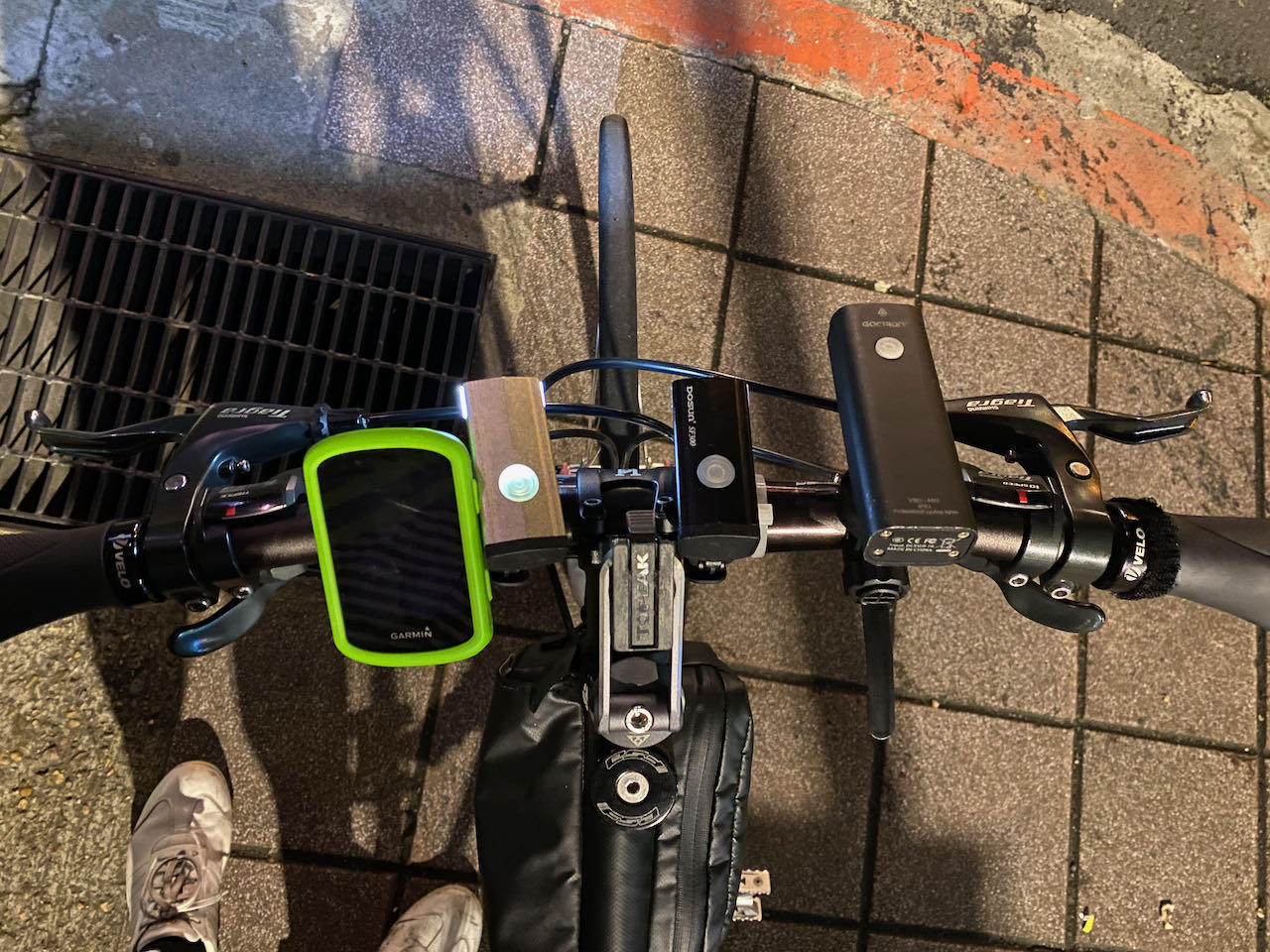
    November is the wet season so you should prepare to cycle in the rain. Your spare clothes and electronic devices should be kept in watertight bags.

    My other advice is to load up your Easy Card for quicker transactions in the convenience stores. You may also keep some small change in hand so that you can buy water from those betel nut booths if needed. They can be found in the middle of nowhere and they have long opening hours, too.

    Training

    My goal was just to finish it within the required time. I didn’t think I needed any extra training as I had been cycling regularly and would cycle once or twice a month for routes more than 70km with elevation gain of 800 metres or so. The route of this challenge is rather flat with a short climb of 100 metres elevation gain. It shouldn’t be too difficult. Nonetheless, I did do 3 training rides on this route with my friends to see how my body would react to long rides. I had cycled from Taipei to Lukang (180km) twice, the first one during daytime to familiarize myself with the route and the second one at night just to simulate what I would need to do in the event. Then I did the second half from Taichung to Kaohsiung (200km) just to find out what to expect from the route.

    I was totally fine during those training rides except that my forefeet hurt a little bit after pedalling for numerous times. I expected that it should be easier in the event with the help of the wind in November. However, the full effect of cycling 360 km in one go was yet to be discovered. 

    After these three training sessions, I started to formulate a strategy. If my average speed was 25km/h, I would be able to cover 360km in 14.4 hours. I would then have 5.6 hours (20 – 14.4) for breaks and meals, which seemed to be quite sufficient. Even if I did it at a slower pace like 22km/h, I would still be able to cover the whole route in 16.4 hours with 3.6 hours to spare. So, I just needed to keep my speed well above 25km/h. And if It’s too hard for some parts, 22km/h was also good enough. Just take it easy lest I drive myself too hard and get hurt, this was what I had believed at the time. I would also need to keep myself awake for 20 hours. My strategy was to take a day off right before the event. I would start sleeping after lunch and then get up at 21:00 to start going to the starting point. For my friends, they planned to do it as fast as they could the first half when they still had the tail wind and then see what would happen.
  • Taiwan KOM Challenge in 3 Days (2)

    Taiwan KOM Challenge in 3 Days (2)

    このブログ記事の翻訳を進行中です。もうすぐ完成しますので、後ほど再度ご確認ください。ご不便をおかけして申し訳ありません。現在は、こちらで提供されているGPXルートや地図などの情報を自由にご利用ください。

    • Where: Luodong, Taroko, Wuling, Qingjing, Puli Township
    • When: 30 June – 3 July 2017
    • Who: Peter and fellow cyclists who joined the group tour organized by Bike Explorer Club 山海戀單車俱樂部
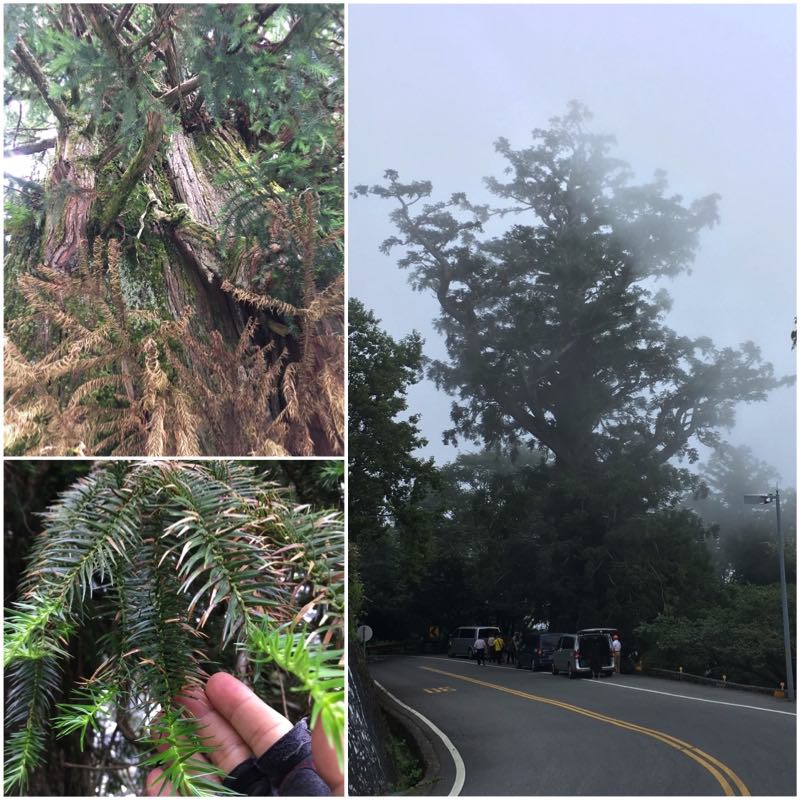
    • This fir (巒大杉 Cunninghamia lanceolata var. konishii) can be found at around 127.6 km of Provincial Highway No. 8. It is more than 3000 years old and around 50 metres tall.
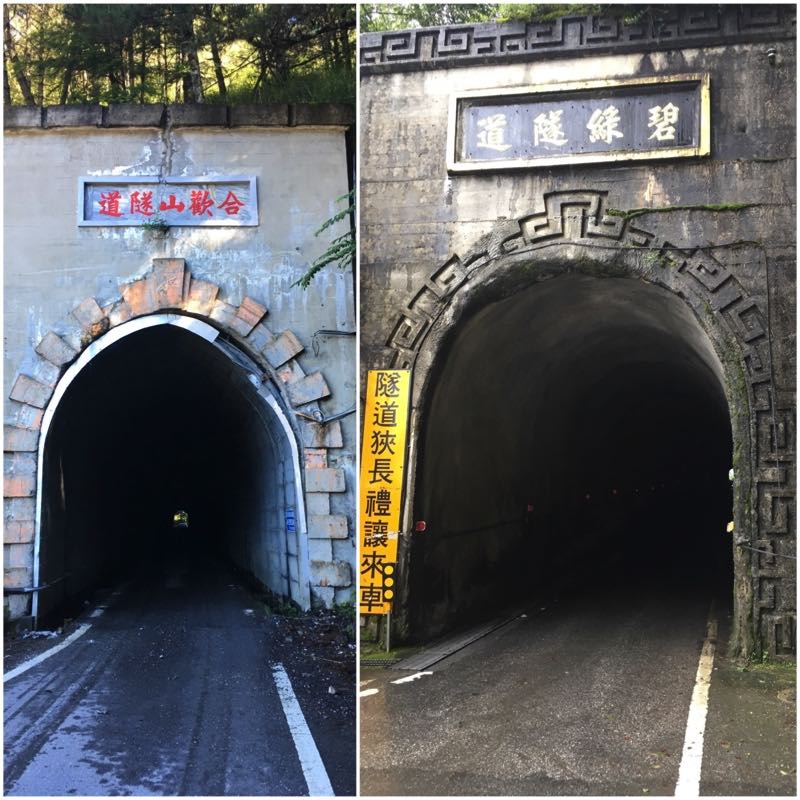
    • It must have been hard to build these roads, especially the numerous small tunnels, yet the designers did not make compromises on aesthetics. The entrances are decorated with beautiful patterns.
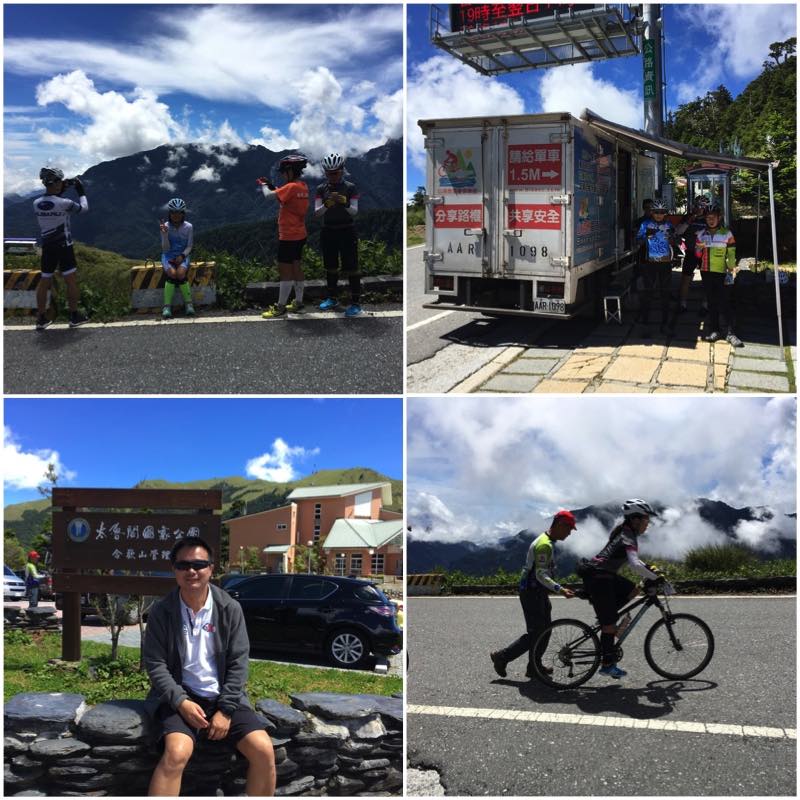
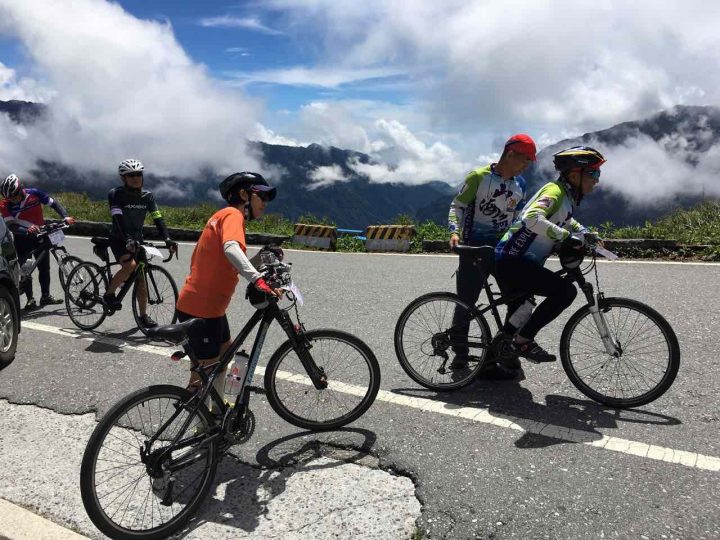
    • The Acacia Hill Station (合歡山管理站 elevation 3002 metres above sea level ) was the last stop before the team reached Wuling. We were at the same level of the clouds. The air was cool and had a unique taste of freshness. It’s a busy spot where campers, hikers and cyclists gather. Our coaches had to give us a push to help us balance upon starting – it’s easy to lose balance when the roads are so steep, and if you do, you will likely force your muscles a bit too much, which may trigger spasm.
    Cyclist on Wuling Pass, supporting vans and mountain ridge
    • Made it to Wuling (elevation 3275 metres above sea level), finally! It’s a great achievement! We were so lucky that the weather was so fine. The downhill ride was more dangerous and tricky. For some cyclists, it is good enough to do the climb on bike and go home by car. But for some, it is not even enough to do the whole trip once. There is the so-called “Wuling Double” (雙進武嶺) challenge, in which people head up to Wuling from Tianxiang (66km, ascending 2825 metre) and then down to Puli (55 km, descending 2826 metres) on the first day, and return to Tianxiang via the same route on the second day! To me, bicycle is a means to explore the world. I always plan my routes to minimise changes of elevation in order to make the ride easier. The thought of maximising its difficulty had surely not crossed my mind before.
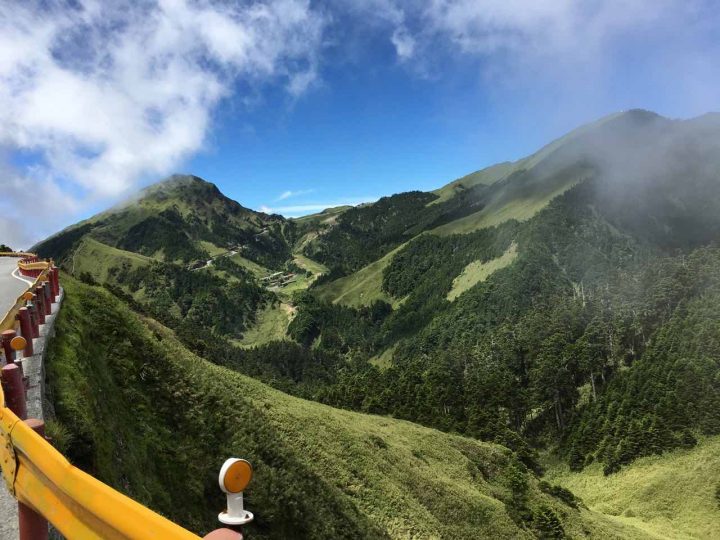
    Cyclist, lake, valley
    • We descended to a nice Japanese style resort in Qingjing (清境, elevation 1607 metres). Everyone was so thrilled about what they had achieved. We had a sharing on the roof about our own story with cycling. The team included some local Taiwanese, a Singaporean, and some marathon runners and one cyclist from Hong Kong. I was so surprised to learn that most of my team mates had only been cycling for around 5 years. A couple retired locals told us that cycling had healed their ageing bodies. It made them young. No doubt it is! They did much better than me in the trip. I seized the last chance to ride on the final day after making sure my hip joint was fine. Yeah, it’s much more fun to cycle than just sitting in a van.
    Conclusion:

    Lois and I love travelling on bicycles, but we had never joined a cycling tour before. We used to just roam along the routes at our own pace, and we would change our plan anytime. Must say we are both free spirits. What we need is someone to provide us the bicycles and take them back at the end of our trip, at the time and place that is most convenient for us. And this is the key service we provide at Bike Express Taiwan.

    Freedom comes at a price, of course. Without an organiser, we need to do all the planning and booking ourselves, probably paying more. Without a support car, we need to carry all our luggages by ourselves and have to plan more conservatively to avoid exhausting or even injuring ourselves. So, if all you want is cycling and sightseeing, you’d better join a cycling tour and let someone else worry about the rest.

  • Taiwan KOM Challenge in 3 Days (1)

    Taiwan KOM Challenge in 3 Days (1)

    このブログ記事の翻訳を進行中です。もうすぐ完成しますので、後ほど再度ご確認ください。ご不便をおかけして申し訳ありません。現在は、こちらで提供されているGPXルートや地図などの情報を自由にご利用ください。

    • Where: Luodong, Taroko, Wuling, Qingjing, Puli Township. The route of KOM challenge in Taiwan. 
    • When: 30 June – 3 July 2017
    • Who: Peter and fellow cyclists who joined the group tour organized by Bike Explorer Club (山海戀單車俱樂部)
    • Goal: To get to Wuling Pass (elevation 3275 metres above sea level, Taiwan’s highest road) from Xincheng Taroko Station (elevation 36 metres) on bicycles in 3 days. This 106km route is usually done in several hours by participants during the KOM challenge.
    Cyclist and Support Truck with Bananas
    • No luggage on the bicycle for this 4-day trip. All were taken care of by the support vehicles. They were also loaded with beverages and energy food to be served at every rest stops.
    Scarecrow, rice paddy field, bicycle and train platform
    • The first half-day we cycled on the flat scenic country roads to warm up before embarking on the challenging climb. The Dongshan Township has quite a number of tourist attractions to offer. We cycled along the Dongshan River Bikeway to the Dongshan Train Station, which has a cover like a melon trellis. Then The Sanqi Village offered a vast view of paddy rice fields. They even built a viewing platform for visitors. 
    Train Tickets, a cargo car, passengers car and Xincheng Taroko Station
    • We were supposed to approach Wuling Pass from the north (北進武嶺). At least this was what I had signed up for. It’s the least steep one, I supposed. Unfortunately, right before our trip started, part of that route were ruined by typhoon, and we had to take the east route instead. We took the train from Su’aoxin Station (蘇澳新站) to Xincheng Taroko Station (新城太魯閣車站). It is a 80km trip covered by train without any climbing. Looked like it’s going to be very steep ahead. Some cyclists I met said that approaching Wuling Pass from the west has endless ramps to climb, while doing it from the east is like climb walls.
    Cyclists on Road of Taroko Gorge
    • We spent the afternoon climbing on the Provincial Highway No. 8 from Xincheng Taroko Station to Tianxiang (天祥, elevation 476 metres ), a 22km ride with a total climbing of 1,370 metres. It’s a road/semi-tunnel carved out of the rocks of the Taroko gorge. Very impressive! Therefore the saying goes, “If you have not been to Taroko, you have not been to Taiwan”. I hired a car and drove on this road years ago. It was a different experience. I did not know that I can climb the road with a bicycle there.
    Van with open door, exhausted cyclist and Sihbaiyang rest stop
    • Endless climbs for the next day. The moment I stopped pedalling, my bicycle started retreating. It was hard to tell by sight how steep the road actually is as it goes zig-zag all the way up. But you could use a cup of water to show the tilt. Though I managed to ride using the lowest gear, I was moving no quicker than on foot. My plan was to stay on the bicycle as long as possible (because it’s a cycling tour after all), but unfortunately I was told to hop on the support van or I wouldn’t have time for lunch. So, that was me looking completely exhausted in the van. While I was trying to help myself to food with shaking hands at Sinbaiyang (新白揚, elevation 1644 metres above sea level), the other guys were already done with lunch and taking a nap. And that’s it for me. After cooling down, I found myself unable to walk properly because of an aching hip joint. To avoid leaving permanent damage, I decided there would be no more cycling for the afternoon and the next day. I would get to Wuling sitting comfortably on the van. Anyway, I had already climbed around 3400 meters. My personal best.