Author: Peter

  • Product Review: Touring with a Klever Q Comfort E-bike – A Hilly Route Test

    Product Review: Touring with a Klever Q Comfort E-bike – A Hilly Route Test

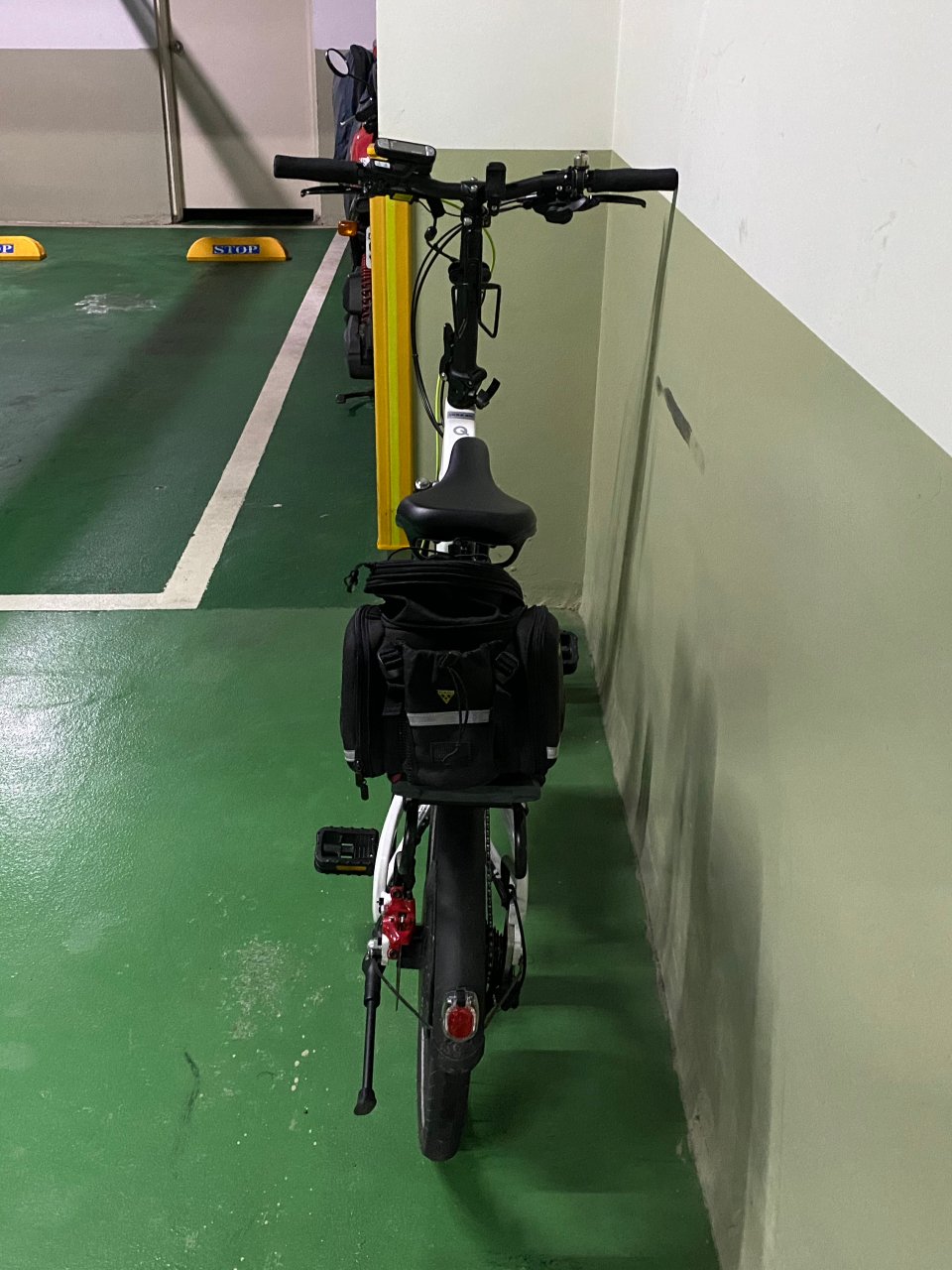
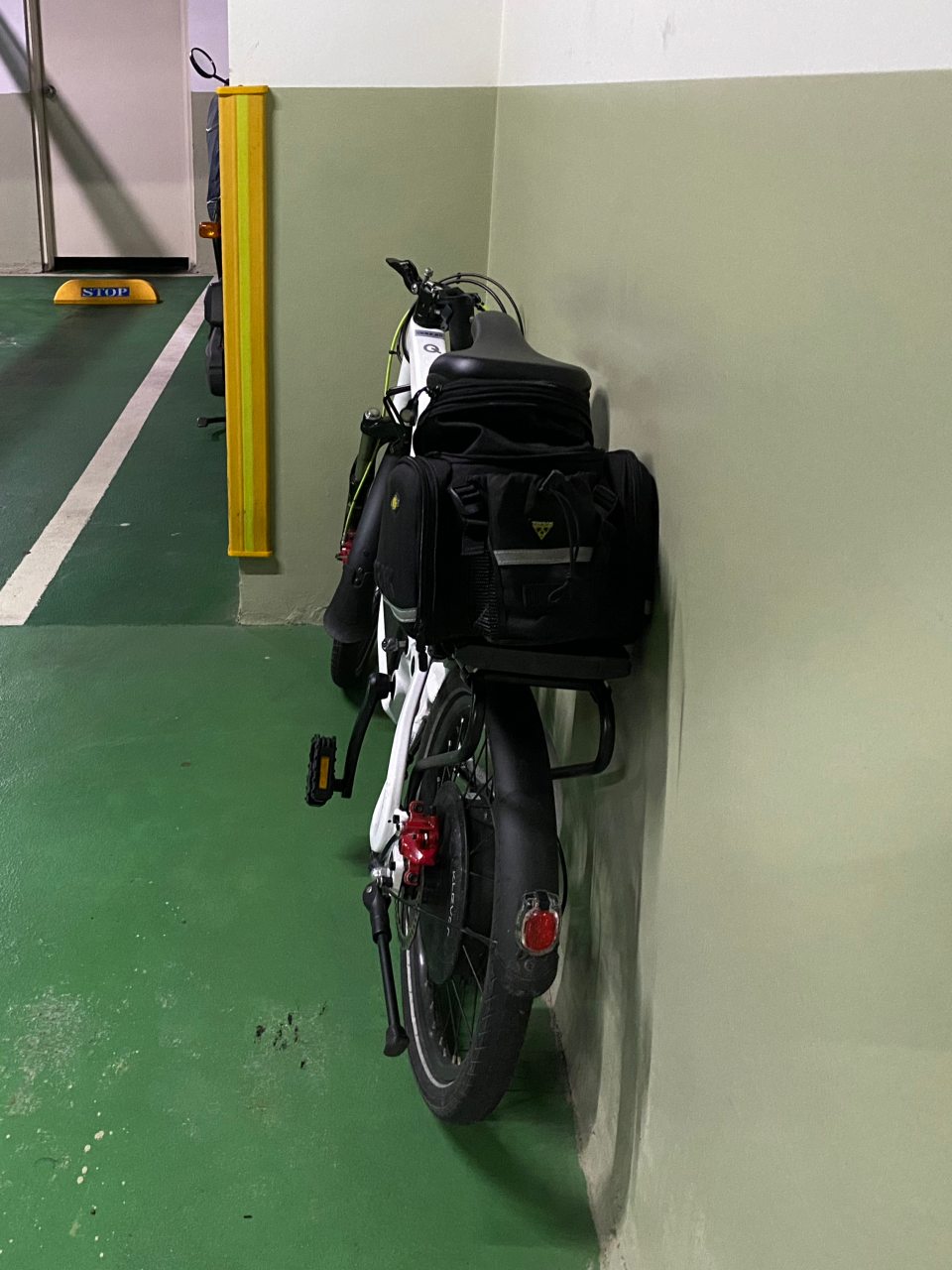
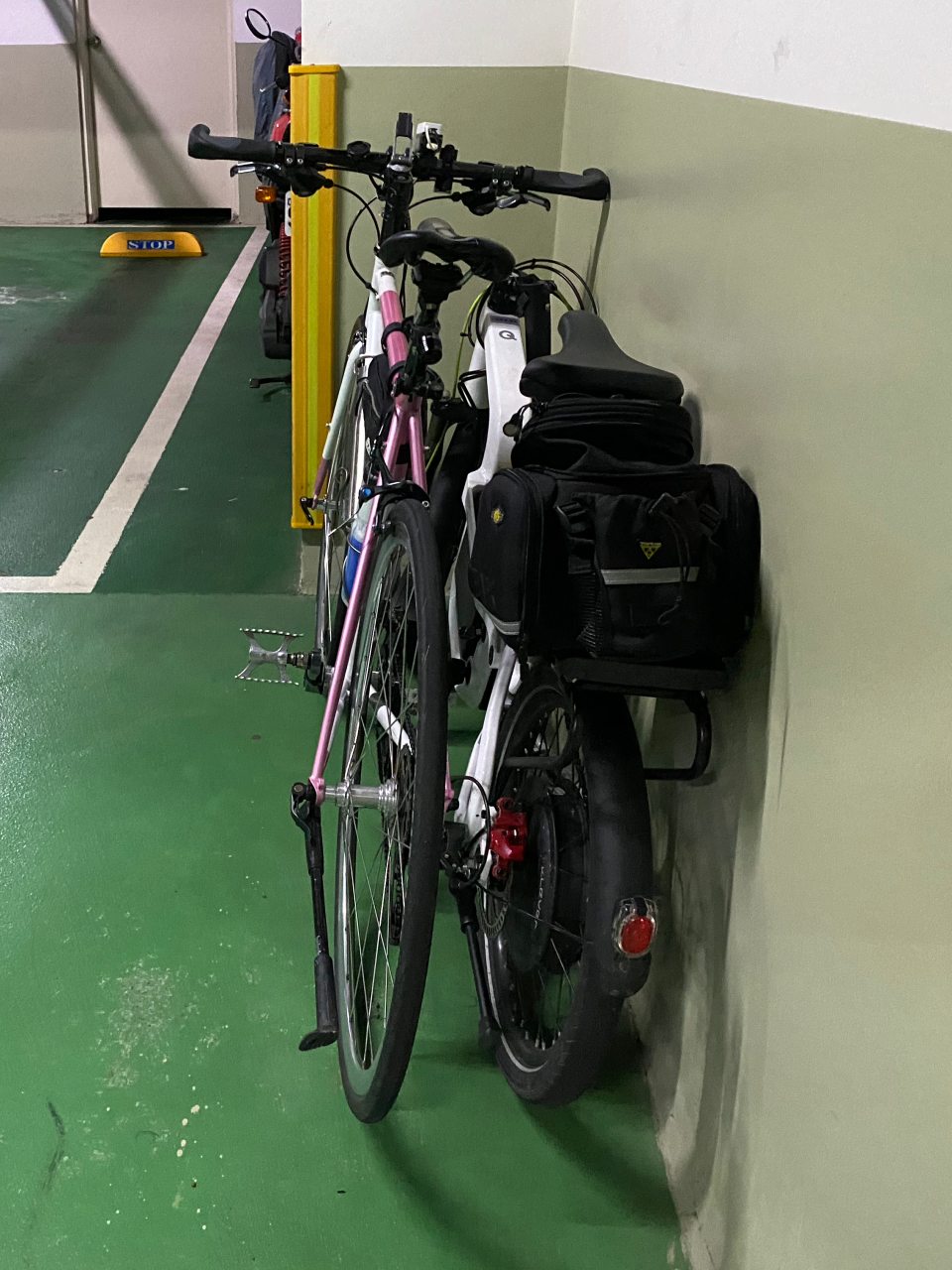
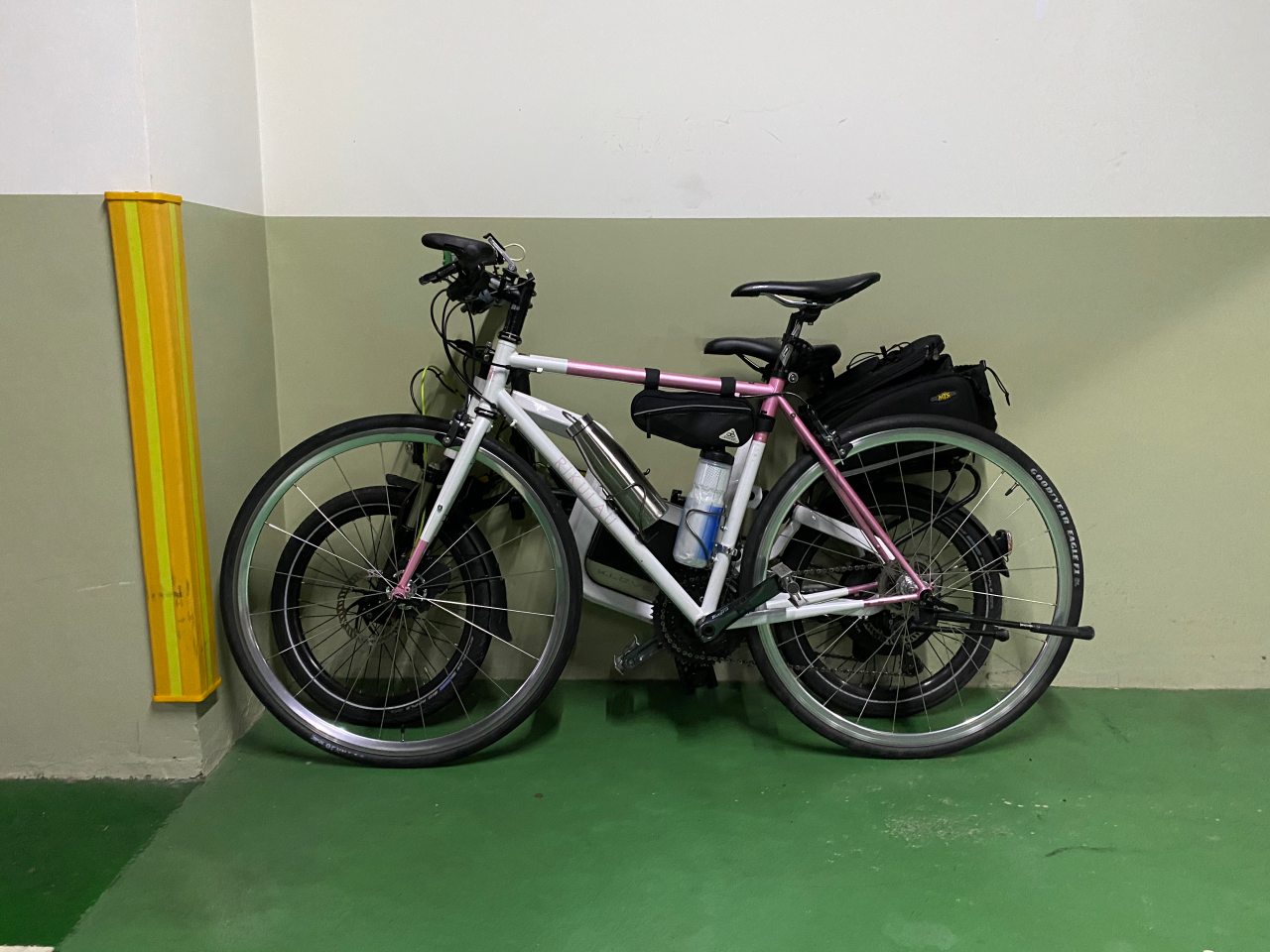
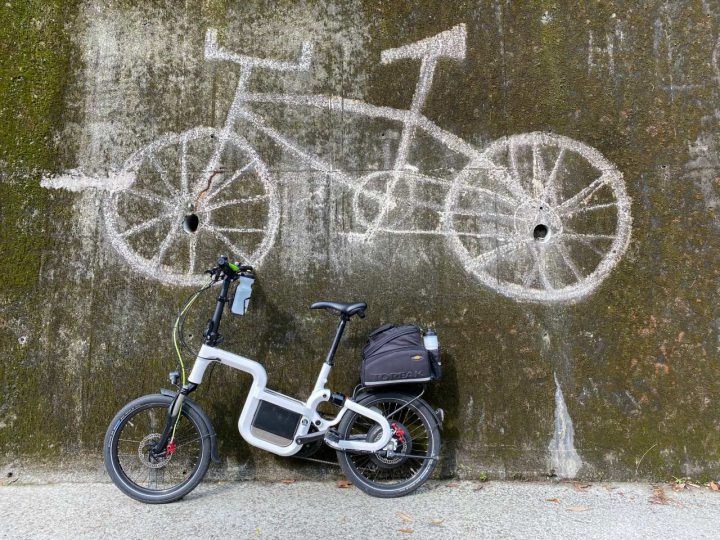
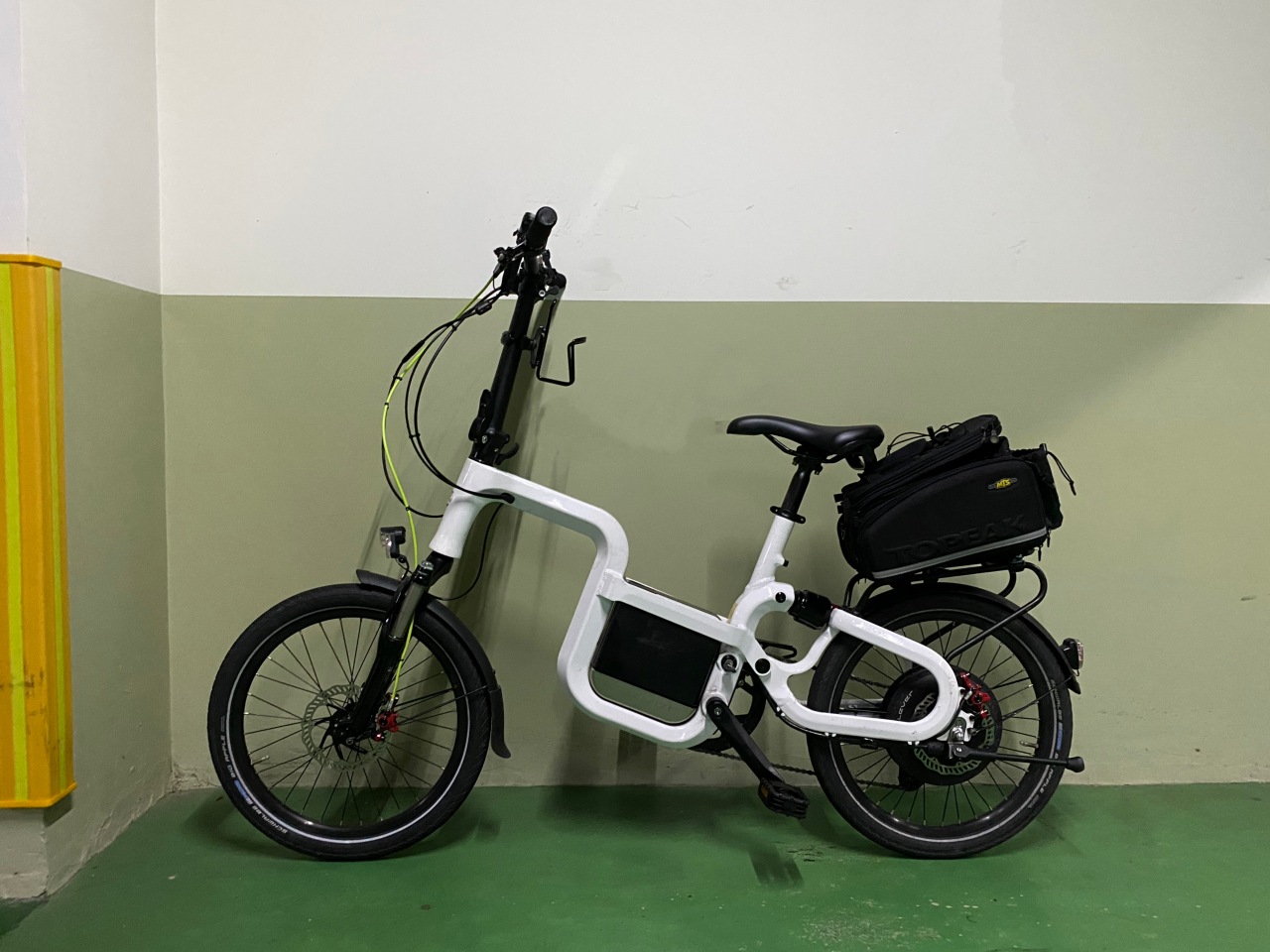
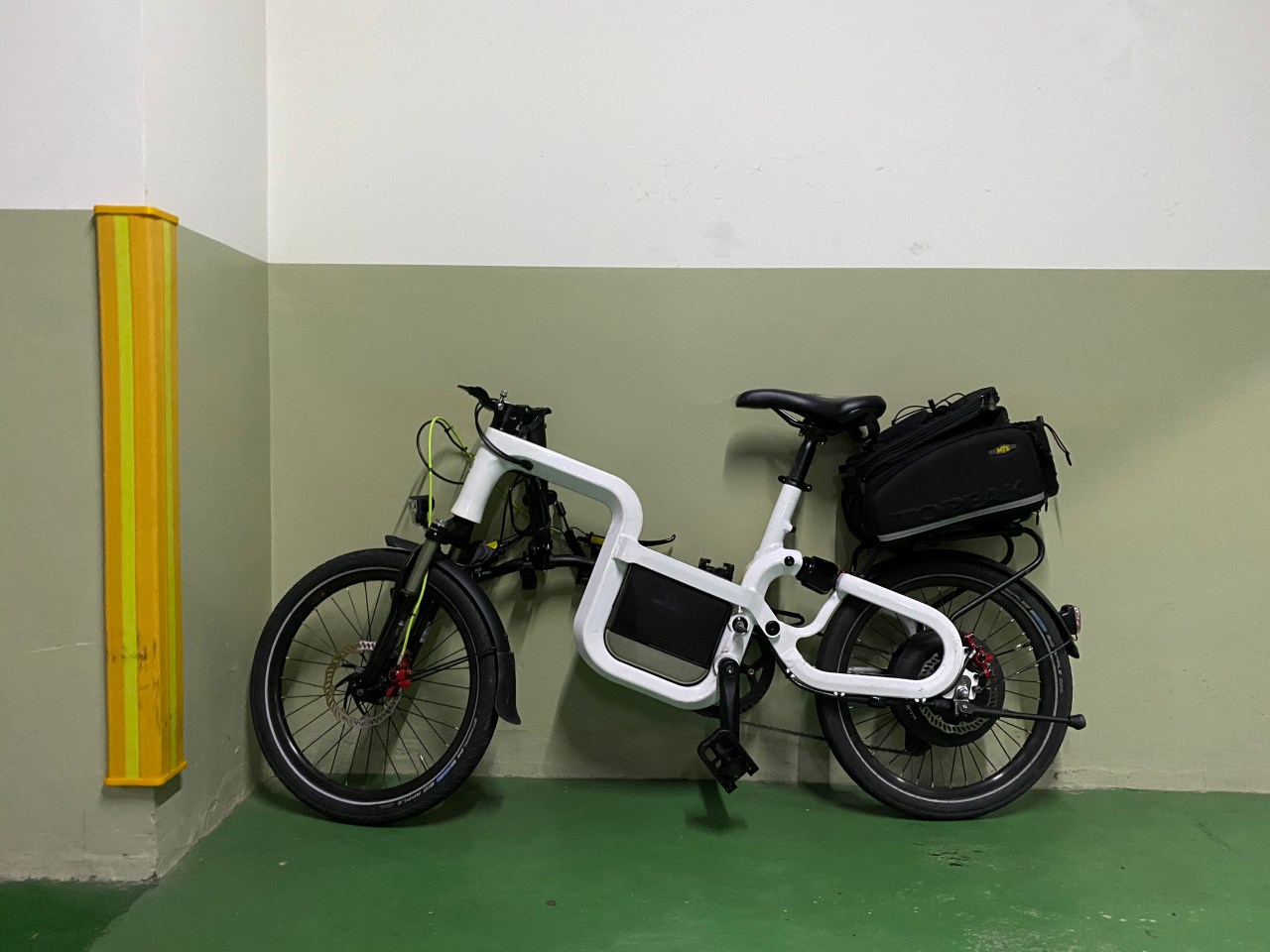
    I have to confess that Klever had loaned us the Q Comfort for quite some months. It had been sitting idly at the narrow interspace between our car and the wall of our parking lot. Yes, we had other more pressing things to deal with and urgent projects to finish. But the honest reason is: we almost forgot about it because it took up so little space and hence drew so little attention. With its fork folded up, the handlebar is turned 90 degrees to align with the frame. It looks like there is not much “folding” involved, but it’s actually a clever and useful design. If I need to store some regular bike in our parking lot, I always need to remove the front wheel and turn the handlebar 90 degrees to make it flat enough for that narrow interspace. With the Q Comfort, all I need to do is fold up the fork and the pedals, and then voila: it’s out of sight (and out of mind).

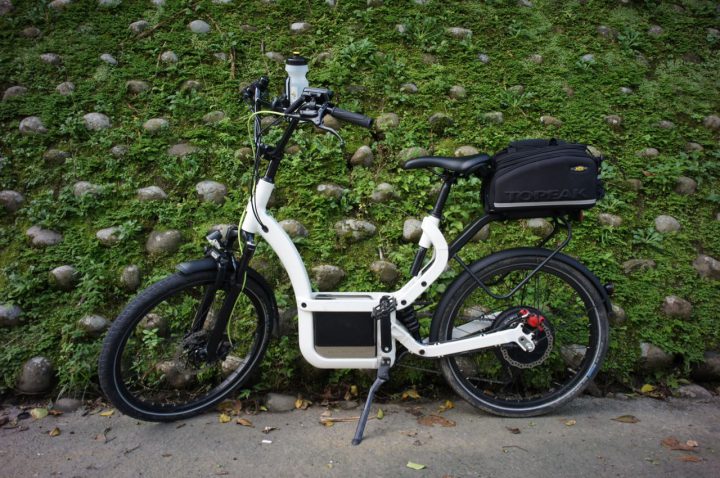
    This is how it’s like before the Q is folded.
    It’s folded and fit snuggly with the Audax Hercules in this tiny space.
    But we couldn’t keep it forever, so it’s time for the test ride. In order to do a fair comparison between B Comfort and Q Comfort, I decided to use the Q on the same two routes – the hilly route and the long coastal route.
    First Impression:

    In terms of size and geometry, Klever’s Q Comfort fits me more than its B Comfort. For my height (1.72m), it is easier to handle and feels nimbler. I can make sharp turns easily and stably. For taller riders or someone who prefers a more upright cycling position, the fork can be extended around 10 cm further. Like the B comfort, when the power is off, the Q works perfectly like an ordinary bike, though heavier. The travel of its suspension system is shorter than that of B comfort. Together with a set of smaller wheels, Q Comfort is shakier on uneven roads. But it doesn’t seem like a big issue for me. 

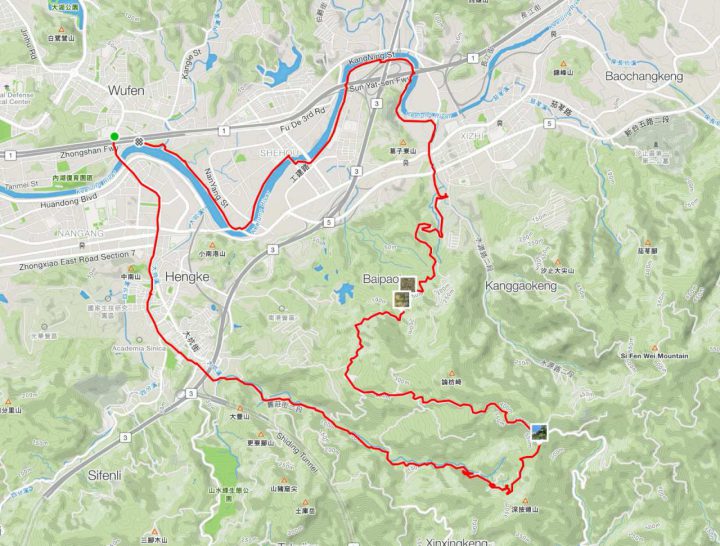
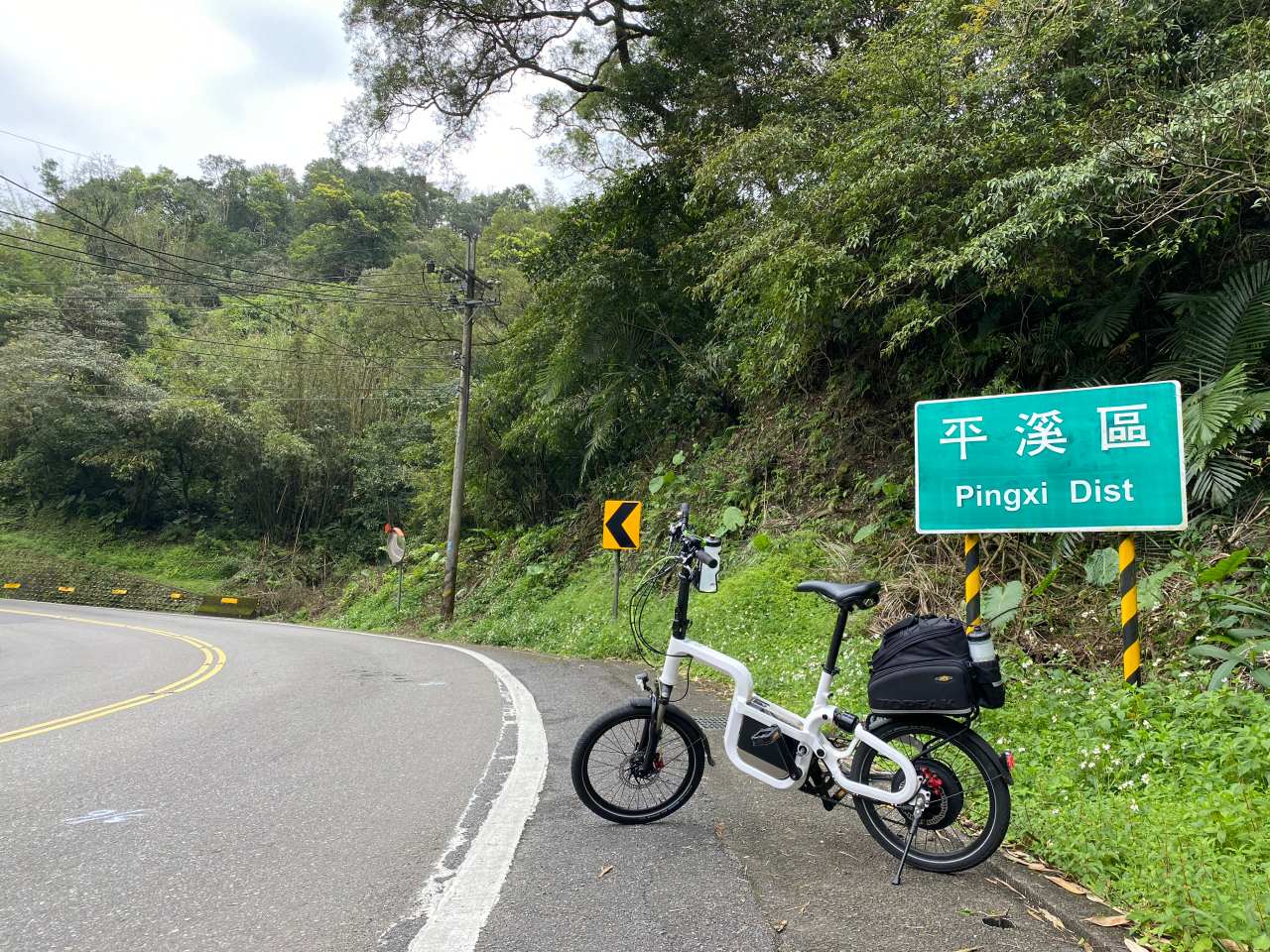
    Our friends at Klever told us Q Comfort is good at climbing. So I went the hilly route first – from Nangang to Ruifang along County Highway 109 and 106, then took Provincial Highway 2D for the return leg (total Distance 77km; elevation gain 1,384m; maximum elevation 490m).

    The climb to the first peak, 200m in 3.5km, was done easily. The push from the BIACTRON motor was more noticeable than that of B Comfort. Although the motors on the two models are both 350W with the maximum torque of 43Nm, the smaller wheels on Q Comfort transform the torque into bigger push. And because of this, you should try to avoid holding the handlebar with just one hand when the assist level is set to M or L. The strong push had almost thrown me off-balance the other day when I was riding with one hand. Please also be extra careful with your center of gravity when setting off uphill on a steep slope. The front wheel can tilt upward with the sudden thrash.
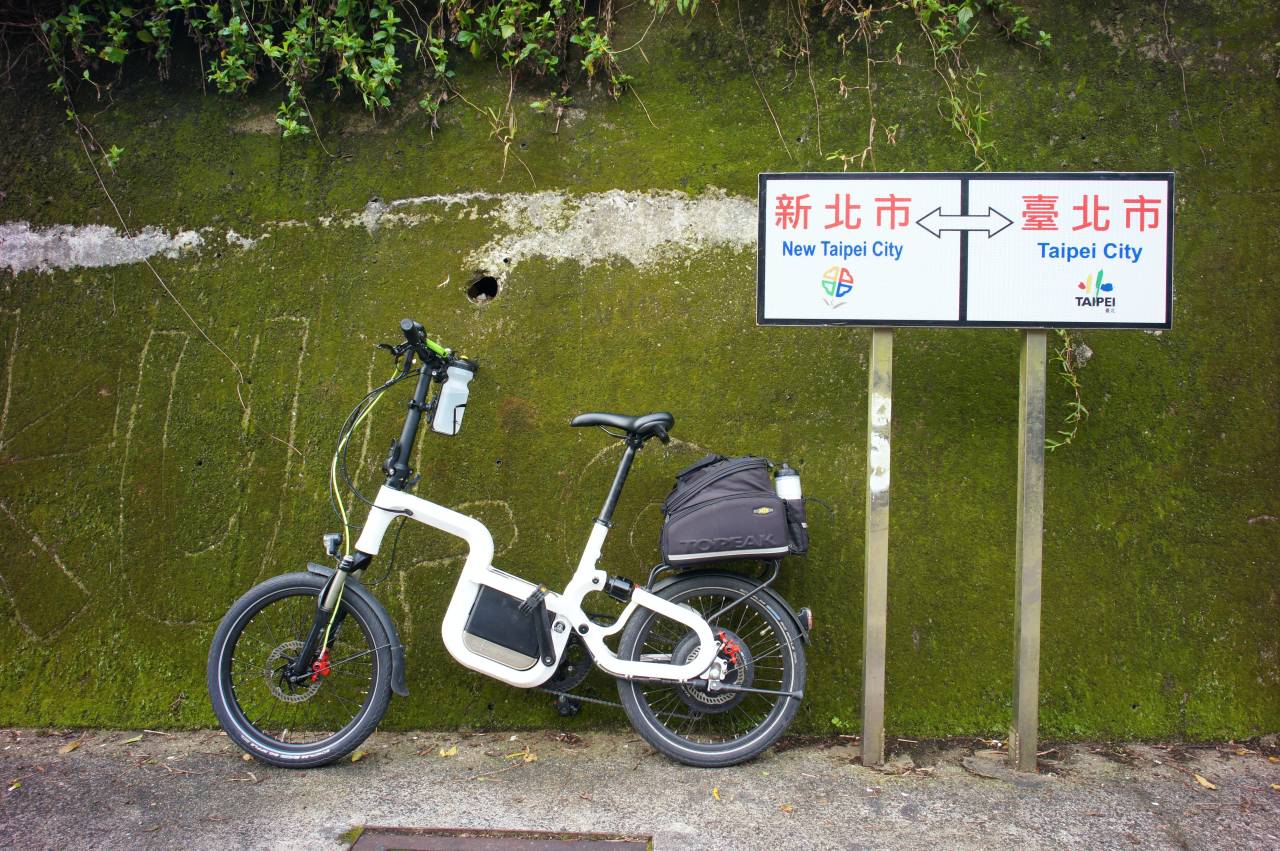
    The descent followed was stable and enjoyable in general. I could control the e-bike with confidence even on sharp turns. When the regenerative coasting kicked in at 35km/h to use some of my kinetic energy to charge the battery, I could feel the drag but I was not slowed down. 

    Then when my speed reached around 45km/h, and when the Q rolled over a set of rumble strips 減速標線, which were raised across the road and painted white, it was rattled momentarily but violently. The battery was disconnected and the panel showed an error sign. I resolved the problem by re-installing the battery and carried on with my ride with no further issues. A couple days later our friends at Klever mailed me a small accessory to be attached to the battery, so that it can fit more tightly into the slot. They help. Apparently this is a bug that Klever has already worked on to solve. I also think I should take it easy when pumping the tyres. I had pumped them to their maximum pressure limit the day when I took the test ride.

    The next climb was a mild one. It took 13.5km to gain 240m to the peak of 290m. In fact, no serious effort was required from either me or the Q Comfort. And soon I was about to do the 3rd climb. After traveling for 5.8km and gaining 315m of altitude, I reached the peak of 488m. That was when the B Comfort had almost exhausted the first battery on my previous test ride. This time, with Q comfort, there were still 2 bars (out of 5) of energy remaining. 
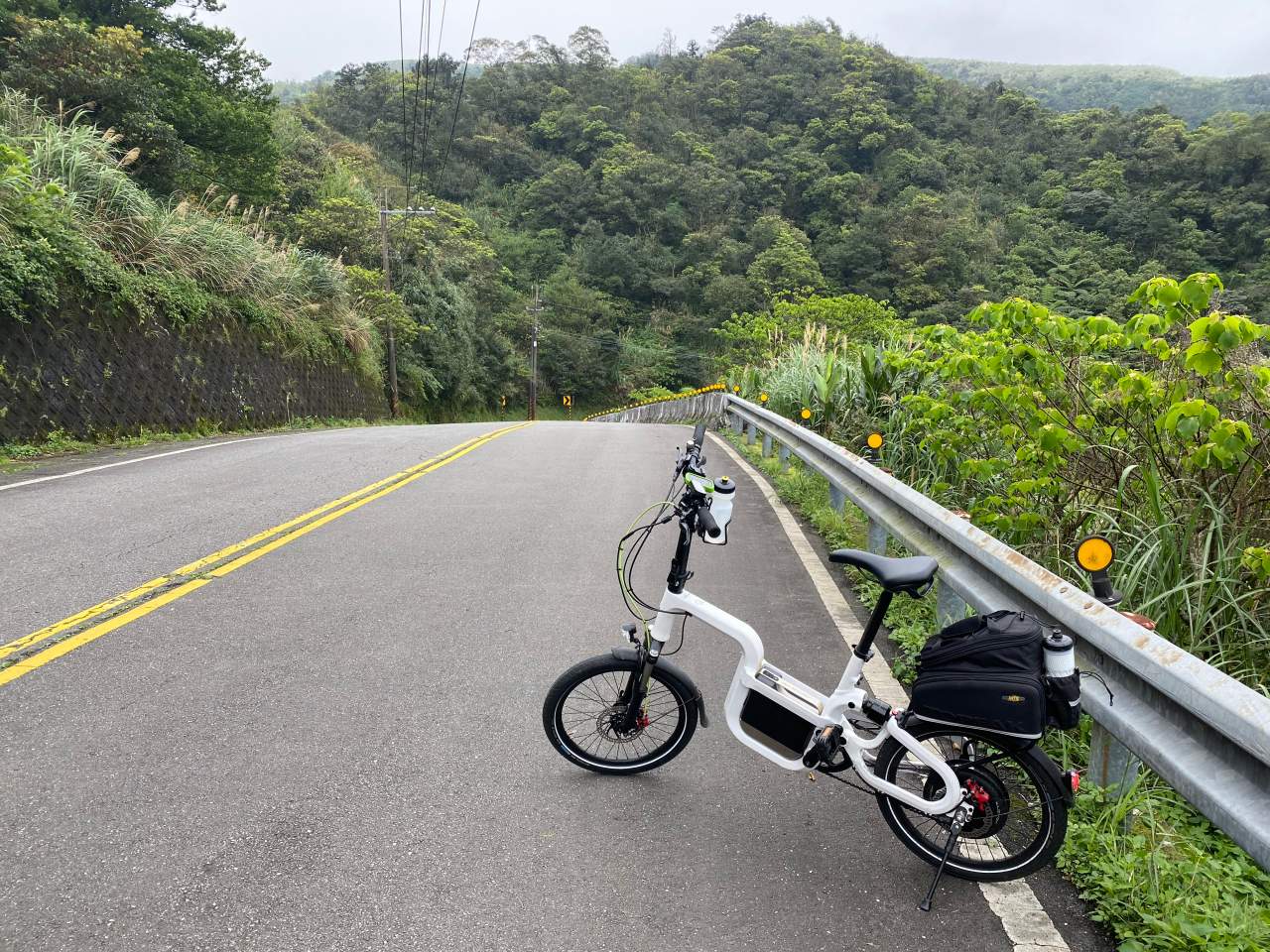
    I descended to Ruifang and had my lunch before heading back home. The last bar of energy was blinking by then, signaling the battery was about to run out. But I made it home (about 10km’s ride) without having to swap in a fresh one.
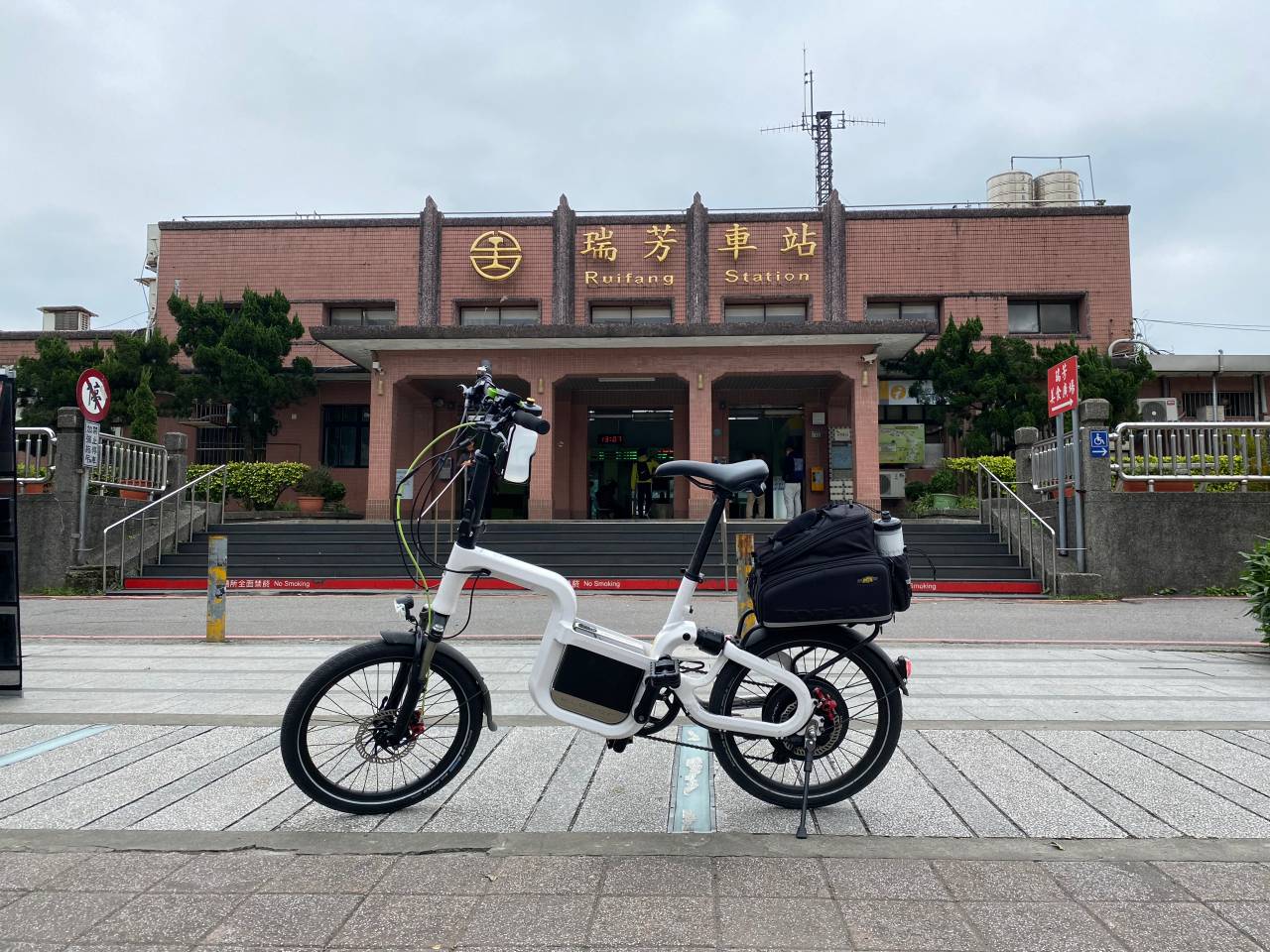

    All in all, the Klever Q Comfort travelled 75km and climbed a cumulative 1341m with just one battery. It was impressive.

    Check out the elevation profile on my Strava link here.
    https://www.strava.com/activities/3181040155

    So, Q Comfort has done well with the hilly route. I will soon take another test ride along the long coastal line to see how it does on flat roads.
  • Navigate the Riverside Bikeways in Taipei and New Taipei

    Navigate the Riverside Bikeways in Taipei and New Taipei

    [This post is last updated on 26 Jan 2023]

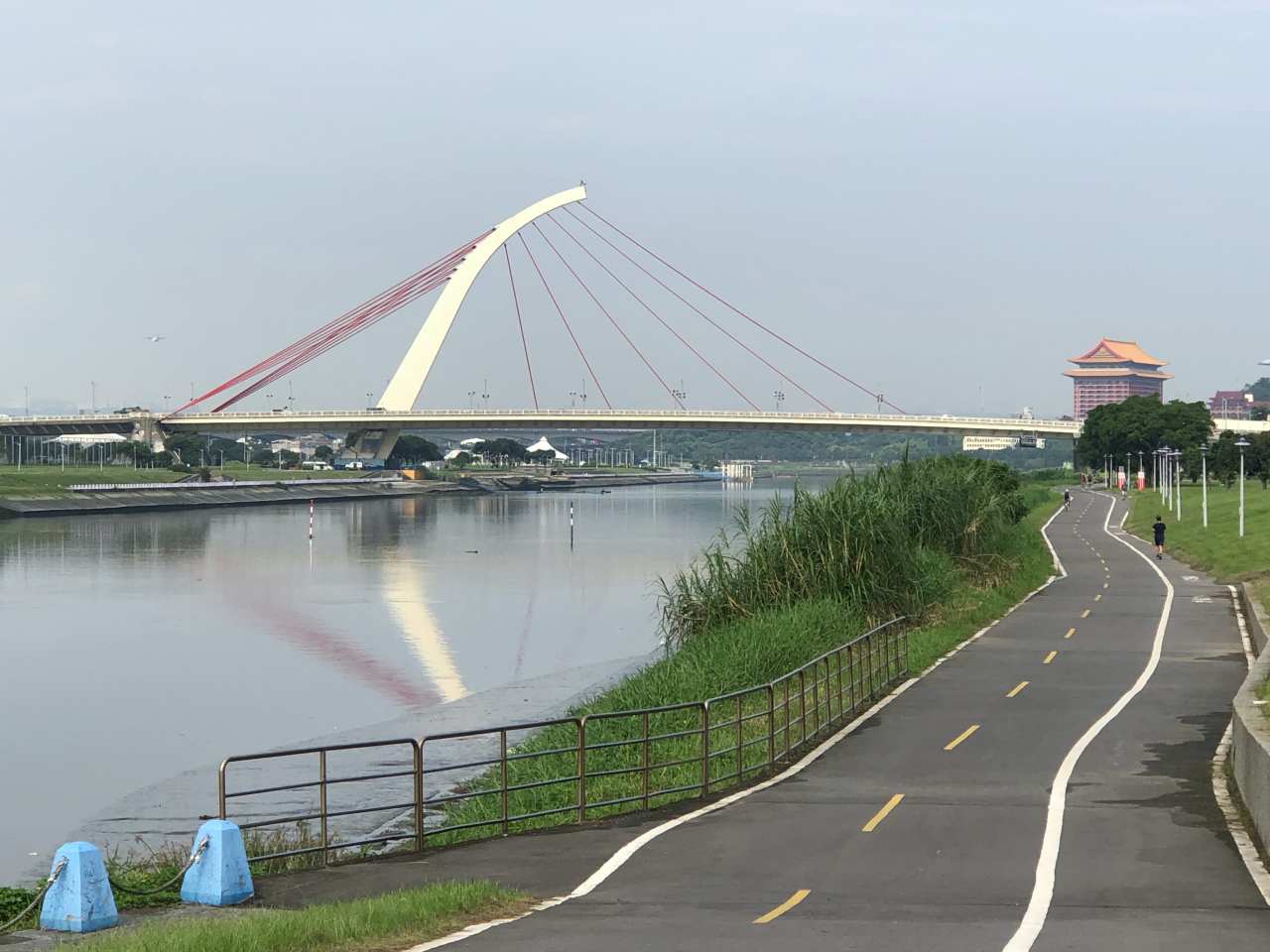
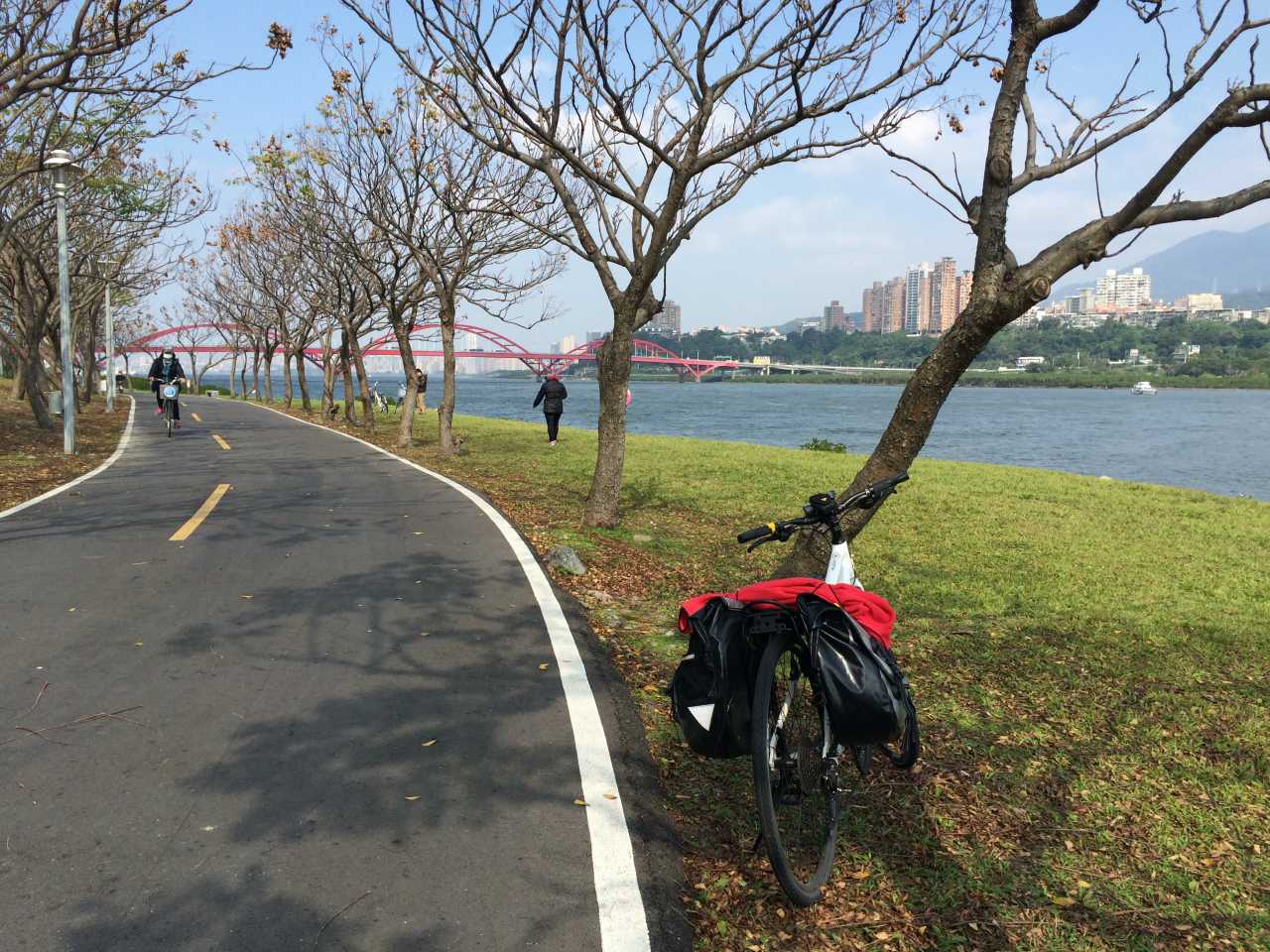
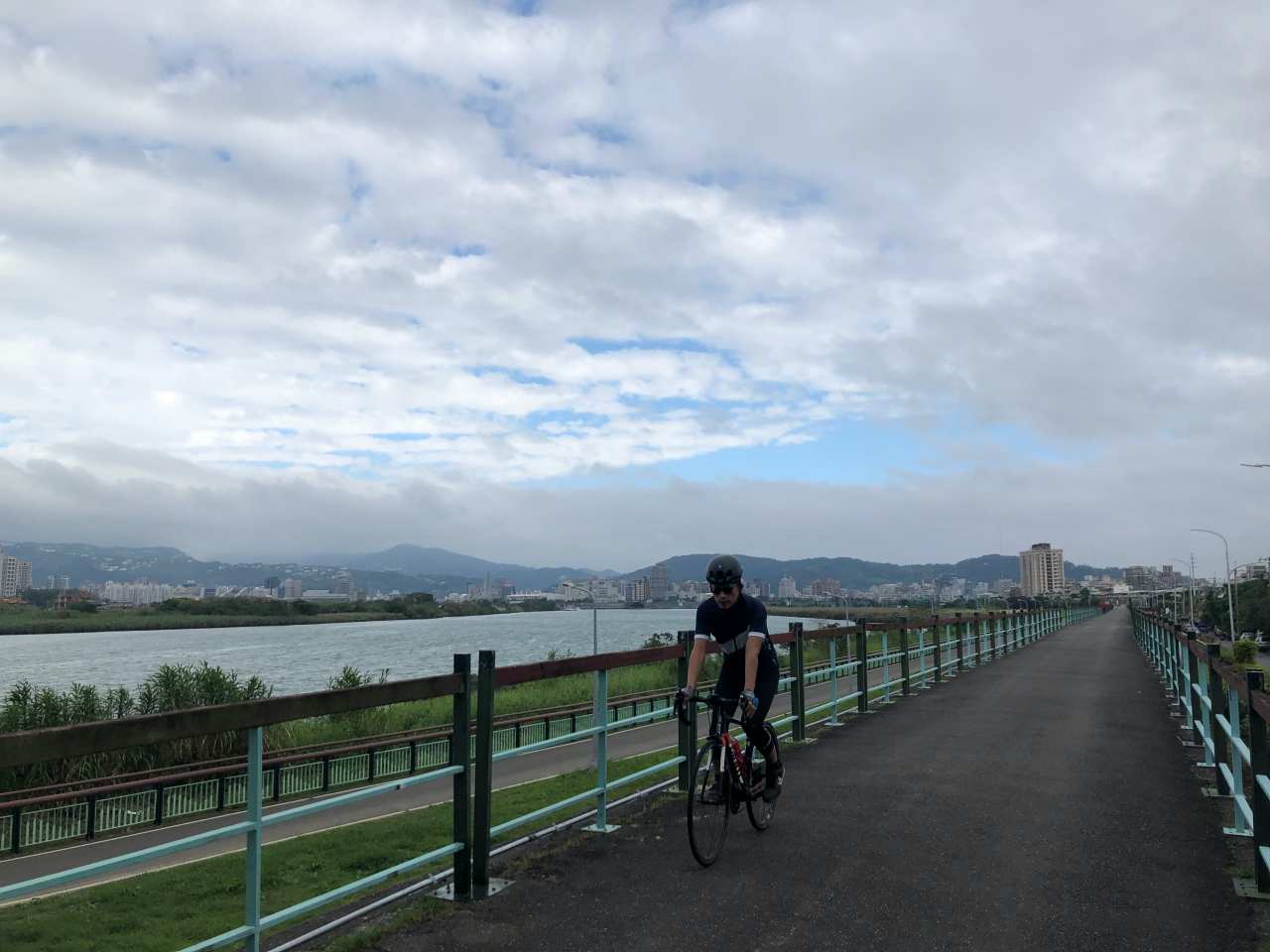
    The riverside bikeways 河濱單車徑, built along the rivers winding through Taipei City and New Taipei City, form a vast network of bike paths. A significant part of it embraces Taipei City in the shape of a distorted “C”, with its flourishes extending towards Xizhi 汐止, Xindian 新店, Sanxia 三峽, Taoyuan 桃園, and Tamsui 淡水. Since only bicycles, e-bikes, and pedestrians are allowed on these designated bike paths (except one or two occasional service vehicles with special permit), cyclists don’t need to negotiate road rights with other motorized vehicles or inhale the polluted air coming from their exhaust pipes. With the absence of traffic lights, these well-paved and seemingly endless bikeways make a cyclists’ paradise whether you are a seasoned athlete in training, a newbie trying to get familiar with your bike, or a parent cycling with an over-excited new rider. Meanwhile, because of its vast coverage, commuting cyclists can also make use of it like the freeways for bikes to get to the closest exit points, so as to stay away from the busy city traffic as much as possible.

    Regrettably, these amazing cycling infrastructures are mostly hidden behind the two-storey-high flood walls erected between the rivers and the city area to protect the cities from flooding during monsoon seasons, which causes the riverside bikeways remain unknown, or at least neglected, for many of the cities’ residents, let alone tourists and visitors. Cyclists who come for a cycling trip in Taiwan for the first time, including myself back in 2009, are most likely inclined to leave Taipei City in a rush for the much craved countryside. Back then I was led by my GPS navigation device onto the busy roads within the city towards the next town. That wasn’t bad at all, but the beautiful, tranquil riverside bikeways were totally ignored because those devices and apps were all programmed to come up with the shortest route to your destination. They still are.

    It’s not until my second cycling trip years later that I discovered the riverside bikeways, a more desirable offer by the city to cyclists. Once we got to the riverbank, we found ourselves cycling blissfully on the dedicated bike paths for more than 20km until we reached Tamsui, where the coastal road unrolled before us. It was like getting through a magic tunnel devoid of all the unpleasant aspects of city traffic.

    The riverside bikeways in Taipei and New Taipei city are too good to be missed as a part of your cycling trip in Taiwan. I have consolidated a list of those access points in this map. You can tap on the square at the top right corner of the following map to launch GoogleMaps with the access points. And then tap on the access point closest to you to have GoogleMaps guide you there. You can then cycle on the riverside bikeway to get out of the city.

    These access points can be in the form of:

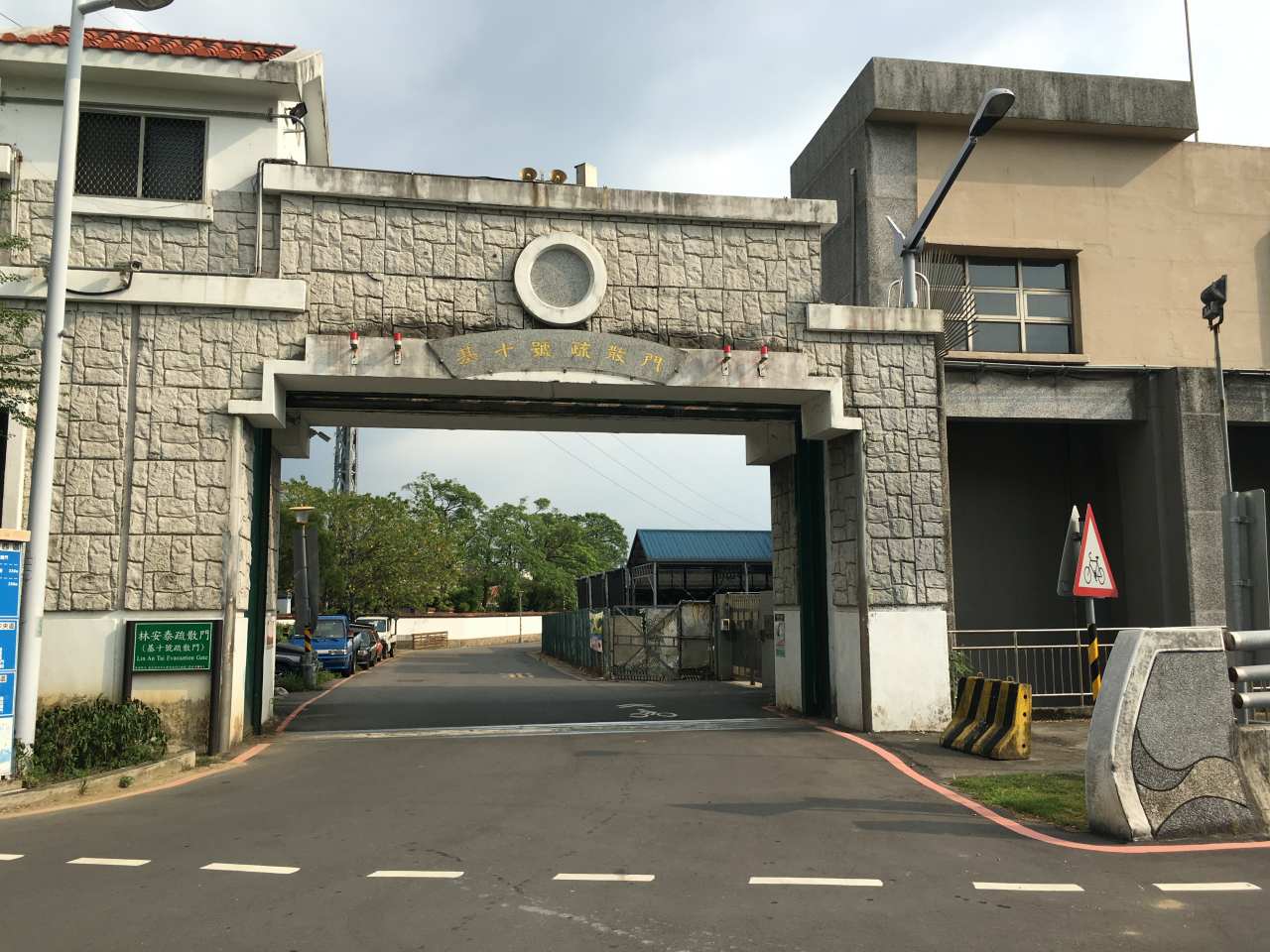
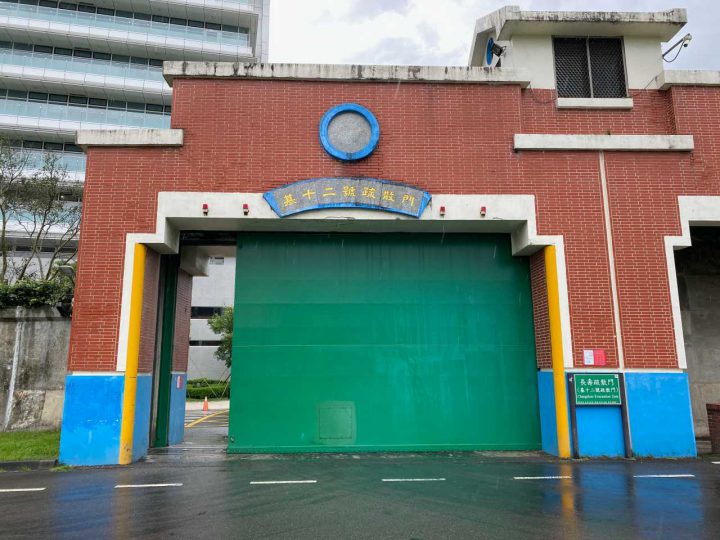
    Evacuation gates
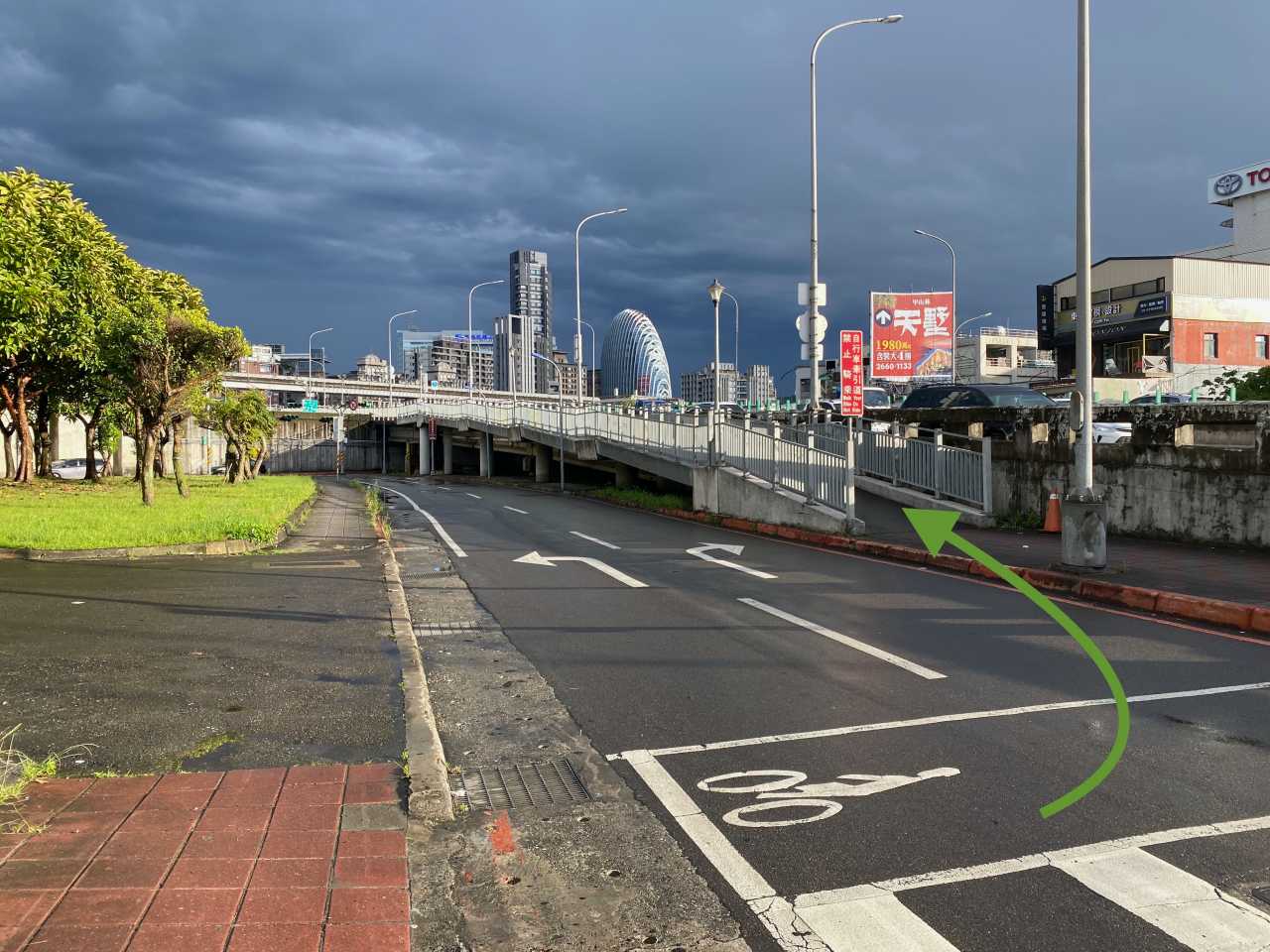
    Flyovers to cross over the flood walls
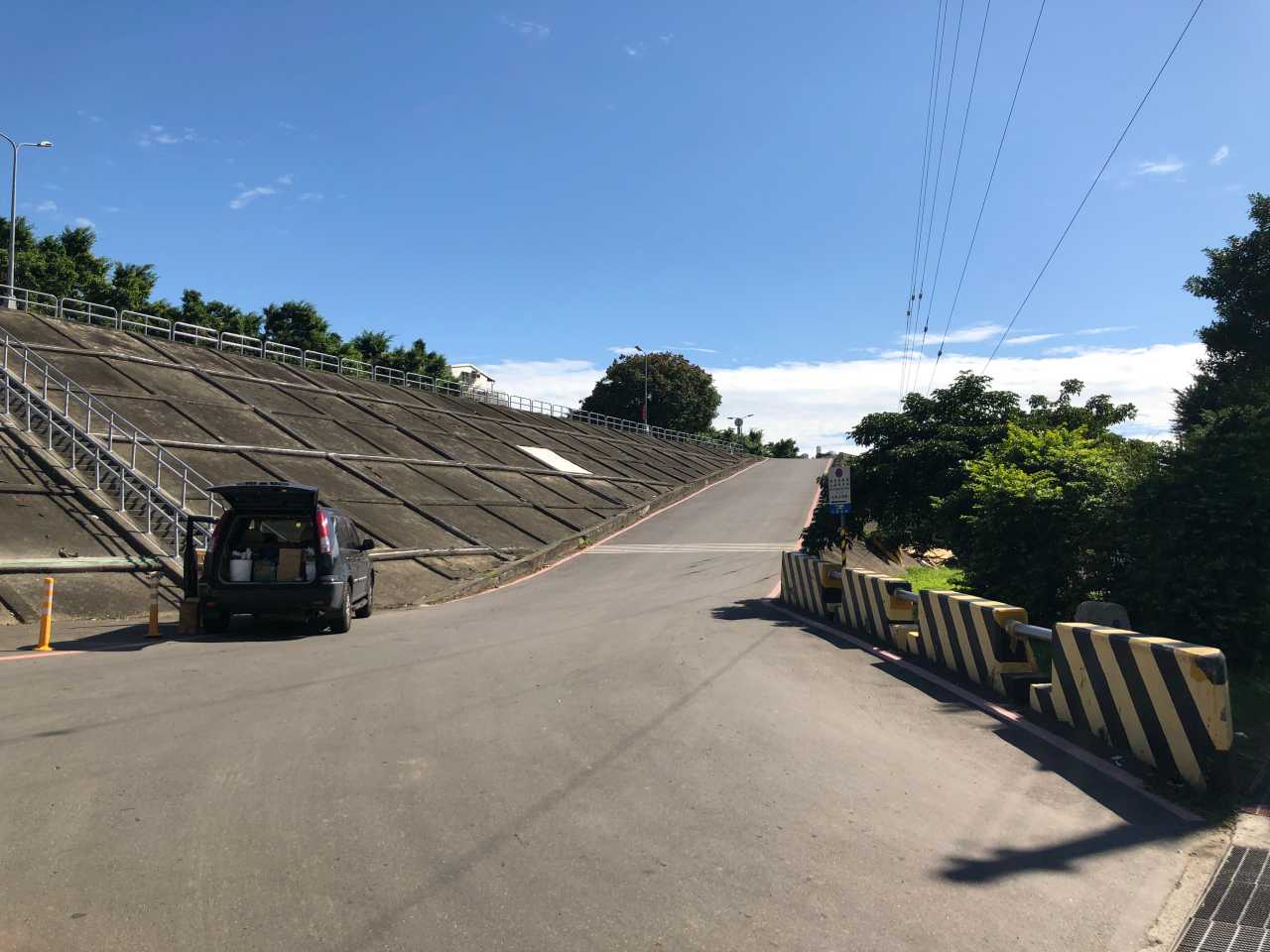
    Ramps for cars
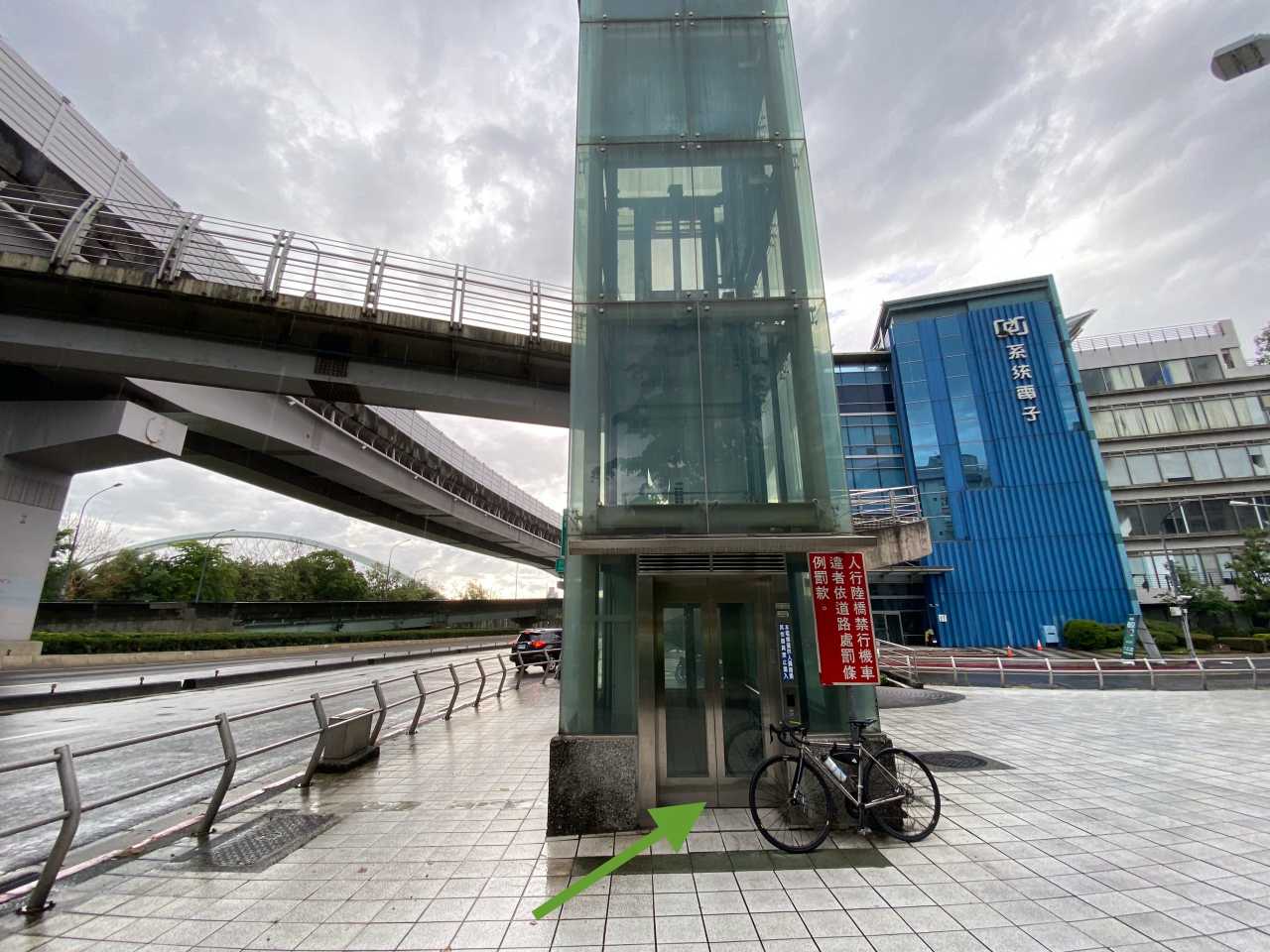
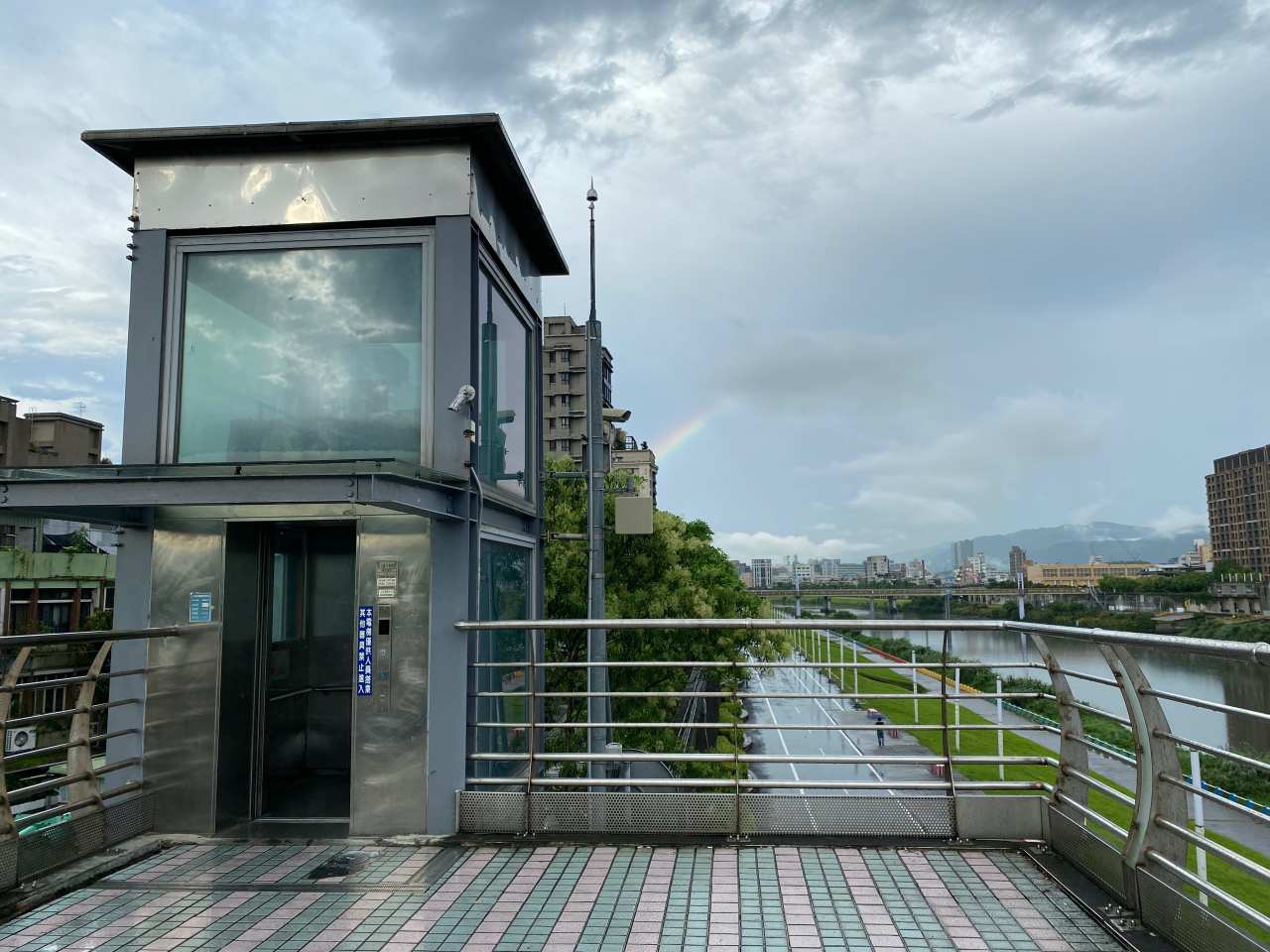
    Elevators that operate at specific hours

    There are many other access points for pedestrians, but these are the points where cyclists have no need to carry their bikes on their shoulders and climb the stairways.

    A small number of these access points are unmarked on Google Maps so I have marked somewhere nearby like I did with the Yanping Evacuation Gate. Once you reach the marked places, you should be able to spot the access points easily. I have also submitted the unmarked access points as missing places to Google. Hopefully they will show up on the Maps soon. 

    I have also included in the list those bridges that connect the bikeways to the other side of the rivers and offer designated bike paths to cyclists. Although bikes are allowed on most of the bridges in Taipei, I don’t regard them all as part of the bikeway network. Like Mingquan Bridge, you need to leave the bikeway and join the other vehicles on Minquan East Road to use the bridge. Bridges like this are not on my list.

    I have also found some GPX files of the bikeways from the two government websites. I have imported to this map for you easy reference.

    https://www.travel.taipei/zh-tw/must-visit/riverside-bikeway

    https://taiwanbike.taiwan.net.tw (site removed/down as in 2024-01-24)

    The list and the routes are not yet completed and I will keep updating it whenever I come across a new access point or a new gpx file. If you happen to know one that is not yet listed here, or you spot any error in our list, please send us an email. We, and I believe all our fellow cyclists, will appreciate your help. Thank you. 

  • Cycling Route: Xizhi Pigeon – Climb Training

    Cycling Route: Xizhi Pigeon – Climb Training

    I had been seeing fellow local cyclists posting accounts and photos of their rides along the route named Xizhi Pigeon 汐鴿展翅, which seems to be lots of fun. I wanted to do it, too. I found the route’s gpx on xplova and invited Lois to join me. The downloadable GPX file of this cycling route is at the end of this post. 

    Xizhi Pigeon 汐鴿展翅 is a 28km cycling route with its starting point at the Nangang Exhibition Center 南港展覽中心 on the east fringe of Taipei City. The maximum elevation of 394.29m at the top makes it a good route for climb training. The route mainly consists of Section 1 and Section 2 of Jiuzhuang Street 舊莊街, Xiding Road 汐碇路 and Xizhi Keelung Riverside Bikeway 汐止基隆自行車道. Upon completion of the route, you will draw a pigeon with spreading wings on the map of your GPS tracking app. 

    To get to the starting point with your bike, you can either take MRT to the Nangang Exhibition Center Station on the blue line (ref: Taking Bicycles on the Metro) or simply cycle there via the Riverside Bikeways along the Keelung river, setting your destination as the Nanhu bridge. It is along the route, so you may as well just start there. If you live outside Taipei, you can also get there by taking a train / HSR to the Nangang Station, followed by a short ride.

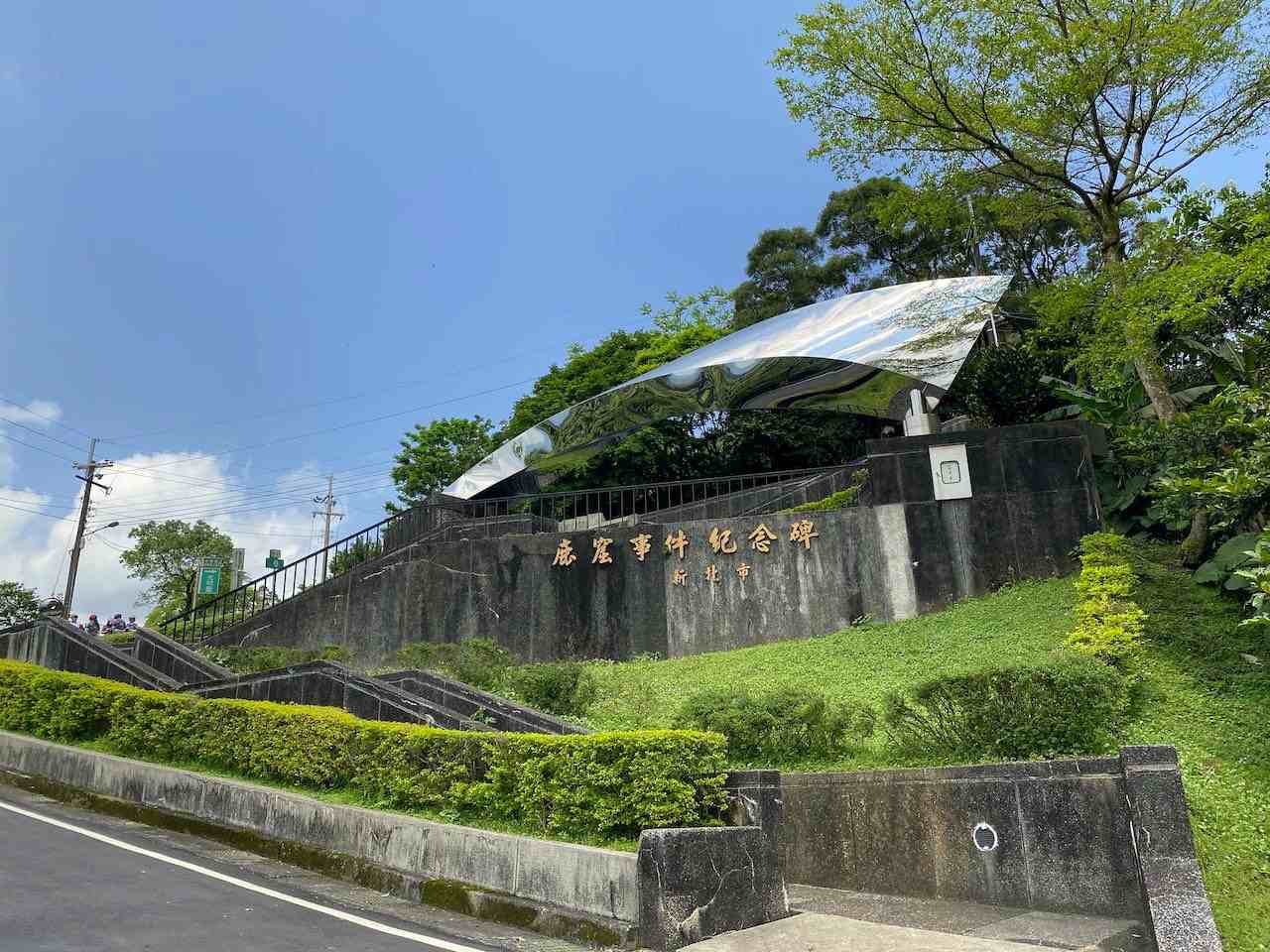
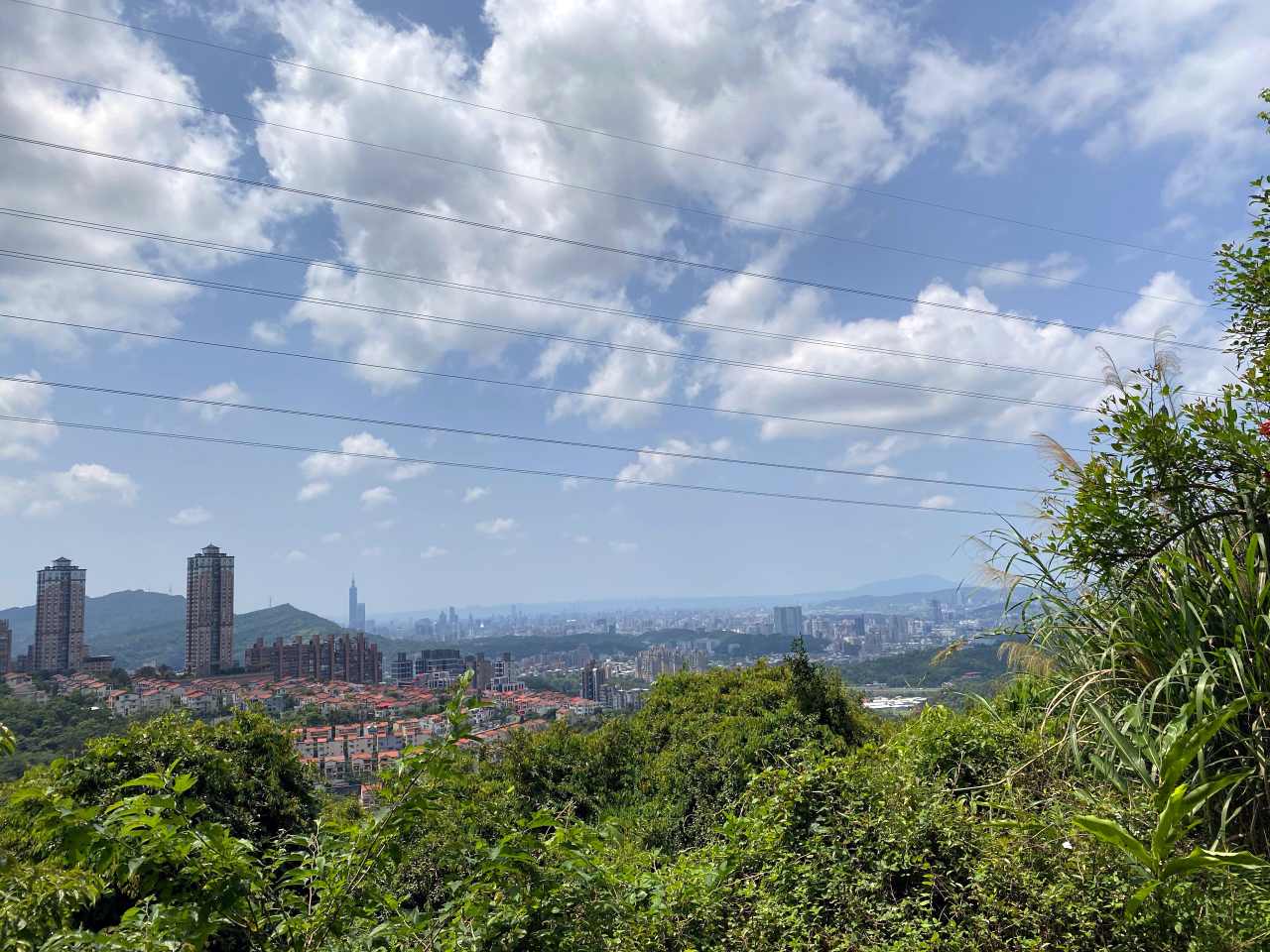
    I took the trip on a Friday morning in April, with me on a Rikulau Audax Hercules and Lois on a Klever Q-Comfort. The traffic soon got much quieter after about 5 minutes’ ride from the busy MRT station (Nangang Exhibition Center Station). We could enjoy our ride at our own pace with almost no cars and scooters on Jiuzhuang Street. Some of the slopes were rather steep for me that my heart rate raced up to over 170 bpm. There were tea shops and a tea workshop along the way but I had no mood to stop to explore. It took me about 1.5 hour to reach the top, where a shiny silver sculpture sits. This is the Luku Incident Memorial park and you can find out more about the incident in this blog post.

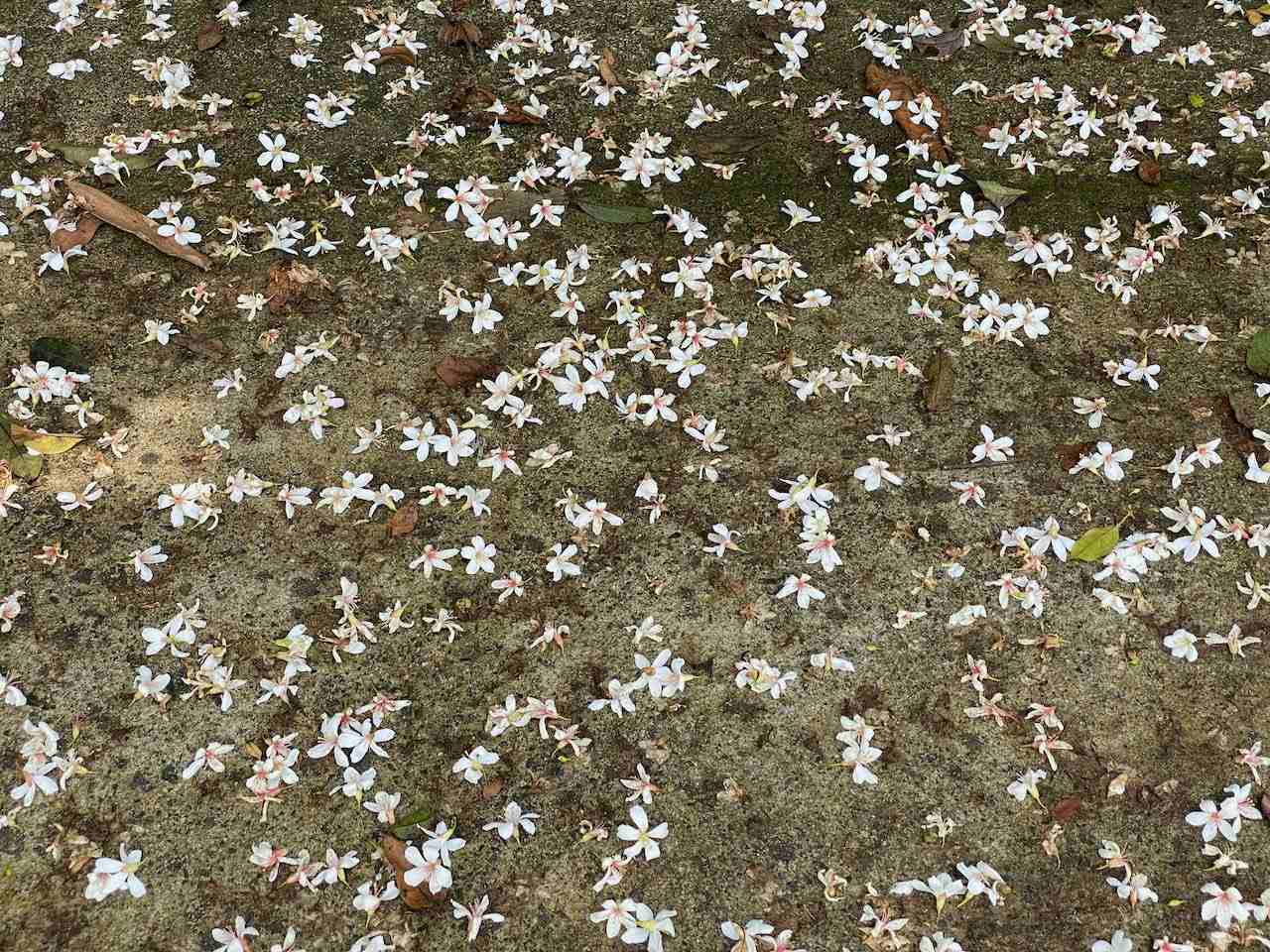
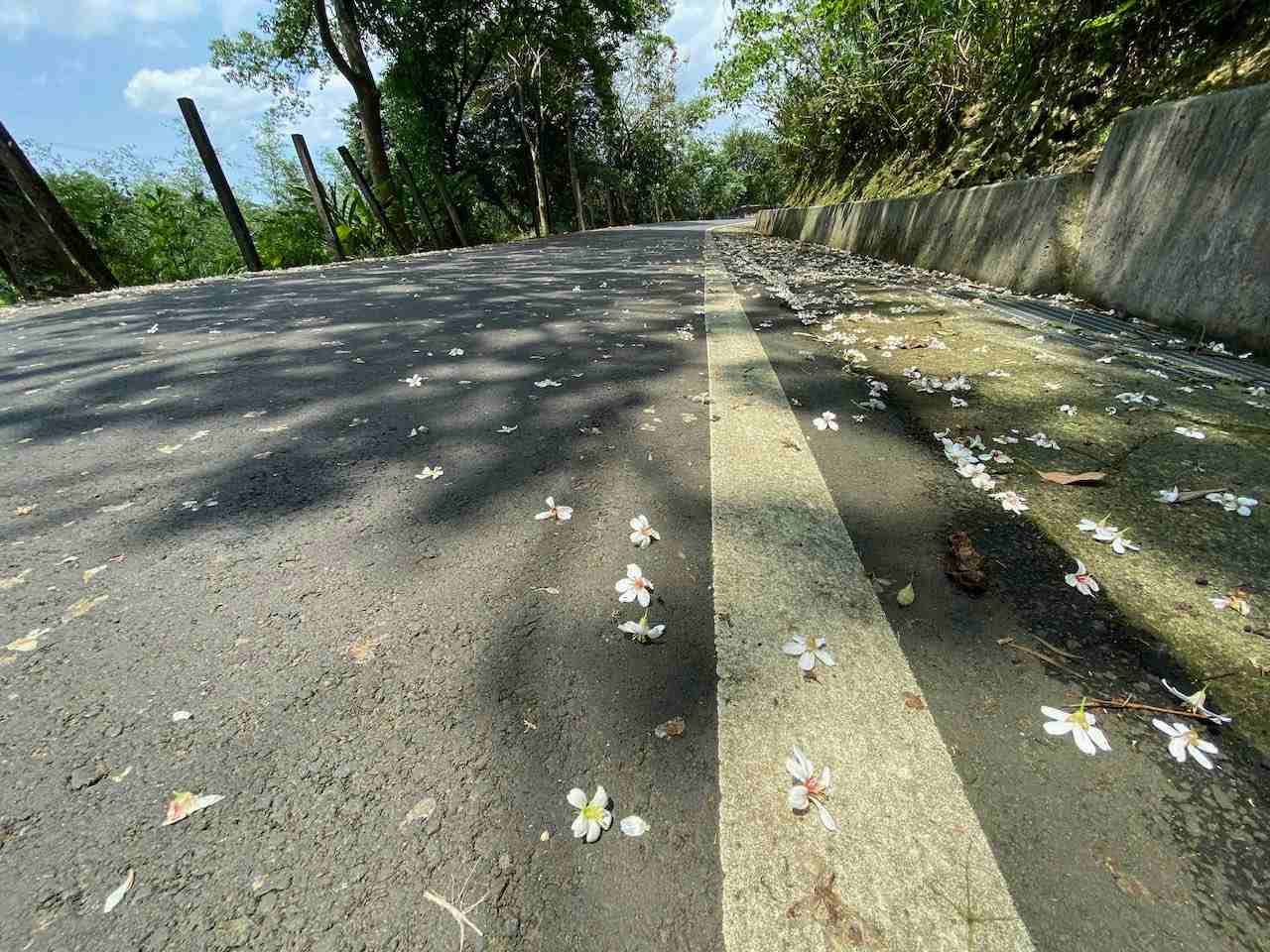
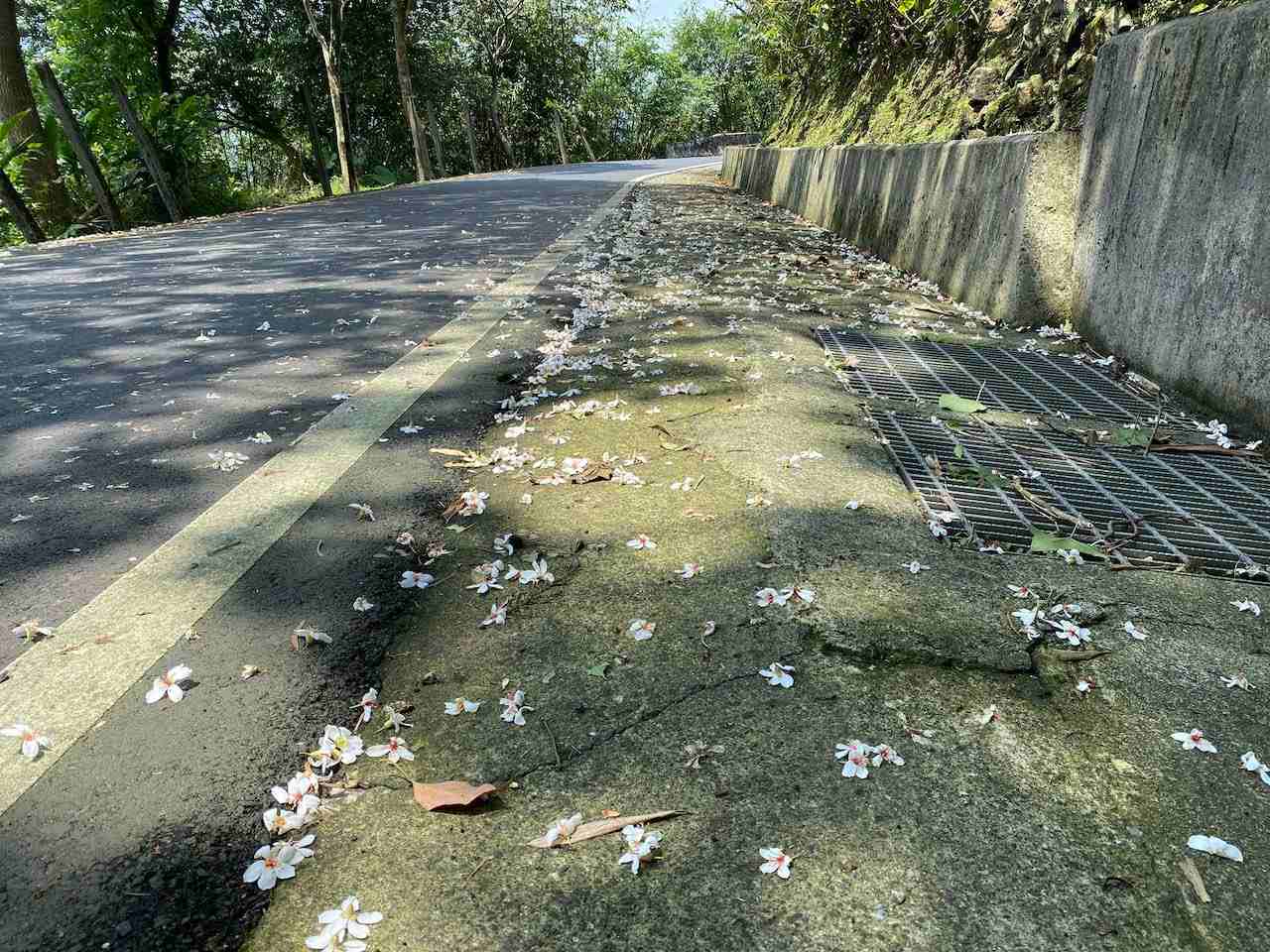
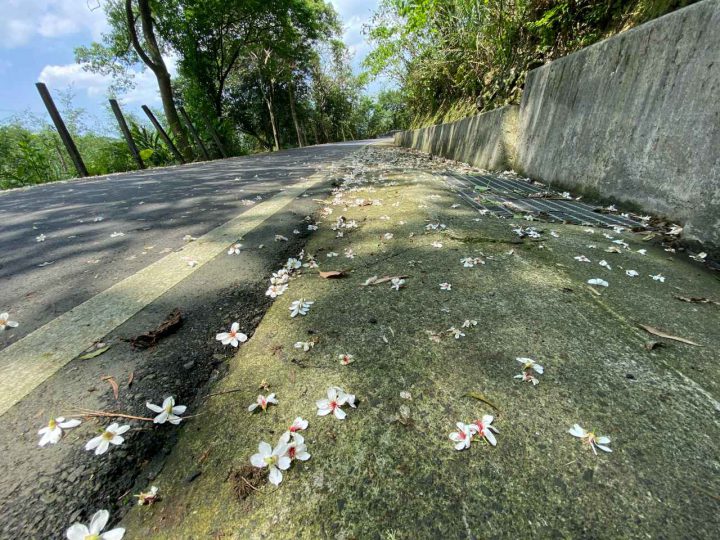
    With Velodash turned on to share our locations real time, I left Lois behind briefly to enjoy my speedy descent on Xiding Road. It was less steep and I could enjoy it without having to hit the brake much. I saw carpets of little white flowers spreading along the way. It was so beautiful that I had to stop to take a good look and take some pictures. It occurred to me later that those are the flowers of Tung Trees, which were introduced to the island during the Japanese rule (1895 -1945) for their economical values. The oil from their seeds makes good waterproofing material and paints. The trunks were used for furniture, clogs, toothpicks and matches. They were popular and planted extensively by poor families to supplement their income. Nowadays, local people love the trees for their dense blossoms during April and May. It’s dubbed as the May Snow. As beautiful as they are, you’d better not touch them as the whole plant is poisonous.

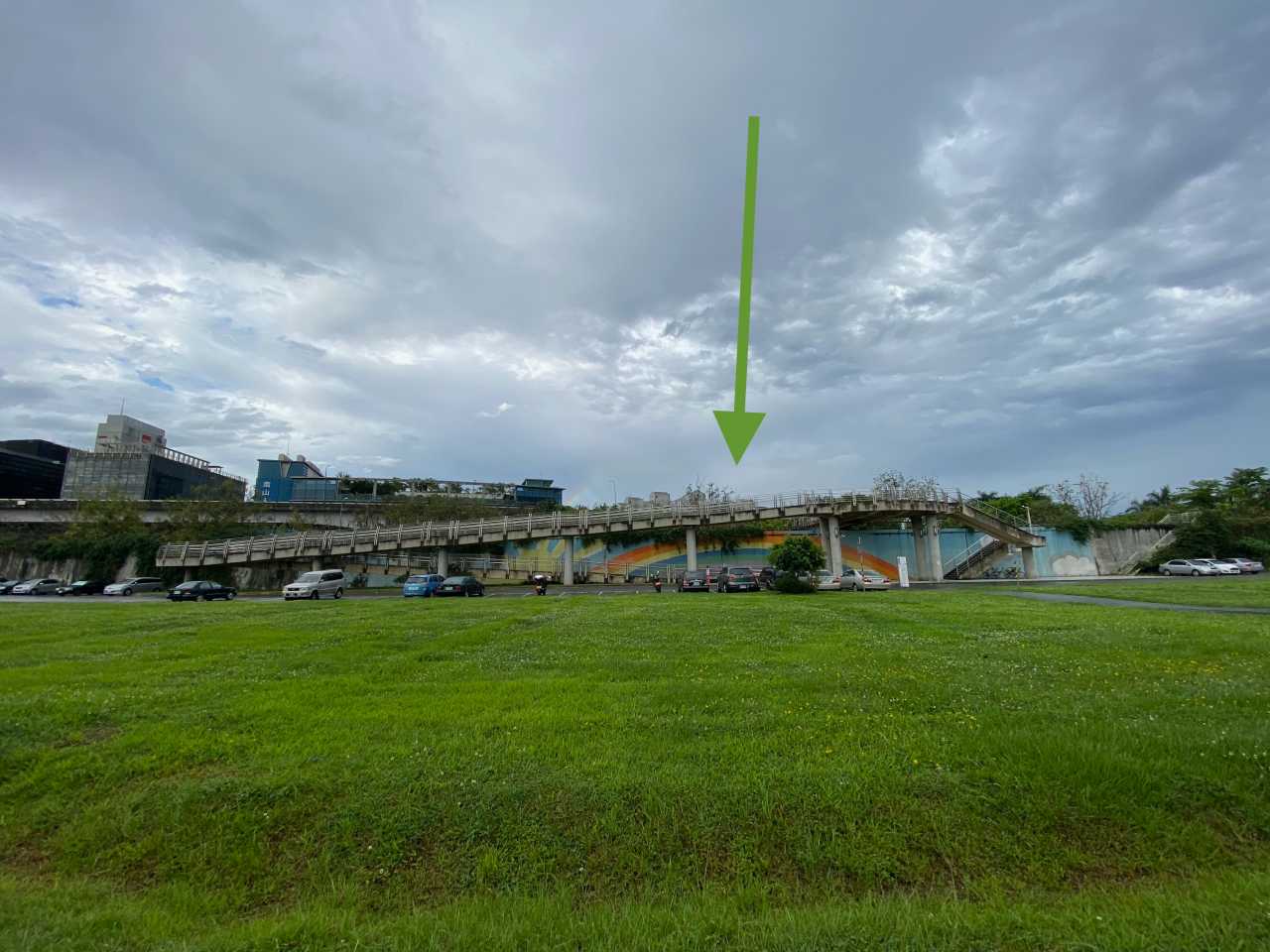
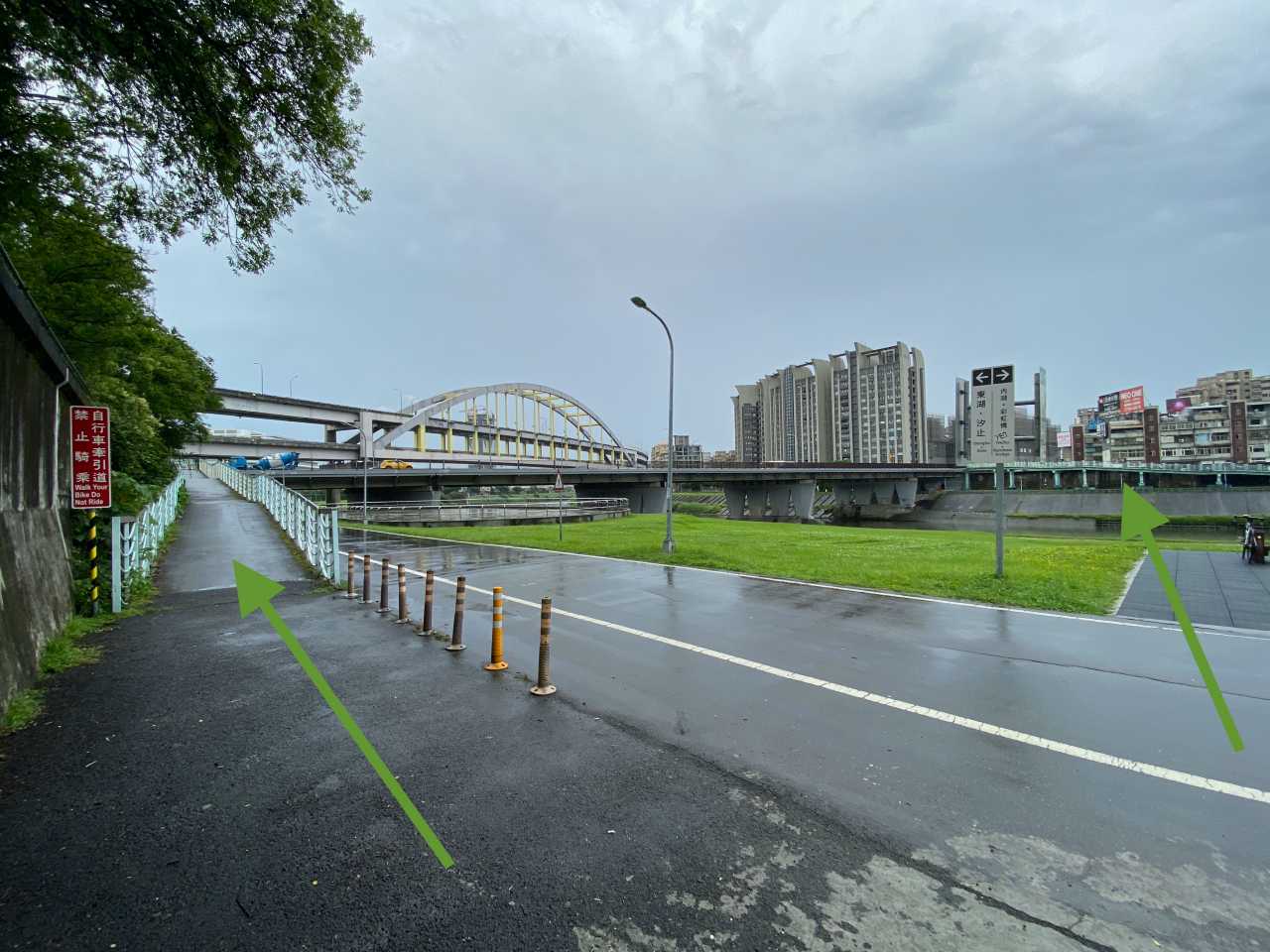
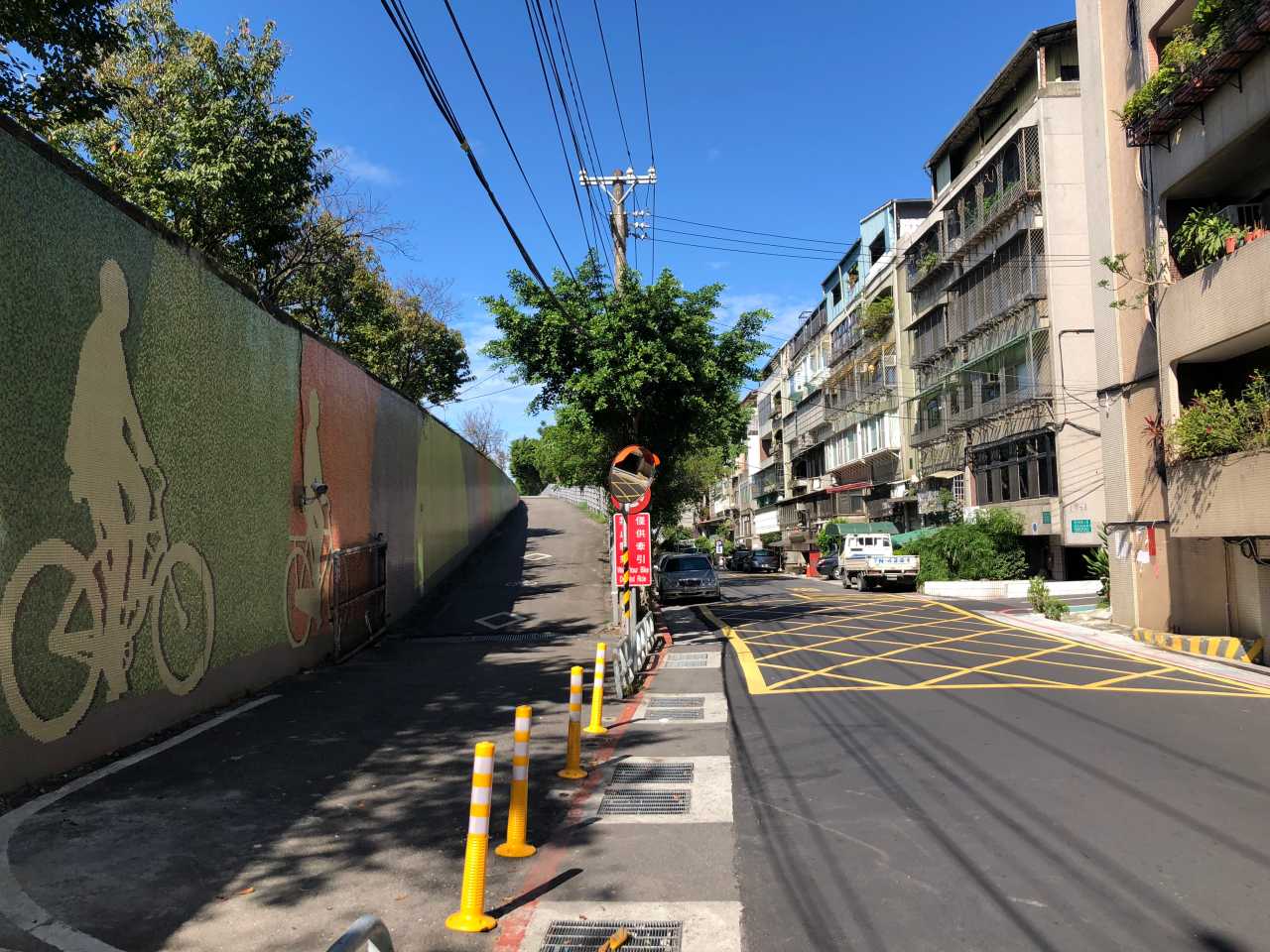
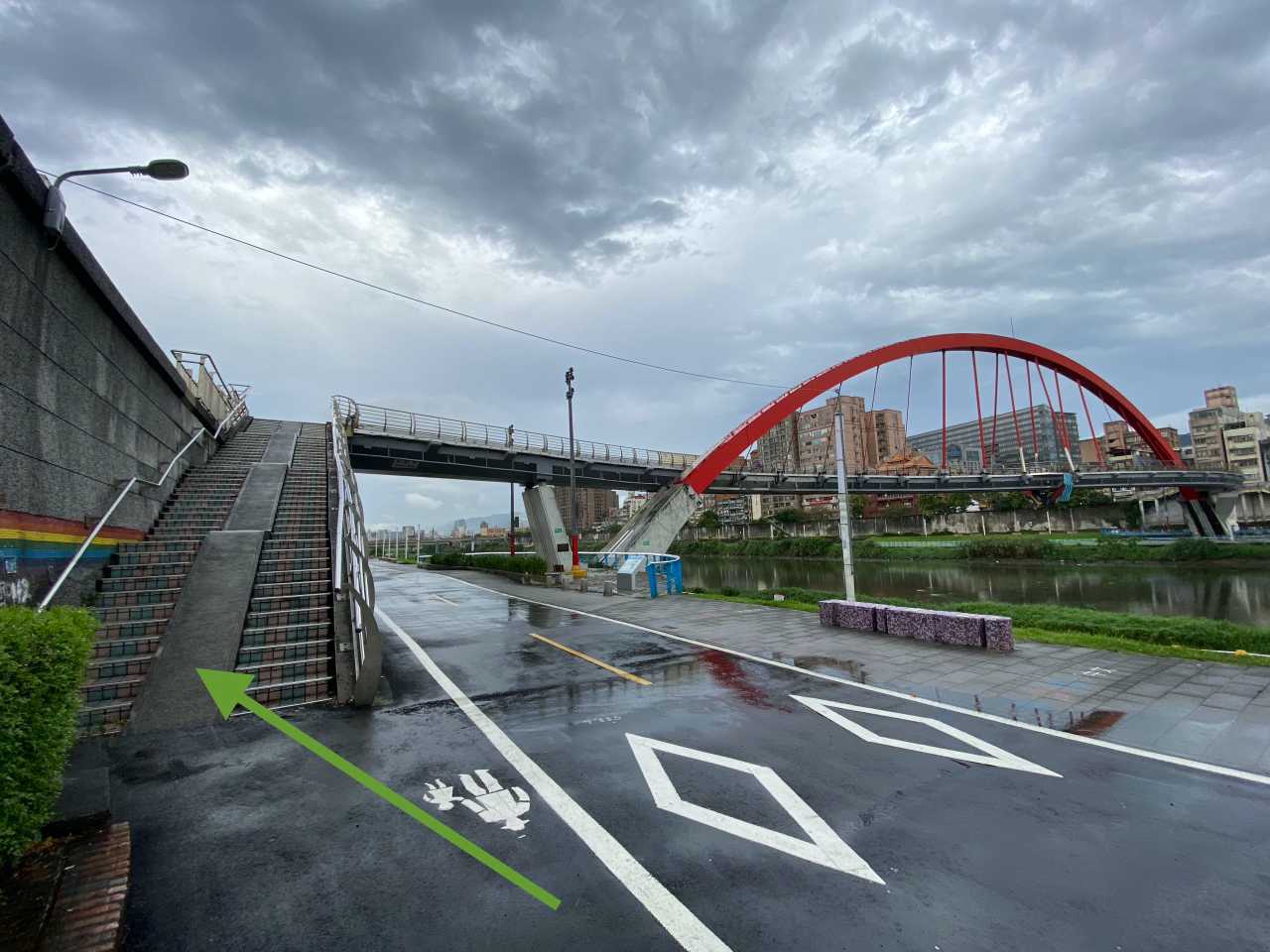
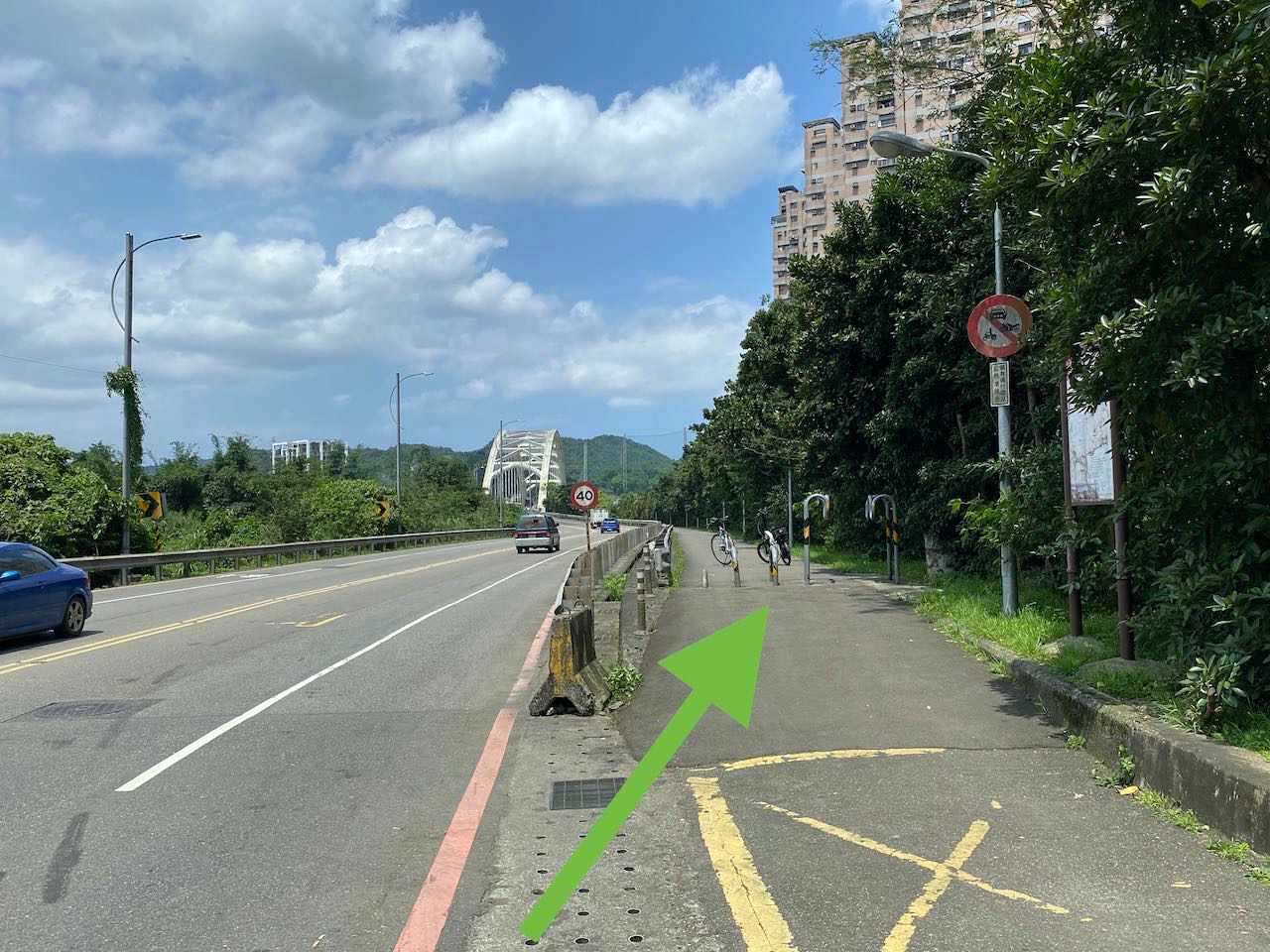
    At the bottom end of Xiding Road, we passed a busy juncture and entered the quiet Riverside Bikeways of Xizhi. It’s easy to miss the entrance, which is shown on the picture below. Then you will complete the route after riding for around 15 more minutes.

    I love this route because its elevation gives me enough training and it offers the reward of a mild downward slope which is perfect for speedy yet unthreatening descent. Traffic on the route is really low and therefore makes it very bike friendly. No wonder we ran into several groups of cyclists even on a weekday. 

    If you want more climbing after doing Xizhi Pigeon, Fengguizui lookout is just about 13km away via Dahu Street, which offers a 636m climb. GPS route available at the end of this post.

    If you want a low-carb meal, an authentic American smokehouse serving juicy brisket, Bogart’s Smokehouse, is about 1km away. 

    For me and Lois, our pick is this local hotpot restaurant that offers all-you-can-eat duck-blood curds 鴨血,  braised pork rice 魯肉飯, and free drinks and ice cream along with a very generous portion of meat and veggies in a standard lunch set. That’s a very satisfying conclusion for a great ride.

    Routes

    Xizhi Pigeon

    Fengguizui Lookout from Nanhu Bridge

    NOTE: To use the routes, please install the App on your smartphone. The App will launch and load the route automatically after you tap the above links on your smartphone’s browser. For Garmin Connect, you can then use the APP to send the route to your garmin device. If your Garmin device is not purchased in Taiwan, you will also need make sure you have the Taiwan map on your device. Here is our blog post on this topic.

  • Product Review: Real-Time Location Sharing Feature of Velodash

    Product Review: Real-Time Location Sharing Feature of Velodash

    When Lois and I are cycling together, there is always a small issue that bothers us. As a rule, it is not safe to ride side by side. Then, as a less experienced and active cyclist, she usually can’t keep up with my speed. That means during our rides together, I am always taking the lead and have to glance back to check on her status from time to time, to make sure she has not fallen too far behind. After a long climb, I also can’t fully enjoy my much-deserved speedy descend in fear that she, who has a natural aversion for speed, will fail to catch up, miss a turn, etc. 

    We have tried out the location-sharing features offered by Google Maps, WhatsApp and some other Apps, but yet to find one that suits our needs. That’s when we learned about Velodash, a cycling App specifically designed for group cycling. In addition to the usual route drawing and event planning functions offered by most other cycling/tracking Apps, it also boasts of a real-time location sharing feature that “allows you to see the current location of your friends” – exactly what I need when I go cycling with Lois.
    It took us some time to locate this function after installing the App – which is a bit frustrating at first. Turned out this feature is only available for cyclists who have joined the same event created in the App. But once we got this figured out, we love it immediately. I can check on Lois’ location and status anytime just by glancing at the same navigation screen. After the climb, I can leave her behind for a moment and enjoy my speedy descend. She will know where I am heading, follow my trail easily, and know where to meet me when I have stopped to wait for her. Our rides together become so much smoother and more enjoyable, thanks to Velodash. 
    It seems there is not much information about this wonderful feature of Velodash out there. I am more than happy to share a step-to-step guide here. 

    How to share real-time location on Velodash when cycling

    1. Install your Velodash App and create your account/profile

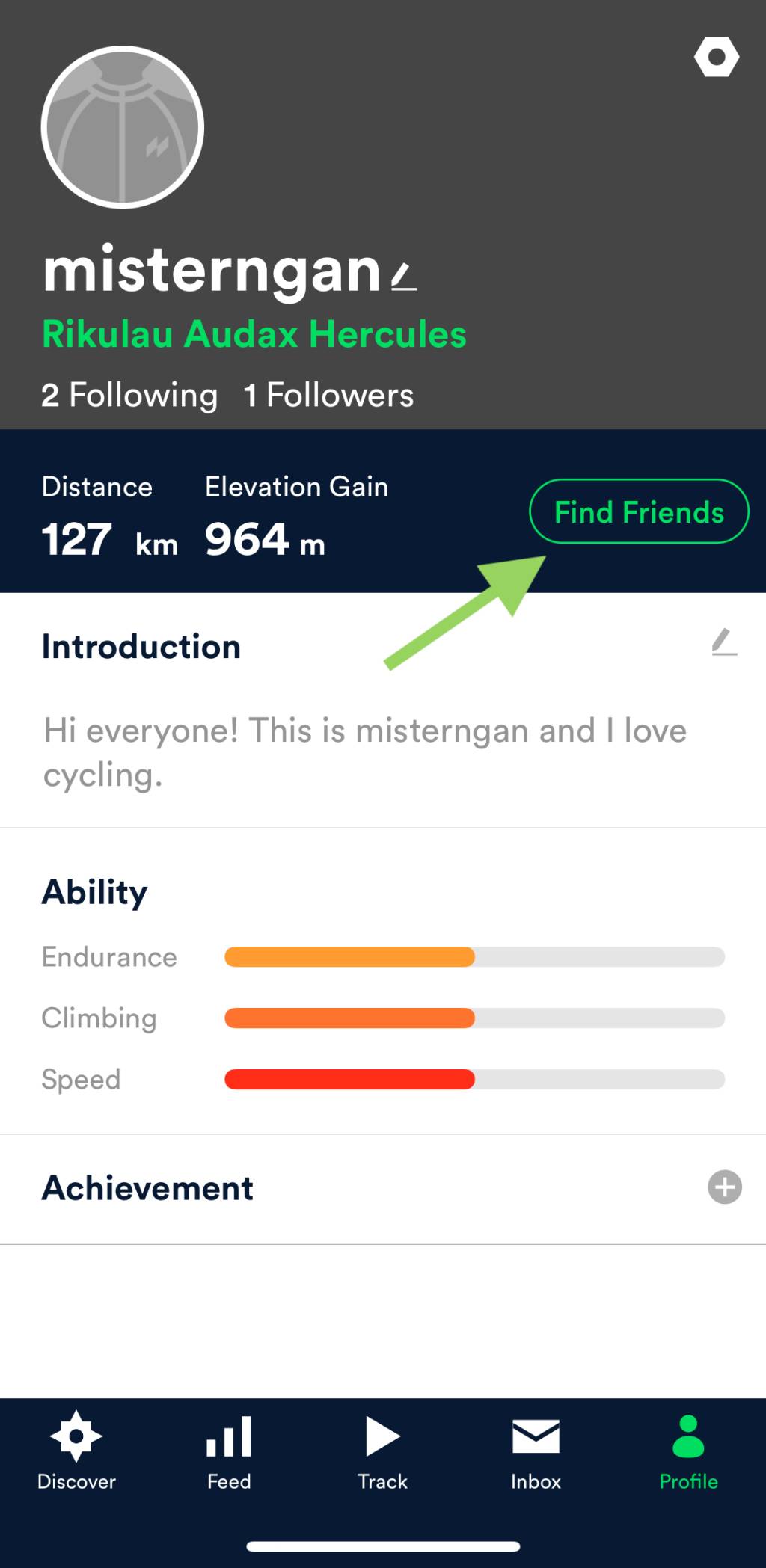
    2. Search for your friend’s profile and follow each other

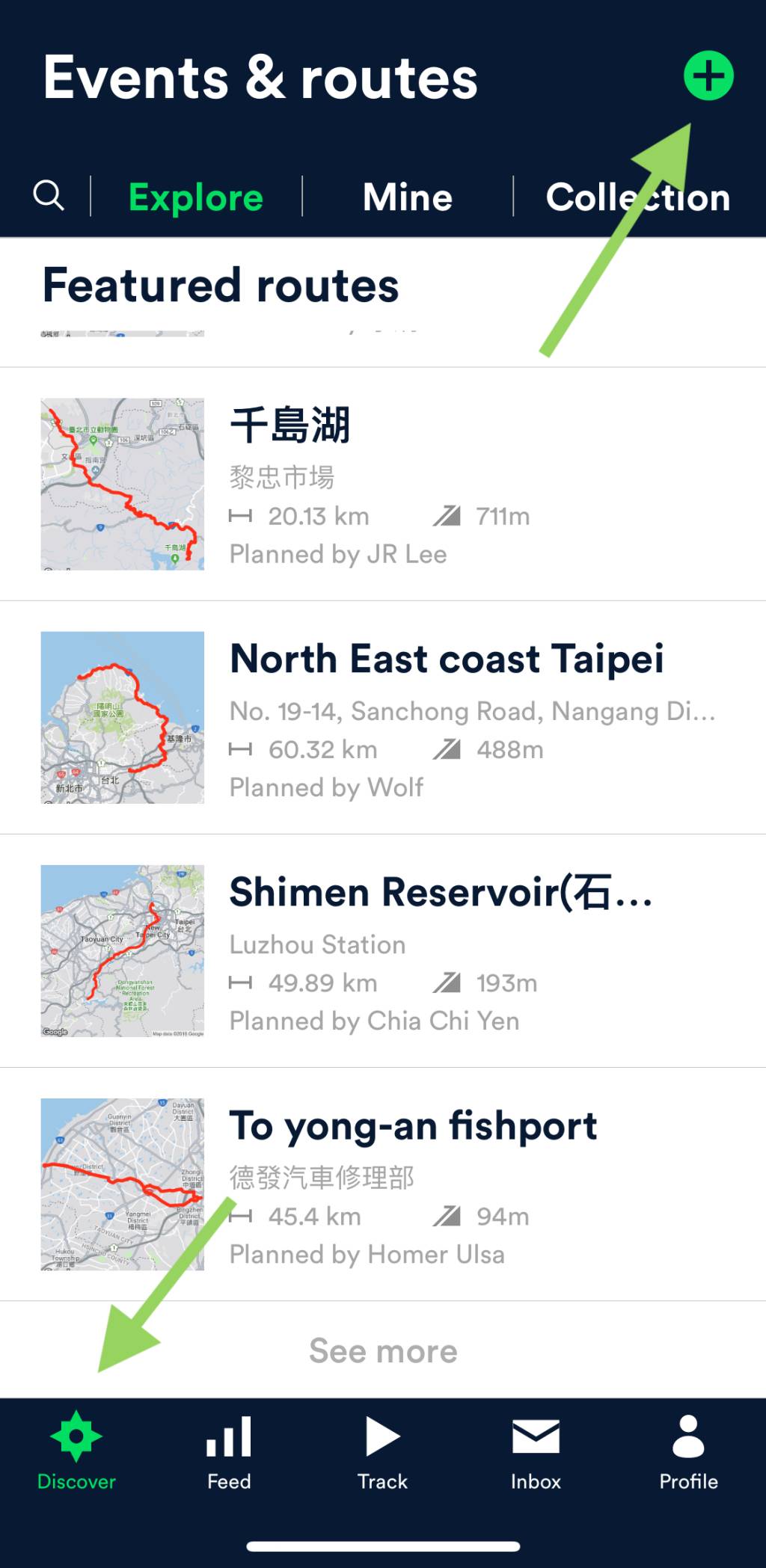
    3. Go to the tab of Discover on the left bottom corner

    4. Tap on the “+” sign at the top right corner to create an “Event”

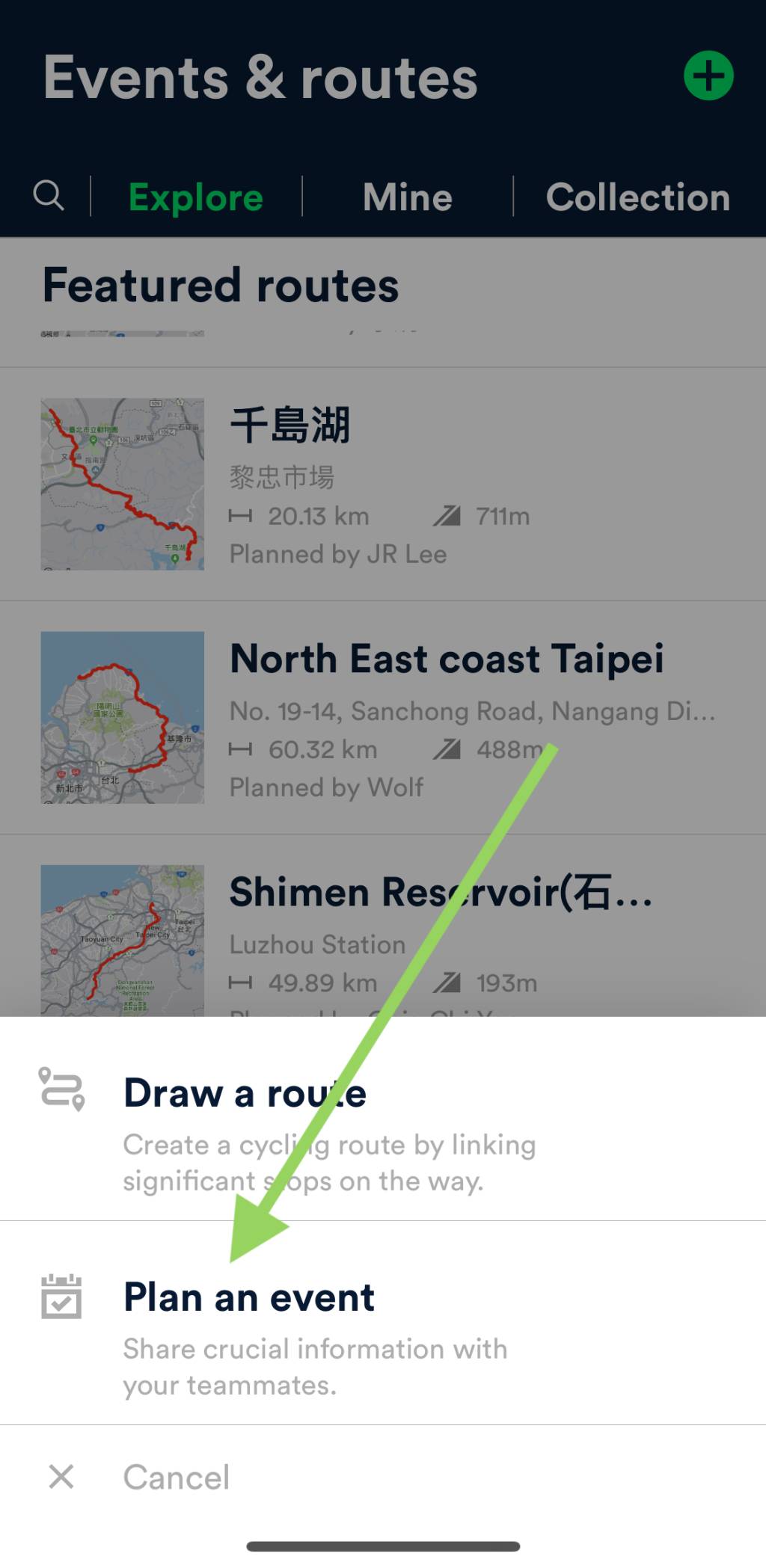
    5. At the page bottom, select “Plan an Event”

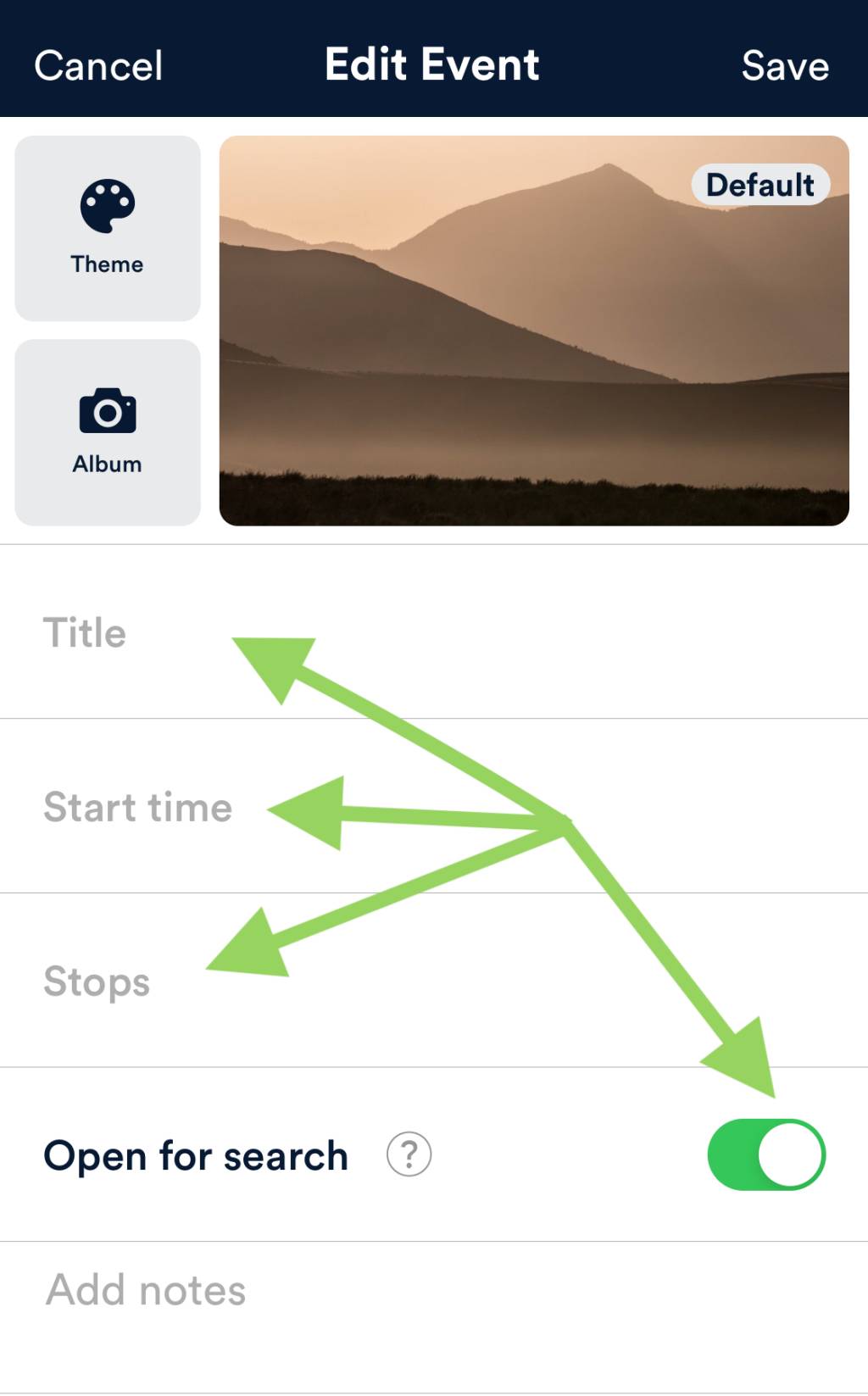
    6. On the page of “Edit Event”, fill in info like “Title”, “Start time”, and “Stops”

    7. Turn off  “Open for search” if this is meant to be a private event

    8. “Stops”: This is how you plan a route for the event. There are four ways to do it: plan a new route on the fly; select from the routes you have saved; search for routes created by other Velodash users; and upload a GPX file

    9. Save the “Event” page when you are done

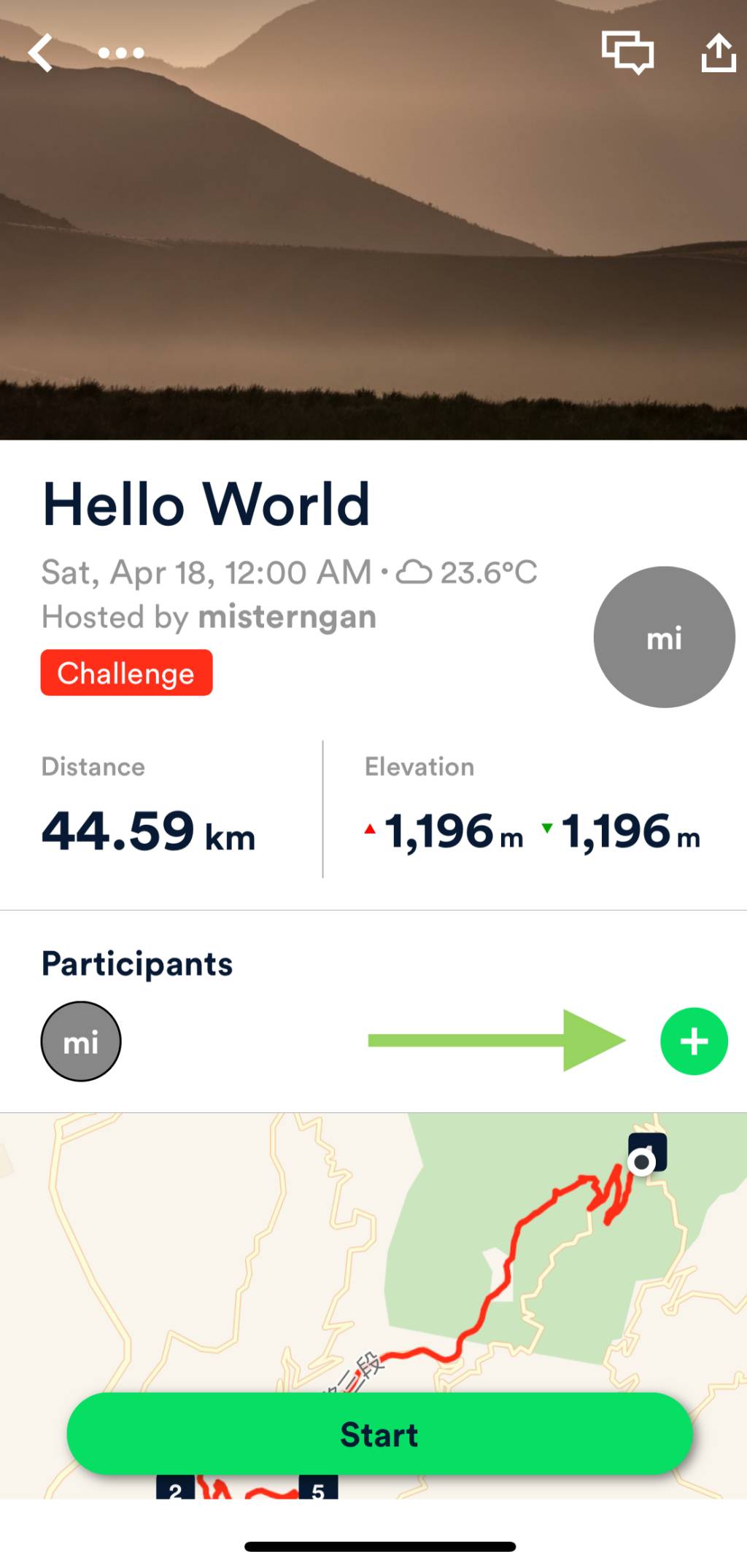
    10. On the “Event” page, add your friends to the “Participants”

    11. Hit “Start” on the “Event” page 

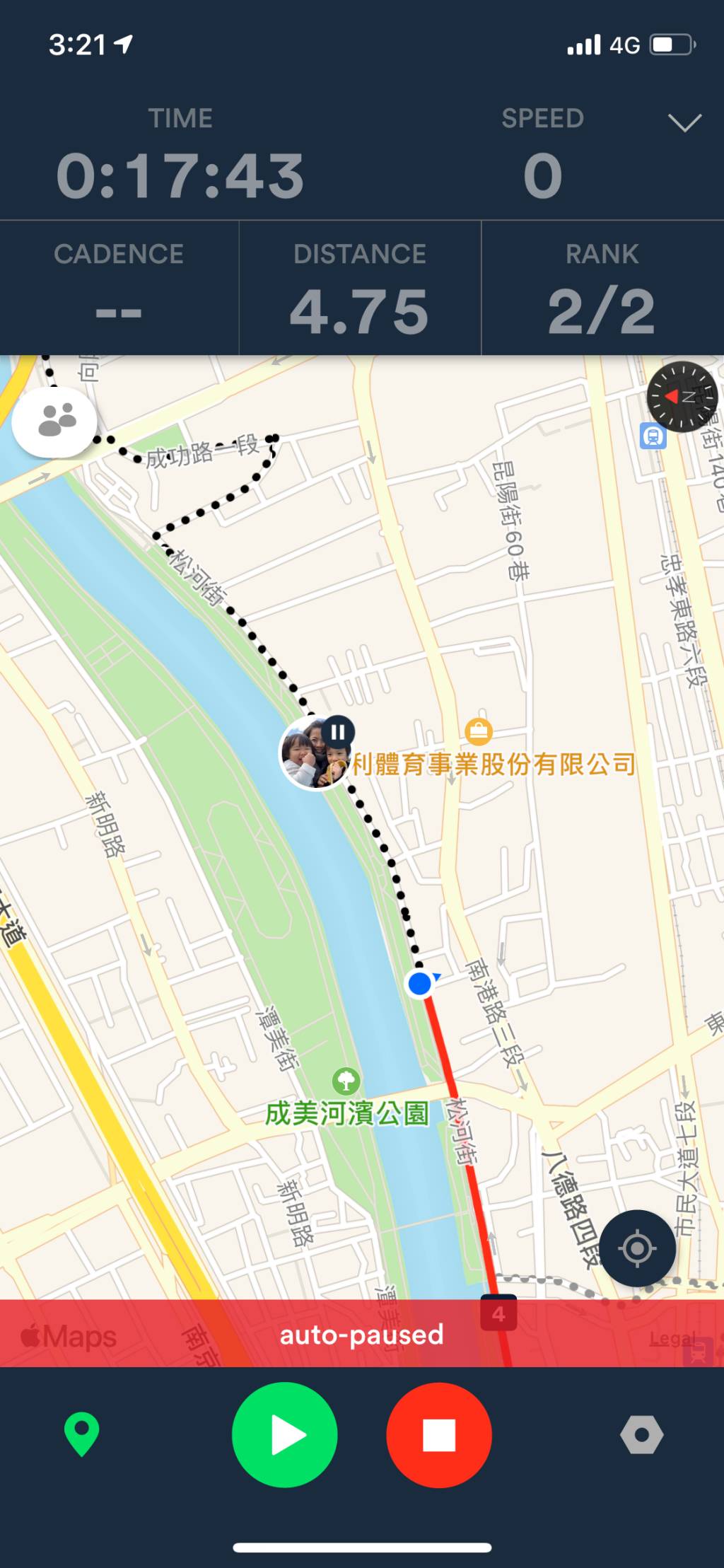
    12. Voilà! All the participants will see each other’s status on the map after hitting “Start”. As you can see here, the Blue Dot is me, with Lois being right in front of me on Paused, waiting for me. The solid red line is what I have covered. The dotted route in black is the route planned and yet to travel

    About the route planning function of Velodash

    The built-in route planning function is simple and intuitive. You can just specify multiple stops on the map and the App will do the routing for you. However, with the aim to come up with the shortest path, in most cases, the route suggested is not the most ideal one for cycling. The dedicated bikeways are usually ignored. So, if you want to go by a very specific route, it’s better to plot it on a desktop with Strava or Xplova, and then export and upload the GPX file to Velodash.

    However, we don’t always have access to our desktops and sometimes we just want to do a spontaneously ride. As mentioned earlier, in order to use the real-time location sharing feature, we must join a Velodash event. That means we have to have a route after all. In this case, I would just give the route planner the starting stop and end stop, and use the route it suggested for the event planner. You don’t really need to follow this suggested route. You are free to deviate from it while still seeing each other’s location and status.

    Other Impressive Features of Velodash

    There are lots of popular routes created and shared by fellow cyclists; they can be found in the Discover – Explore tab. You can save the ones you’re interested in to your own collection, and retrieve them when you are planning your event.

    We can also explore other fellow cyclists’ events and join them if you are interested. I once created an event for testing and received a message from some guy asking if he could join me. Too bad I had to turn him down.

    Velodash can also be connected to external sensors to improve accuracy. I have successfully connected a Garmin speed sensor to the App.

  • Product Review: SPIN UP F12W-PRO Bicycle USB Charger Dynamo from SunUp Eco (2)

    Product Review: SPIN UP F12W-PRO Bicycle USB Charger Dynamo from SunUp Eco (2)

    The Challenge of Making a Front-Mount Bicycle Dynamo

    Before the release of F12W-PRO, two rear-mount bicycle dynamos (R12W and R03W) in the line of SPIN UP have been in the market for some time. Turned out it is quite challenging to develop a front-mount model. While there are many buffers, including the saddle, the pads on our cycling pants, and even our butt, to absorb the vibration coming from a rear-mount generator, for a front-mount one, the slightest vibration could easily find its way to our more sensitive fingers via the fork and the handle bar. On the other hand, any noise from the generator will become more noticeable from affront than from arrear, thanks to the structure of our ears. It may sound trivial, but all these small nuisances will turn into major annoyances during long rides. But a rear-mount bicycle dynamo may not be an ideal choice – I wouldn’t want a generator on the rear wheel because all my electronic devices are on my handle bar. I don’t want to run a long wire from the rear wheel to the front.

    Therefore, in seeing the need of a front-mount model, Mr. Yang and his team had been working on minimising the noise and vibration of the generator in the past 3 years until F12W-PRO was all set and ready to meet its users.

    How Intelligent Power Management System (IPMS) works

    As mentioned earlier, SPIN UP F12W-PRO is the first bicycle dynamo with Intelligent Power Management System (IPMS). Depending on our riding speed and the level of power available in the built-in reservoir battery (a lithium ion battery), the IPMS operates in 4 different ways in order to maximise energy efficiency.

    In the first scenario where the reservoir battery is empty or near-empty, and our speed is not fast enough to generate the required output of 5W, any energy generated from our cycling will go straight into the reservoir battery first. It means the charging will not start if you plug in your phone at times like this, not until there is enough energy stored in the reservoir battery.

    In the second scenario where our speed is still not fast enough to generate the required output of 5W, but the energy level of the reservoir battery has passed the required minimum, the IPMS draws energy from both the built-in reservoir battery and the generator at the rate of 2.7W and 1.7W respectively, making up a total output of 4.4W, which will surpass the minimum requirement of most smartphones and thus kick start the charging process. Although it is not impossible to tap more power from the generator, the development team decided to limit it to 1.7W for better cycling experience. My guess on the technical reason behind it is that they don’t want the generator to create too much undesirable drag during climbs.

    In the third scenario where we are cycling at a medium speed of 15-17km per hour, the generator will happily churn out electricity at the rate of 5W, which, after going through the rectifier and the voltage regulator, is converted into a stable supply of 5V1A that can be fed directly to the USB port and then to your phone or other electronic devices. The reservoir battery is left untouched.

    In the fourth and last scenario where our bike is traveling faster than 18km per hour and the energy generated is more than 5W, while keeping on pushing out a stable 1A current to the USB port, the IPMS will direct any surplus energy to the reservoir battery for later use. But again, to avoid creating too much undesirable drag, the maximum energy output is limited to the rate of 6.6W.

    To minimise the possible harm and annoyance caused by our electronic device being charged having to stop and resume charging within a short interval, say every time we stop to take a sip of water or in front of a traffic light, the reservoir battery will power the USB port solely for around one minute before it goes off.

    When both the reservoir battery and our electronic device are fully charged, the generator will only generate enough energy to power the onboard computer and circuits and thus bring the drag level to minimum.

    For those who is also in need of a powerful front light, the additional wire branching out from the upper end of the cable, which is ready to be connected to a front light, will be handy. A Dynamo LED light set that includes a front light and a rear light is also available on the SPIN UP official site.

    What Makes SPIN UP F12W-PRO So Special

    Most of the other bike dynamos available in the market only have 3W of rated power. It’s good enough to light the bike lamps, but they have to rely on a power bank to collect trickles of energy before it can be used to charge a smartphone, which usually requires a supply of 1A. This really made SPIN UP F12W-PRO, which can feed energy directly from the generator to your electronic device without having to route through the reservoir battery, stand out from the crowd. Apparently, the time it will take to charge your device will be a lot shorter and the energy loss that will inevitably occur during the charging process will be far less.

    Mr. Yang and his team have substantial reasons to believe their F12W-PRO is so far the best.

    There is a speed limit of 70km per hour set upon the use of SPIN UP F12W-Pro though. If your speed exceeds the limit, excessive high voltage will build up at the generator’s mother board and eventually break down its components permanently. And such limit is set for bikes with 700C wheels, for which 70km per hour is about 550 turns per minute. That means if you are mounting your F12W-PRO to a smaller wheel, the speed limit for you is lower.

    It was a very enriching morning. Soon it would be lunch time. Before heading out for lunch together and me bringing a SPIN UP F12W-PRO home for more thorough trial, my conversation with Mr. Yang strayed to Nikola Tesla, the inventor of AC induction motor and the square root of three for the three phase electrical systems…

    Would I Pay USD499 for the SPIN UP F12W-PRO

    At the time of writing this post, I have been using the dynamo for more than 3 months. I will share my experience with it in more posts to come. All in all, it has been working very well. I have no intention of returning it to Mr. Yang. I will pay the hefty yet worthy USD499.

    Part 3 Charging Performance Report

  • Product Review: SPIN UP F12W-PRO Bicycle USB Charger Dynamo from SunUp Eco (1)

    Product Review: SPIN UP F12W-PRO Bicycle USB Charger Dynamo from SunUp Eco (1)

    Feature Overview of SPIN UP F12W-PRO

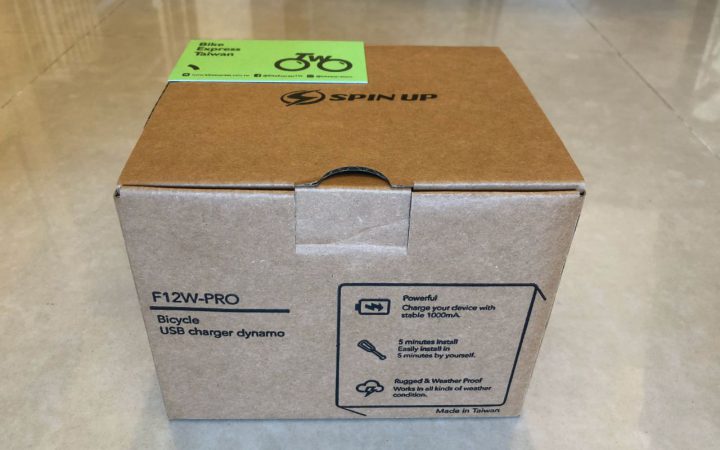
    SPIN UP F12W-PRO, a new front-mount model added to SunUp Eco’s line of bike dynamos released to the market in late 2019, is a high-power low-drag 3-phase bicycle USB phone charger that promises to keep your smartphones and other electronic gadgets charged while you are pedaling along. Robust, durable, and efficient, it starts pumping out a stable current of 1A through its USB port as soon as your cycling speed reaches 15km per hour, without having to wait until a certain amount of energy has been accumulated in the reservoir battery.

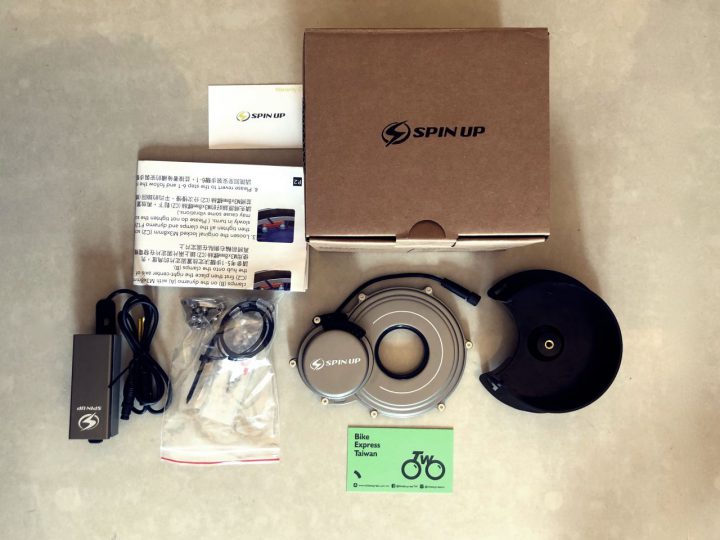
    The generator, weighing a portable 370g, is to be mounted on the spokes of the front wheel and will be driven directly by the wheel to achieve minimum mechanical drag. It works with both disc brake and rim brake, and is compatible with 26”, 700c, and 29er wheels. An assist kit is included to help make the installation easier, quicker, and more precise.

    The most distinctive feature of F12W-PRO may be its adoption of Intelligent Power Management System (IPMS), which is the first among bicycle dynamos. It helps maximize energy efficiency, prevent unnecessary energy loss, prolong the life of the reservoir battery, and charge your phone as fast as possible.

    The more adventurous touring cyclists will surely welcome the all-weather feature of F12W-PRO. Operative in a wide temperature range between -25 and 65 degree Celsius and with a water resistant rating of IPX4, which means it can stand water splashing from any direction with no harmful effect, F12W-PRO is your reliable source of power even in the toughest of times.

    But, let’s be honest, the bundle of all these wonderful features does not come cheap. A hefty price tag of USD499 per set will make most who are interested in F12W-PRO think twice, if not stopping them at all. So, we try to find out if it is worth the price or not.

    I have always wanted a bicycle dynamo to save me from my “range anxiety” for my smartphone. We all know how indispensable our smartphone is. When I’m on my bike, especially during cycling trips, I need it for photo-taking, navigation, ticket booking, searching of accommodations, checking of train schedule, communicating with my friends, and a bunch of other random tasks. There is not one phone with battery life long enough to sustain such extensive use, so I have been using power banks along with my iPhone. But the capacity and output power of power banks deteriorate as they age. When we are using old power banks, we may often find our phones stop charging soon after they are plugged in, while the power banks indicating they are still full of power. Without dwelling further into the technical explanations behind this, I should only say this does not help much in easing my range anxiety.

    Besides, even though I don’t do multi-day cycling trips often and seldom go bike touring in the wild, and therefore don’t really have a pressing need for a bike dynamo, I still want one on my bike as I like the idea of being self-sufficient and untethered  by electric outlets. 

    My First Try with SPIN UP F12W-PRO

    I contacted SunUp Eco, the developer of F12W-PRO, to see if they can loan me a trial set. As a former electric engineering major, I am also very interested to meet them in person to learn more about the design and development their bike dynamos. It turned out they are friendly with Rikulau Taiwan, one of our partners, and have heard about us. The answer is: yes, they’re happy to loan us a set of F12W-PRO and happy to meet with us.

    We were greeted warmly by Mr. Mark Yang, founder and President of SunUp Eco, in their workshop on the outskirt of Taoyuan County. Mr. Yang and his team wasted no time to show me how to install the dynamo on a bike. The demo bike happened to be a Rikulau in my size. Within 10 minutes, the generator was ready. I took the bike out right away for a test with my iPhone plugged in. At first, nothing happened. Then I started doing a long climb to the Shimen Reservoir at a speed of around 7km per hour. After 5 or 6 minutes, while I was still climbing, the screen of my iPhone lighted up to show that the charging started. It lasted for around 3 minutes and then stopped. I later learned that it is because my speed then was not fast enough to generate the amount of power that the system needs to accumulate in its reservoir battery before it can pump out the electricity at the required rate. After the climb, I rode for a little bit more on the top of the dam before descending back to the SunUp Eco workshop, with an average speed of over 15km per hour. Electricity was churned out steadily the whole time and my iPhone took in the energy automatically whenever it was available – in the case of some power banks I have used, once the charging has stopped, I have to unplug and re-plug the lightning cable in other to kick start the charging process.

    Back in the workshop, I started grilling Mr. Yang and his team on the design and development of F12W-PRO Bicycle USB Charger Dynamo.

  • Product Review: Touring with a Klever B Comfort E-bike – A Hilly Route Test

    Product Review: Touring with a Klever B Comfort E-bike – A Hilly Route Test

    We have been receiving enquiries about e-bikes for hire from time to time. So we asked around and were introduced to an e-bike manufacturer, Klever Mobility, who generously loaned us an e-bike for a try.

    An e-bike, or a so-called pedelec (from pedal electric cycle), can be compared to smartphones in its infancy. There used to be palmtop computer makers who tried to add the functions of a telephone to their PCs, and mobile phone makers who tried to make their phones run computer applications. This is what’s happening in the motorbike and bike manufacturing industries. Klever Mobility is a daughter company of Kymco, a well-established local manufacturer of scooters and motorcycles with more than 50 years’ experience, who has also been working on electric mobilities for more than 20 years. Founded in 2011 and carrying with it years of invaluable experience in building machine-powered bikes, Klever Mobility commits itself to designing and building the hybrid that can unlock the full potential of electric mobility and offer the best riding experience.

    In terms of motor positioning, there are two major types of e-bikes at the moment: hub-drive and e-drive. Hub motors, which place the electric motor in the center of a bicycle wheel, are certainly the most common form of electric bicycle motors.

    Mid-drive motors, which house the motor closer to the center of the bicycle and transfer the motor’s power to the rear wheel via the bicycle’s chain drive, have become much more common over the last 2-3 years, and are cutting significantly into the hub motor’s lead as the king of the e-bike motors. (1).

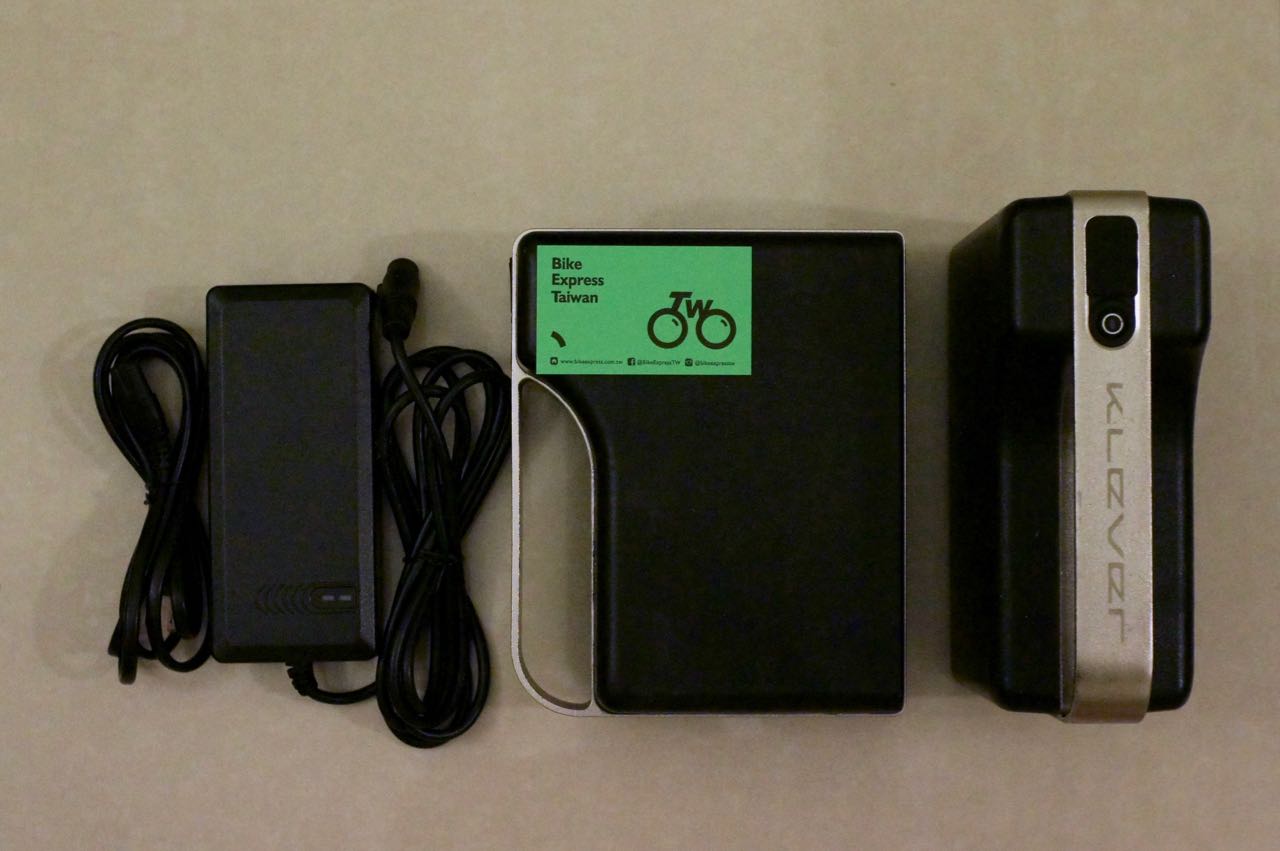
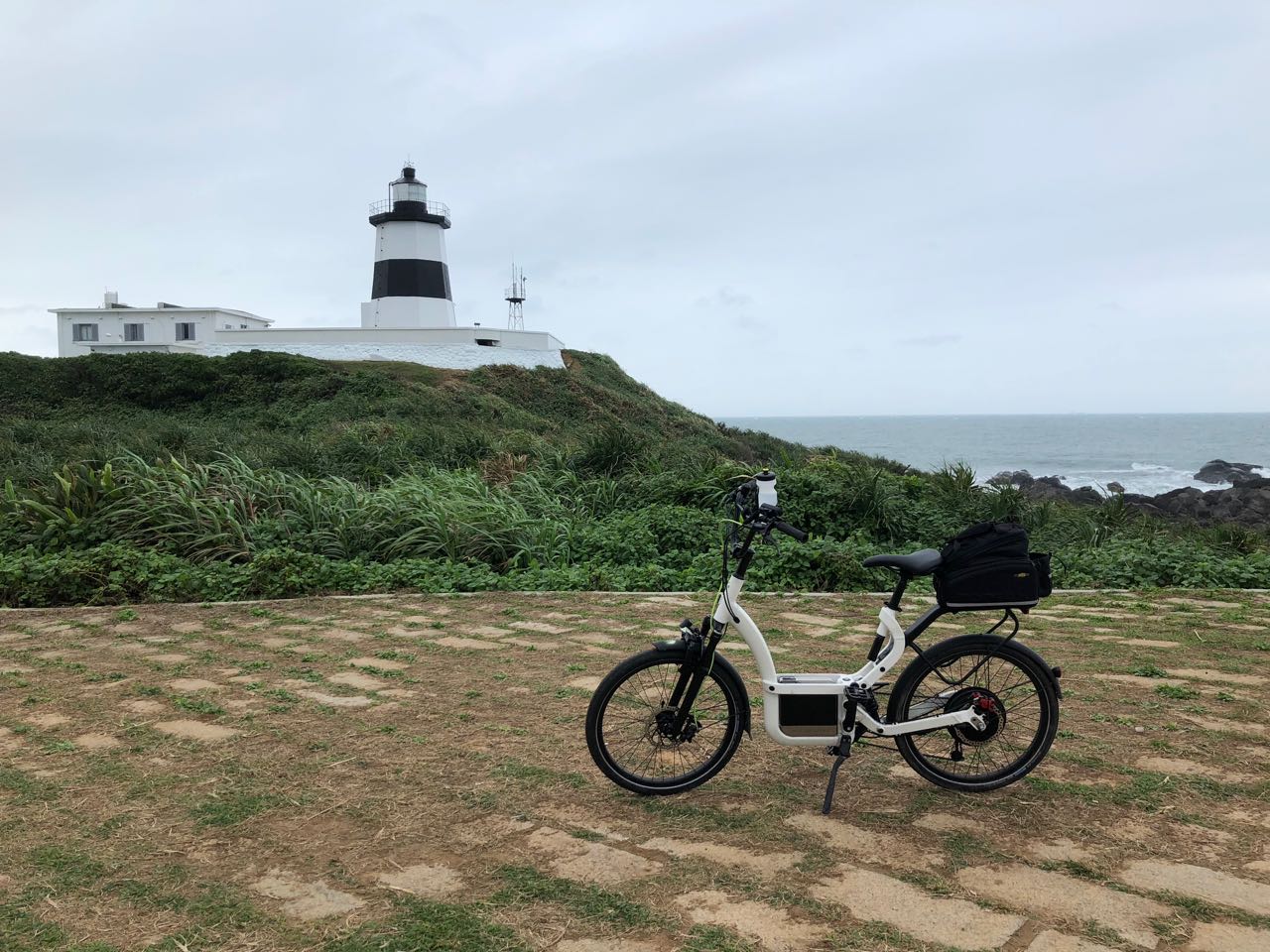
    The Klever e-bike loaned to us is a member of the low step-through and full suspension B series, belonging to the hub-drive family. It comes with an in-house developed rear drive system called BIACTRON, which consists of a 350W gearless and brushless rear hub motor with torque sensors, capable of regenerative coasting and braking. The 470Wh battery is rectangular in shape, which makes it easy to be packed in most touring bags. When in use, it will be put inside a slot in front of the bottom bracket. It helps to keep the centre of gravity low. 

    As to the non-electrical, human-powered system, it has a 48-tooth chainring and a set of Shimano Deore 10-speed cassette (11-32 Teeth). One may take note when doing the maths on the gear ratio that the size of the wheels are 24 inches. A standard mountain bike comes with 26 inches wheels. 

    When everything is fixed to the newly designed robust aluminum frame, must say it looks more like a scooter than a bike – it may not be a surprise when we consider its lineage. I had been quite skeptical about the effectiveness of the pedals of e-bikes, after seeing enough e-bike riders on the streets using their pedals as mere footrests. So, to see whether my skepticism is legitimate, I started the test ride without a battery. Turned out it ran very smoothly. The motor did not get in the way of my pedalling; it even managed to turn a small portion of my energy spent to power up the rear lamp. I found it a nice feature because it helps to keep us safe on the road even when the battery runs out. I cycled for a couple more kilometres. The extra weight from the robust frame and the motor had not slowed me down until I needed to do some climbing and when gravity came into play. Without a smaller chainring (e.g. 30 or 22 T), the gear ratio made it hard for me to climb some steeper slopes. Of course this is not really an issue, considering it is an e-bike and you are not supposed to ride an e-bike without a battery. But now I know its limitations and I know I have to make sure I have enough juice when I am going out for a hilly route. 

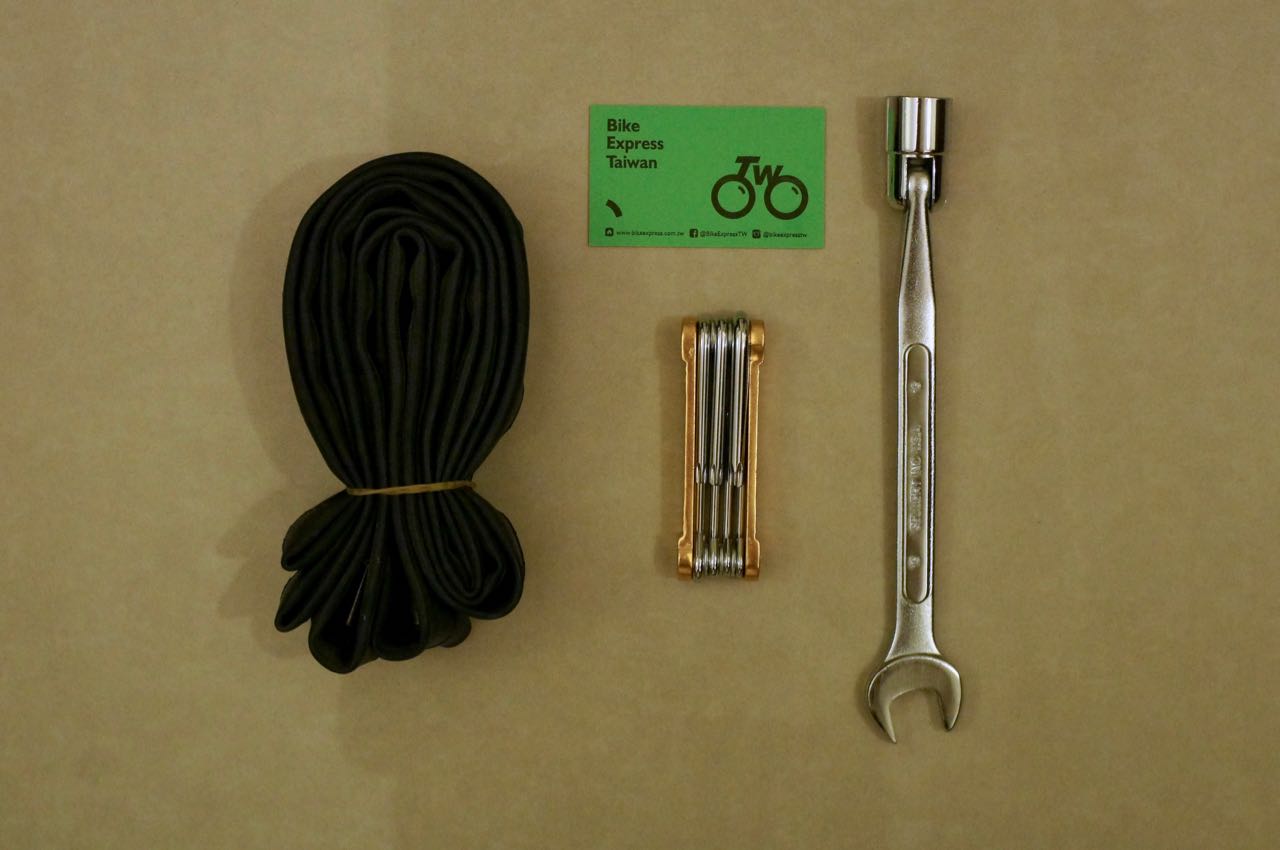
    Next, time for some more serious testing. Now that I have electrical power at my disposal, I could be more ambitious when I was planning my routes. We want to see if it’s good for bike-touring. Lois and I used to cycle for about 50km a day without much climbing when we were bike-touring. We are both not competitive riders and we stop (for breaks, for sightseeing, for coffee, for snacks…) a lot. We may be able to cover more ground with an e-bike. I planned two routes, but first, I need to learn how to replace a tube in case of a flat tire. The tires of the Klever e-bikes are so sturdy a flat tire or punctured tire is very rare indeed. But still. Klever Mobility is kind enough to arrange a demo session for me in their workshop. The procedure to change an inner tube is exactly the same as what needs to be done with an ordinary bike, except that the wheels are much heavier, especially the rear one, which has a heavy motor attached to it. The front wheel has a quick release but the rear one is fastened to the dropouts with bolts. The electric plug to the motor is locked with a star screw. So, in addition to the hex keys, a 19 mm socket wrench and a T25 star key are also needed. I will need to make sure I have all the tools with me when I go somewhere remote because, if there is a flat tire and I am not able to fix it, Lois, a licensed but incompetent driver, won’t be able to come save me.

    The first route I rode is a hilly one from Nangang to Ruifan along the County Highway 109 and 106, just to test how well the e-bike can climb. Then I returned home from Ruifan via Provincial Highway 2D (shown on googlemaps as 2丁) and Provincial Highway 5 (total Distance 77km; elevation gain 1,384m; maximum elevation 490m). I weight around 78kg and I packed an extra battery, which make the total weight around 85kg. The BIACTRON motor system has sensors to detect my pedaling force and provides additional push accordingly. With pedal assist at the lowest level, I managed to climb the first 233m peak on the County Highway 109  by shifting the rear gears. It was quite a steep one; I gained 200m in 3.5km. 

    As I was descending to the junction of the County Highway 106 (elevation 50m), the regenerative coasting was kicked started when the e-bike hit 35km/h. Then there came some steeper descends and I reached around 45km/h. The console beeped to warn me about exceeding the speed limit. Other than that, the e-bike worked quietly. You can hardly noticed any sound coming from the motor.

    The next peak was 290m. It was a mild one because it took 13.5km to gain 240m of elevation. I paused frequently to take pictures of the villages in the outskirt, like Shiding, Jingtong, Pingxi and Shifen. It’s in general a very comfortable ride except I had to share the road with the roaring motorbikes. This is a very popular route for bikers, too. 

    The final climb came right after Shifen. I started at  173m of elevation and reached 488m. It was an elevation gain of 315m in 5.8km. At some points, I needed to push the assist level to the highest. The muscles on my legs were getting tired and the battery was coughing up its last bits of power. But we did it. We made it to the top without having to switch to a new battery. I was impressed by its endurance.

    As I was descending to 55m of elevation, on a 10km ride towards Ruifang, the e-bike harnessed some power back to recharge the battery. And I recharged myself with a late lunch at Ruifang. 

    I started my return leg with my fellow old battery. I wanted to see how far it could go. There wouldn’t be any more climbing and I had set the pedal assist to the lowest level. It should be able to last for a bit longer. And that was when a mutiny happened – a cramping leg. Alright! Time to switch to luxury mode. I swapped in the fresh battery and headed home with pedal assist set to a higher. The second battery was still half full when I got home.

    Check out the elevation profile on my Strava link here.
    https://www.strava.com/routes/16388043

    Reference:

    1. https://electrek.co/2018/06/07/electric-bicycle-hub-motors-vs-mid-drive/

  • Product Review: Touring with a Klever B Comfort E-Bike – A Long Coastal Route Test

    Product Review: Touring with a Klever B Comfort E-Bike – A Long Coastal Route Test

    My second test with this E-bike was a longer trip with less climbing. I cycled to Keelung from Dahu Park because I was quite sure I could not board the train with the e-bike. From there, I travelled along the northern coast mostly on the Provincial Highway 2 to Tamsui, then headed home along the Riverside Bikeways. It was a 118km route, which felt mostly flat to me. But turned out the accumulated gain on elevation on those mild slopes added up to over 1,232 metres, according to my Strava record. 

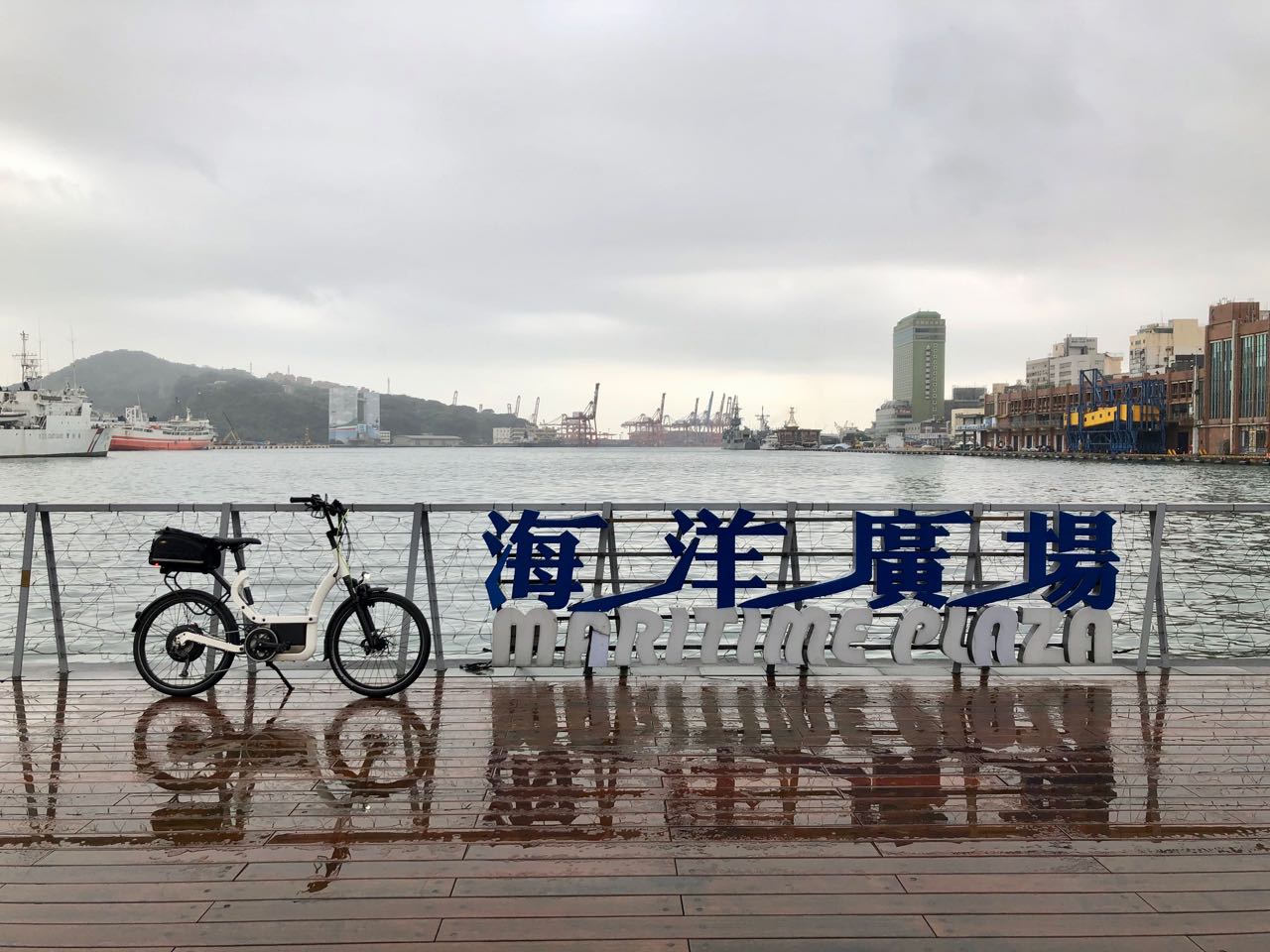
    It was a cloudy day with occasional drizzles. Braking on the wet road was effective with the 2.15” tyre and the hydraulic disc brake. And luckily my pants and bags were well protected by the fenders of the two wheels. Without them, the dirt and the filthy water threw up by the rear wheel could have accumulated on my lower back and found their way to my under pants. Well, I don’t really mind cycling in the rain and got soaked – all my bikes do not have fenders. But for some reason, when I am riding an e-bike, I expect a certain level of comfort. 

    I made it to Keelung in under one hour. I could reach 25km/h easily in the head wind or when climbing a mild slope. This was amazing! One would probably need to spend the same amount of time with public transportation. 

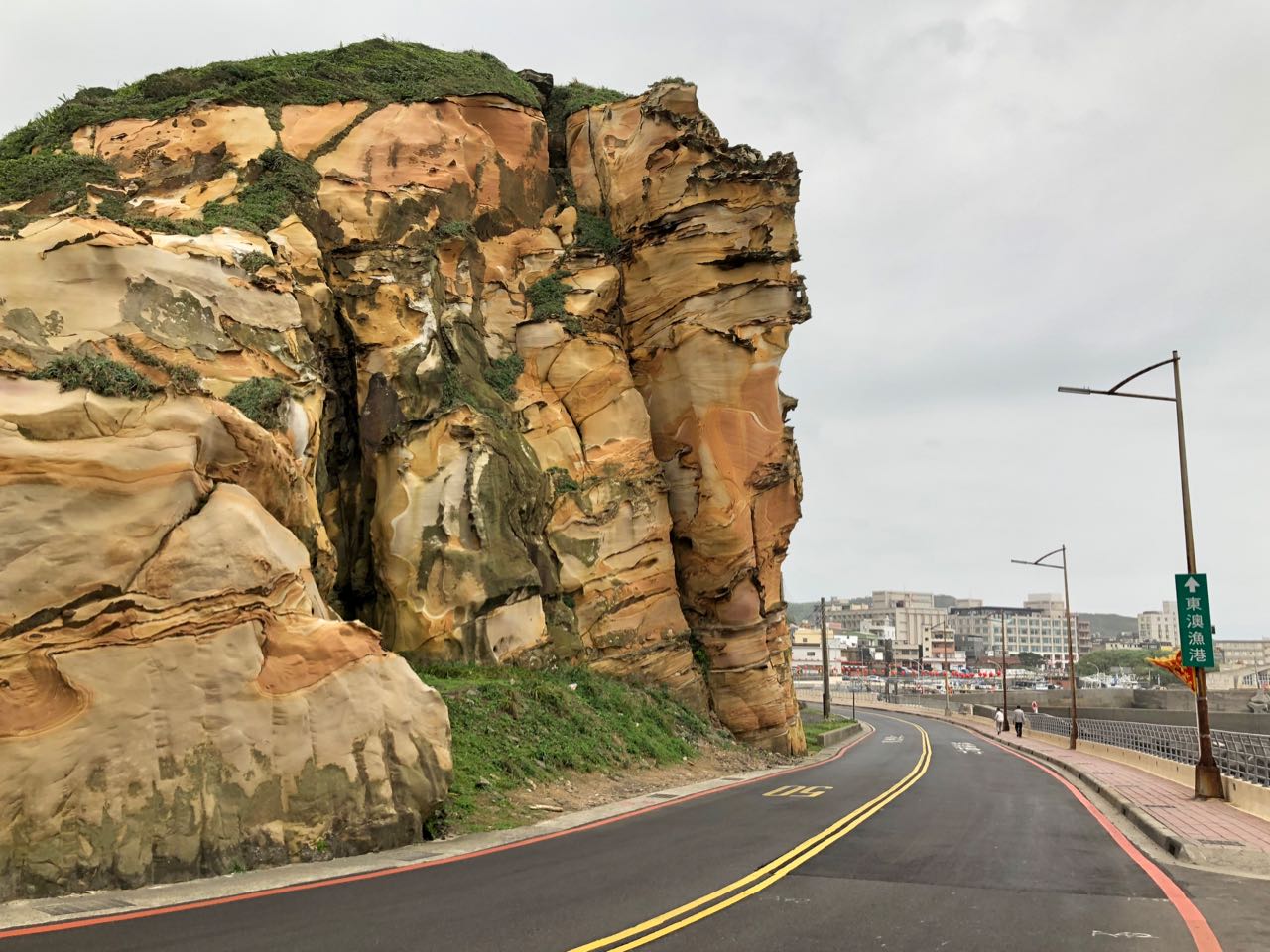
    I left the main traffic and avoided a major climb by heading straight to Waimushan Fishing Harbour. Rain stopped there. I started my coastal cruise, passing through Wanli Fishing Harbour, Yehliu Geopark, Jinshan Old Street. I made it to Fuguijiao Lighthouse (65km of the 118km trip) after traveling for 5 hours with lots of short pauses in between to take pictures and a longer one for lunch. Then the battery was almost exhausted at 70km. I swapped in the fresh one and arrived at Tamsui Old Street in an hour. It was still early, around two o’clock. But I needed to be home for a shower and have dinner with the kids. Strong headwind at the Riverside Bikeways. No worries! My second battery was still fresh. We pierced into the wind with ease. The only problem was that my bottom started to hurt after sitting on the saddle for 7 hours. Again, when I was home, the second battery was still half full. 

    This is my route on my Strava record.

    https://www.strava.com/activities/2001072404

    Conclusion:

    The Klever B Power is a great e-bike for bike-touring. It can handle hilly roads and travel long distance, rain or shine. Consistently sensing my pedaling, the motor offers me help accordingly without me having to ask (or push buttons).  

    According to my two test rides, you will need a spare battery for day-long trips or multi-day bike touring. The traveling charger can refill an empty battery in 5 hours. Assuming you haven’t exhausted both batteries, which may not be wise, you can recharge the half-empty one first when you settle for the evening, and then plug in the empty one overnight. 

    Without the help from a gearing system, a hub motor has to drive the wheels directly and may get overheat when the slopes are too steep to climb. My friend from Klever told me that their BIACTRON system would protect the motor by cutting off the power when it becomes overheat. When it cools down, it works again.

    A mid-drive e-bike is less likely to suffer from overheating, because it enjoys the benefits of its internal gears and the bike’s gearing system. However, the bike’s drive system is operating under greater stress because it pulls the chain together with the rider’s force. The cassette and chain set got worn out more quickly. And worse, the chain could snap on the way. 

    In the case of a rear hub motor, when it works, it removes some tension from the chain by driving the wheel directly. 

    Anyway, I am looking to try a mid-drive e-bike someday to do a comprehensive evaluation and a first-hand comparison of the two systems. Meanwhile, check this out for a thorough comparison of the two systems.

    So, now we have got e-bikes suitable for bike-touring, is Taiwan a suitable place for bike-touring with e-bikes? Absolutely! Taiwan government has been building roads with slow vehicles, i.e. scooters and bicycles, in mind. One can always find designated lanes for slow vehicles on busy roads, bridges and tunnels. E-bike riders can also use the bikeways along the rivers that are commonly found in most cities and townships. The population density in Taiwan is just about right that you can find a hotel, hostel or homestay to stay each night and recharge your batteries with little difficulty. And according to our own experience, you hosts can usually find you a safe place to store your bikes.

    More Readings: https://www.cyclingabout.com/bicycle-touring-on-electric-bikes-ebikes/

  • My First Cycling Trip in Taiwan Day 8

    My First Cycling Trip in Taiwan Day 8

    22 April 2009

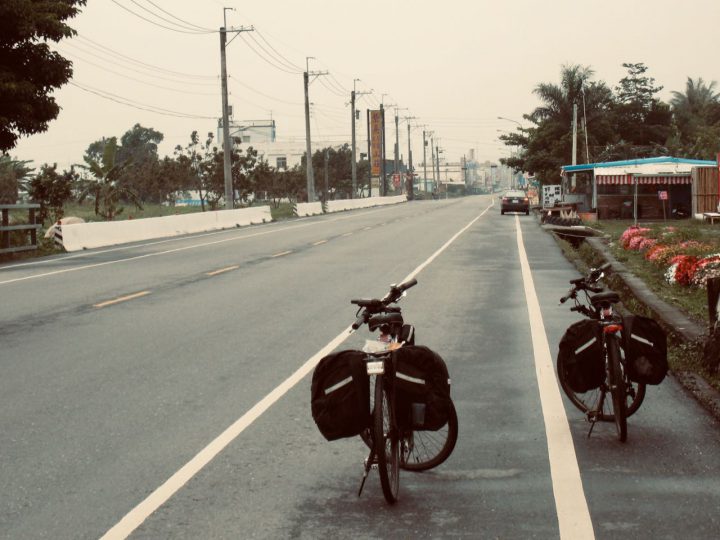
    We continued our trip and headed south along the Provincial Highway No. 9 in the southern part of the rift valley. Before long, we entered Taitung County officially but still needed to ride 50km before we would reach Taitung City. Townships in Taitung County, including Chishang, Guanshan and Luyeh, have been well known for producing the finest rice in Taiwan. There were endless views of paddy fields disappearing into the horizon. 

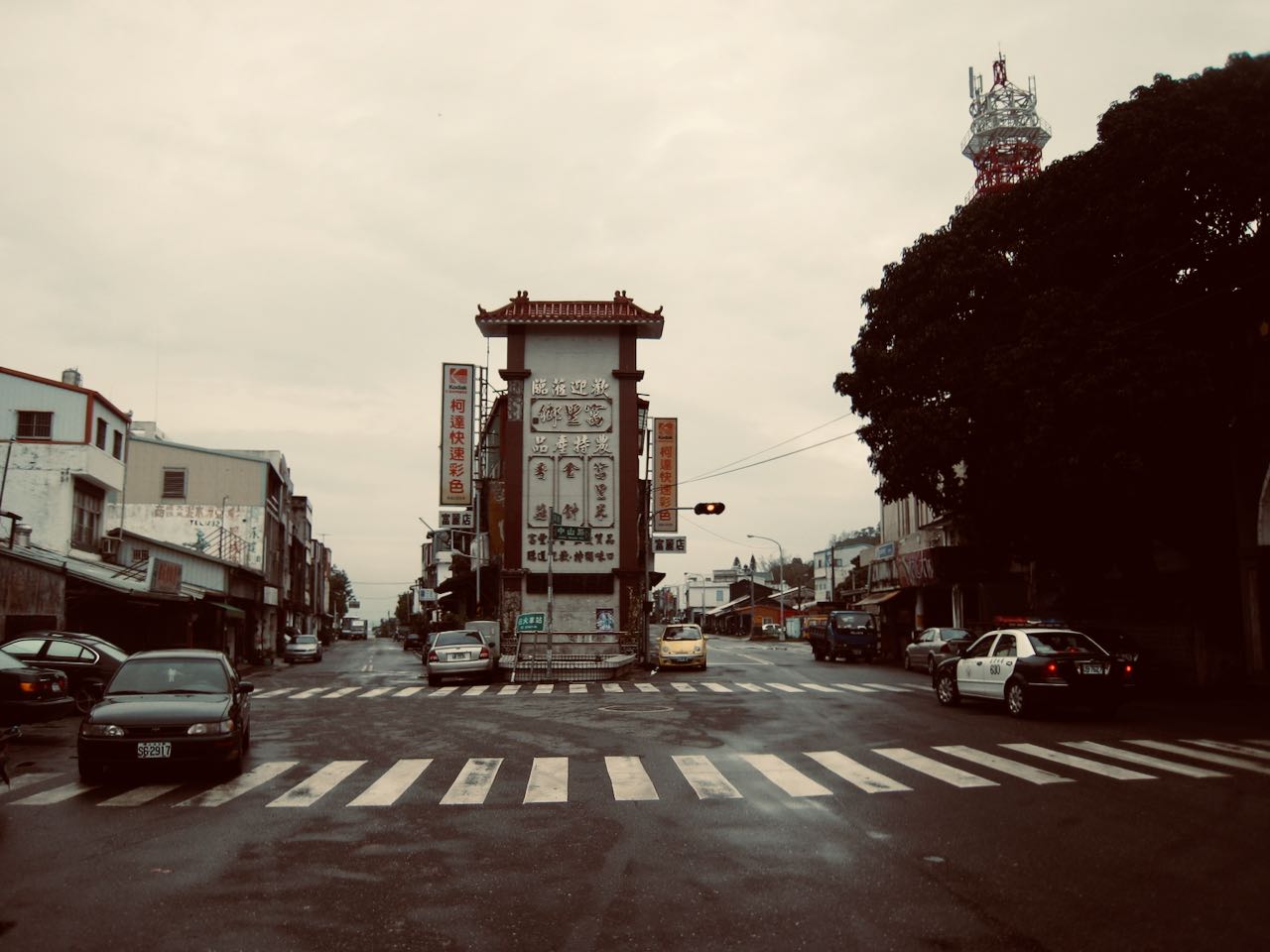
    The first township to see was Chishang (池上). If you have some knowledge of Chinese, you  would have recognized these two characters on many instances  because several chain stores selling bento (lunchbox) bear the name, eg. , 池上便當, 池上木片便當, 池上飯包. A perfect combination of climate, water, soil and altitude, together with farmers’ meticulous caring of the plants, rice grown in Chishang has been frequent winner in rice competitions. 

    Given that Chishang produces around 12,000 tonnes of rice annually, which is around 1% of Taiwan’s rice production, I wonder if there is enough rice for all those bento shops. Perhaps that’s why the township office is running accreditation programs for bento shops.

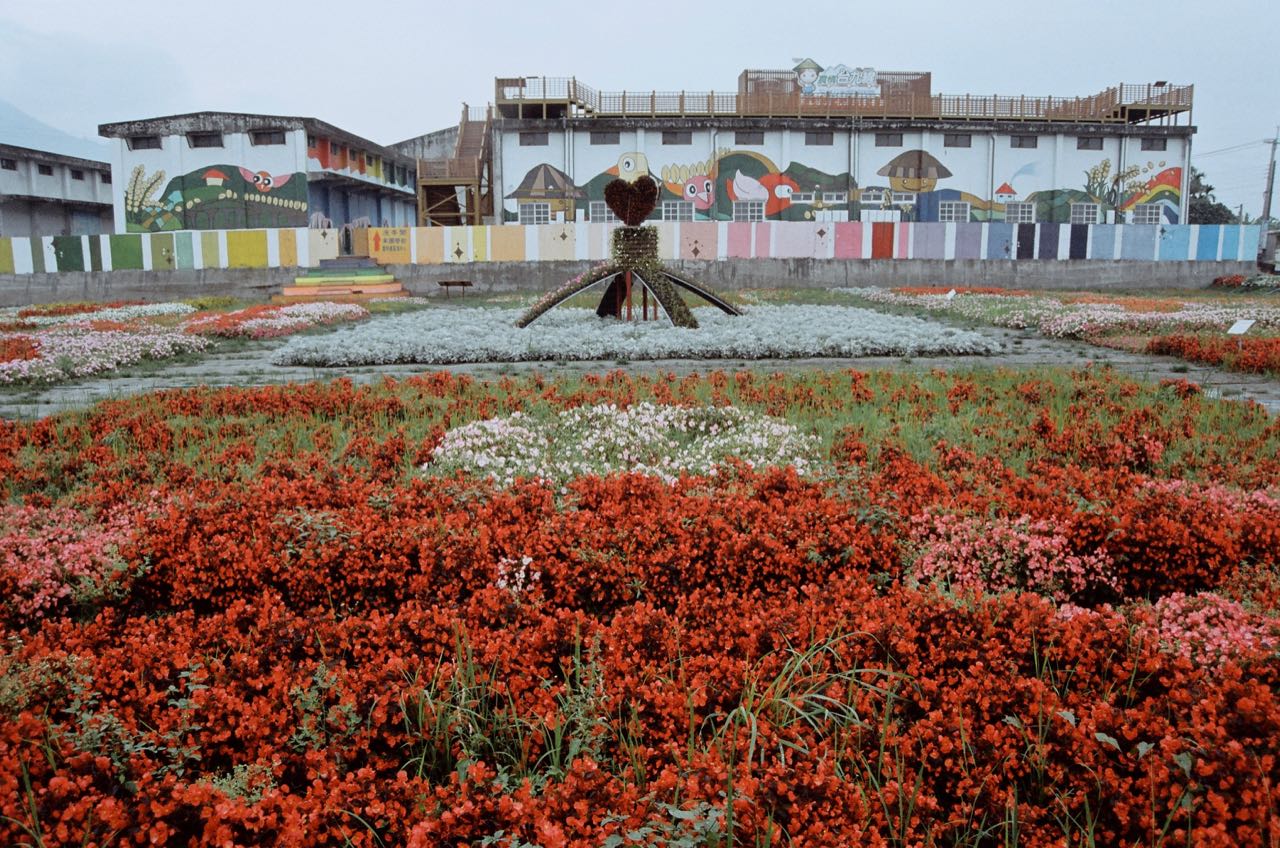
    Then after further travelling for 10 km, we stopped in front of a very colourful building with rice as cartoon characters painted on it’s facade. There was an enormous display of the word Guanshan Rice in Chinese (關山米) on the field, formed by crops of different colours. A platform was set up for visitors to take a bird’s-eye view of the display. The building used to be a rice mill and storage. The Guanshan Township Farmers’ Association had turned it into a tourist service centre. Visitors could sign up for a short demonstration of the process of rice milling. Rice produced in Guanshan used to be a tribute to the Japanese emperor during the Japan rule. But this legacy alone was not enough to ensure their products thrive in the market. We could tell that the Farmers’ Association had put in lots of efforts to polish their brand.

    We missed two famous tourist spots around Chishang because we did not know of them at the time: the Dapochi and the Brown Boulevard. They are definitely worth the trouble of taking a detour. It’s pretty easy when you have Google Maps. Just set the Destination to “Dapochi” when you are approaching Chishang Station. After you have enough fun there, use Google Maps again to guide you to “Brown Boulevard”. If you are travelling northwards, set your destination  to “Brown boulevard” when you are leaving Guanshan Township.

    We climbed a little bit to Luyeh Highland and then started a 20 km nice long descend from 240 metres to 40 metres above sea level towards Taitung City. It was awesome. We were moving like the wind. 

    And that’s it. It’s about the end of our trip. We found a random hotel to stay for the night and did some common tourist thing. The next day, we cycled to Taitung Train Station and shipped the bicycles to Songshang Station in Taipei. This simply is a wonderful service for cyclists like us who prefer travelling without a rigid plan. There are more than 50 stations scattered on the island with luggage rooms that allow you to drop off your bikes. Because of this, we can plan our routes with a lot more flexibilities. We can even send some personal belongs or souvenir we bought along the way to the next stop or the final destination in order to slim our saddle bags.

    Parted with our bikes, we completed the around-the-island tour by taking a train from Taitung to Kaohsiung and then the High Speed Rail to Taipei. We did some sightseeing in Kaohsiung and Taipei but it was kind of weird (cold turkey?) to switch from pedaling to bipedalism. I missed the bike, the mobility and freedom it brought me, and the encouraging smiles from strangers when I was breezing past their sides. 

    — End —

  • My First Cycling Trip in Taiwan Day 7

    My First Cycling Trip in Taiwan Day 7

    21 April 2009

    The next day we did exactly as the hostess told us the night before: leave by ourselves when we woke up. They probably had their own daily routines and did not want to put any time strain on us.

    Some intermittent drizzles again. We continued our tour southwards on the Provincial Highway No. 9 and got a chance to take a good look at the valley in broad day light. Roads were flat and straight and flanked by green paddy fields. It’s a very pleasant view.

    After lunch, we needed to pedal harder. After some serious climbing, I finally reached the top of a slope and stopped in front of a tea shop in the Wuhe village, 210 metres above sea level. As I was waiting for John, who lagged behind me, the tea shop owner waved me in and later offered us lots of tea for tasting. There used to be more than 100 tea farmers with 200 hectares of plantation. In the1990’s, failing to compete with the high mountain (over 1000 metres) tea from the west coast, half of the plantation has gone out of business. 

    Meanwhile in Taitung, inspired by the Oriental Beauty Tea, Chen Huicang (陳惠藏), a specialist of the Tea Research and Extension Station (茶葉改良場, an institute under the Council of Agriculture, Executive Yuan), has developed a special kind of tea that, among other aromas, carries a natural signature flavour of honey.

    Some research findings revealed that, when bitten by tea green leafhoppers, tea plants would secrete some chemicals that, even at an extremely low level, could attract a special kind of spider, Evarcha albaria, which is a predator of the leafhoppers. It seems after hundreds or thousands years of evolution, tea plants has developed a way to call for help. And those chemicals are the sources of that signature flavour.

    A tea farmer from Wuhe village, Gao Zhaoxu (高肇昫), went to consult Chen Huiceng and returned home with the tea processing technique. But he still needed the leafhoppers to bite his plants.

    He adopted the eco-friendly farming practices, including suspending the use of pesticide, as promoted by the government of Hualien Township. After years of development and improvement, the tea produced in Wuhe village has regained its competitive advantage and tea farms started to stand on their own feet again. Until 2007, the total area of tea plantation has returned to 160 hectares.

    Live in harmony with the nature and we will be rewarded with something precious. This is something I learned there.

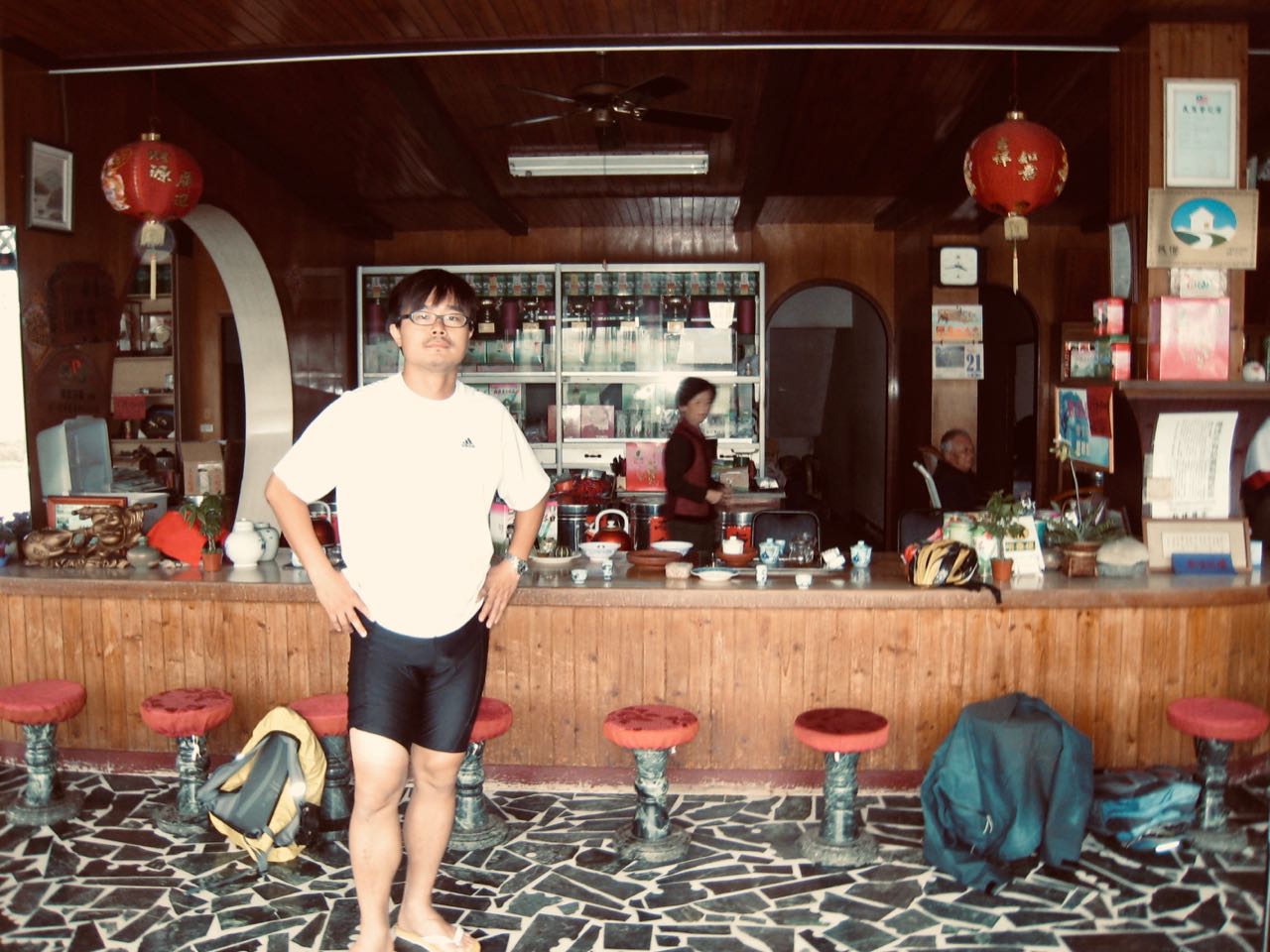
    A cyclist standing in front of a tea shop
    One of the tea shops in Wuhe

    I did like their tea but I could only buy two bags because of the limited space in my saddle bags  and my reluctance to carry too much weight. Actually, if you find something you really want to buy during a cycling trip, you could send it back to Taipei using the railway system. Unfortunately I did not know that at the time.

    We left the tea shop and started descending to Yuli. There were small road signs put up by homestays to advertise themselves. It started raining. We picked one homestay at random and followed the direction on the road sign to to somewhere quite far away from the town centre. It was closed. That sucked, especially after the climb we had to do to reach that homestay. But then even if it’s not closed, we might still end up with a fully booked one. So, you should always call to check before actually committing any time and strength to get there. Homestay owners might not be able to communicate well in English over the phone. Again, the Bike Express Taiwan team is happy to do the job for our clients.

    John used the GPS to find the closest hostel. It must be up and running for some time to have its information stored in the GPS database. We did not have Google Maps back then. Anyway, we could finally take a good rest and wash our soaked cloths.