Author: Peter

  • Cycling Around Taiwan in Multiple Stages (3): Taitung, Hualien, Yilan

    Cycling Around Taiwan in Multiple Stages (3): Taitung, Hualien, Yilan

    This is the stage 3 of our Cycling Around Taiwan in Multiple Stages. We were to cover Taitung, Hualien and Yilan.

    Designing the Trip

    Here are some considerations when I was planning this part.

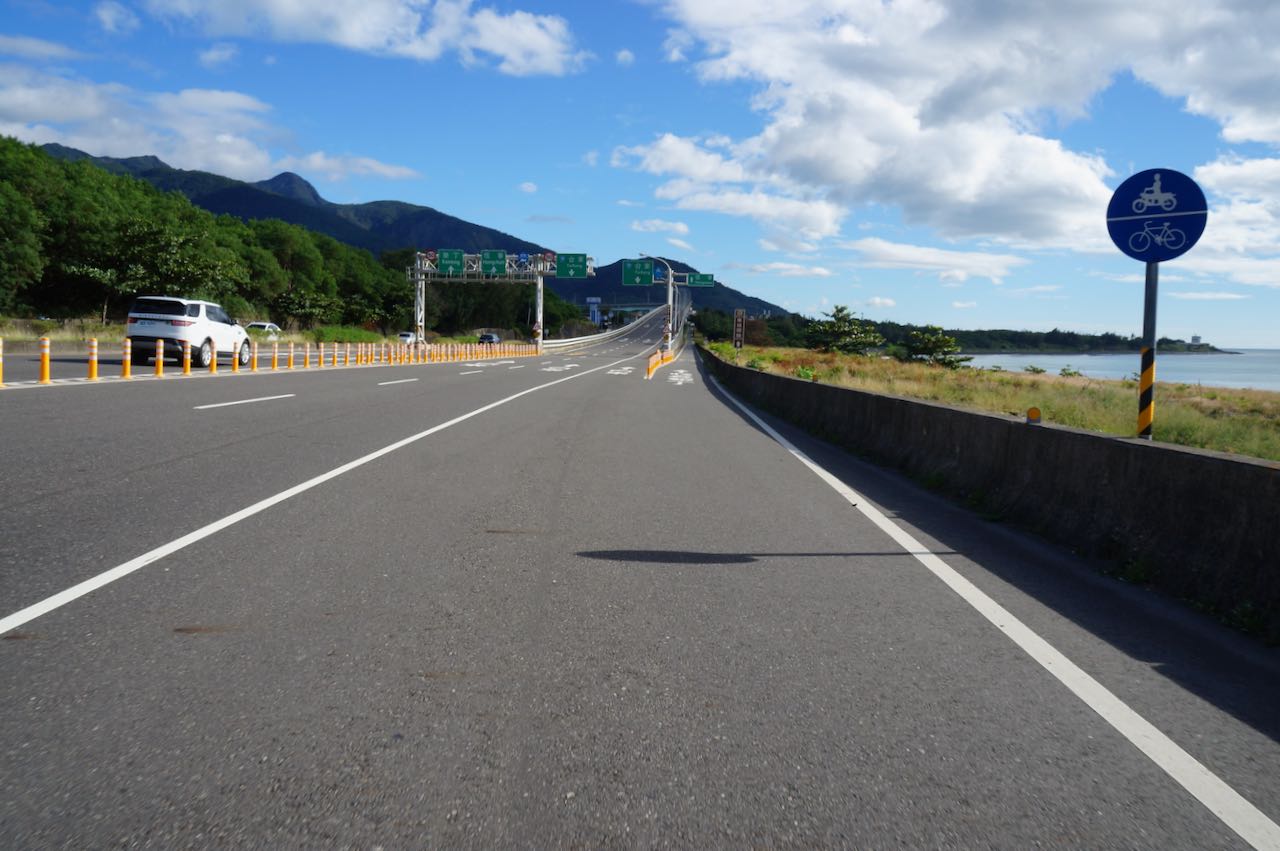
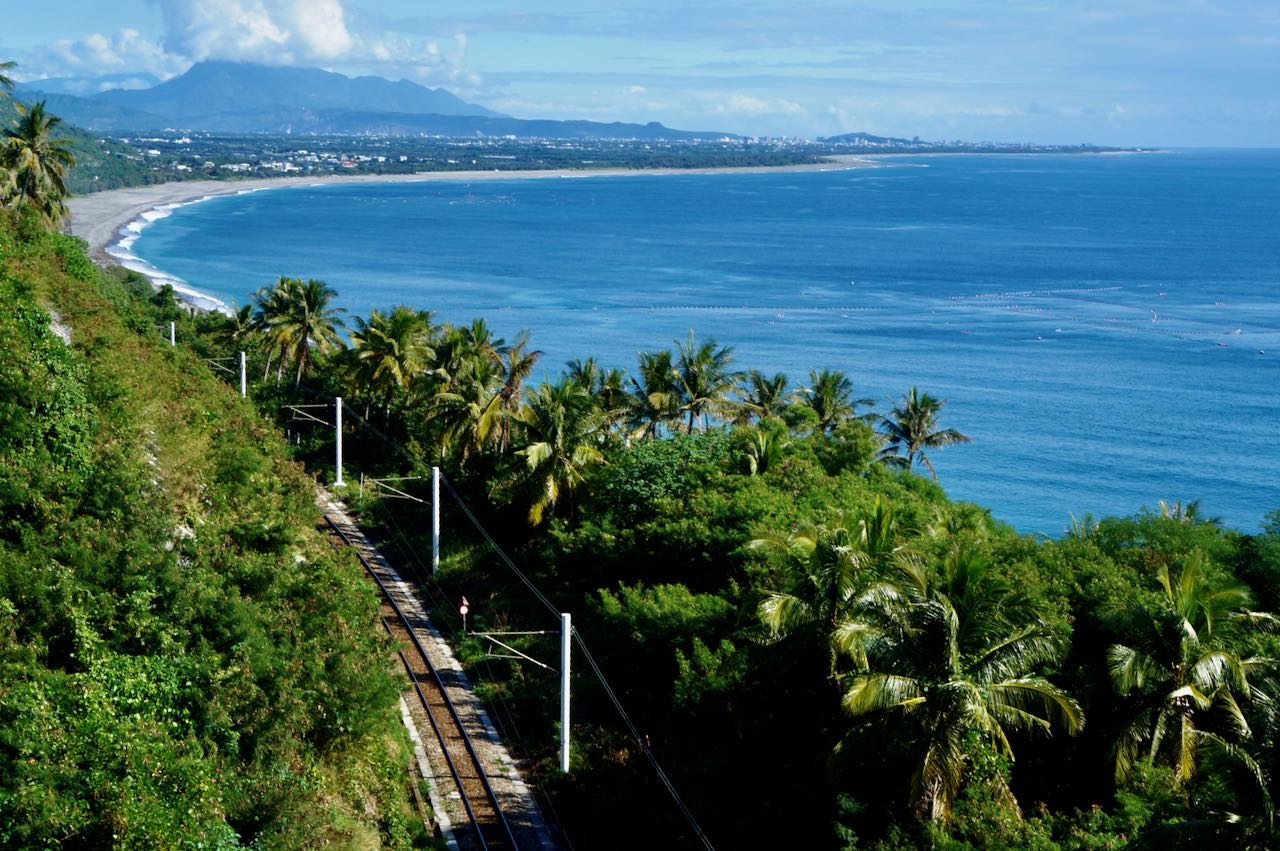
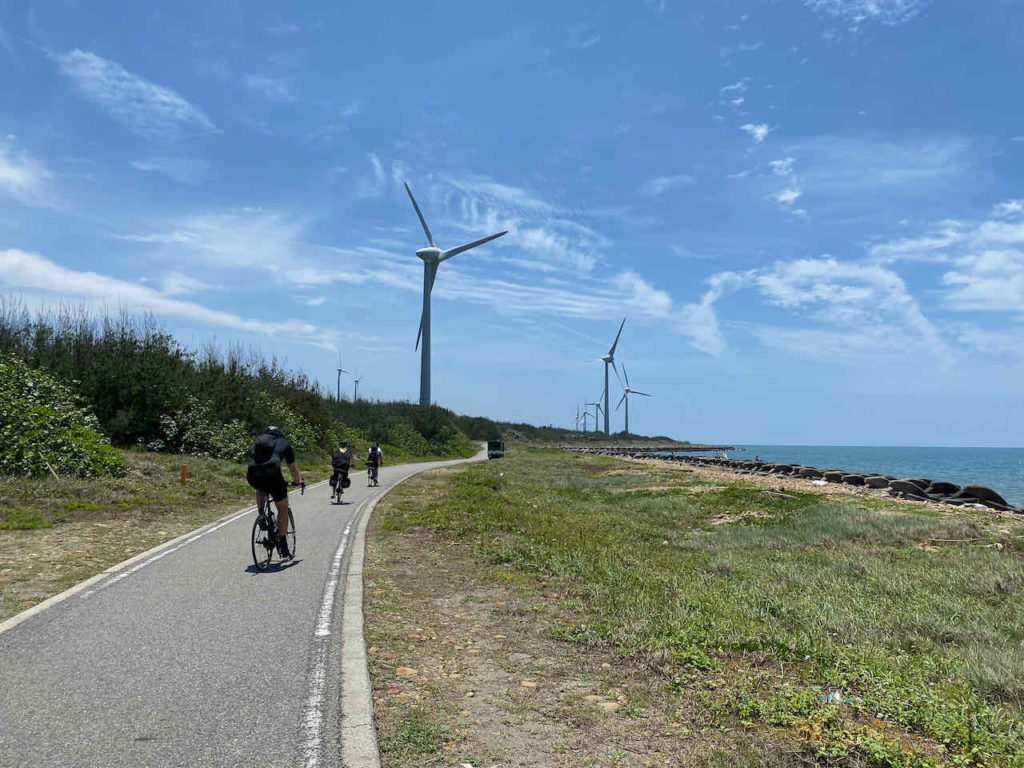
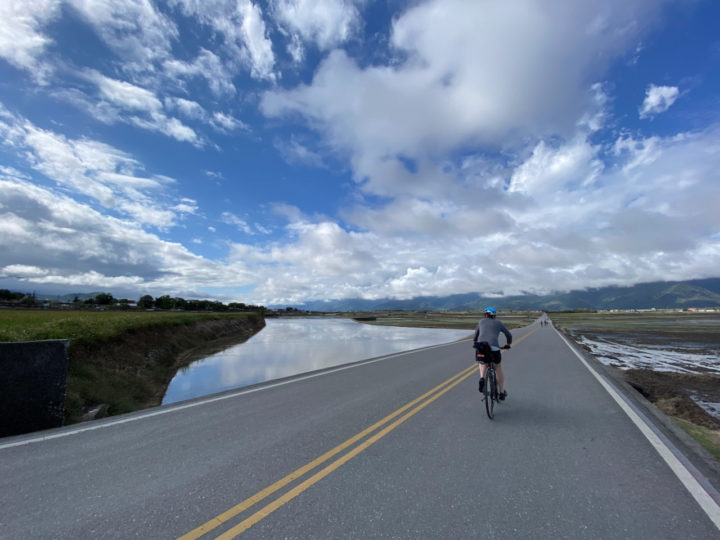
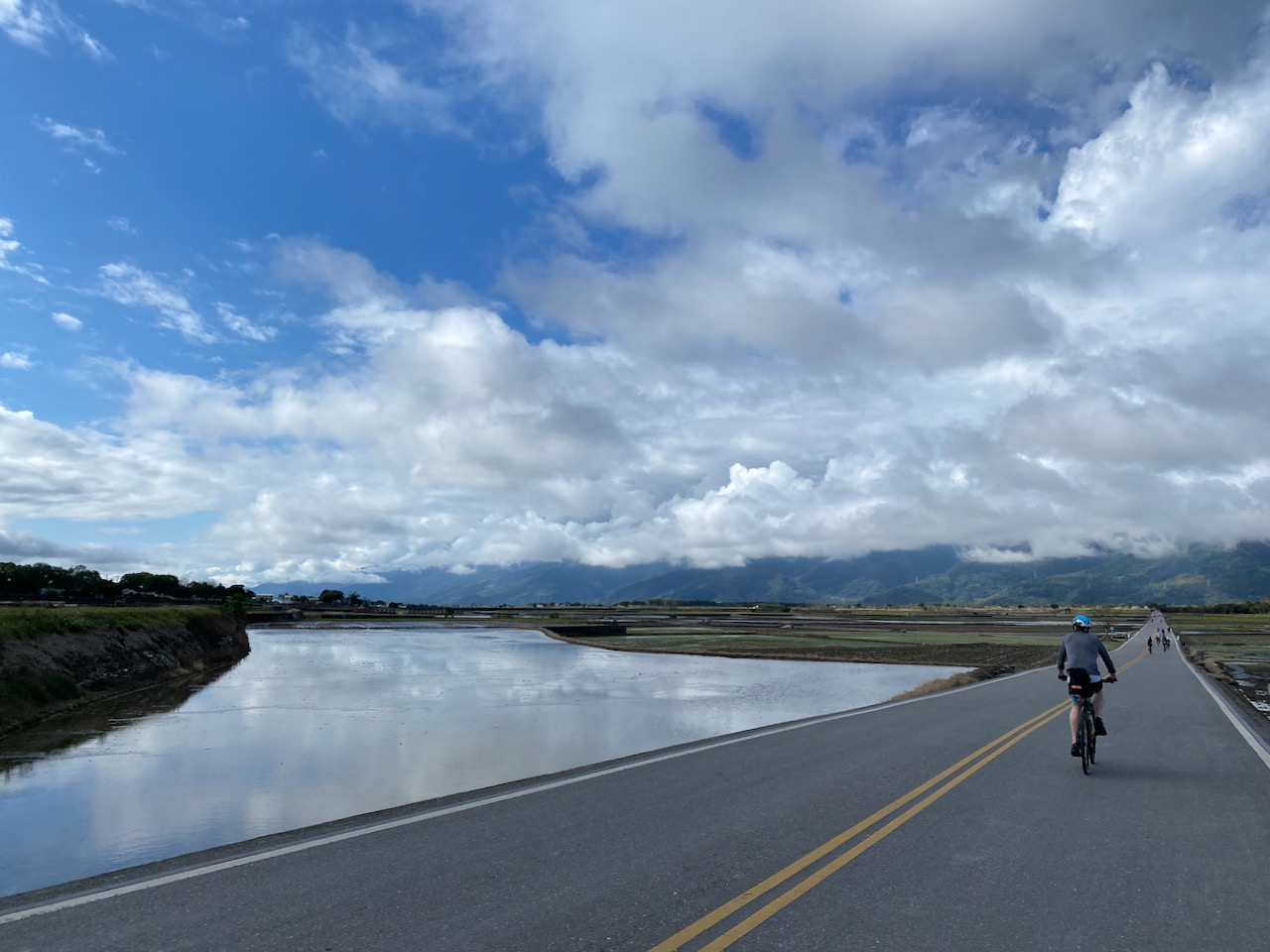
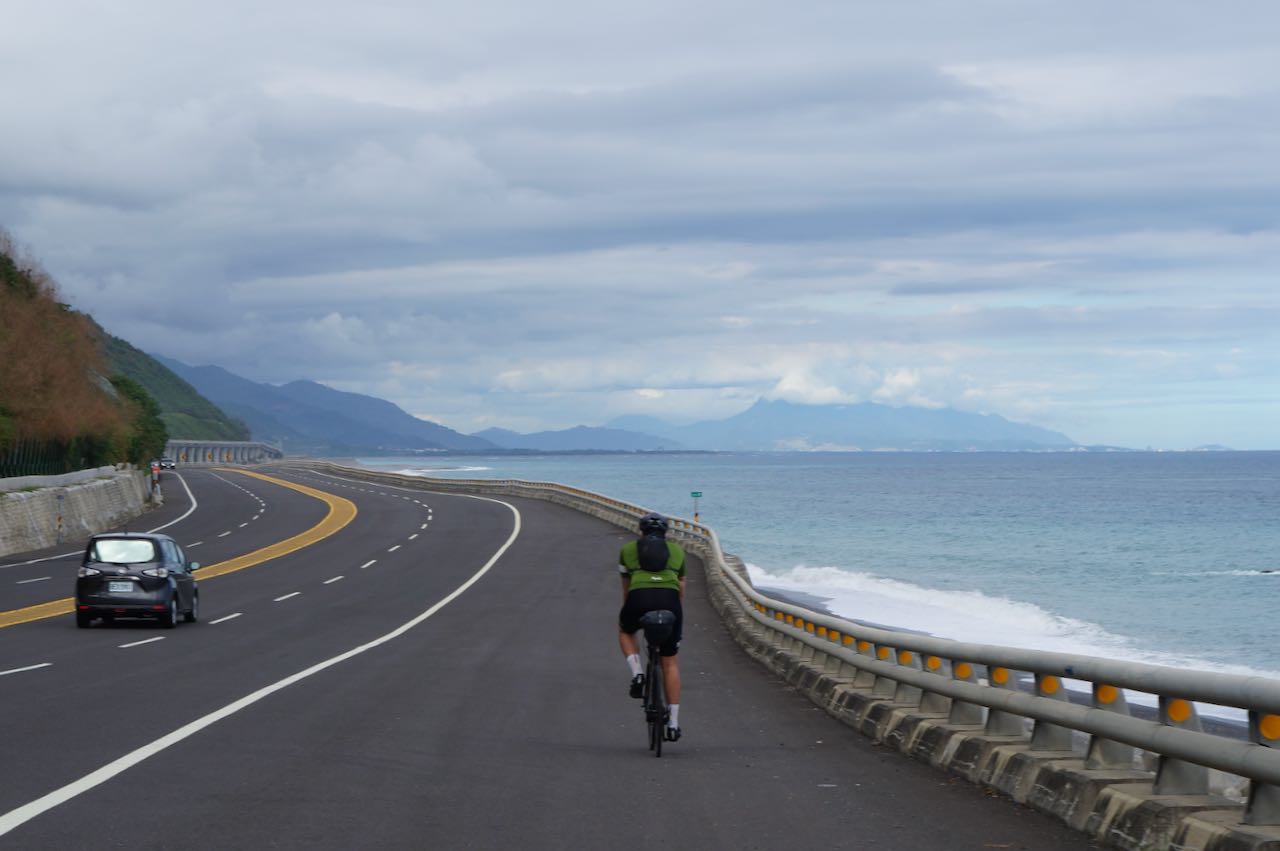
    From Taitung to Hualien, there are two routes to choose from, the rift valley and the coastal route which sandwich the Coastal Mountain Range. The rift valley is more populous with vast paddy rice fields and many interesting places to visit. Supplies and places to stay over are easier to find. But the coastal route offers stupendous views of the Pacific Ocean which shouldn’t be missed. In a perfect world, I would plan the route to cover both the rift valley and the coast by starting from Taitung heading north to Ruisui in the rift valley and then switch to the coast using the Ruigang Industry Road (花 64 or HL64). By doing so, you will get the best part of the rift valley and the coastal route. The most famous part of the rift valley is found on the Southern half of the rift valley and the best views of the Pacific Ocean are found on the northern part. And the direction is important, too. By travelling northwards, you find yourself closest to the sea because we drive on the right side of the road. Most interesting stops are on this side making it safer to visit the places without having to cross the road.

    Then after Hualien City, there is the Taraoko Gorge, the starting point of the Central Cross-Island Highway transversing the Central Mountain Range which brings you to the altitude of 3,275 metre at the Wuling Pass, the route for Taiwan Kom Challenge. I would plan a short detour climbing to Tian Xiang Recreational Area (Altitude 485m) to get a taste of the challenge before heading north to tackle the tricky Suhua Highway which brings you to Yilan. 

    The Suhua Highway

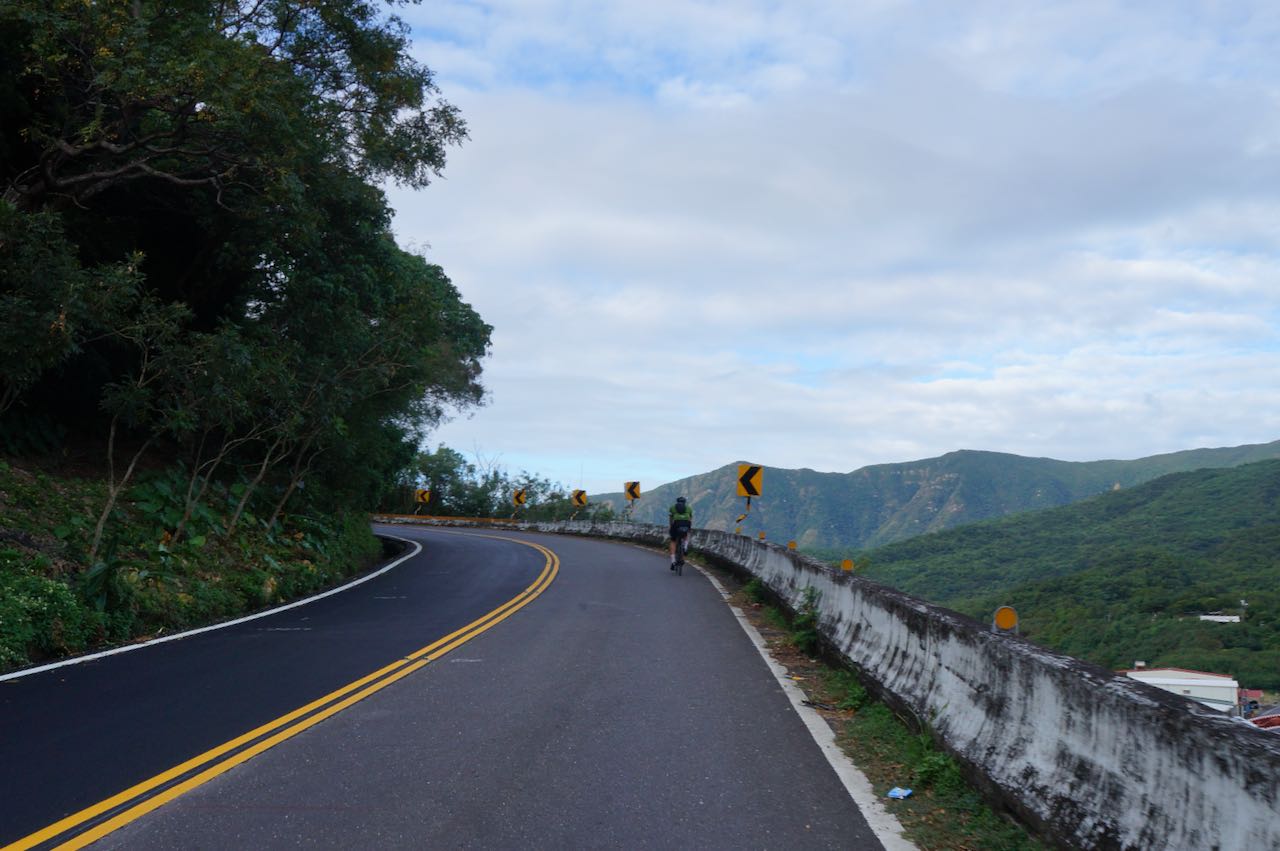
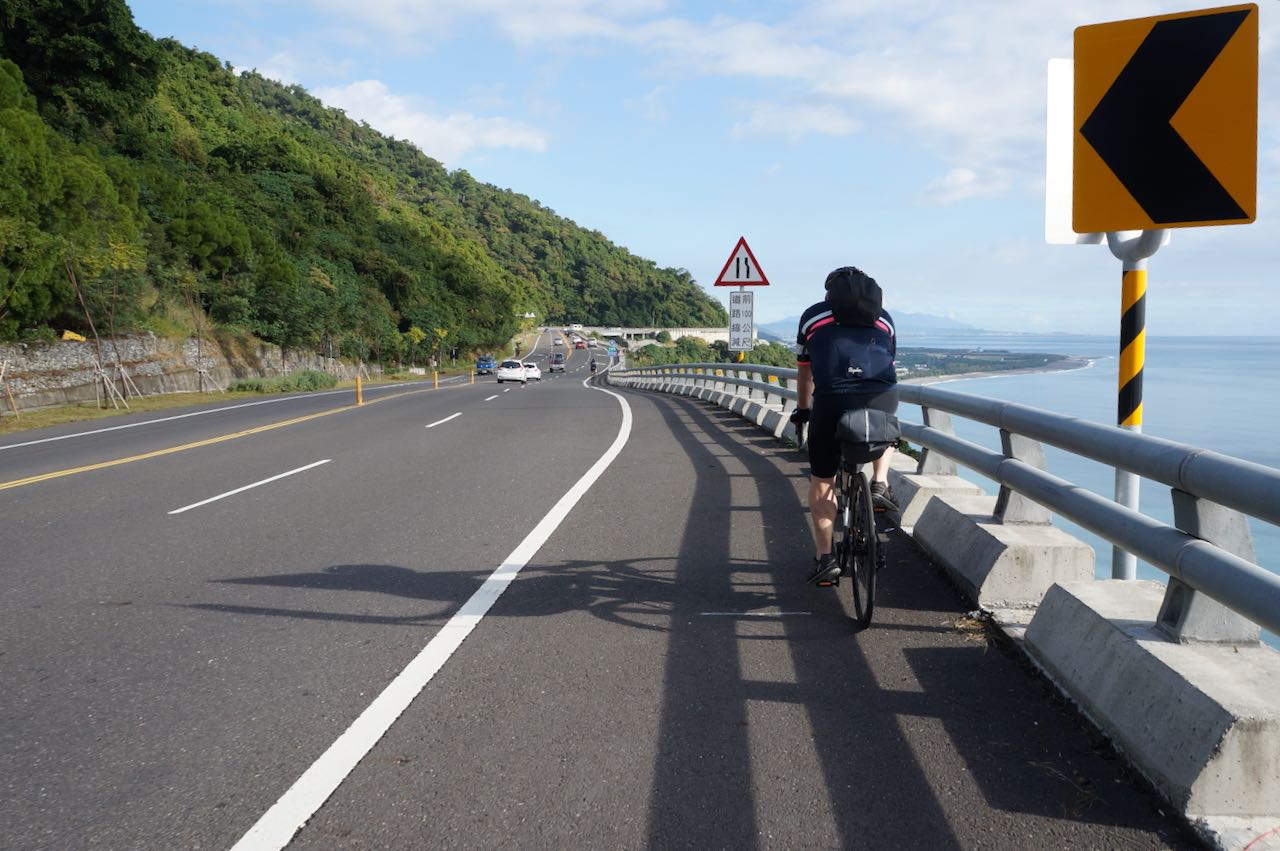
    Why is the Suhua Highway so tricky? It’s a topic not to be taken lightly whether to cycle on this section or not. Not only does the route have a total ascent of 1,451m in 78km from Xincheng to Su’ao, many parts of the highway is built right next to a cliff with the width merely enough for two vehicles to pass. High steep slopes are found on your left to the peak of the mountain. Frequent earthquakes loosen the rocks on the slopes making them ready to fall onto the road. There could be landslides to block the whole road after heavy rains or typhoons. Besides, there are around 9 tunnels to cycle through which means poor air condition and visibility inside. And noises produced by the motorised vehicles are trapped inside to blast your eardrums non-stop. 

    Nonetheless, most people who have done it would say that it is worth the risk. I myself have not done it yet but I had goosebumps just by looking at the Street View on GoogleMaps when researching for this itinerary. And there has been a good development. The traffic condition has improved a lot after the Suhua Highway Improvement Project is completed in 2020. New wider segments are built to straighten the highway. Travelling time is reduced. Bikes are not allowed on these new segments but those heavy vehicles and cars would then be drawn to the new route (Provincial Highway 9), making the old one (Provincial Highway 9䞁 or 9D) less busy, more enjoyable to cycle. In fact, big trucks are not allowed on the old route. But please note that there are still segments where the old Suhua Highway and the new one overlaps.

    So, In favourable weather conditions, I would do it when I cycle around the island. If you want to skip it, you can take a train from Xincheng Station to Suaoxin Station. Here is more details on this post: Cycling the Suhua Highway: Evaluating Challenges, Experiences, and Factors to Consider.

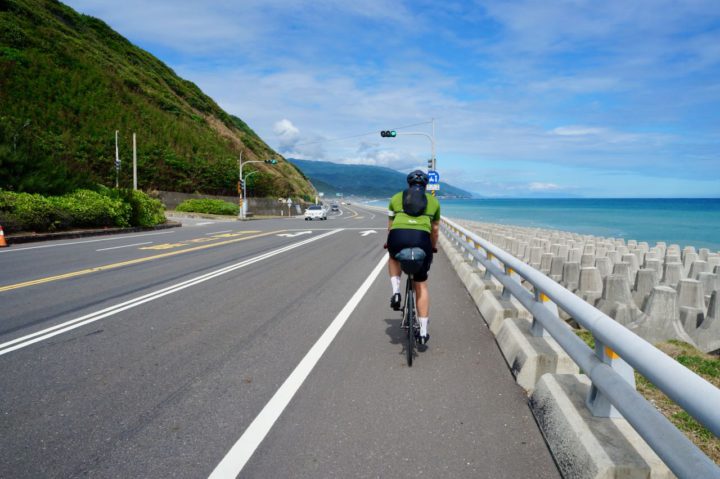
    Heading north on the old Suhua Highway, after climbing the 5th peak of Suhua Highway, we would then descend to the plain of Yilan which is an alluvial fan formed by the Lanyang River. There are lots of hot spring hotels in Jiaoxi. It would be nice to plan a longer stay to chill out there by having a day with less distance to cover. Most people would then head north east and climb two peaks on the Beiyi Highway (ćŒ—ćźœć…Źè·Ż Also a segment of Provincial Highway No. 9) to get back to Xindian in Taipei to finish the whole trip. But the coasts on the north and north east are too good to be skipped. I would just head north to Fulong and stick to the coasts. 

    Isn’t it a nice plan?  But this is exactly what we did not do. This is only good for those who do it from May to September when the wind is not coming from the north. Or for those who don’t mind cycling against the wind. 

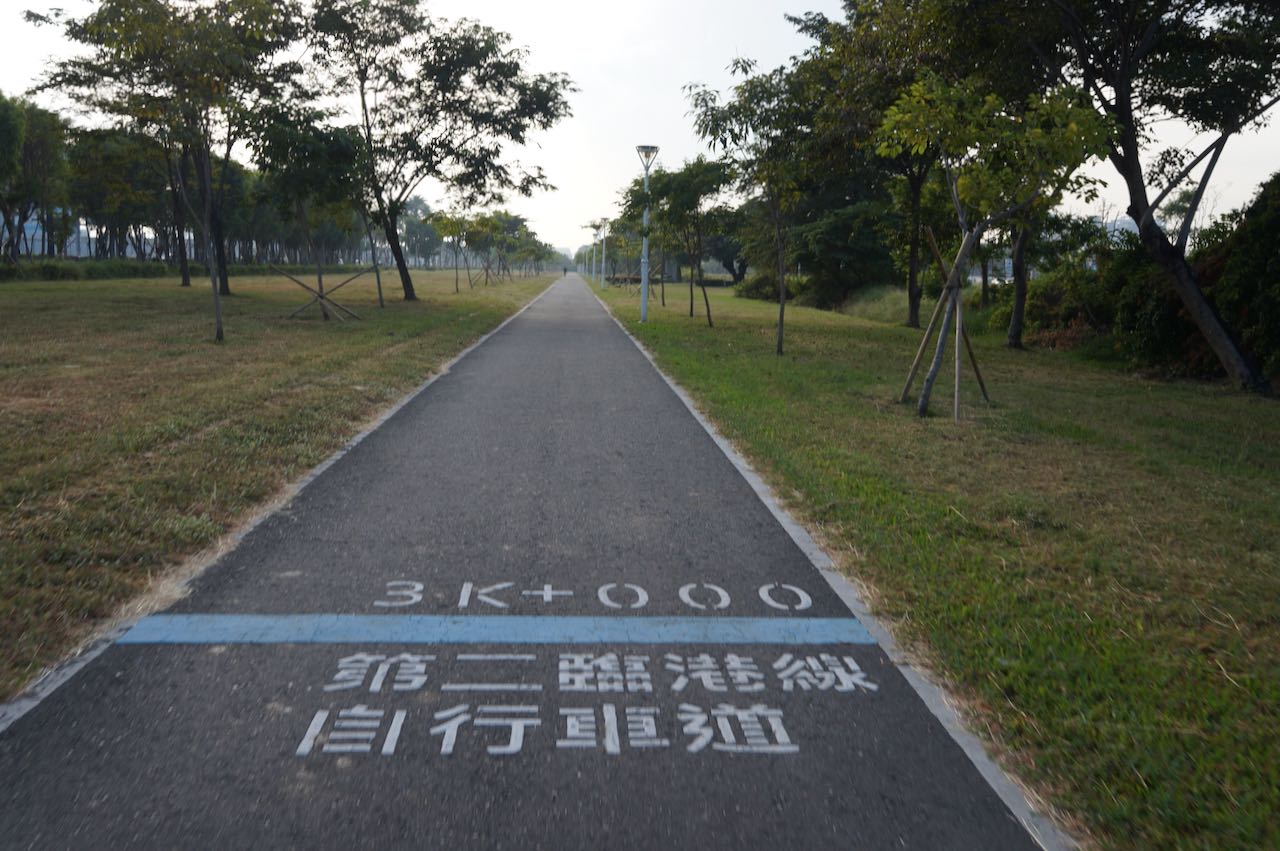
    We did this stage in January when there was the prevailing wind coming from the north. We needed to head south to make the wind work for us. We started from Fulong, the north east tip of the island, and spent the first day covering Yilan. Then, we skipped the Suhua highway by taking the train to Hualien from Suaoxin Station. Since we were heading south, there were not many benefits of cycling on the coast route. We stayed in the rift valley the whole time from Hualien to Taitung. Here are the details of the itinerary

    Day 1 Fulong to Xincheng Taroko, Hualien (54km, Ascent 143m, Descent 128m with a train ride from Suaoxin to Hualien)

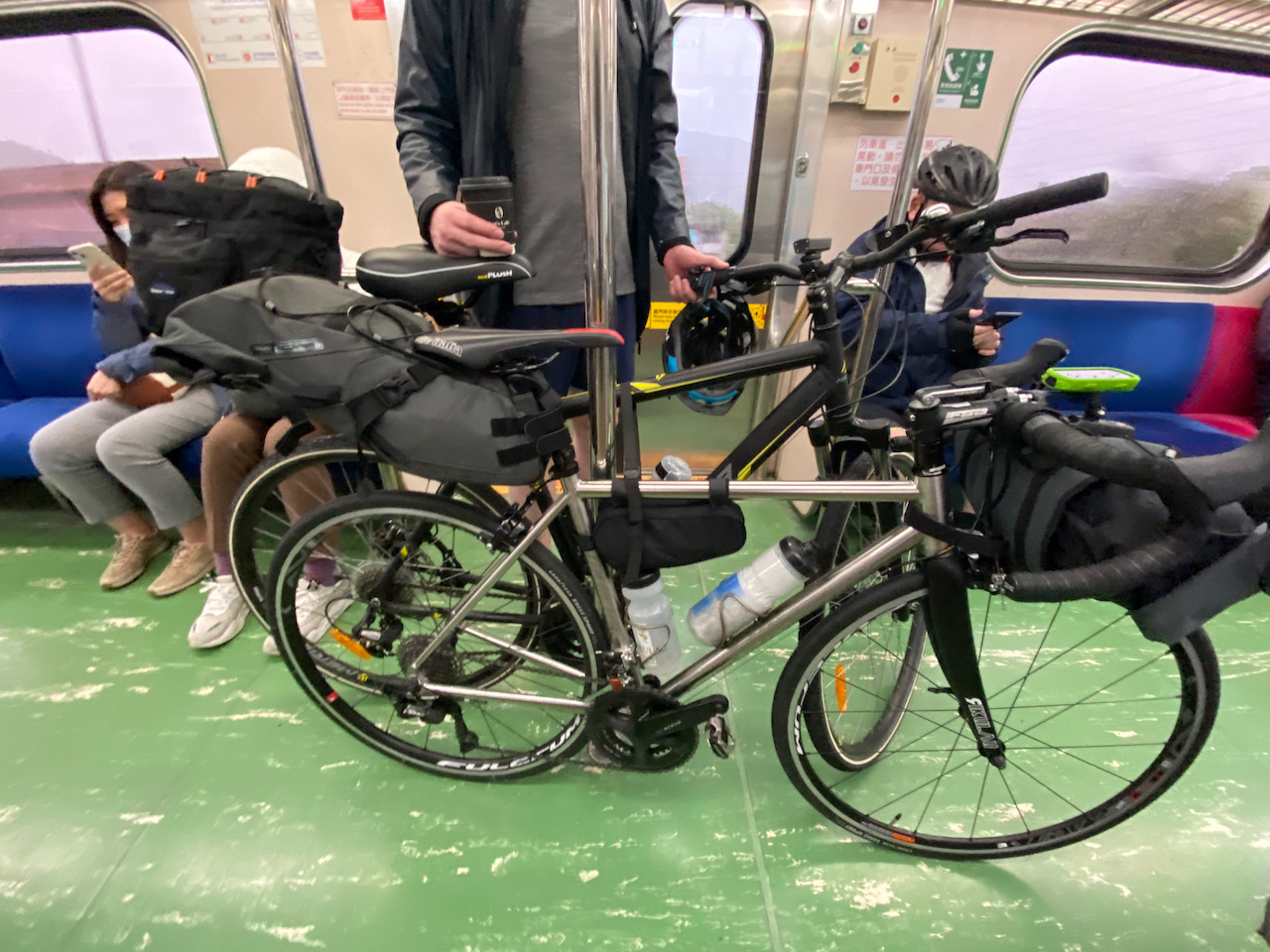
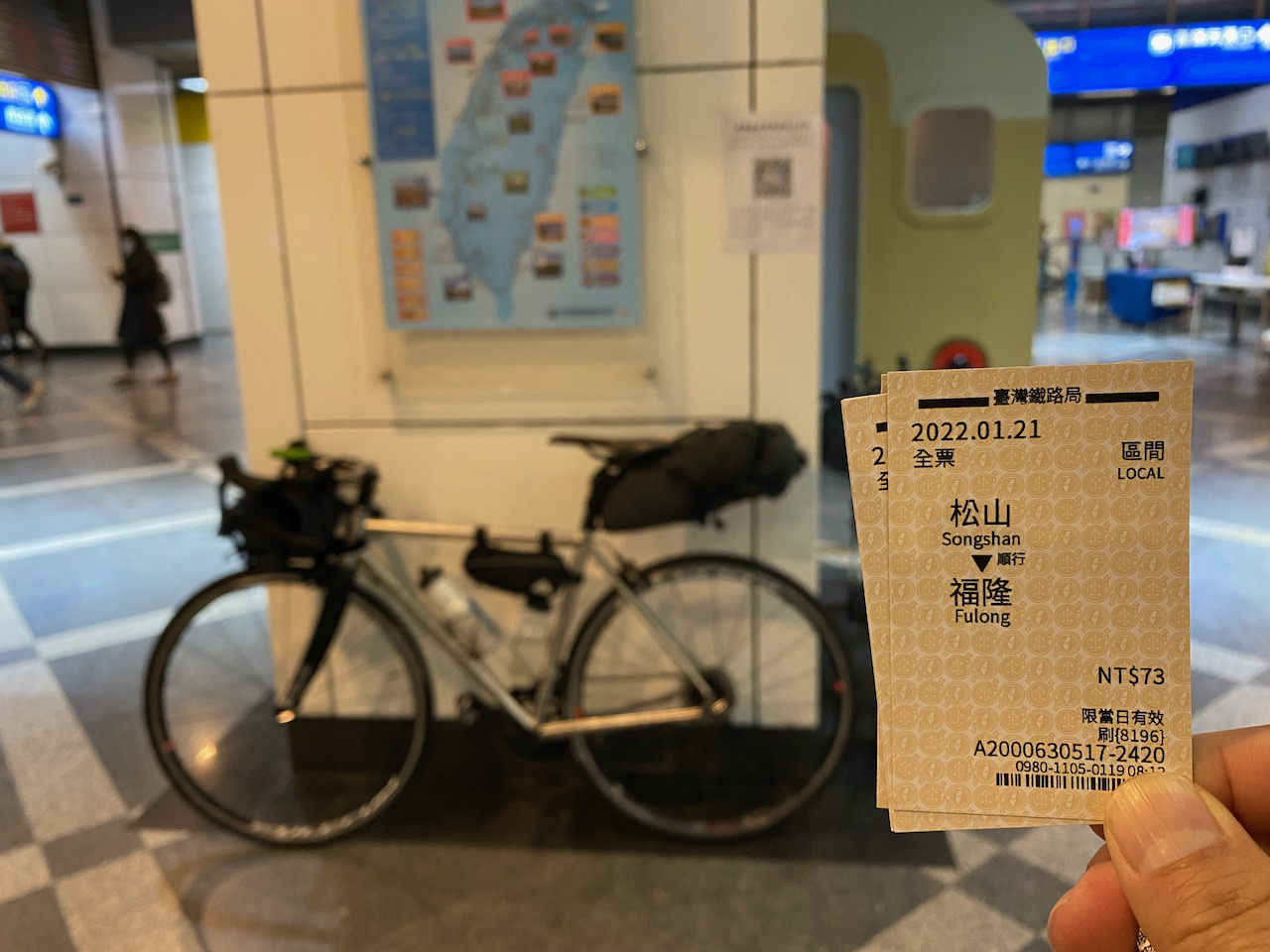
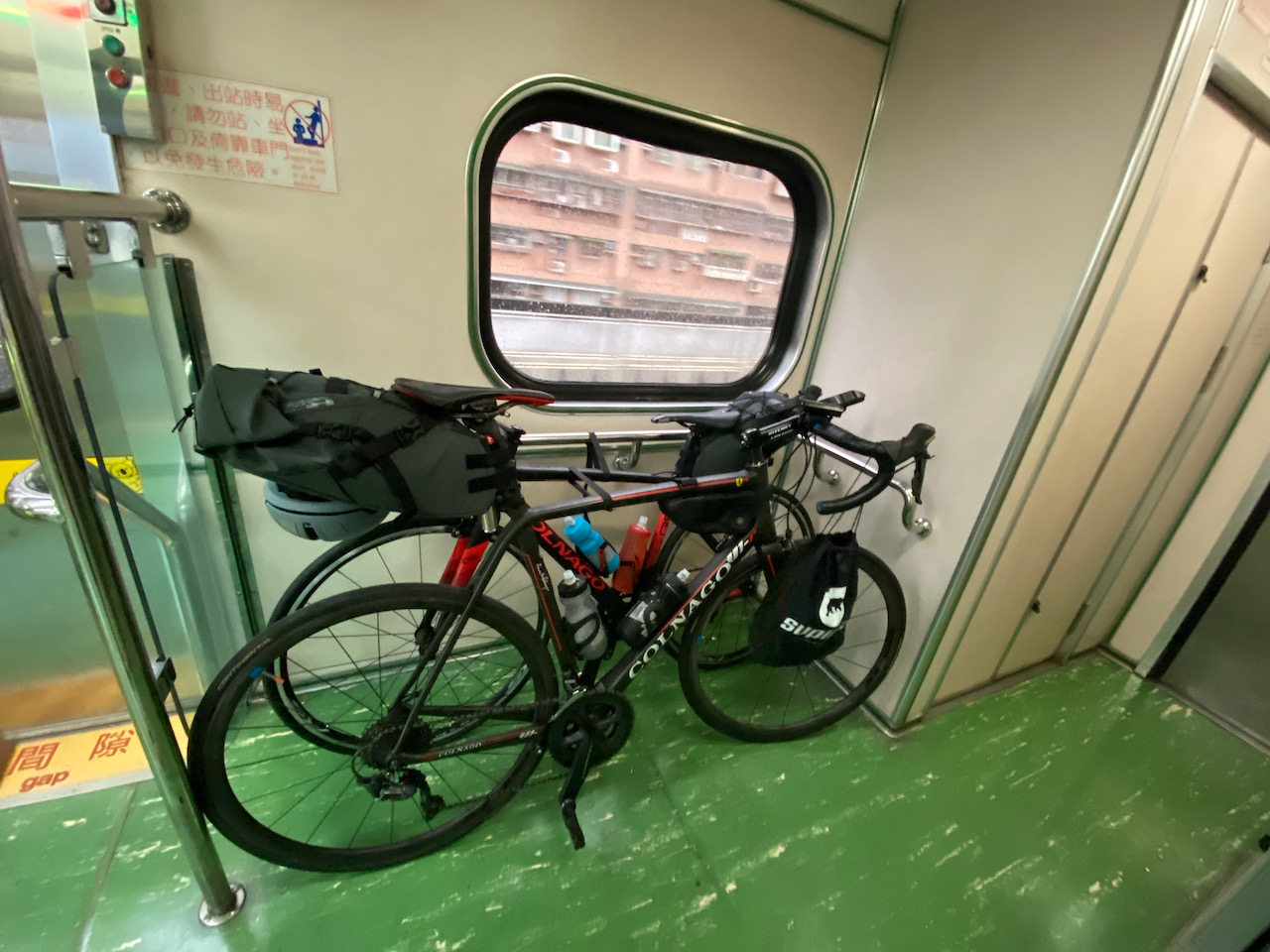
    To get to Fulong from Taipei, we took a 1.5 hour early train (No. 4148), which allows whole bikes on board. Two of my friends boarded from Wanhua station first. On that weekday morning, it was so packed that it required some courage to force into the train with such big pieces of luggages. Then it got much better on the next station of Taipei Main Station where more passengers would get off. When it’s my turn to board at Songshan station, we have even much more space. There are 900,000 commuters to Taipei each day. When the train is leaving the city, it gets empty. It may be a good idea to use Songshan Station or Nangan Station for trains heading north. Please refer to this post for more info about taking bikes on public transportation in Taiwan.
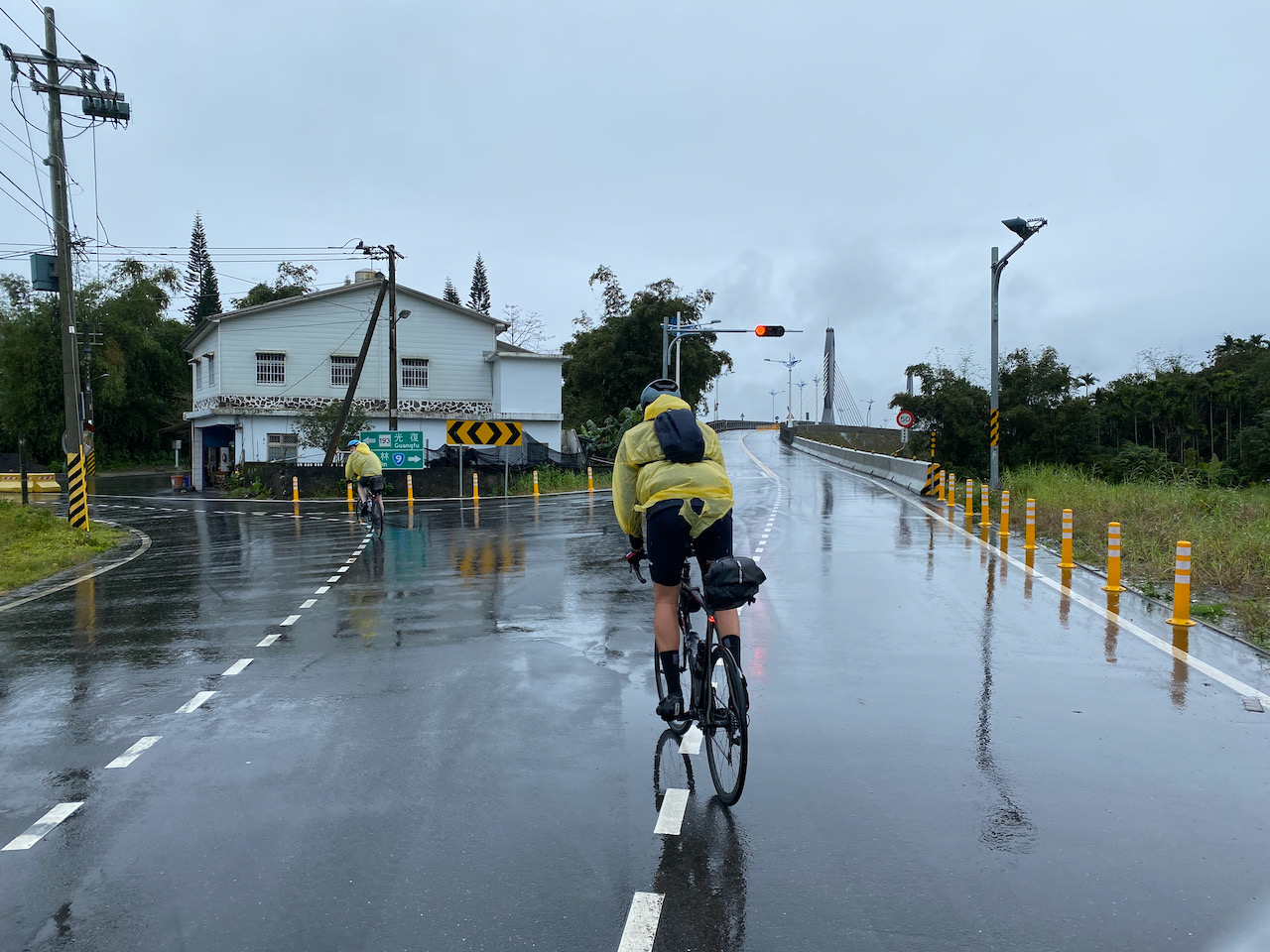
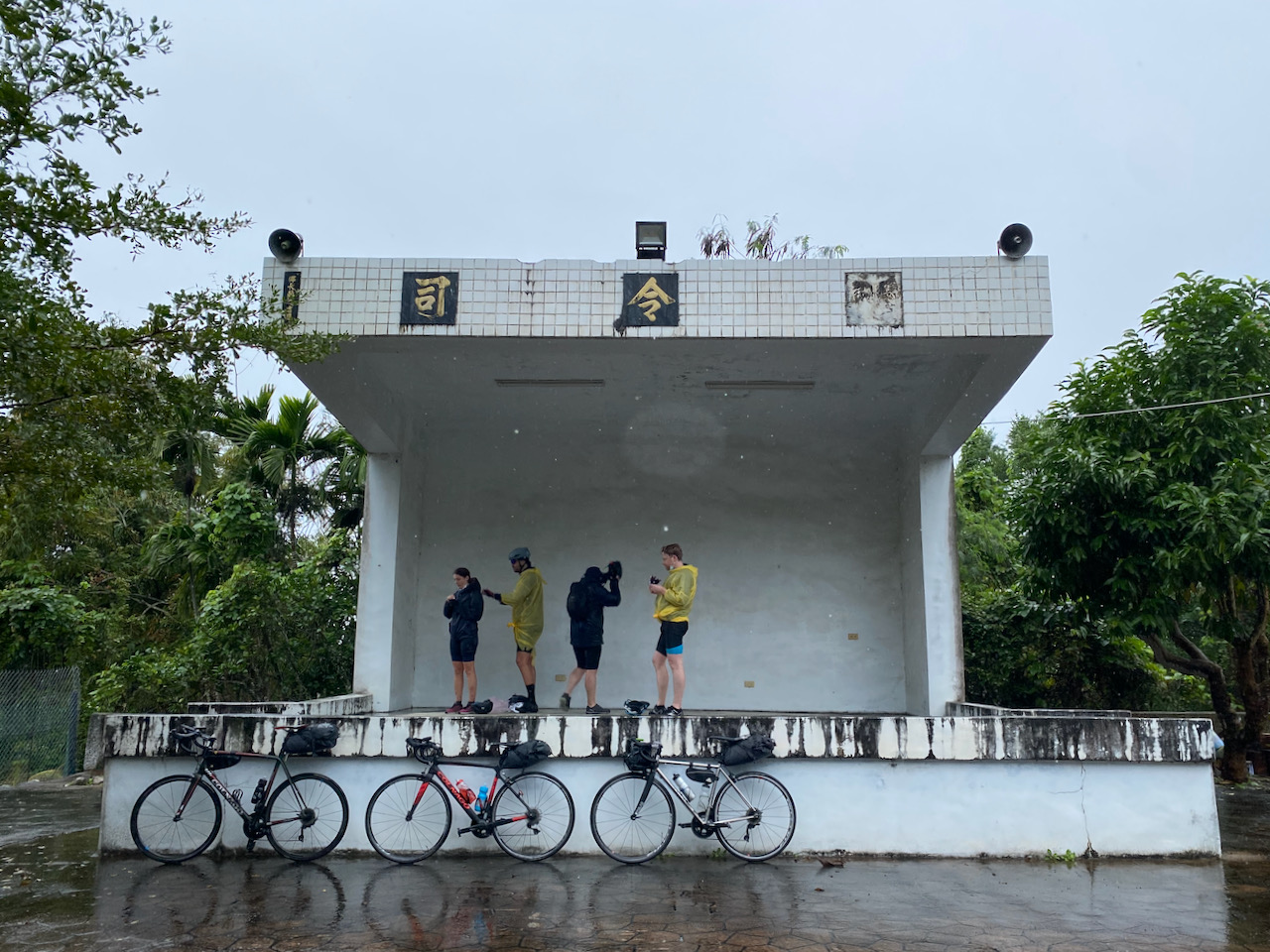
    Everything went perfectly well except the rain. Not pouring down but enough to wet everything and flood all the potholes. We decided to complete the trip as soon as possible. I tried to lead the group to some dedicated bikeways but they seemed muddy. It’s better sticking to the main road. Water was sloshing in my friend’s shoes (I wore slippers). Each time we stopped for a break, they had to take off their shoes and shocks and pour the water. They have waterproof jackets but once water got hold of the internal layers sticking outside on the sleeves or waist, it seeped inside and drenched everything. All the clothes in the bags were drenched too. A disposable raincoat sold in the convenience stores would solve the problem, though it is thin and torn easily.

    We made it to the Suaoxin Station early. There weren’t any shops inside the station. Neither there were any shops around the area except for a 7-Eleven and several food stalls we missed 1 km away. We swapped the tickets for an earlier train and got back to the 7-eleven for lunch.

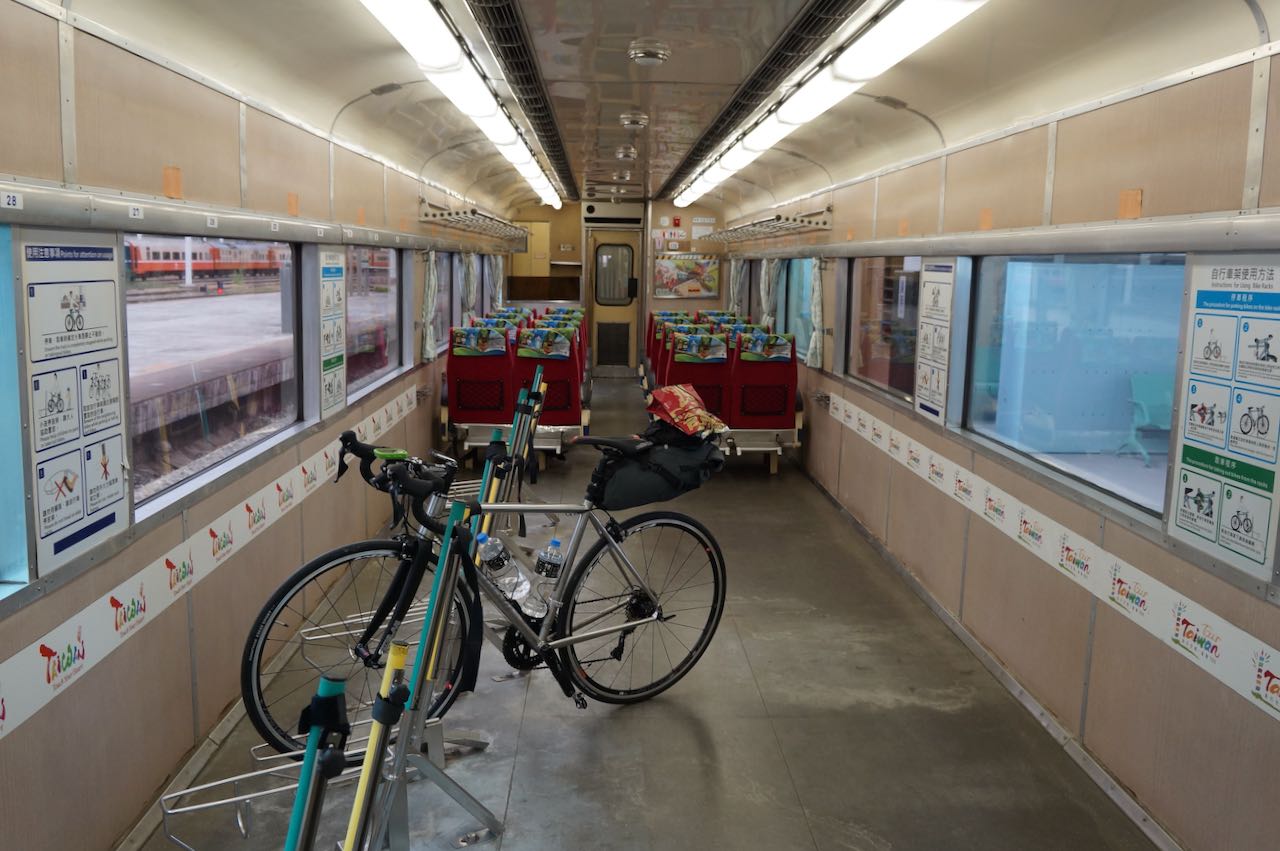
    This train ride was nice. We had the whole car to ourselves. We did not stay in Xincheng because we did not plan to have a detour to climb to Tianxiang and the hotels around Xincheng Taroko Station are a little pricier. I planned our stay further south, the Beipu Station. My friend realised their clothes in the bags were drenched too after checking into the B&B and getting ready for showers. Those bags claim to be water resistant or waterproof are destined to leak after a couple uses. So, I always pack my clothes in zip lock bags. I don’t mean to be gleeful but just to let my readers know the differences. We then ended up spending the afternoon in a coin operated laundry to wash and tumble dry the clothes (and ahem
 shoes). 

    Routes:

    NOTE: To use the routes, please install the App on your smartphone. The App will launch and load the route automatically after you tap the above links on your smartphone’s browser. For Garmin Connect, you can then use the APP to send the route to your garmin device. If your Garmin device is not purchased in Taiwan, you will also need make sure you have the Taiwan map on your device. Here is our blog post on this topic.

    Day 2 Xincheng Taroko to Guangfu (72km Ascent 530m, Descent 435m)

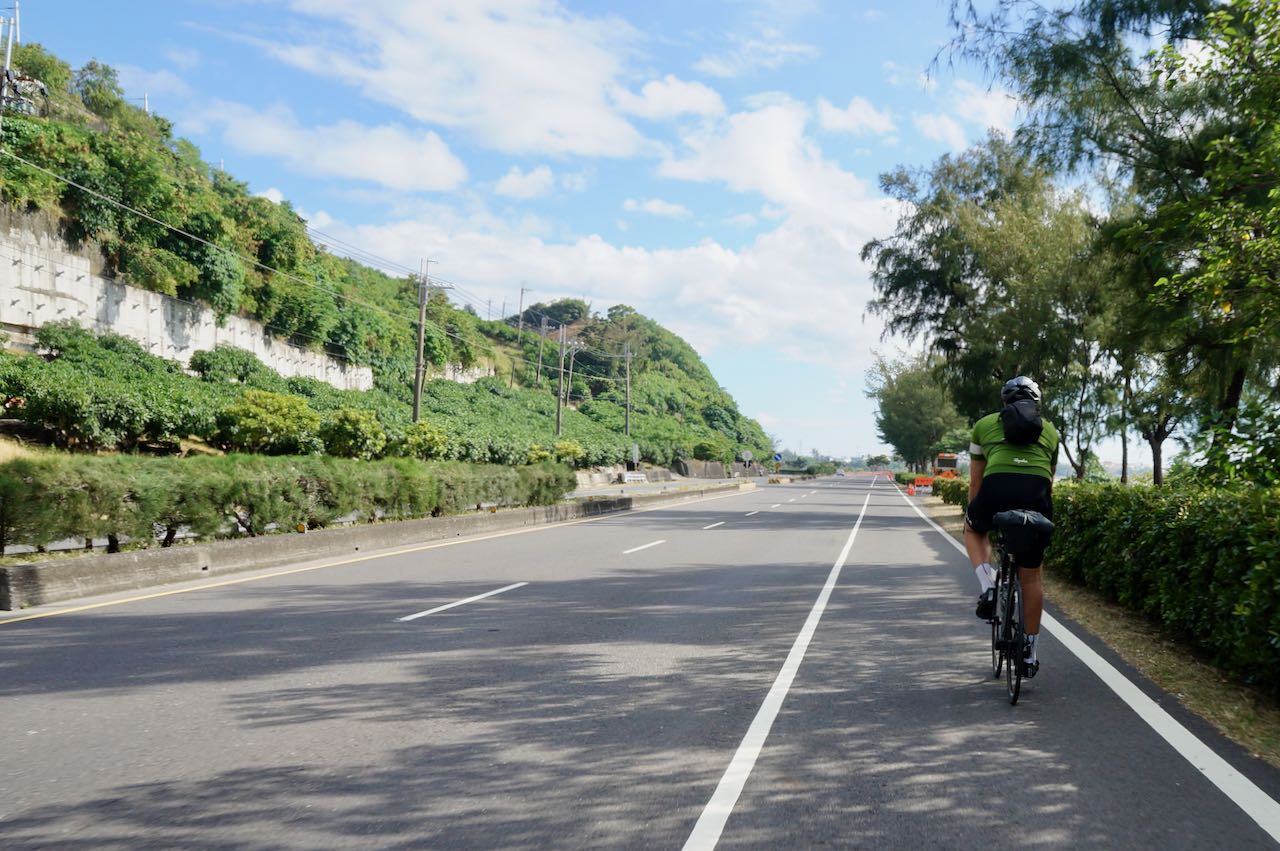
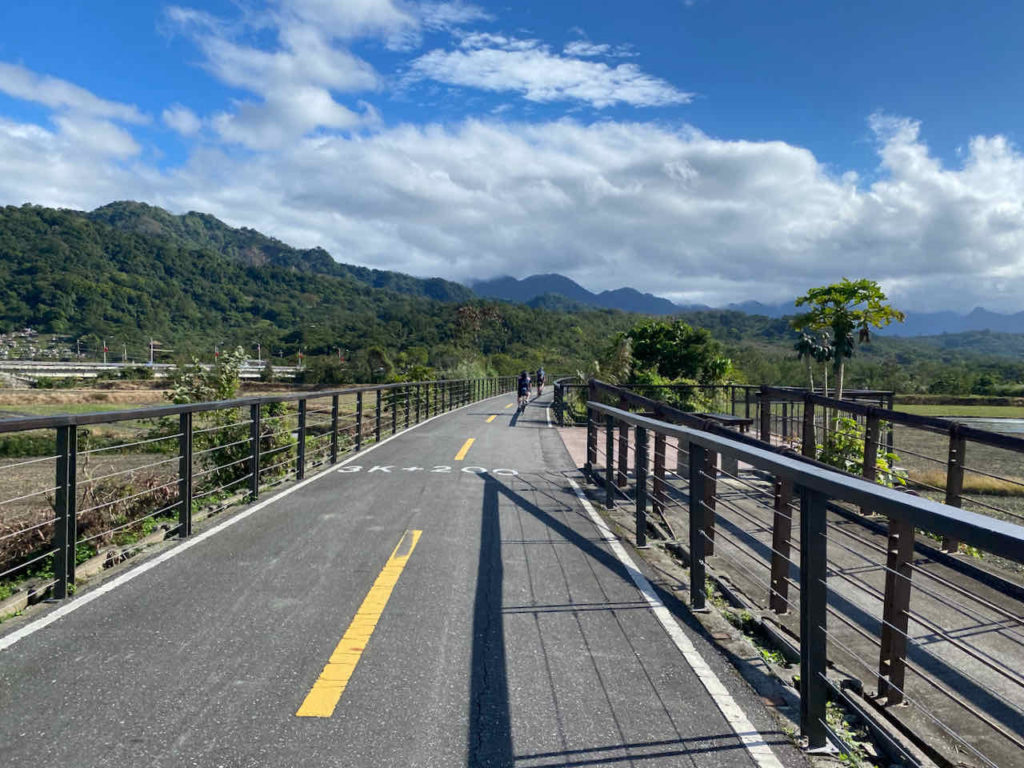
    We were sticking to the rift valley route instead of the coastal route in Hualien. But there are two routes in the rift valley to choose, the Provincial Highway No. 9 and the County Highway 193. The former one is wider, flatter but with more traffic. There are more supply stops. The latter one is smaller, some short climbs but quieter with less traffic. We voted unanimously to cycle on County Highway 193, which turned out to be a great choice. Once we left Hualien and turned into County Highway 193, we had the whole road to ourselves. It was so quiet and we could chat relaxly while cycling. It’s still raining on the 2nd day. The surface is totally wet but there were no other vehicles to splash muddy waters on us. The only inconvenience was that there were only some small grocery stores along the route. Not quite probable to get a decent meal and choices of snacks are very limited if you find one that’s open. 
    We reached the B&B late after lunch with empty stomachs but we needed to clean our bikes first.  Lucky that the B&B has a big yard with a hose for us to rinse the dirt from our bikes. Then everyone rushed to their rooms for shower and I went for a quick lunch with another member who had the same priority as mine: food. 

    That evening, we managed to find a fancy restaurant serving really nice meals.

    Routes:

    NOTE: To use the routes, please install the App on your smartphone. The App will launch and load the route automatically after you tap the above links on your smartphone’s browser. For Garmin Connect, you can then use the APP to send the route to your garmin device. If your Garmin device is not purchased in Taiwan, you will also need make sure you have the Taiwan map on your device. Here is our blog post on this topic.

    Day 3 Guangfu to Fuli (65km Accent 424, Descent 310m)

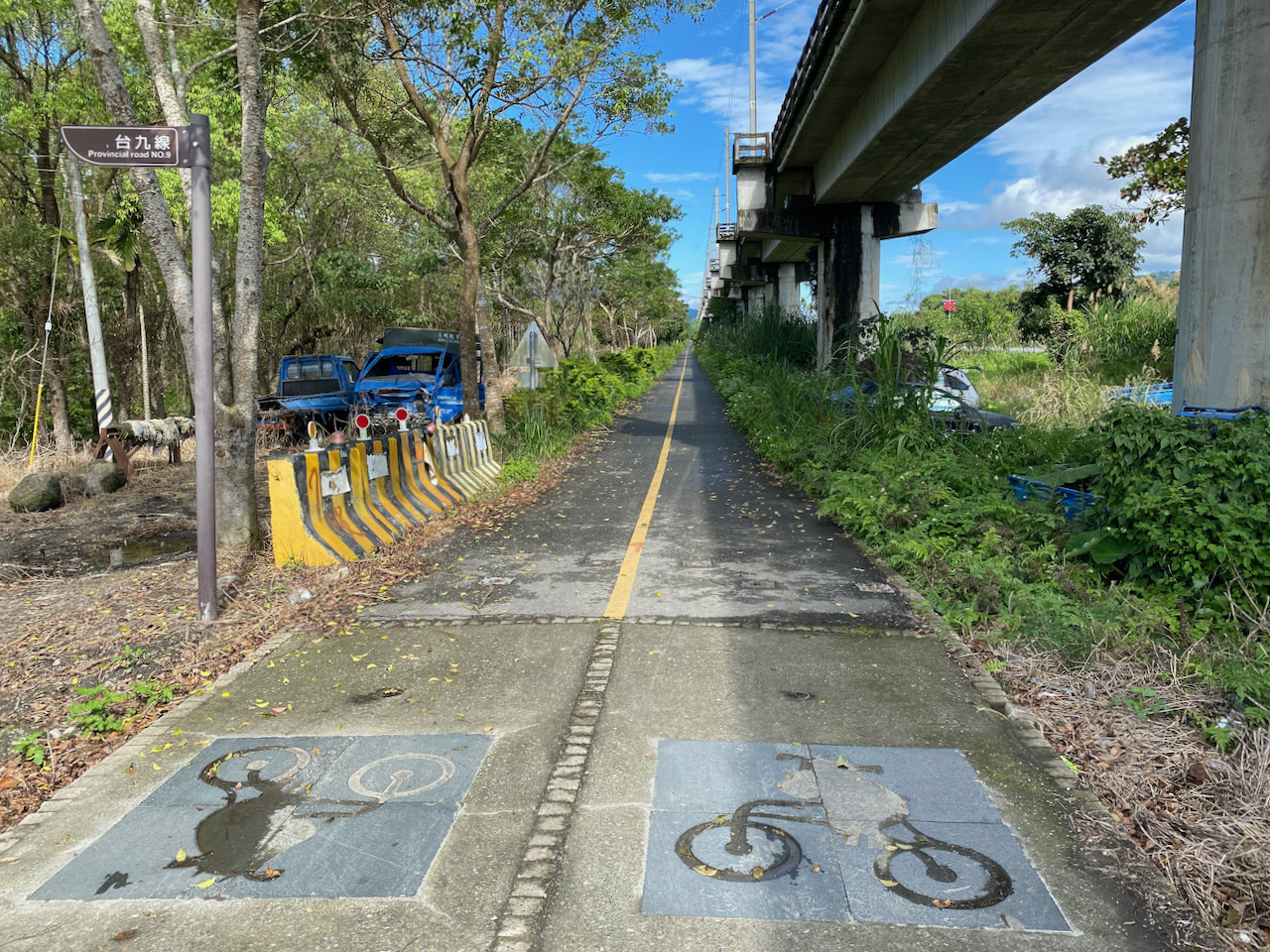
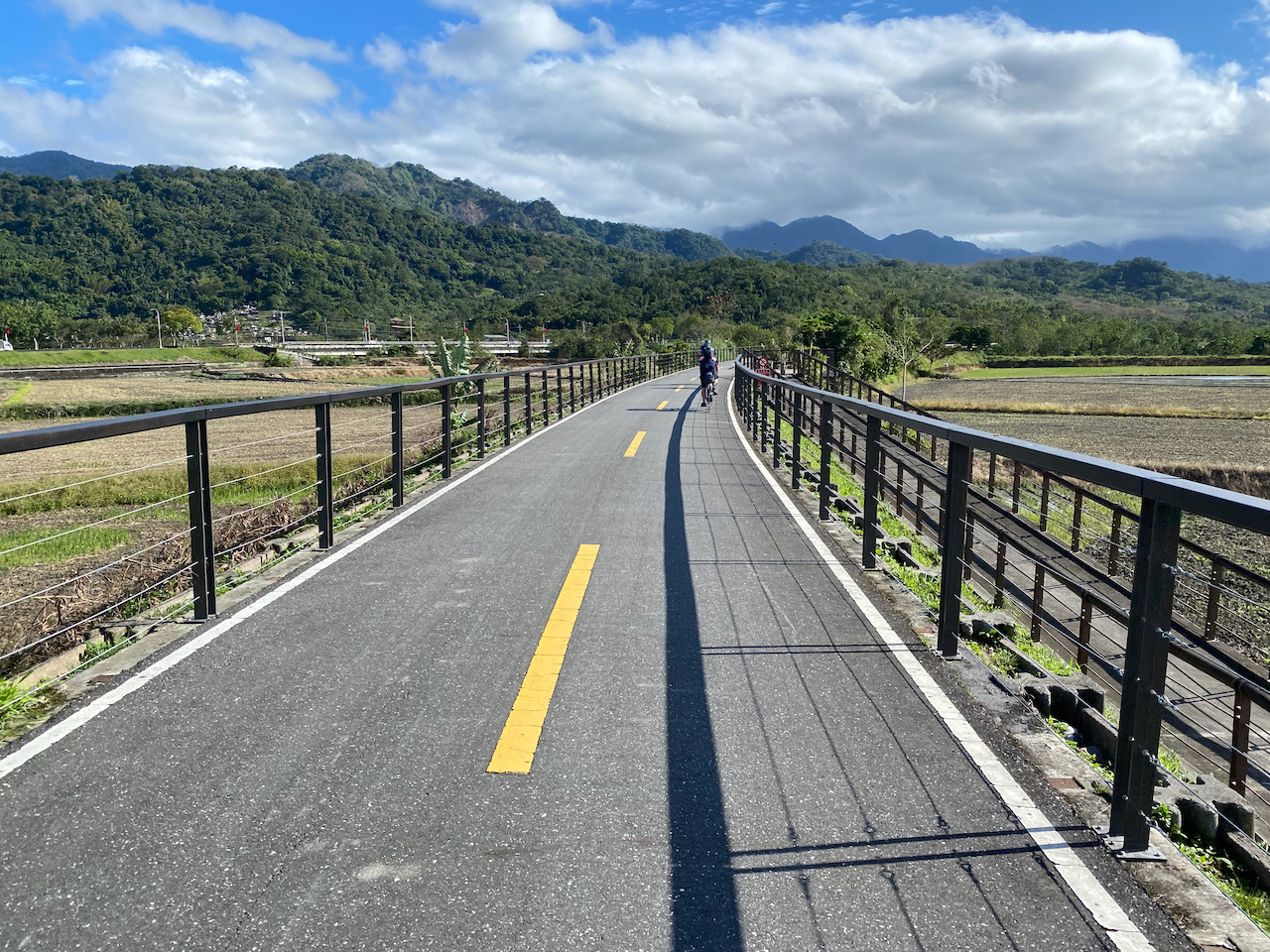
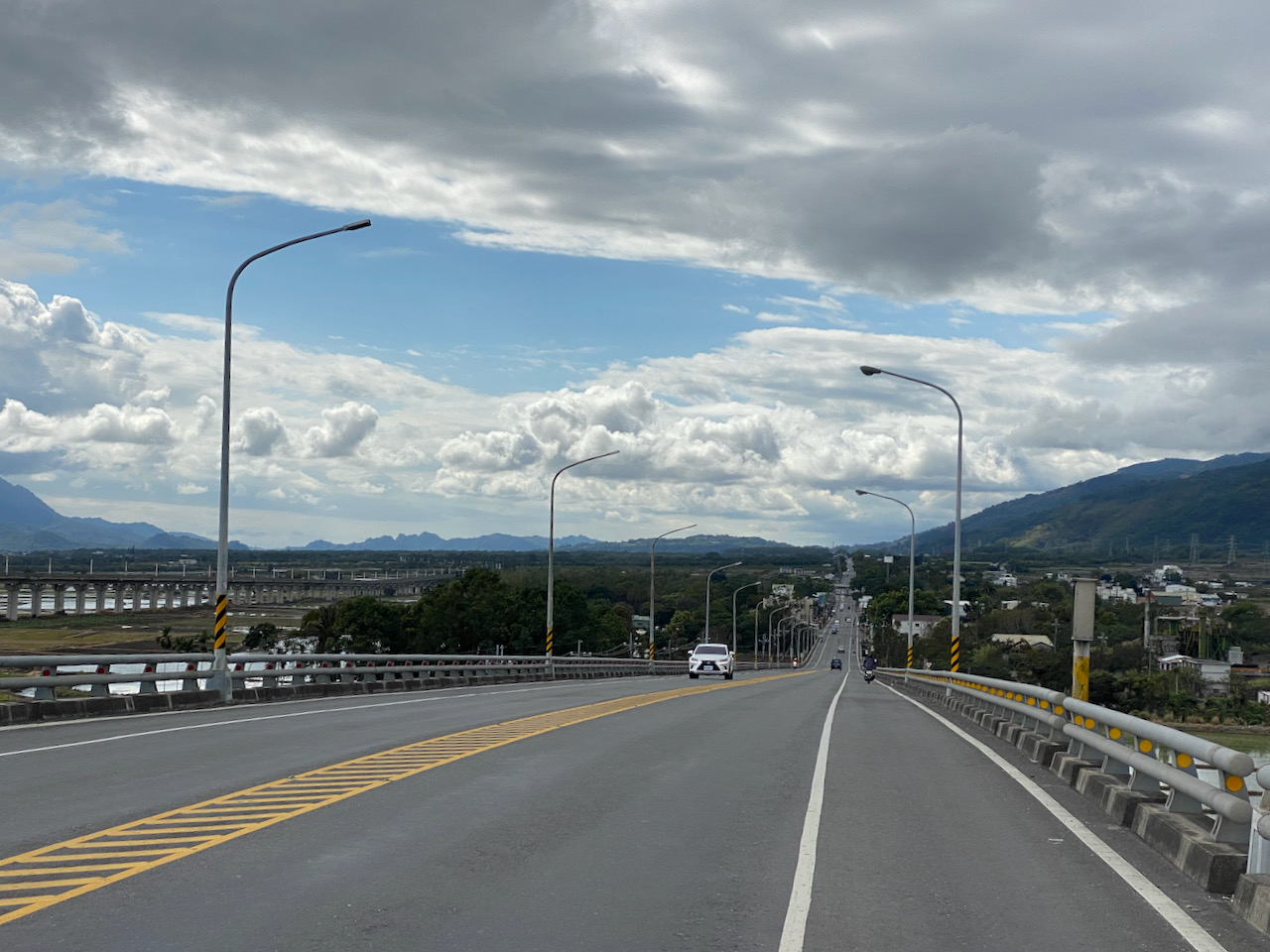
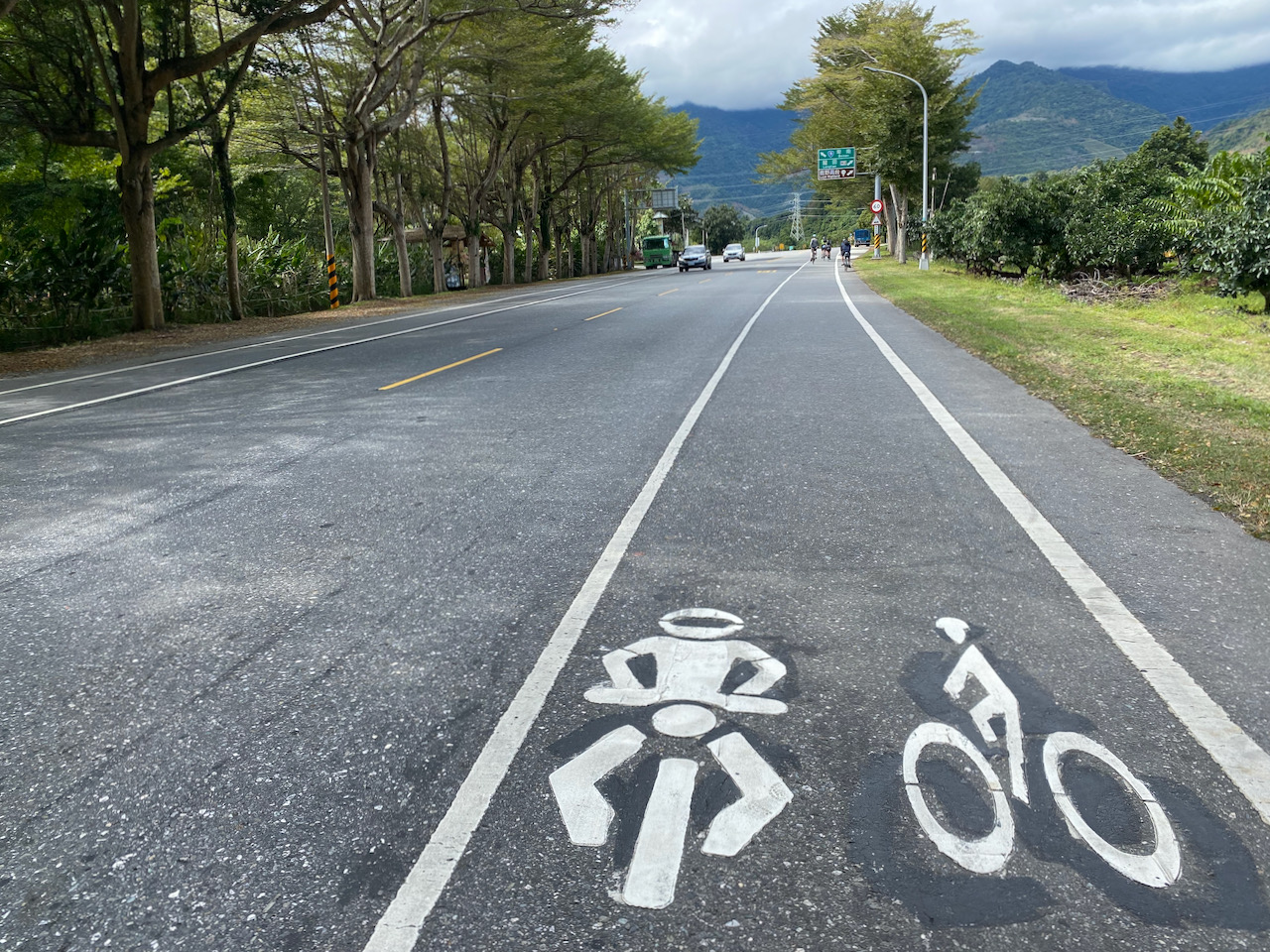
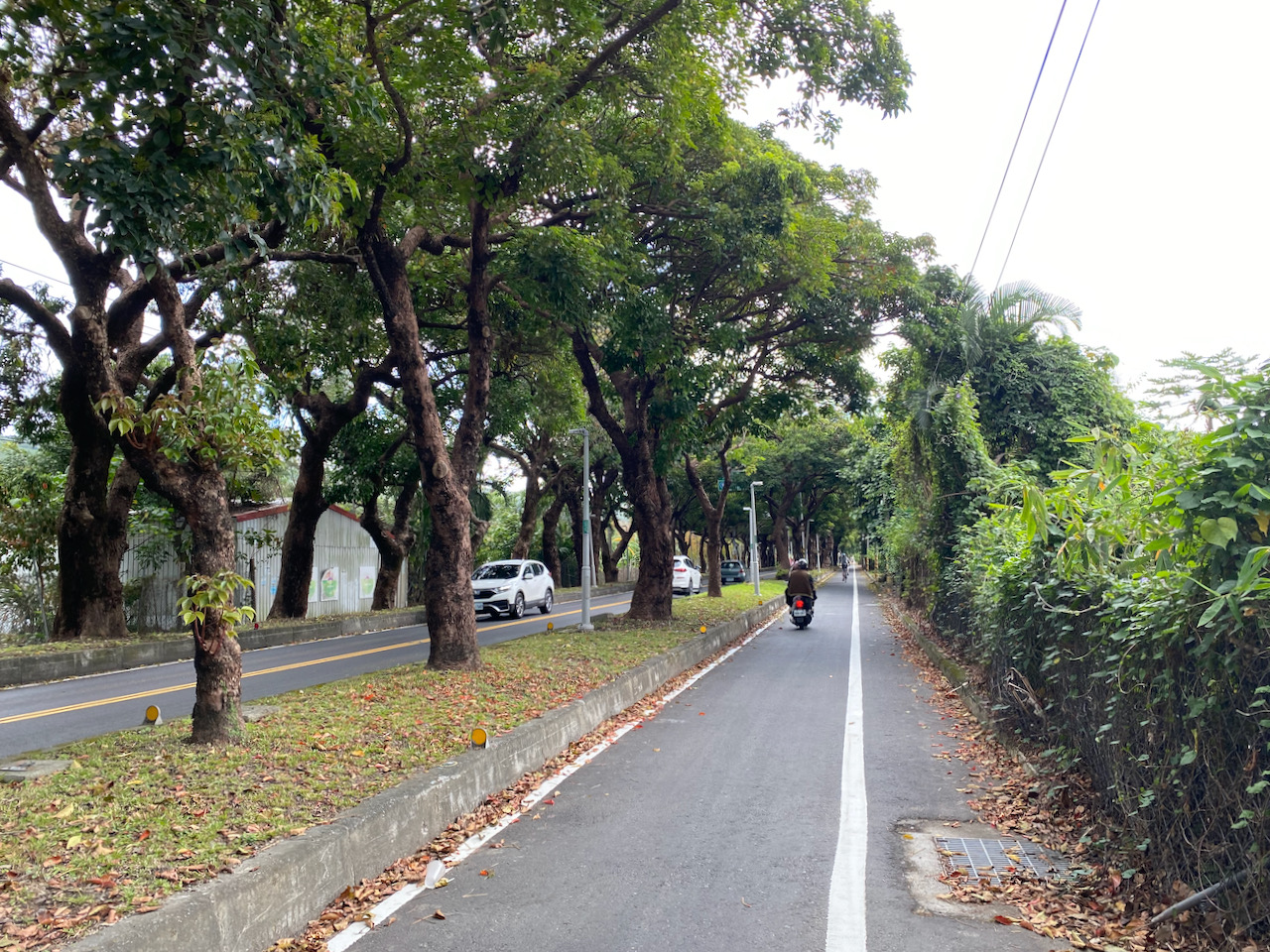
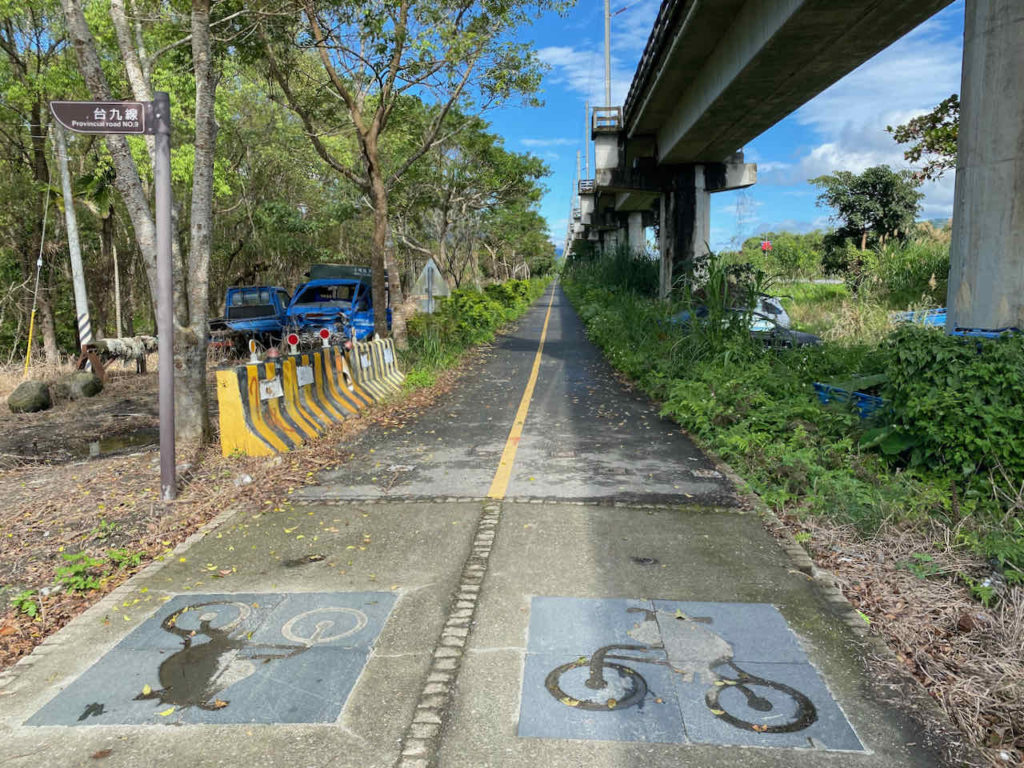
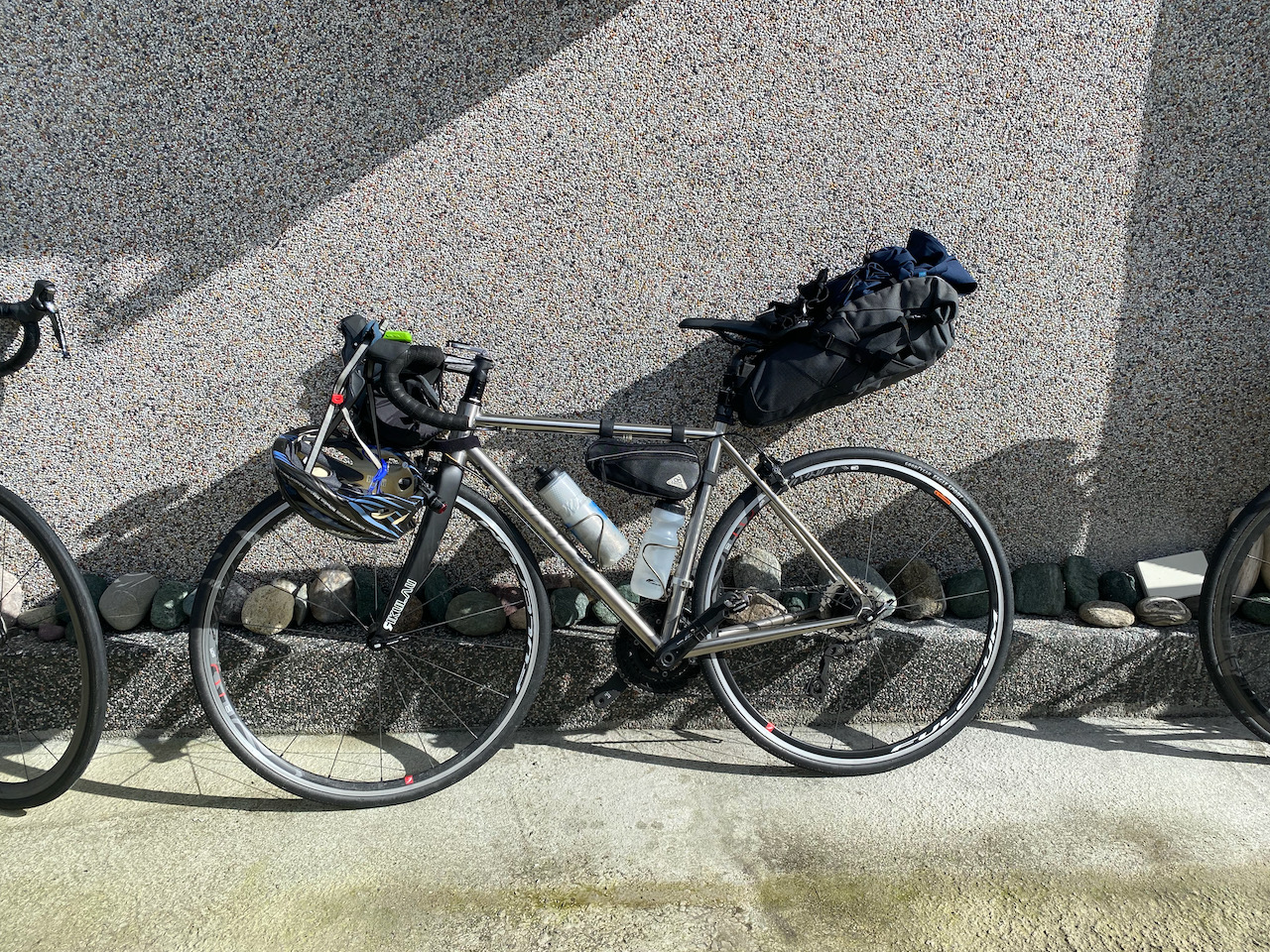
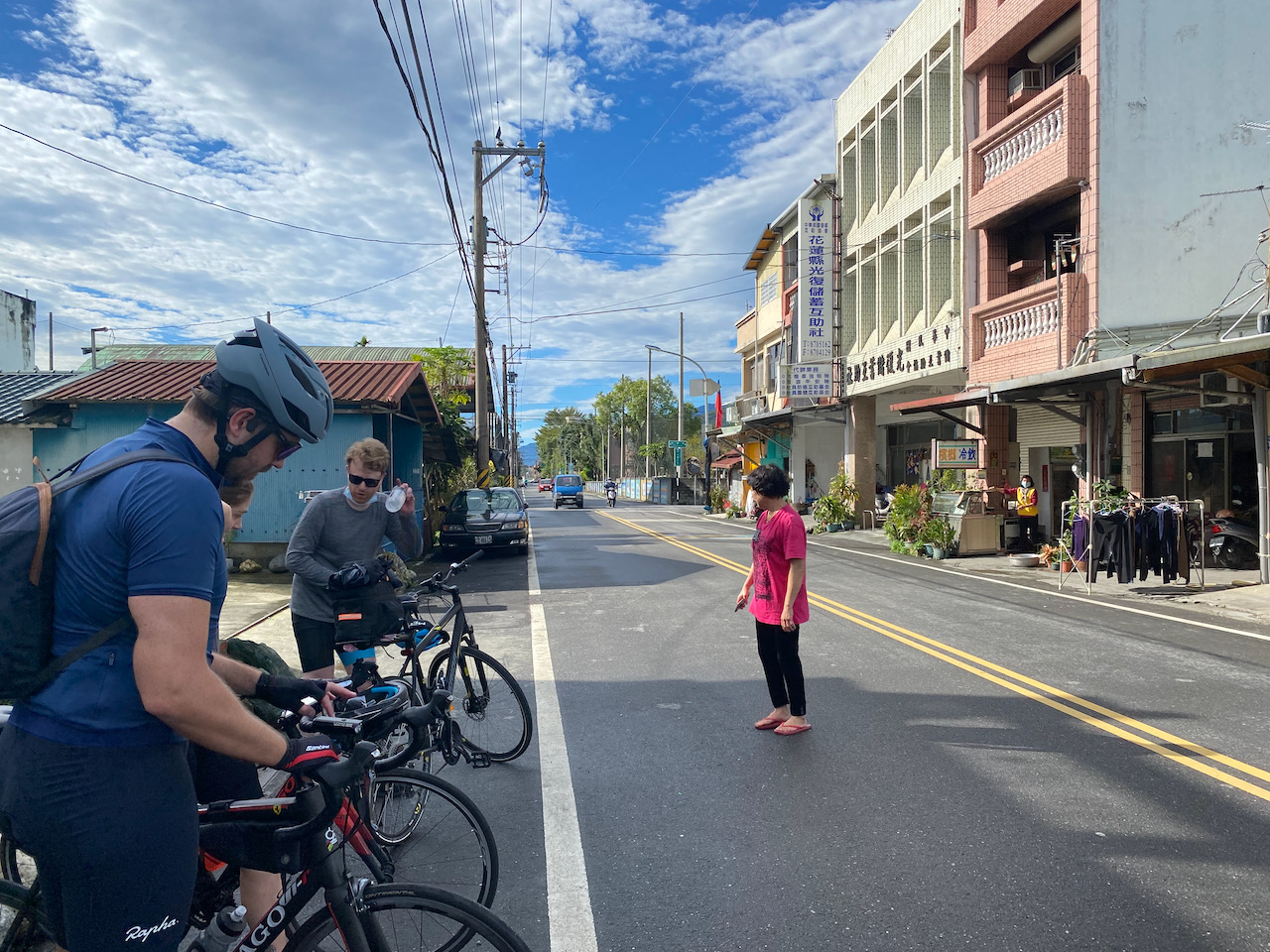
    Sun finally came out. We stayed on Provincial Highway No. 9, which is flat and wide, except there is a short climb of 150 metres to the Wuhe Terrace where you can find some tea shops and a Tropic of Cancer Marker. After descending from this terrace,  there were two bikeways running parallel to our route. The first one, Fuyuen old railway bikeway 毌æșèˆŠé”è·Żè‡ȘèĄŒè»Šé“, started from the Fuyuan Station running southwards. It is converted from the old railways after a new one was built elevated. Then there was this  Yufu bikeway  (玉毌è‡ȘèĄŒè»Šé“) brought us from Yuli to Old Dongli Train Station, a place for chill out and taking pictures. Apart from the two bikeways, we cycled on Provincial Highway No. 9. It’s a wide flat road with a shoulder dedicated for scooters and bicycles. After leaving the 2nd bikeway, there is a farmer’s association outlet selling local products on the Provincial Highway No. 9. Sometimes you would find some sculptures made of the hays after the rice is harvested here. This was an easy day. We checked into the B&B early and drank some beer before sunset. Fuli is a very small town. There was only one restaurant with dine in option.
    Routes:

    NOTE: To use the routes, please install the App on your smartphone. The App will launch and load the route automatically after you tap the above links on your smartphone’s browser. For Garmin Connect, you can then use the APP to send the route to your garmin device. If your Garmin device is not purchased in Taiwan, you will also need make sure you have the Taiwan map on your device. Here is our blog post on this topic.

    Day 4 Fuli to Taitung (60km Ascent 324m, Descend 517m)

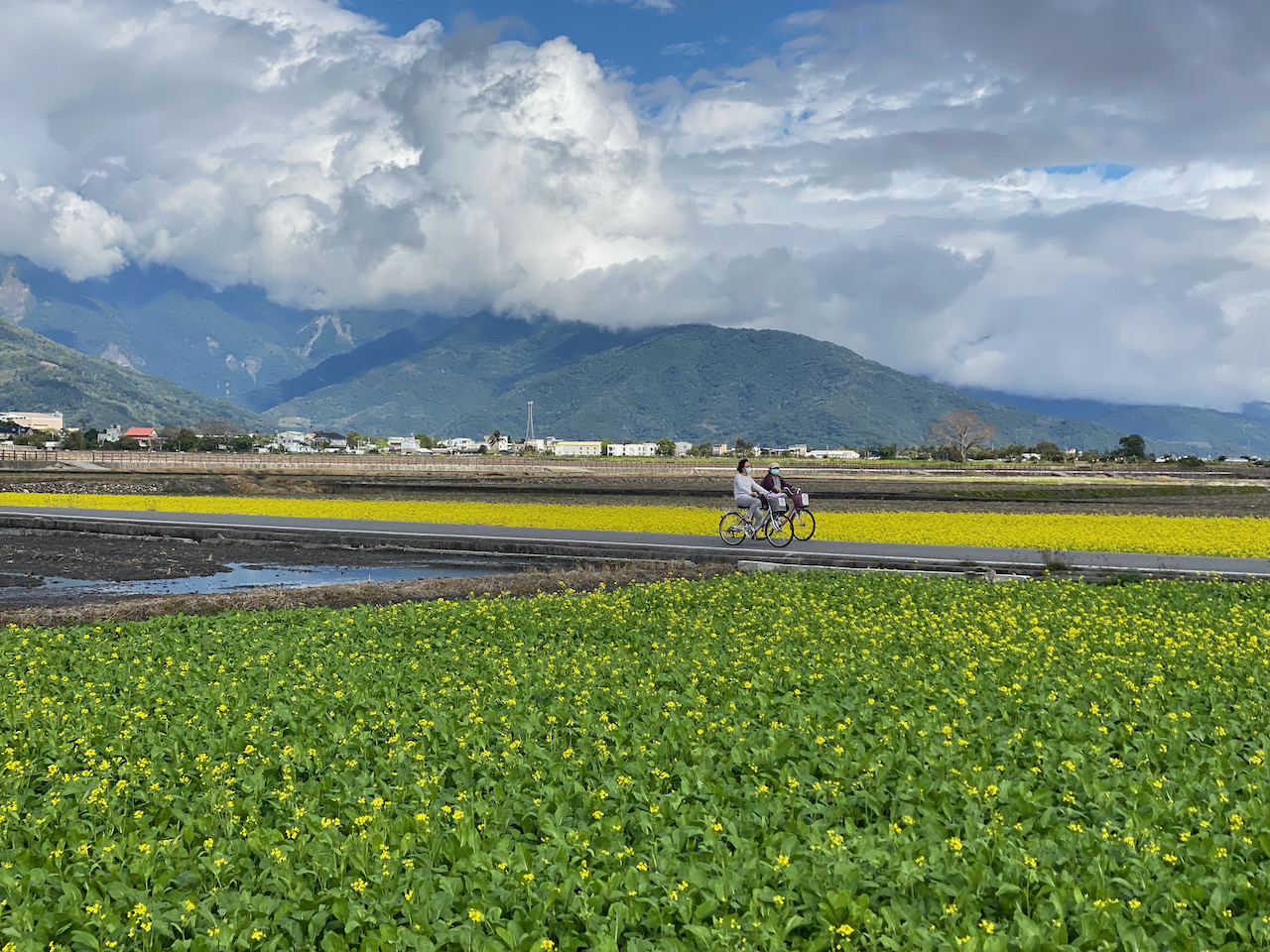
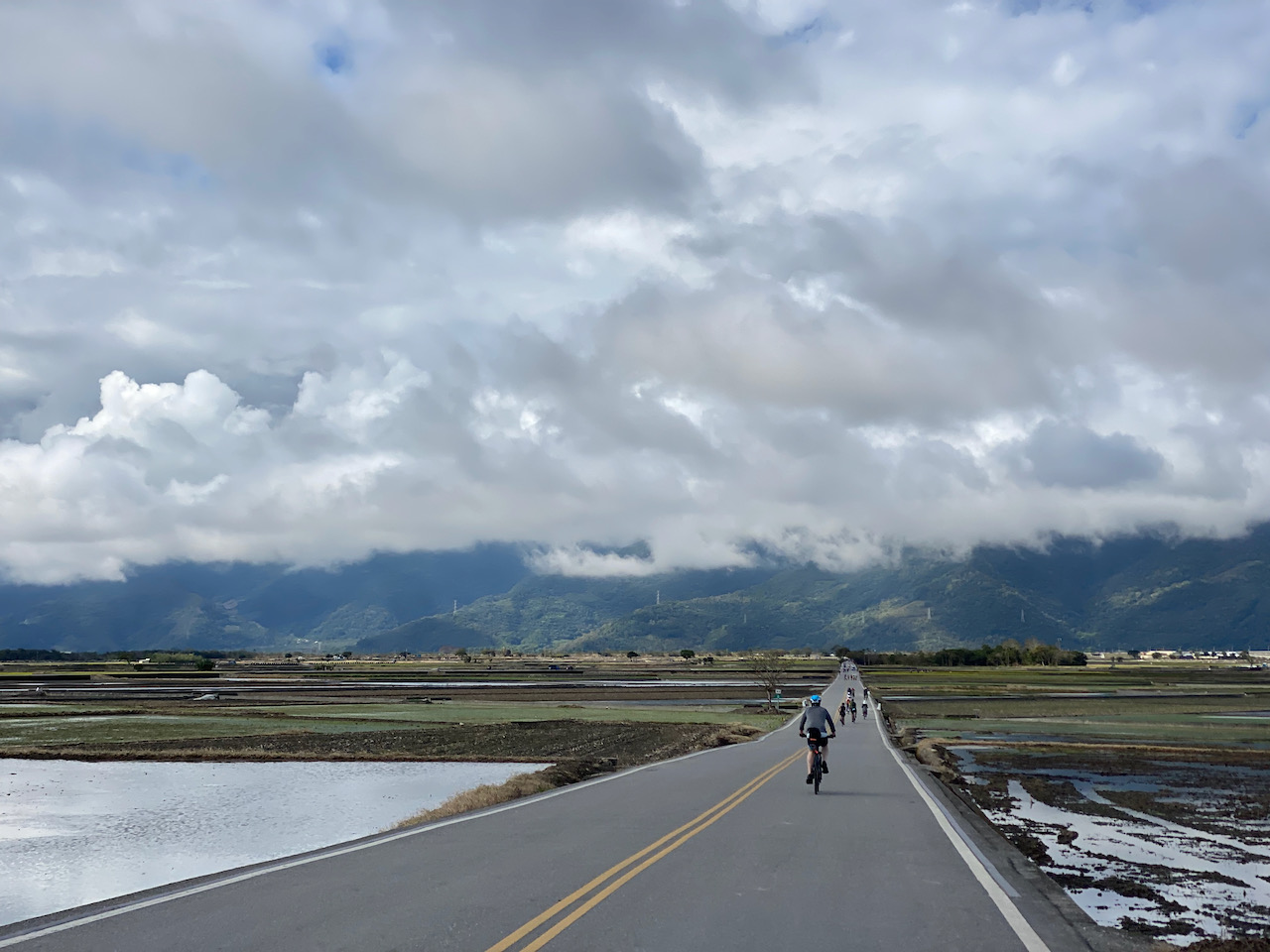
    This is the last day of our trip. Only 60km left to cover. There was this famous Brown Boulevard laid ahead of us in Chishang where the finest rice of Taiwan is cultivated. The part of Provincial Highway No. 9 was equally great. After a little climb of around 100m, we descended to the Taitung Train Station to have our bikes shipped back to Taipei. We managed to find a SPA that lets us use their staff’s shower room if we spend some money for their services. It was so nice to get refreshed before boarding a plane there to get to Taipei.
    Routes:

    NOTE: To use the routes, please install the App on your smartphone. The App will launch and load the route automatically after you tap the above links on your smartphone’s browser. For Garmin Connect, you can then use the APP to send the route to your garmin device. If your Garmin device is not purchased in Taiwan, you will also need make sure you have the Taiwan map on your device. Here is our blog post on this topic.

    Conclusion

    After completing this stage, we’d still need to cycle from Taipei to Fulong to complete the loop of around the island but my friends were already claiming that they had accomplished the challenge because they had cycled to Fulong by themselves for some weekends. So, that’s it for the around Taiwan trips. But there is still more to explore on the island, especially in the mountains.
  • Cycling Around Taiwan in Multiple Stages (2): Kaohsiung to Taitung

    Cycling Around Taiwan in Multiple Stages (2): Kaohsiung to Taitung

    We did multiple trips to cycle around Taiwan because we did not have time to do it in one go. The downloadable GPX file of the cycling route is at the end of each section.

    This is the 2nd stage of our Around Taiwan in Multiple Stages trip. We were to cover Kaohsiung to Taitung in this stage. We would go from the west coast to the east coast by climbing over the 460m Shouka mountain pass or Shouka Biker Rest Stop. We started off from Kaohsiung 高雄 cycled to Checheng è»ŠćŸŽ. There are two routes to climb to the Shouka Biker Rest Stop, the Provincial Highway No. 9 or County Highway 199. Provincial Highway No. 9 has lots of traffic making it less enjoyable. So County Highway 199 is a better choice. We spent the 3rd night in Jinlun 金殙 where quite a number of small hotels to choose. Some even offer hotsprings. The last day was quite easy. It’s just 41 km to Taitung Train Station where you can have your bike sent back to Taipei (Wanhua Station or Songshan Station). Then you can either take a domestic flight back to Songshan Airport in Taipei or take a train home. For me, I have taken a special train with 40 bike racks in carriages for bikers. I can push my whole bike onto the train, the C.K. EXP No. 81 (Departs at 16:02) and had 5 hours to spare until I arrived at Songshan Station. C.K. EXP No. 81 is only available every Friday, Saturday, Sunday and Monday.

    If this stage seems too short for you, I have plotted an extra route by heading further south to the Eluanbi Lighthouse.

    Day 1: Kaohsiung to Checheng (99km, Ascent 310m, Descent 323m) é«˜é›„è‡łè»ŠćŸŽ

    We only had 3 days to spare when we were having this stage. So, we started from Kaohsiung instead of Tainan where we left off to make it easier. We sent our bikes to Fengshan on Wednesday and collected them on Friday before 8:00 p.m. Then we spent the night in Kaohsiung and started as early as possible the next day. With hindsight, Nanzi is a better location to collect the bike as it’s closer to HSR and the luggage room is easier to locate. The other option is taking the earliest HSR with the bikes bagged on Saturday morning and start cycling right from Kaohsiung Zuoying HSR station. The earliest HSR to arrive at Zuoying, Kaohsiung is 8:40 am which makes you start late, though.

    Kaohsiung is the 3rd biggest city in Taiwan. When we started cycling from the city centre, it was a 4-lane main road. As we headed south further, a bikeway emerged making cycling more relaxing. Then the road got less busier when we reached the countryside. We had a broken spoke and were lucky to have a very helpful bike shop nearby in front of Fang-Liao station. While waiting, we had a 3-hour lunch break. Can’t complain. Carbon wheels are tricky to fix. But we still can make it to Checheng before 3:30. It’s quite an easy route and the wind at our back did make it much easier.

    If you have plenty of time, you may take a detour to the Pier 2 Art Center and then take a ferry to Qijin District, cycle south east along the narrow isle and get back to the main route by ferry at the Zhong Zhou Ferry Station.

    Route

    Alt Route

    NOTE: To use the routes, please install the App on your smartphone. The App will launch and load the route automatically after you tap the above links on your smartphone’s browser. For Garmin Connect, you can then use the APP to send the route to your garmin device. If your Garmin device is not purchased in Taiwan, you will also need make sure you have the Taiwan map on your device. Here is our blog post on this topic.

    Day 2: Checheng to Jinlun (78km, Ascent 650m, Descent 629m) è»ŠćŸŽè‡łé‡‘ćŽ™

    The first 37km in Day 2 is harder as it involved accumulated climbing of 530m. But once we reached Shouka pass, there would be a long thrilling descent to the east coast. The detour to Duoliang Railway Station, which is marketed as the most beautiful train station of Taiwan is to be found along Provincial Highway No. 9 right before reaching Jinlun.

    Route

    NOTE: To use the routes, please install the App on your smartphone. The App will launch and load the route automatically after you tap the above links on your smartphone’s browser. For Garmin Connect, you can then use the APP to send the route to your garmin device. If your Garmin device is not purchased in Taiwan, you will also need make sure you have the Taiwan map on your device. Here is our blog post on this topic.

    Day 2: Extra Checheng to Jinlun via Eluanbi Lighthouse (136km, Ascent 1170m, Descent 1148m) è»ŠćŸŽè‡łé”é‘ŸéŒ»è‡łé‡‘ćŽ™

    Instead of heading east on County Highway No. 199, you can head south all the way to Eluanbi Lighthouse before switching northwards, enjoy the view on the east side and then  do the unavoidable climb to Shouka Pass. It would be a long long day of 136km distance with 1093m of Ascent, 1070m of Descent. Given that it’s also hard to get supply or stay over after turning north from Eluanbi Lighthouse, I would suggest inserting one extra night by staying over on Manzhou Township if you plan to use this route. You would have covered 45km there only but it’s better there for more choices of homestays with food stalls and convenience stores for meals and supplies. Or you may cover more distance on Day 1 and stay over in Kenting to make this day a little bit shorter. There are plenty of small hotels in the vicinity of Kenting Night Market. Whatever the plan is, Just don’t end up having to descend in the dark from Shouka Pass.

    Route

    NOTE: To use the routes, please install the App on your smartphone. The App will launch and load the route automatically after you tap the above links on your smartphone’s browser. For Garmin Connect, you can then use the APP to send the route to your garmin device. If your Garmin device is not purchased in Taiwan, you will also need make sure you have the Taiwan map on your device. Here is our blog post on this topic.

    Day 3: Jinlun to Taitung (41km, Ascent 263m, Descent 256m) é‡‘ćŽ™è‡łć°æ±

    This is the last day of our stage 2. I make it much shorter for more slacks to ourselves. I don’t want to miss the train home in case we have any delays due to any issues. Taitung is one of the most remote cities on the Taiwan main island. Tickets for direct trains to Taipei are snapped up within hours when they are available for purchase. There are flights to Taipei Songshan Airport but seats are limited. If missed, we would have to take the train or coach back to Kaohsiung for HSR or coaches to get back to Taipei. 

    We cycled directly to Taitung Train Station. My friends drop their bikes at the luggage room and have them sent back to Taipei. We had a relaxing lunch at the city centre which is 5km from the train station. While they took a flight back to Taipei, I took a 5 hour train ride back to Songshan Train Station with my bikes on board. (Edit: this train is no longer in services. Now, the only train that takes naked bikes from Taitung to Taipei is Chu-Kuang Express 667 which departs at 22:45 every Sunday and arrives at 04:31 the next day.)

    Please note that there is not much public transportation in Taitung City. No Ubers either. There are plenty of taxis but most of them are queuing at the train station. So, it would be easier to have the restaurant booking a taxi for you while you are having a meal. 

    Route

    NOTE: To use the routes, please install the App on your smartphone. The App will launch and load the route automatically after you tap the above links on your smartphone’s browser. For Garmin Connect, you can then use the APP to send the route to your garmin device. If your Garmin device is not purchased in Taiwan, you will also need make sure you have the Taiwan map on your device. Here is our blog post on this topic.

  • Cycling Around Taiwan in Multiple Stages (1): Taipei to Kaohsiung

    Cycling Around Taiwan in Multiple Stages (1): Taipei to Kaohsiung

    Cycling around Taiwan in multiple stages is an itinerary I planned for my expat friends in Taipei who don’t have the luxury of taking 9 – 10 days off from work to do it in one go. For each stage, one can use a weekend plus 1 – 2 day(s) off before or after to make it a 3 – 4 days cycling holiday. The downloadable GPX file of the cycling route is at the end of each section.

    Planning the trip

    By dividing the route into multiple stages, we will get some extra bonus such as being able to visit different parts of the island in their best seasons. We can also incorporate some detours to visit more interesting places as we are more relaxed about time. For those who do it in one go, they are bound to cycle against the prevailing wind (North-East for winters and South-West for summers) on one side of the island. When doing it in multiple stages, we can change our direction for different stages so that we will always have the wind at our back.
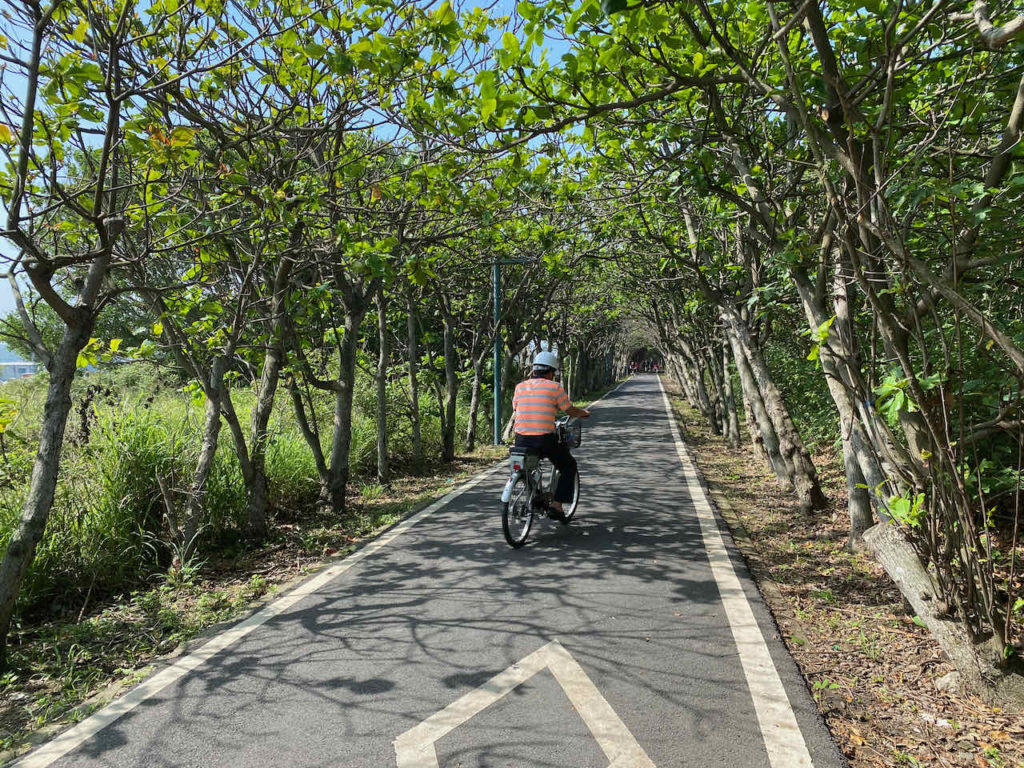
    In the detailed itinerary, I have provided an alternate GPS route plotted to maximise the use of the dedicated bikeways, which my friends found more enjoyable. These bikeways provide a break from the noisy traffic, well paved road surface and sometimes shades by trees. Some even offer us very pleasant views and lead us to interesting places. 
    However, these bikeways are usually narrower than regular roads, which means you could be slowed down by other users. Your rhythm could be hampered by those roadblocks built to stop other vehicles from entering. Please also note that the conditions on those bikeways could change drastically during unfavourable weather. Some can be flooded, populated by slippery mosses, blocked by sands or even completely destroyed by the natural forces. So, please observe and proceed with caution. When in doubt, switch to the main roads for your own safety. 

    I have marked some convenience stores on GoogleMaps for your reference. They are reliable supply stops as they mostly open 24 hours a day. But I‘d also like to support small businesses such as local grocery stores and betel nut stalls. They sell water at half the price we pay in the convenience stores.

    For my said trips with friends, we took public transportations to get to the starting point and return from the end of each stage outside of Taipei. Please refer to this post for details on how to travel with your bikes on public transportation. As lots if people in Taipei would spend their weekends away from the city, I highly recommend you avoid ending your trips on Sundays so as not to compete for tickets with the crowd, especially when you plan to carry your bike onto a train carriage/coach.

    Here are the details of what we did for your reference.

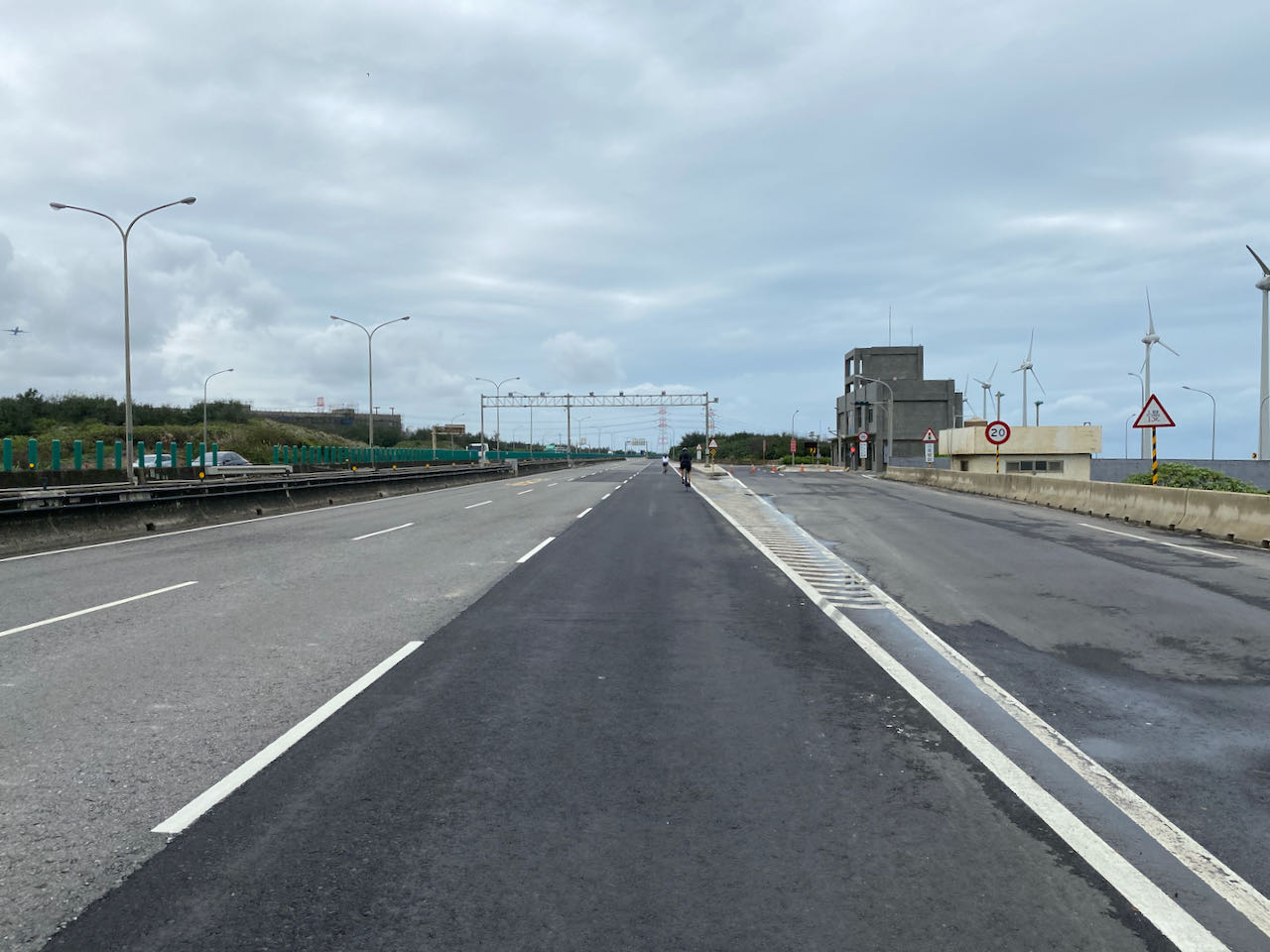
    For Stage One, there are 3 routes to go on the west part of the island: the coastal route, a route close to the mountains and a route in the middle. I picked the coastal route as it is wide and flat with sparse traffic lights. There are heavy vehicles occasionally passing by but most of the traffic is on the elevated highways, leaving us plenty of space on the ground level. There are less supply stops and not many choices of hotels, so we needed to commit to a longer day of cycling than wanted.

    Day 1: Taipei to Hsinchu City (89km, Ascent 165m, Descent 160m) ć°ćŒ—è‡łæ–°ç«č

    Suggested Lunch Break: Yongan Fishing Harbour æ°žćź‰æŒæžŻ

    Accomodations: Small hotels available right next to the route, more choices available in the city centre, 7km more.

    Route

    Alt Route

    NOTE: To use the routes, please install the App on your smartphone. The App will launch and load the route automatically after you tap the above links on your smartphone’s browser. For Garmin Connect, you can then use the APP to send the route to your garmin device. If your Garmin device is not purchased in Taiwan, you will also need make sure you have the Taiwan map on your device. Here is our blog post on this topic.

    Day 2: Hsinchu City to Lukang (110km, Ascent 205m, Descent 206m) æ–°ç«čè‡łéčżæžŻ

    Suggested Lunch Break: Baishatun or Tongxiao 癜æČ™ć±Żæˆ–通柔

    If 110km a day is too ambitious, you can plan your stay in Wuqi District, Taichung ć°äž­æą§æŁČ捀 instead of Lukang, leaving the remaining 20km for Day 3. But I believe that extra 20 km should not impose much impact as the route for Day 3 is direct and flat. Gaomei Wetlands é«˜çŸŽæż•ćœ° is a nice place to visit. I have even pondered staying over in the small hotel there. But the dinner plan could be tricky. Wuqi District may be a better choice as it’s only 7km from Gaomei. 

    Lukang is a popular tourist destination. There are plenty of hotels to choose from but they can be fully booked during weekends.

    Route

    Alt Route

    NOTE: To use the routes, please install the App on your smartphone. The App will launch and load the route automatically after you tap the above links on your smartphone’s browser. For Garmin Connect, you can then use the APP to send the route to your garmin device. If your Garmin device is not purchased in Taiwan, you will also need make sure you have the Taiwan map on your device. Here is our blog post on this topic.

    Day 3: Lukang to Budai (91km, Ascent 80m, Descent 83m) éčżæžŻè‡łćžƒèą‹

    Suggested Lunch Break: Mailiao éș„毟

    For day 3, if you want to cover less distance, you may stay over in Dongshi æ±çŸł which is 10km less. But choices of hotels are very limited.

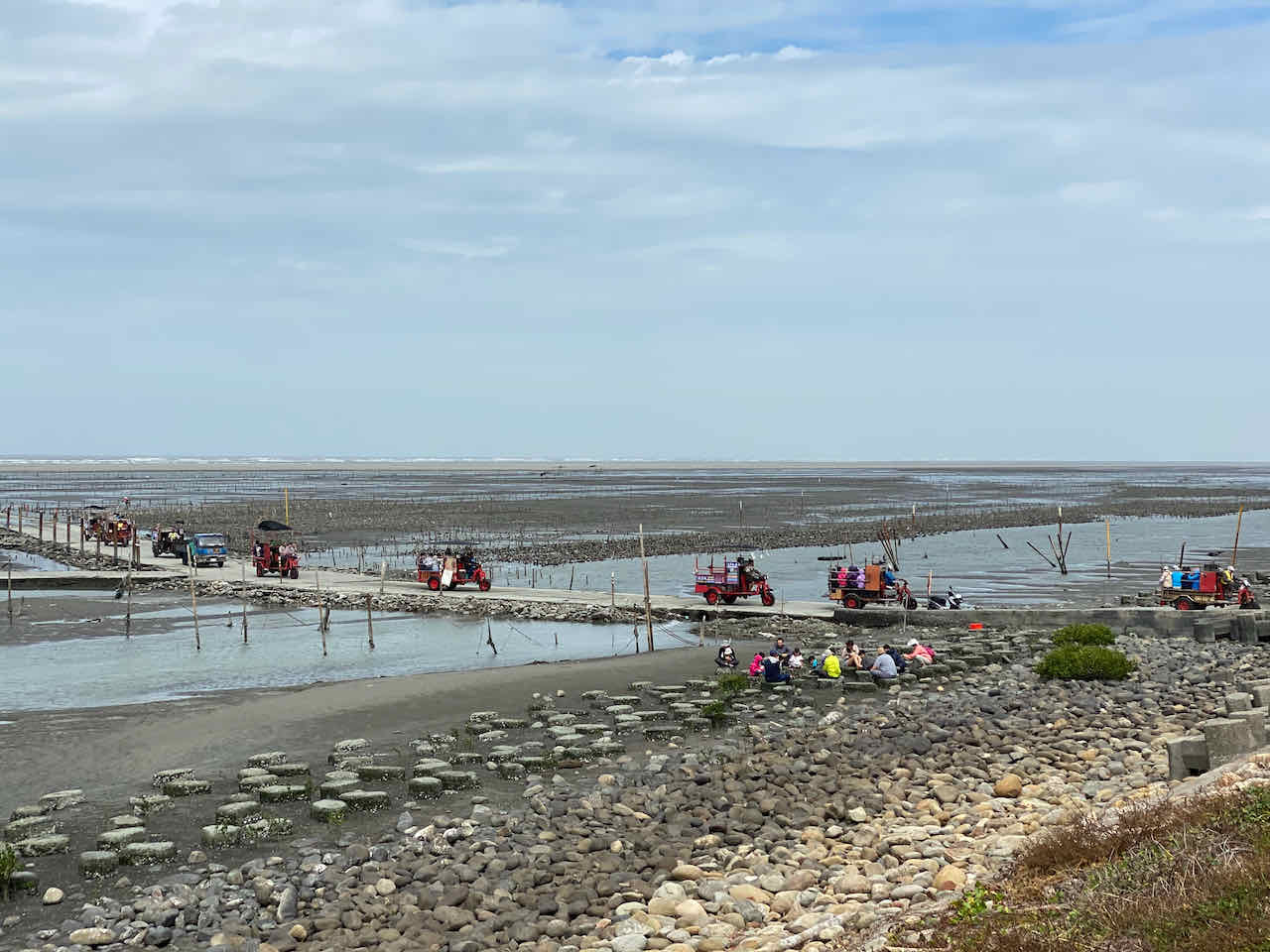
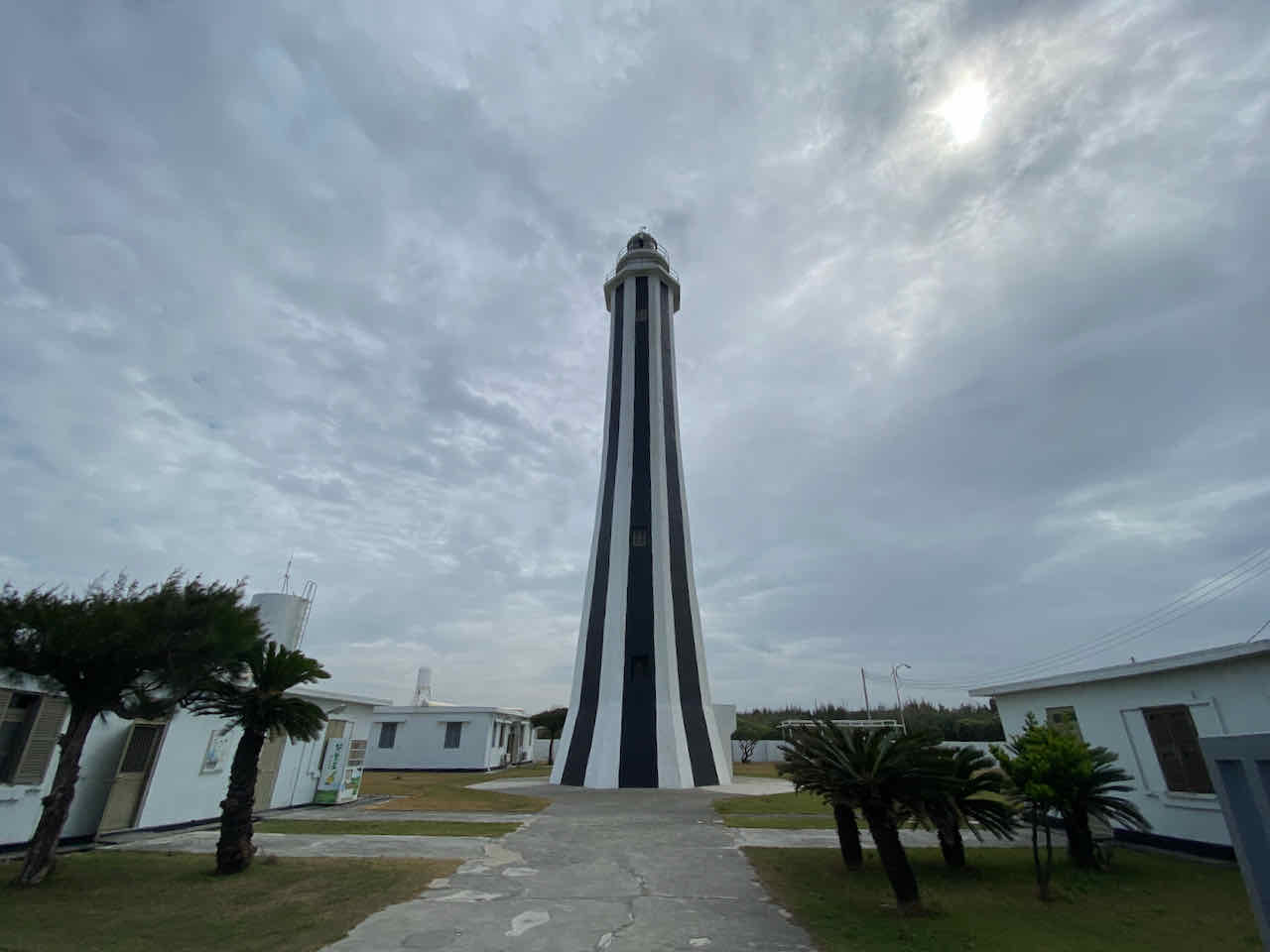
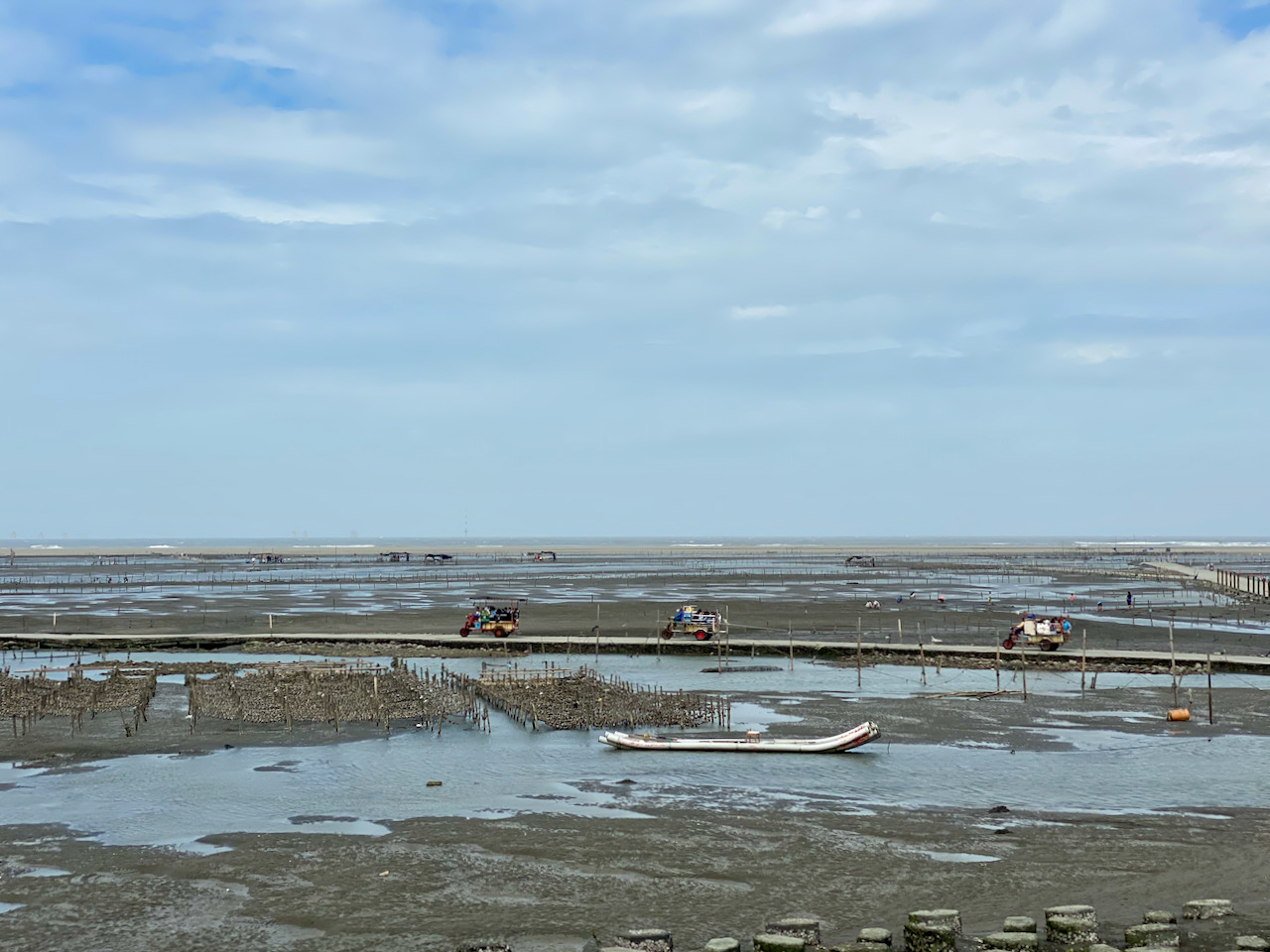
    A detour to Fangyuan Lighthouse èŠłè‹‘ç‡ˆćĄ” is around 3km from the main route. The oyster farm nearby has become a tourist attraction where people can ride a cart out to the oyster field and dig some oysters.

    We stayed on the isle of Budai. There are plenty of hotels to choose from. The Budai Harbour Fish Market offers seafood with great atmosphere like in the night markets. If you have more days to spare, there is ferry service to bring you to Penghu County 柎æč– with your bike.

    Route

    NOTE: To use the routes, please install the App on your smartphone. The App will launch and load the route automatically after you tap the above links on your smartphone’s browser. For Garmin Connect, you can then use the APP to send the route to your garmin device. If your Garmin device is not purchased in Taiwan, you will also need make sure you have the Taiwan map on your device. Here is our blog post on this topic.

    Day 4a: Budai to Tainan Train Station (50km, Ascent 153m, Descent 142m) ćžƒèą‹è‡łć°ć—ç«è»Šç«™

    Suggested Lunch Break: Tainan

    This is the last day of our Stage 1. We dropped our bikes at Tainan Train Station Luggage Room to be sent back to Wanhua èŹèŻ or Songshan Station æŸć±±è»Šç«™ in Taipei. They were available for pick up the next day. The Tainan Station Luggage Room is hidden behind a private scooter parking. You need to get into the gate to find it.  Then we took the train to Shalun Station æČ™ćŽ™è»Šç«™ for the High Speed Railway. You can also take the train or inter-city buses to get back to Taipei. 

    I prefer having my bike shipped for less hassle. And we have an e-bike in the group which would be too heavy to carry. Another option is bagging your bike and carrying them onto the train or HSR but the carriage can be too crowded to take in such a big piece of luggage during peak hours. 

    Route

    NOTE: To use the routes, please install the App on your smartphone. The App will launch and load the route automatically after you tap the above links on your smartphone’s browser. For Garmin Connect, you can then use the APP to send the route to your garmin device. If your Garmin device is not purchased in Taiwan, you will also need make sure you have the Taiwan map on your device. Here is our blog post on this topic.

    If you want to cycle more on day 4, you can cycle to Kaoshsiung as shown in this Day 4b plan.

    Day 4b: Budai to Kaohsiung  (89km, Ascent 135m, Descent 112m) ćžƒèą‹è‡łé«˜é›„

    There are two train stations in Kaohsiung that provide bike shipping services, Nanzi Station æ„ æą“è»Šç«™ and Fengshan Station éłłć±±è»Šç«™. Nanzi Station is more preferable as it is much closer to the High Speed Railway Station in Kaohsiung. I have used Fengshan Station before. The luggage room was very difficult to locate and it is hidden behind a construction site, the work of which seems to be unlikely to finish soon.

    Route

    Alt Route

    NOTE: To use the routes, please install the App on your smartphone. The App will launch and load the route automatically after you tap the above links on your smartphone’s browser. For Garmin Connect, you can then use the APP to send the route to your garmin device. If your Garmin device is not purchased in Taiwan, you will also need make sure you have the Taiwan map on your device. Here is our blog post on this topic.

  • “Two Towers in One Day” Challenge – Useful Info and Experience Sharing (2)

    “Two Towers in One Day” Challenge – Useful Info and Experience Sharing (2)

    Execution

    Bad news: weather forecast said there wouldn’t be tailwinds for us. It’s very uncommon for this season and it happened to fall on the event day. It turned out that at some point, there would even be a 7km/h wind blowing against us and I had to join some groups for drafting. But on the bright side, the lack of north wind means that it would be dry and there would be no slippery, dirty road surfaces.

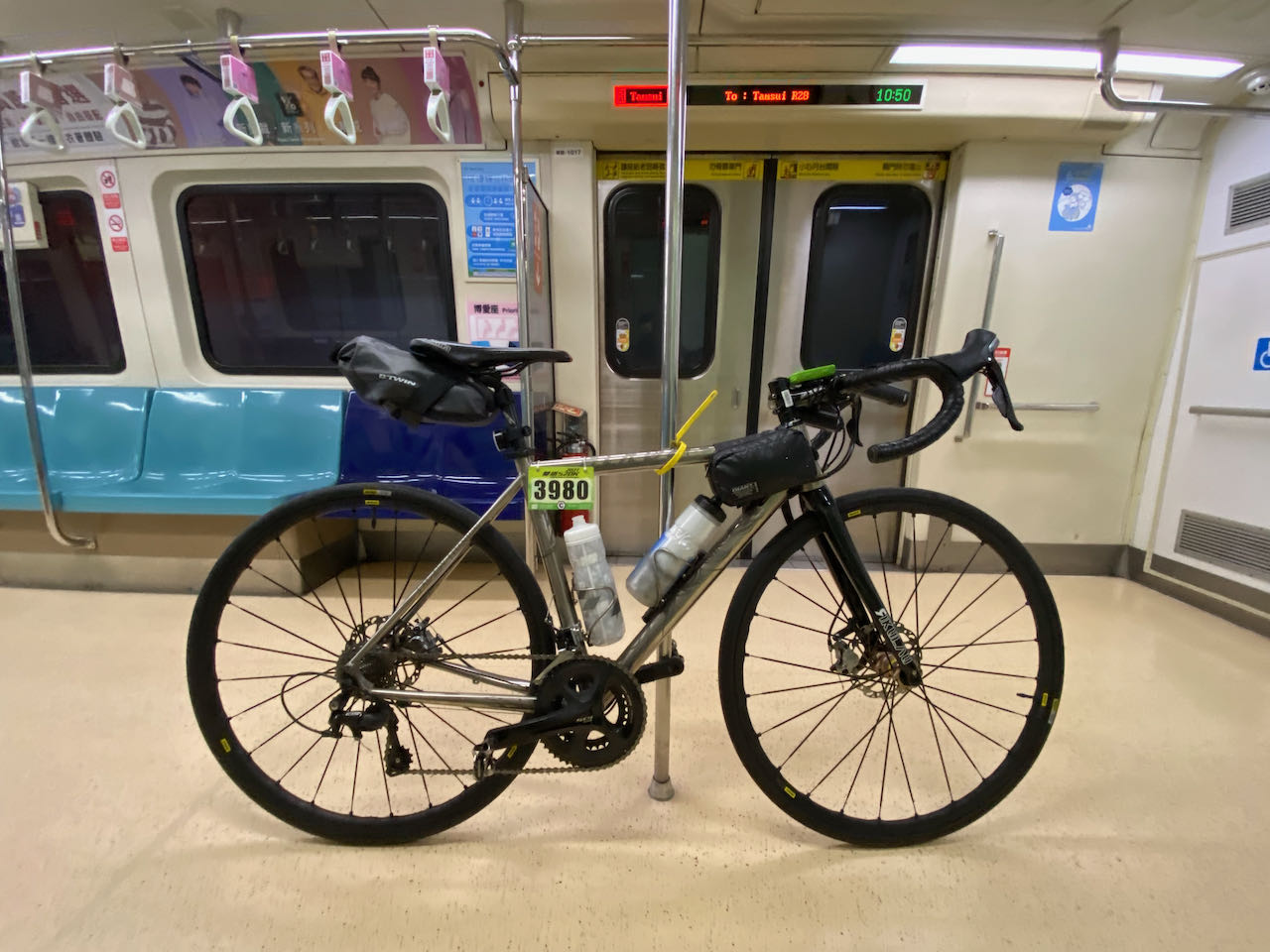
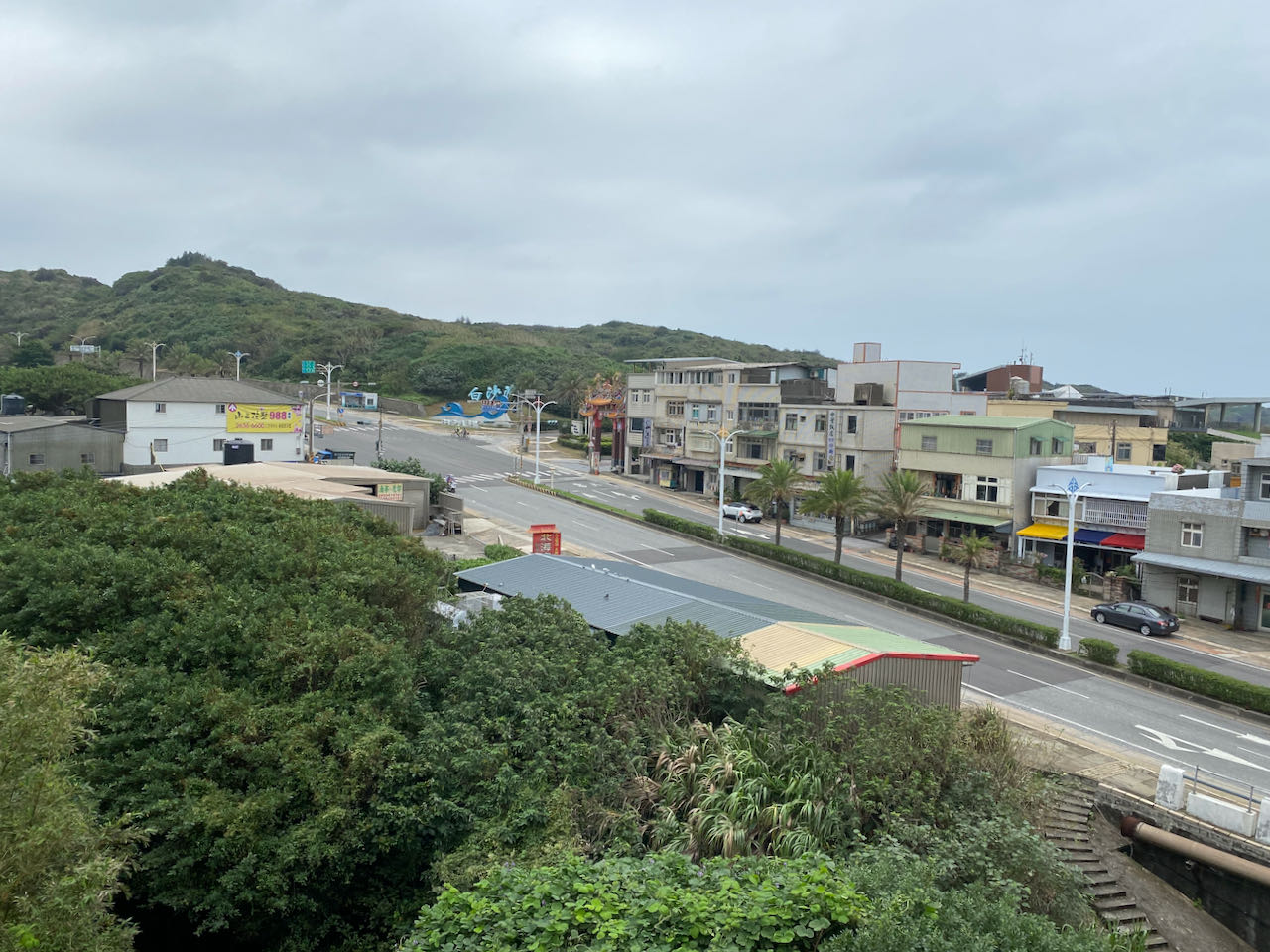
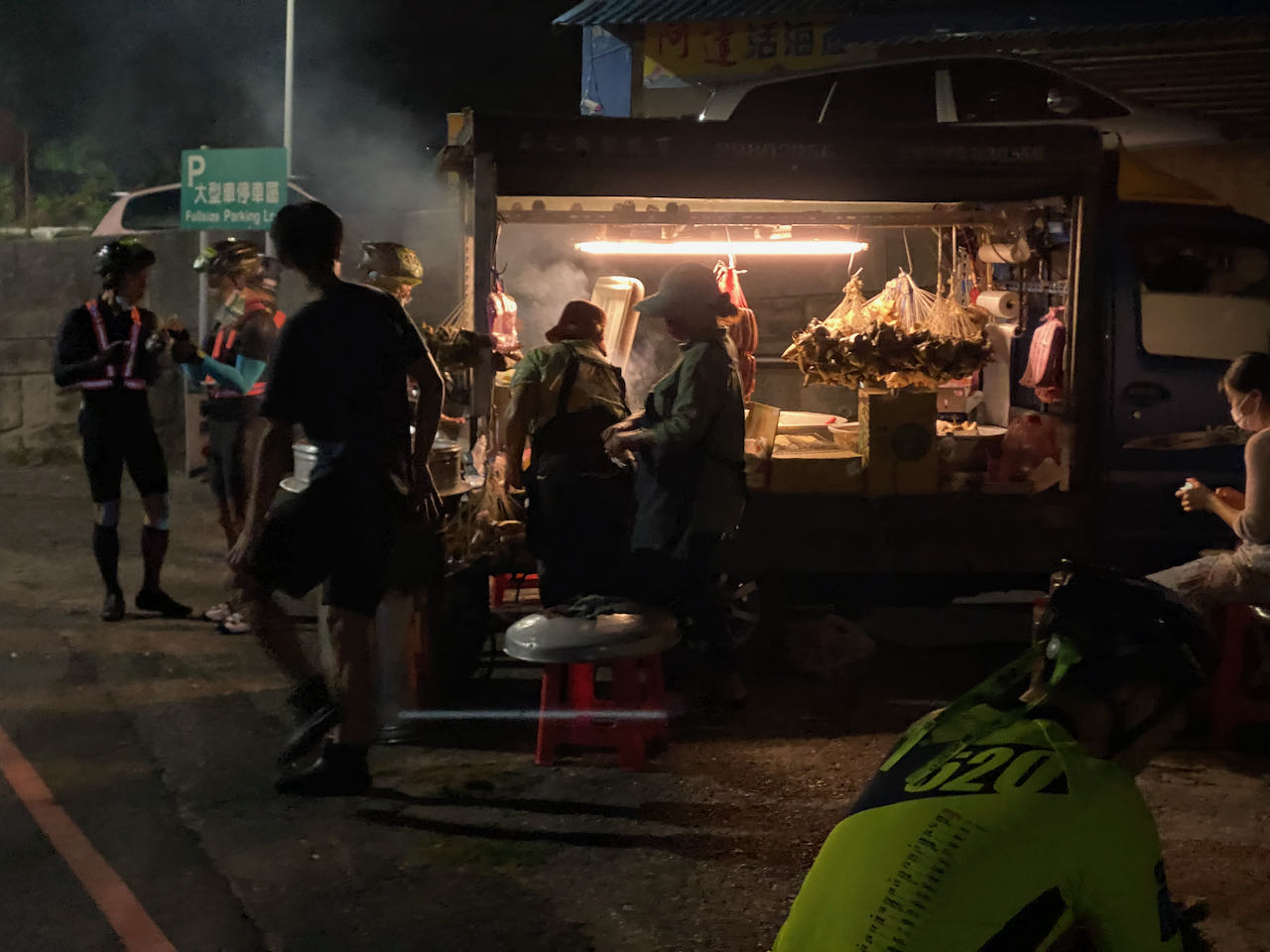
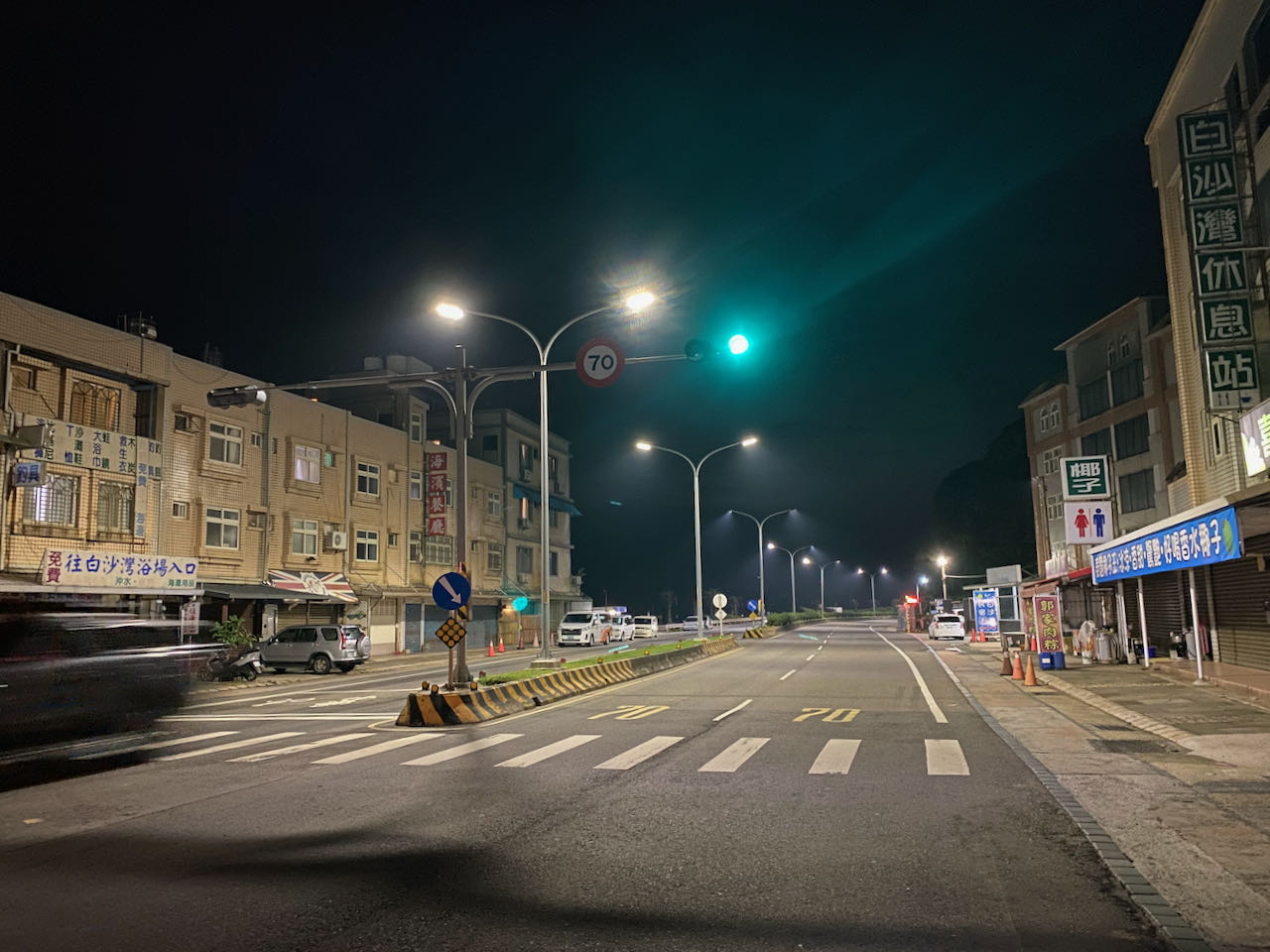
    On Friday morning, I took the MRT to Hongshulin Station and cycled 20 km to Baishawan where only three businesses were open: a pub, a grocery store and a food stall selling sticky rice dumplings and escargots. They only exist because of those visitors to the beach during summer. The atmosphere is completely different in November. I felt so lonely and regretted that I had only a simple meal from 7-eleven in Hongshulin. I should have treated myself to a decent one before getting to this small settlement. 

    Poor Choice of Hotel

    I checked into a small hotel I booked a couple weeks ago. It was clean with a good view. But the mattress was too soft for me. There was no support at all and it left my body in a strange posture. I missed my own bed already. I took a shower and had a beer with some escargots and two sticky rice dumplings for “dinner”. Around 4:00 pm, I was ready to go to bed. I estimated that I would have had 6 hours of sleep before my alarm went off at 10:00 pm. But I was woken up by the arrival of a group of cyclists who checked in around 6:00 pm. Soundproofing of that building was so poor that whenever the elevator moved, there was a squeal followed by a knocking sound when it stopped, which made it impossible for me to fall back to sleep. Though being frustrated and angry, I forced myself to lay flat and keep my eyes shut and wait for the time to pass. It’s going to be a long day. Gotta conserve every drop of energy. I learnt, afterwards, that some would even take sleeping pills but I wouldn’t go that far.

    9:50 pm, I could not do it any more. I jumped out of bed and ate 2 pieces of bread to top up the fuel in my body, also hoping to trigger some bowel movement soon enough so that it would save me the trouble of looking for toilets during the event.

    Takeaways: I could have booked a better hotel where I had stayed years ago. But somehow that hotel had a lower priority on GoogleMaps so that it didn’t show up when I was searching for accommodation in the area. The map even showed that the hotel was closed after I explicitly searched for it. That’s why I ended up experimenting with a new one. But I saw other cyclists heading into it that day so it was probably still in business. Maybe the hotel did not own or update their Google Business Profile actively. So, it’s always a good practice to make a phone call to make sure.

    Small homestays/hotels with less rooms should be better choices as there won’t be large groups of travellers making lots of noises. More homestays/hotels are available in Sanzhi District äž‰èŠć€ which is around 6 km to 8 km away from the starting point. 

    Starting

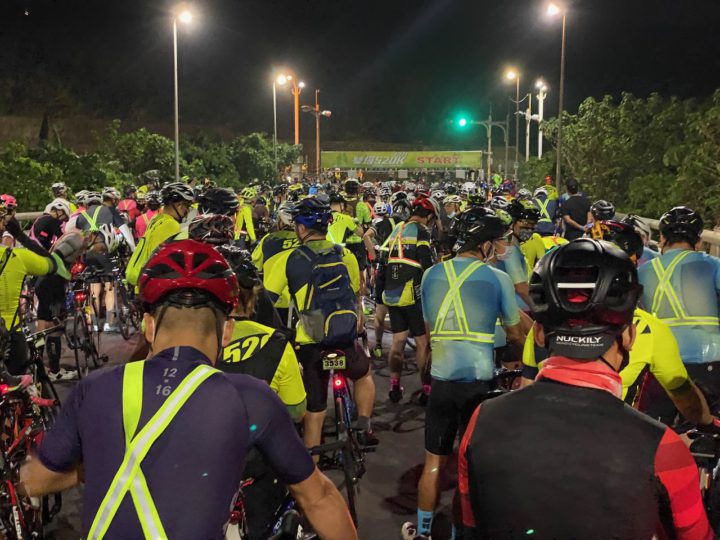
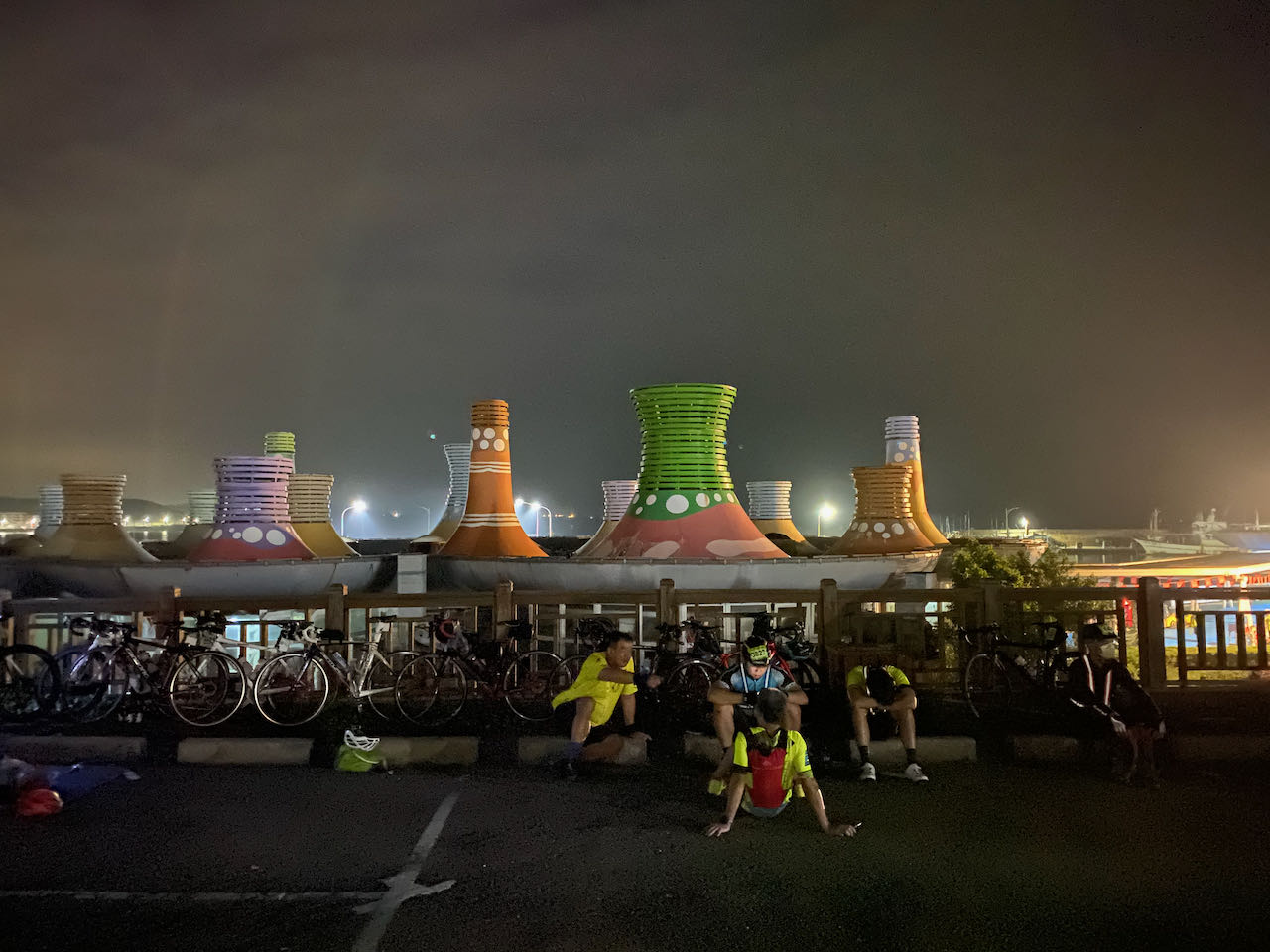
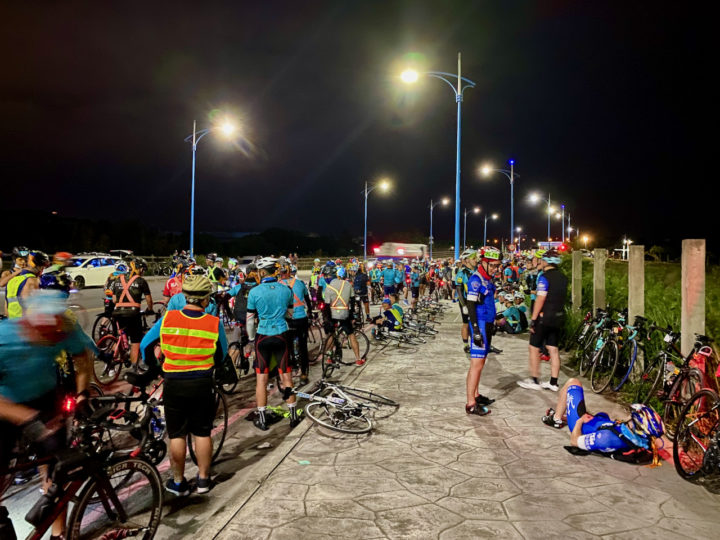
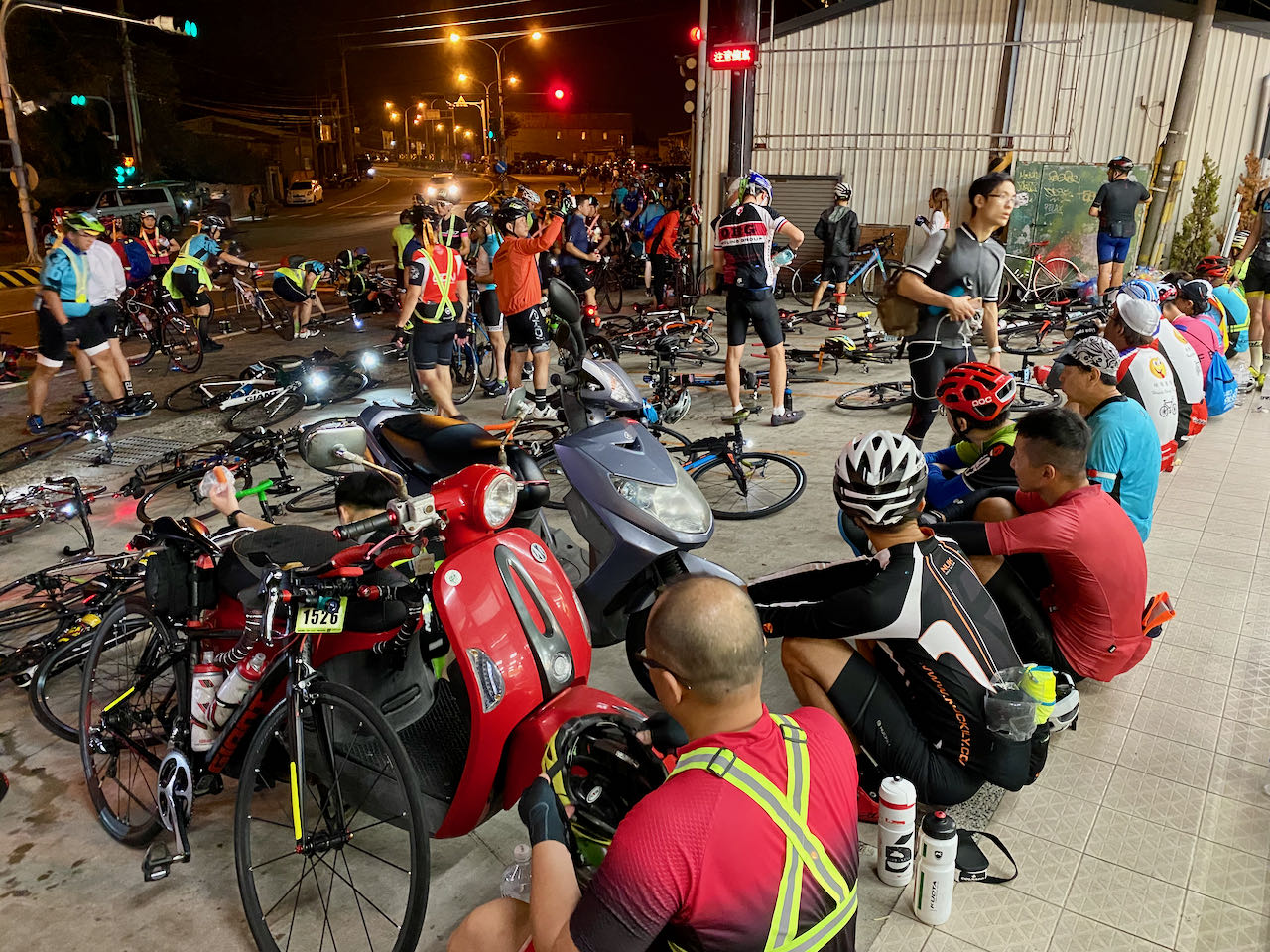
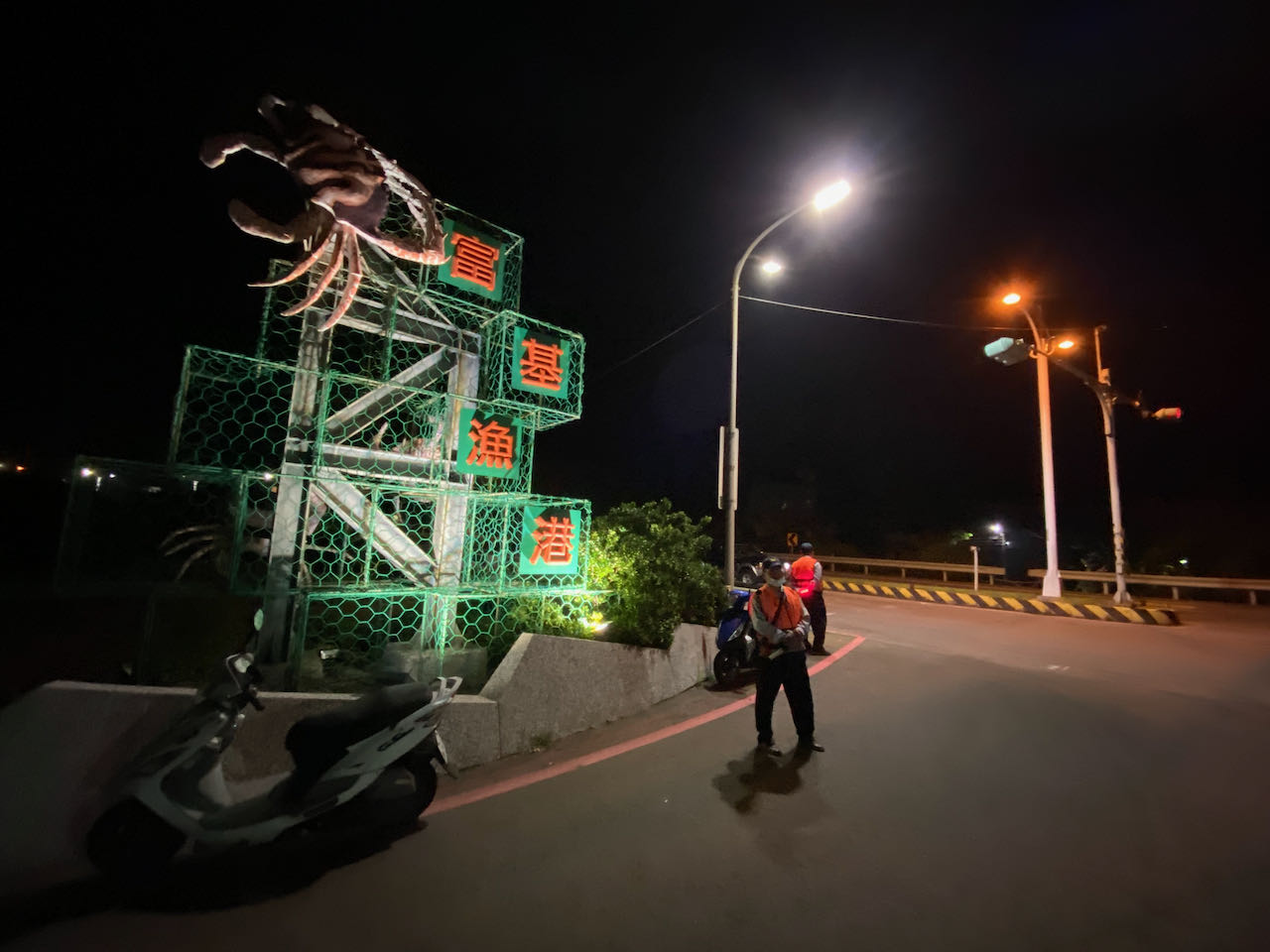
    It only took less than 5 minutes to cycle to Fuguijiao. There was a food truck selling sausages and sticky rice dumplings, one more chance to load up more fuel. At 22:30, there were already lots of participants waiting, most of them sitting in the big car park with their bikes. The big public toilet in the seafood market was open to the participants. No more administrative work required. We only needed to sign in by cycling through the starting gate with our number stickers on our helmets. It took a minute to deposit my backpack. 

    There were more than 1500 participants queueing up behind the starting gate. Getting bored waiting, I chatted up a guy in his fifties who was also doing the challenge alone. Turned out it was his first time, too. Not even had he done the Taipei to Kaohsiung in One Day Challenge before. He finished work that day, asked his daughter to drive and send him to Fuguijiao, took a brief rest and had dinner, then here he was. 

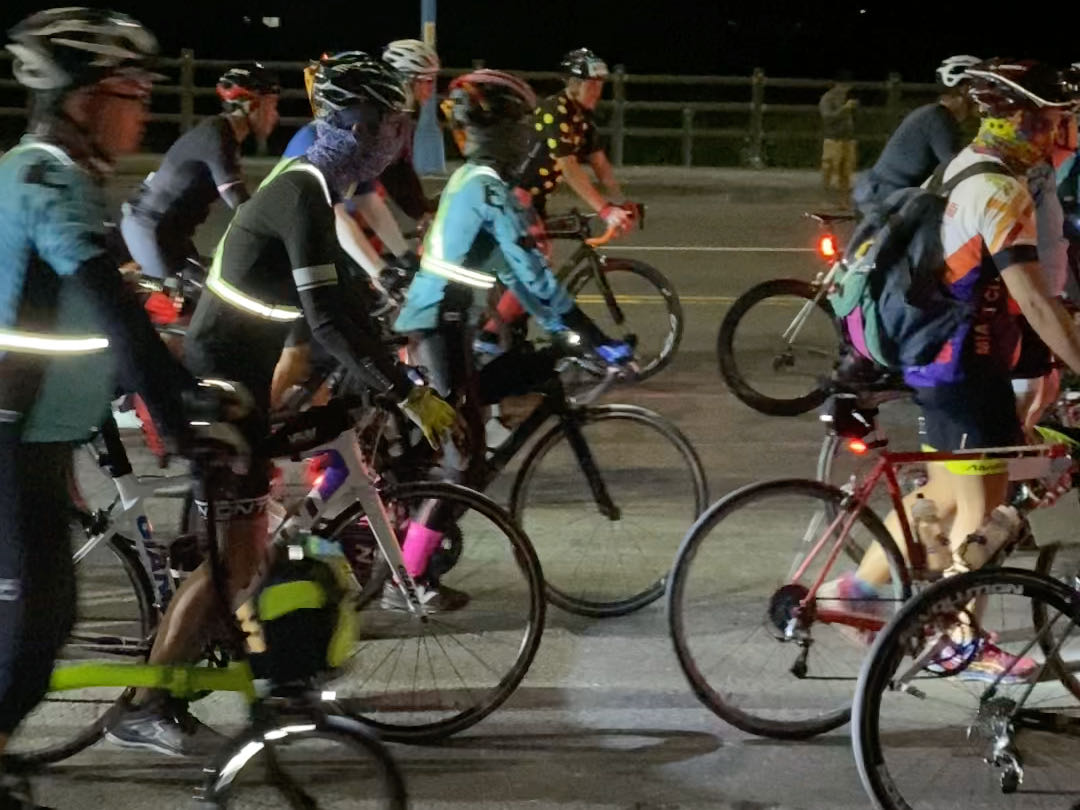
    The event started at 0:00 sharp. I saw the peloton unzipping itself and feeding through the starting gate. When it was my turn, it was more than a minute later. It was rather packed and we occupied a whole lane of the road. 

    We were supposed to follow the traffic lights. But there was really no good reason to stop for the light at those small junctions at a time like this. So, everyone just proceeded after making sure it was safe to go. At some important junctions, there were traffic controllers to guide the participants. 

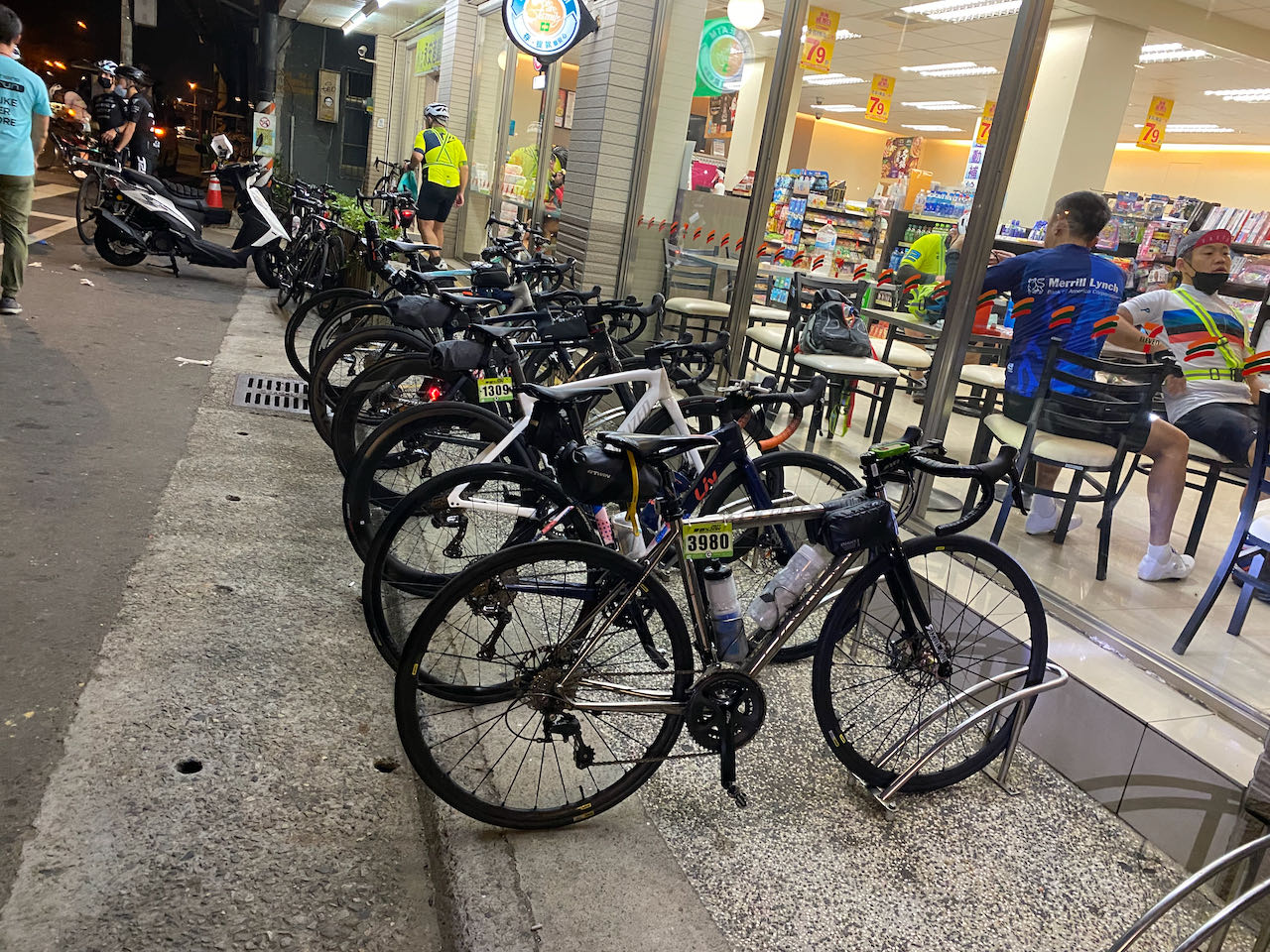
    After passing Guandu bridge (27km), the peloton stretched much thinner and I was able to cycle at my own pace. I stopped to buy a bottle of water at the first convenience store after Guandu bridge. A couple passing by were surprised to see so many bikes in the small hours and asked me where we were going. I proudly said “Eluanbi Lighthouse” and then moved on, probably leaving them even more surprised/confused. 

    The wind was not particularly favourable to us but it was a nice ride on the west coast. In less than 3 hours, I had covered 85km and reached my first supply stop at Yongan Fishing Harbour. There were big boxes of energy gels stacked up in the convenience store. I ate two onigiris and one pack of energy gels, maybe a bit too much and too quickly. My stomach gave me a warning nudge with a reflex, almost creating a reflux. OK ok. Next time, I would be gentler.

    After taking a break and refueled, I was feeling refreshed and energized. I found myself overtaking a fleet slowly. But I soon realized the leader was cycling at a very steady pace, so I decided to tag along for drafting. Their pace was just right for me! For courtesy, I did not follow them too closely, leaving more than one bike’s length in front of me. But it was such a wonderful 20km ride. At the first official checkpoint in Hsinchu (107km), they stopped and I carried on. Then I saw them in front of me again as they had overtaken me when I was looking for a toilet. How lucky I was! I tagged along with the group again.

    I made it to my 3rd supply stop (148km) in Baishatun at 5:20 a.m., more than 1.5 hours earlier than planned. The group carried on and I stopped for a break. To be honest, I had almost worn myself out trying to keep up with them. I checked my iPhone and found that the battery was still 70% full. I had put it into Low Power Mode and only used it to play some music. The energy level of my first light also looked good. The sun would be rising soon. I was glad that I had decided not to bring two power banks with me.

    I set a timer for 15 minutes and sat on the ground for a break with my eyes closed. Then, I was ready to go again.

    A punctured tyre, and more

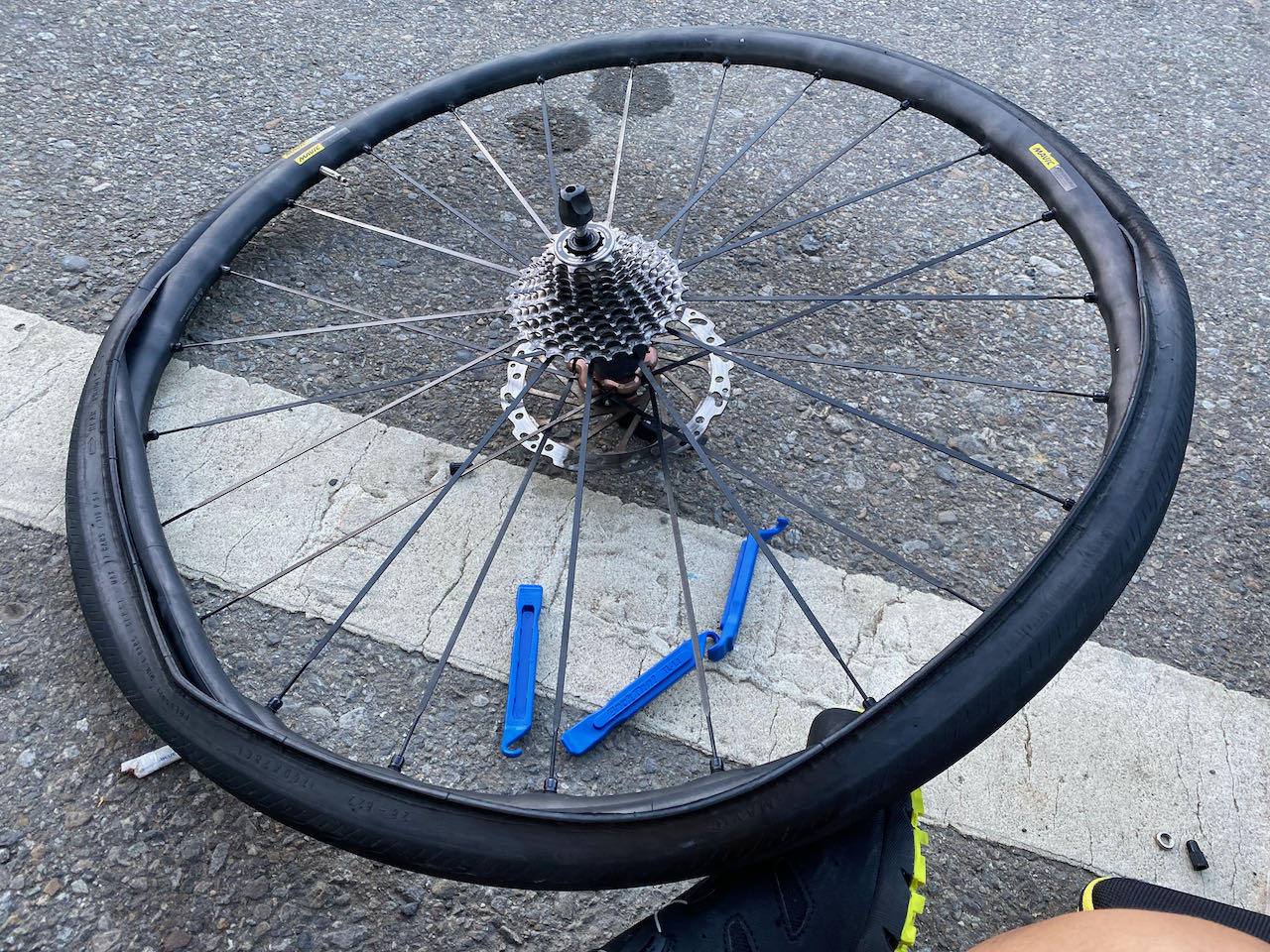
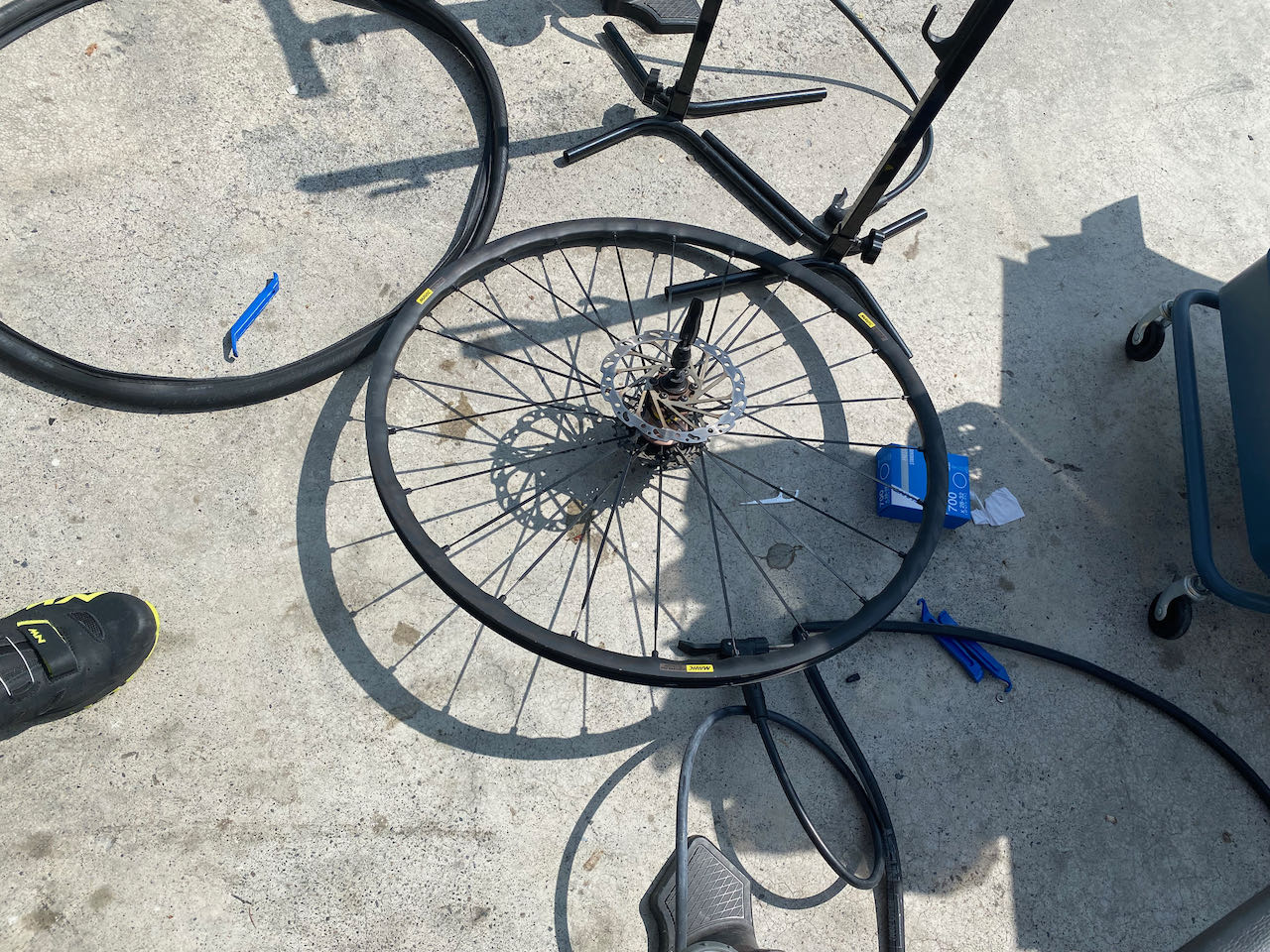
    At 6:15 a.m. I bumped into a pothole with very sharp edges. My rear wheel was flat. It must be a pinch cut. But no worries. I made good progress so far and I had a spare tire and a hand pump for occasions like this. Staying cool, I took a bite of some snacks and used 14 minutes to replace the tyre (I took pictures to keep time record). I did not want to spend too much time and effort on pumping. So, I started cycling after putting a decent amount of air into the tire. My average speed was well above the required 22 km/h for finishing the challenge in 24 hours and I wanted to keep it that way.

    So, I borrowed a floor pump from a supporting car to make sure the tyre pressure was high enough. It was only 60 PSI. In order to make sure the pinch flat wouldn’t happen again, I pumped it up to 100 PSI, 20 higher than what I usually use.

    As I entered the west fringe of Taichung city, there were lots of traffic lights with very long countdowns. My average speed was dropping to a low 23km/h. Then, the rear tire went flat again at 8:15 a.m. Shit! Did I do anything wrong when I fixed the tyre? I still had inner tube patches and I could fix a puncture. But if it was a pinch cut again, those wouldn’t work. Besides, it would add 15 minutes or more to patch the tyre. So I tried my luck by calling up a friend who was providing support to a participating team. He had told me he could help if needed as long as it did not interfere with his operation. He happened to be only 2km away from me and he would give me two more spare tyres. 
    We agreed to meet midway while he cycled towards me and I walked my bike towards him. Some truck driver saw me and offered to bring me to a nearby support station but I politely declined, believing I would be seeing my friend soon. But then we realized we were both heading in the wrong direction and away from each other! My rear tyre started to come off from the rim as it was rolling on the surface full of dirt. It got more and more difficult to push my bike forward. That’s when a man on a scooter with all kinds of bicycle supplies and tools saw me and stopped to ask about my problem. He was there to provide support to his friends. He gave me two inner tubes and ended up staying with me to fix the tyre. He refused to take any money from me. 

    It was a puncture that caused the flat. We found the sharp object and removed it from the tyre. It was pure bad luck, not that I had done it wrongly the previous time.

    Try to catch up, but…

    I had lost count of how much time it took us to fix this problem. I realised that my average speed had dropped to around 21km/h. I tried to make up for the time lost but my lower back got so stiff just like flying with economy class on a long haul flight. I needed to stop to take more breaks. It seldom happened to me when I was on this bike. 

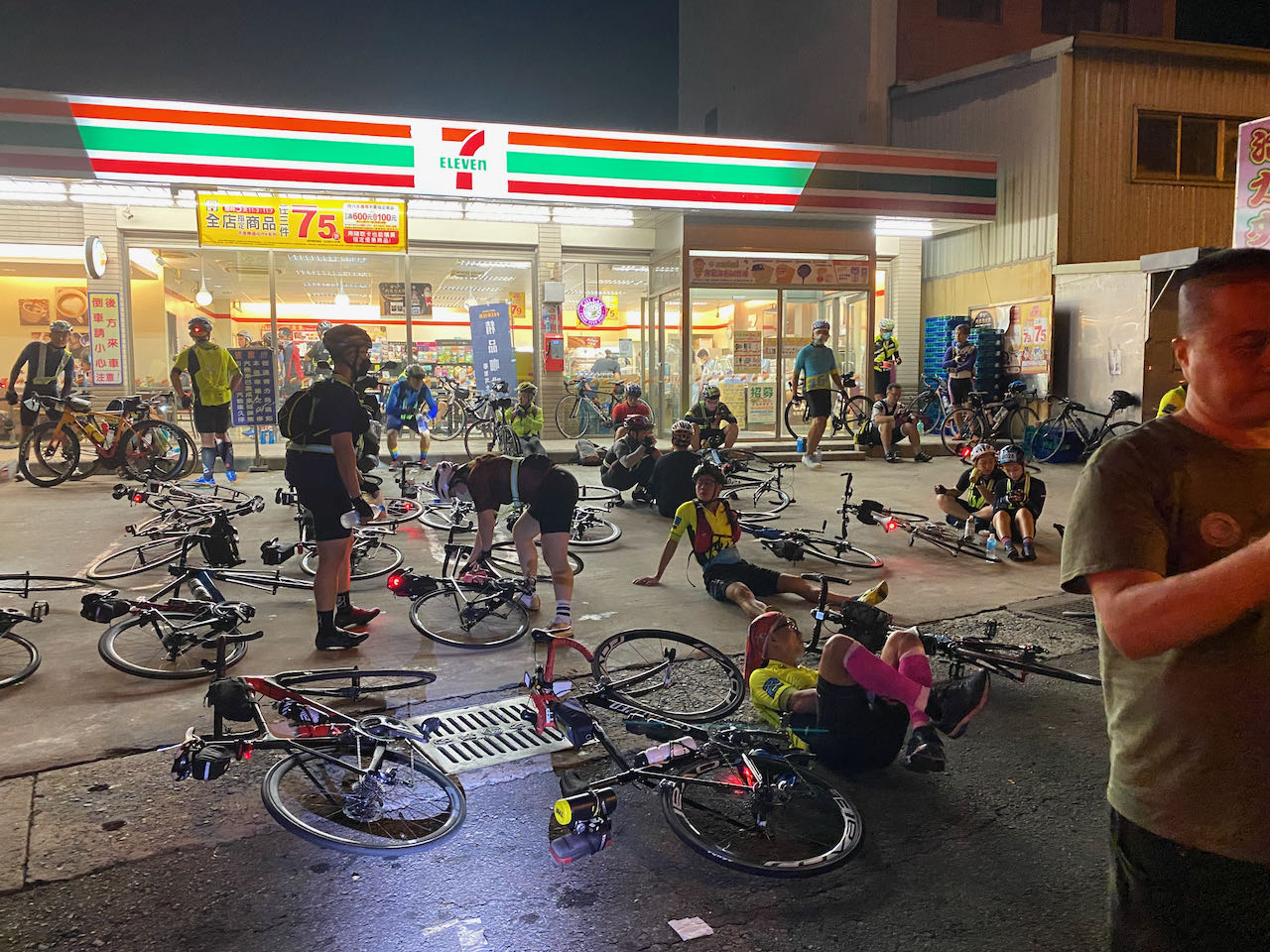
    I also found that my favourite energy gels were sold out in convenience stores. Only chocolates, cakes and breads were available. I stopped at a busy one for supplies. There were so many bikes that I had to lay mine down on the roadside. Just when I was ready to pick it up and continue my ride, I heard gas leaking. No way! It’s my bike again! The rear went leaking again after 45km.

    Well well well, no worries. The situation was far better than the previous time. I had two spare inner tubes (one from the man on scooter and one from my friend). Also there was a pop-up stall selling bike supplies and tools right beside the convenience store, from which I bought another inner tube because it was sold in a box. It gave me a bit more faith. The staff of that stall also let me use their floor pumps. Should it be necessary, I could even get new tyres from them. At this point, mine looked suspicious.

    I removed the inner tube and inspected it. The wheel was warm under the sun. The inner tube had a small hole facing the rim. It was neither a puncture nor a pinch. I concluded that it’s not my tyre that had caused the leaking. I decided to keep using it, partly as a proof of my reasoning capability and my sanity under this woeful situation. I was not defeated yet.

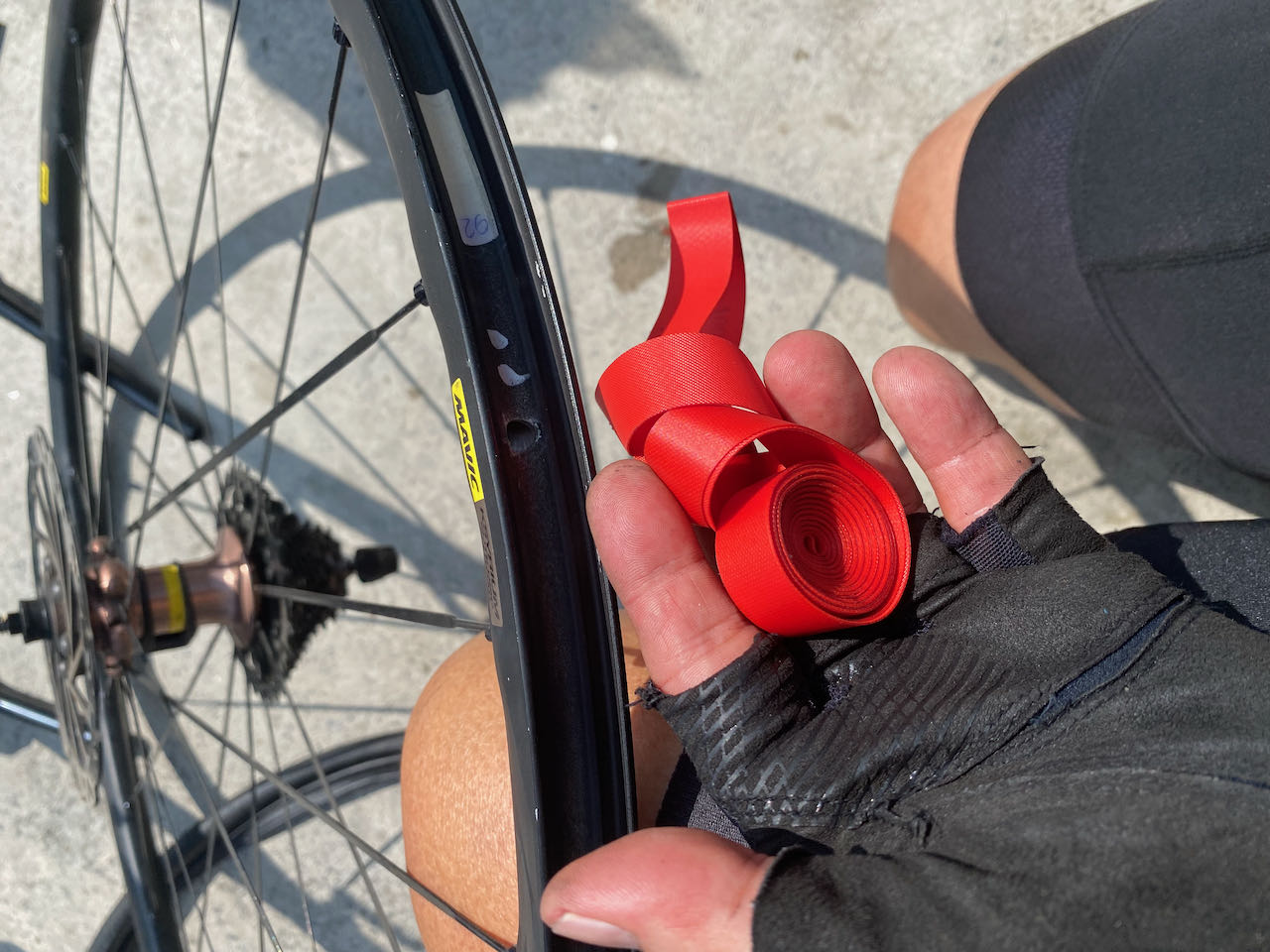
    From my past experience, when we have a hole like this, it means the rim tape is getting too old. But there was no rim stripe nor spoke hole on this wheel. I thought there must be something wrong with the rim surface and I had a rim stripe with me. So, I put it on the rim and installed the inner-tube-sold-in-box. I pumped it to slightly over 100psi. Worked just fine. 

     (When I told Chengnon about this afterwards, he said it was the tube that was defective.)

    When I was ready to go again, I checked my Garmin and found my average speed dropped to 19km/h, well below my target speed of 21.25km/h in order to reach Eluanbi Lighthouse by 0:00. My legs were still working fine although they felt weaker. My feet had swelled up but they were okay after I released the buckle to the extent that my feet could slip out from the shoes easily. I was glad I had bought a pair of oversized shoes. 

    Then, I realized I could ride at a speed of 30km/h more easily. There were dry leaves rolling alongside me on the road. Yes! The wind had changed. Now it was in my favour. My average speed climbed slowly to 19.4km/h. But the stiffness on my lower back had evolved into unbearable pain. I found myself putting more weight on my hands and my shoulders were tense. I had to stop more frequently to stretch. Ah
 the tyre pressure was probably too high as it’s 25% higher than usual. It might have absorbed less shaking and rattling, which had been putting pressure on my spine since the first puncture. But I was hesitant to release some air because I did not have a gauge and I did not want any more flat tire.

    I had covered 300km. It was clear that I wouldn’t be able to finish within 24 hours. A part of me missed my comfortable bed back home while the other part was trying to convince myself to keep going. The game was still on. I was making progress despite all those setbacks. It would soon be 400km and I would be counting down from the last 100km to reach the finish line. I took some painkillers for my lower back pain, though not quite helpful. I decided to treat myself to a longer break with some real food when I reached Tainan city. 

    Time to decide

    The route was flat, the road surface was nice and the wind was in my direction. I managed to overtake some other participants. My cadence sensor went offline and the music from my earphones stopped. When I reached Tainan city centre, it was totally dark and the effect of lack of sleep kicked in. Or perhaps the effect of the painkillers too. My mind started to go blank from time to time. I bought instant noodles and coffee at the first 7-Eleven I saw. And then I found my iPhone was off. The battery had drained much sooner than I expected. This was the last draw. Technically I did not need my iPhone to keep cycling. I had my Garmin for navigation. My first light was still showing no sign of low battery and the second light was untouched. There was still some juice in the powerbank. But my will power was hit hard by yet another unexpected situation. 

    I could still push myself forward. If I arrived at Eluanbi Lighthouse by 6:00 a.m. the next day, there would be a nice hotel room waiting for me.

    But then the pain on my lower back was getting excruciating. I would have to stop more frequently and rest longer. The time I stayed on the bike would get shorter. It would be harder and harder to estimate my arrival time. In case I arrived late, I was not quite sure where to collect the hotel room key. My backpack and bike bag would be shipped back to my home the next day. Without a bike bag, I would not be able to board the bus with my bike
 More importantly, beyond Kaohsiung, there would be no escape route and I would have to keep going until I reached Eluanbi Lighthouse or turned around. I was feeling a little bit dizzy and sleepy already. The risk of falling off the bike was not nonexistent. If only I had subscribed to my friend’s supporting team! I could have supporting vehicles waiting for me and bringing me to the hotel in case I exhausted myself before reaching the finishing line.

    The Tainan Train station was 15km from me. It was still open. I could cycle there, drop my bike at the luggage room for shipping back to Taipei, then board the next train to Tainan HSR station for a 2 hour ride home. The next exit option would be Kaohsiung. But I wasn’t sure if I could make it there before 8:00 pm when the luggage room closed for the day. So, I decided to retire from the challenge in Tainan City. By 10:00 pm, I was home for a good shower and hugs with my wife and kids.

    As to the guy I chatted up at the starting line, I happened to have his sticker number in one of my photos. The record showed that he finished in 22 hours 26 minutes. Bravo!

    Self Evaluation:

    The main reason why I could not continue with the challenge is my lower back pain. Here are some factors I think may have contributed to the problem.

    Wrong mattress. My lower back, shoulders and neck would get stiff after sleeping on a soft mattress. This is what I found in that small hotel I had stayed. It may not be a major issue in other circumstances, but for a day with more than 20 hours’ ride on a bike, the issue is bound to be magnified. 

    Tyre pressure. I had increased my tyre pressure quite significantly since the first pinch flat. A tyre with high pressure will transfer more rattle and shaking from the road surface to my body, my spine particularly in the case of a rear tire. In fact, right before big events, one should not experiment with new settings, including positions of the cleats or saddle.

    Lack of long distance training. I finished the Taipei to Kaohsiung Challenge in 2020 without any issues like this time. But I was using an Audax Hercules back then, which was made for long distance cycling. This year I was doing it on a bike with more aggressive geometry. I should have done at least one long distance training and observed the reaction of my body. All those pains and discomfort can be avoided with proper posture. You can refer to this post from Sheldonbrown.com for more details.

    Ineffective painkillers. And I suspected that they had also contributed to my dizziness when I was reaching Tainan.. 

    Unfamiliar route. I had not prepared for the last 100km from Kaohsiung to Kenting. I thought it was just another 100km along the route. But it turned out that this had undermined my confidence and willpower quite significantly especially during stress events.

    Lack of food varieties. I was planning to sustain myself by drinking energy gels because it’s easy to swallow and digest, so that I could spend less time on eating and more time on cycling. But this proved to be harder and less fun than I thought. I regarded the breaks more like an obligation than a chance to relax, both for my mind and muscles. This had backfired. It’s a long challenge. We should reward our mind and body from time to time. The taste of real food would definitely boost morale, even if it’s just a bowl of instant noodle.

    Lack of support. Being an introvert, I did enjoy cycling alone. But for an event like this, the importance of mutual support from teammates and the aids from supporting cars could not be overlooked. I believe my unfortunate experience in the Execution Section has made this clear. 

    So, that’s it. I hope you are going to enjoy the “One Day Two Towers” Challenge and finish it in time.

  • “Two Towers in One Day” Challenge – Useful Info and Experience Sharing (1)

    “Two Towers in One Day” Challenge – Useful Info and Experience Sharing (1)

    The “Two Towers in One Day” Challenge äž€æ—„é›™ćĄ” is another popular cycling event in Taiwan held early November each year. In this event, participants need to start cycling from the northern tip of the island of Taiwan to its southern tip to cover a total of 520km within 28 hours. Two lighthouses, Fuguijiao Lighthouse and Eluanbi Lighthouse, mark the starting point and finishing point respectively, hence the name “Two Towers in One Day”.

    Those who would like to try a less challenging one can instead sign up for the “Taipei to Kaohsiung in One Day” Challenge äž€æ—„ćŒ—é«˜, which will be held on the same day and cover 360km in 20 hours.

    After completing the “Taipei to Kaohsiung in One Day” Challenge in 2020, I decided to take up the “Two Towers in One Day” Challenge in 2021. Unfortunately I could not make it to the finish line this time. In this post is some experience I would like to share. Please refer to this post for more information about Support, Rules and Administration.

    My Plan and Strategy

    28 hours is a very long stretch of time and I doubt I would be able to stay awake and keep cycling. So I had aimed to finish it in 24 hours. I believed I would be able to stay sharp and focused for that long if I had enough sleep beforehand. With this target in mind, I would need to achieve an overall average speed of 21.66km/h. To allow 4 hours for breaks, my average moving speed would need to be around 26km/h. This looked reasonable, given that there should be prevailing wind coming from the north east in the winter that would give us a push.

    I used to mistake the impact of lack of fuel as tiredness when my legs went soft after cycling for around 2 hours. Then I learned from my experience last year during the “Taipei to Kaohsiung” Challenge that our legs never get tired and all I need is fuel. As long as we keep fueling our muscles by taking in carbohydrates, our legs will keep pedalling. Along the route of the “Two Towers” Challenge, there are numerous convenience stores where we can find all kinds of carbohydrates, including my favourite energy gels. Their locations are marked on the GoogleMaps in the next section of this post. Since supplies are very easy to get, I decided not to join any teams nor hire any supporting vehicles.

    The Challenge starts at 00:00 Saturday (midnight). I took a day-off on Friday, booked a hotel around 2km away from the starting point with the hope to get as much sleep as possible right before the event. Participants could drop their night pack with the organizer at the starting point and it would be sent to the finishing line for collection when the participants arrive. The organizer could also help book a hotel room right next to the finish line if needed. This is what I had opted for. I could take a good rest when I finished. For the return trip, there are coaches bound for Kaohsiung HSR station. I could bag my bike, hop on one of the coaches and then take the HSR back to Taipei.

    Contingency Plan: In case I needed to retire early from the Challenge, there are numerous train stations along the route. Some train stations would take my bike and send it back to Taipei for me to collect later. I could then travel like an ordinary passenger (though with filthy cycling outfits). There are also some coach stops. The tricky part is between Kaohsiung and Kenting. The population is sparser further down south and there won’t be much public transportation available in between. 

    The Route

    The organizer suggests a route (shown in blue on Google Maps) but we are not obliged to use it. We just need to pass the four checkpoints and reach the destination within respective time limits. I had done some research and modified the route (shown in green on Google Maps) a little bit to avoid a climb (100 metres of elevation) at Houlong Township (ćŸŒéŸéŽź) and the traffic lights in Budai Township (ćžƒèą‹éŽź) and Kaohsiung. The segment in Taichung also has quite a few long traffic lights but I have yet to see any tips on how to bypass it.

    The checkpoints and those convenience stores close to the route are marked on this map for your easy reference.

    Equipments and Accessories

    Bike

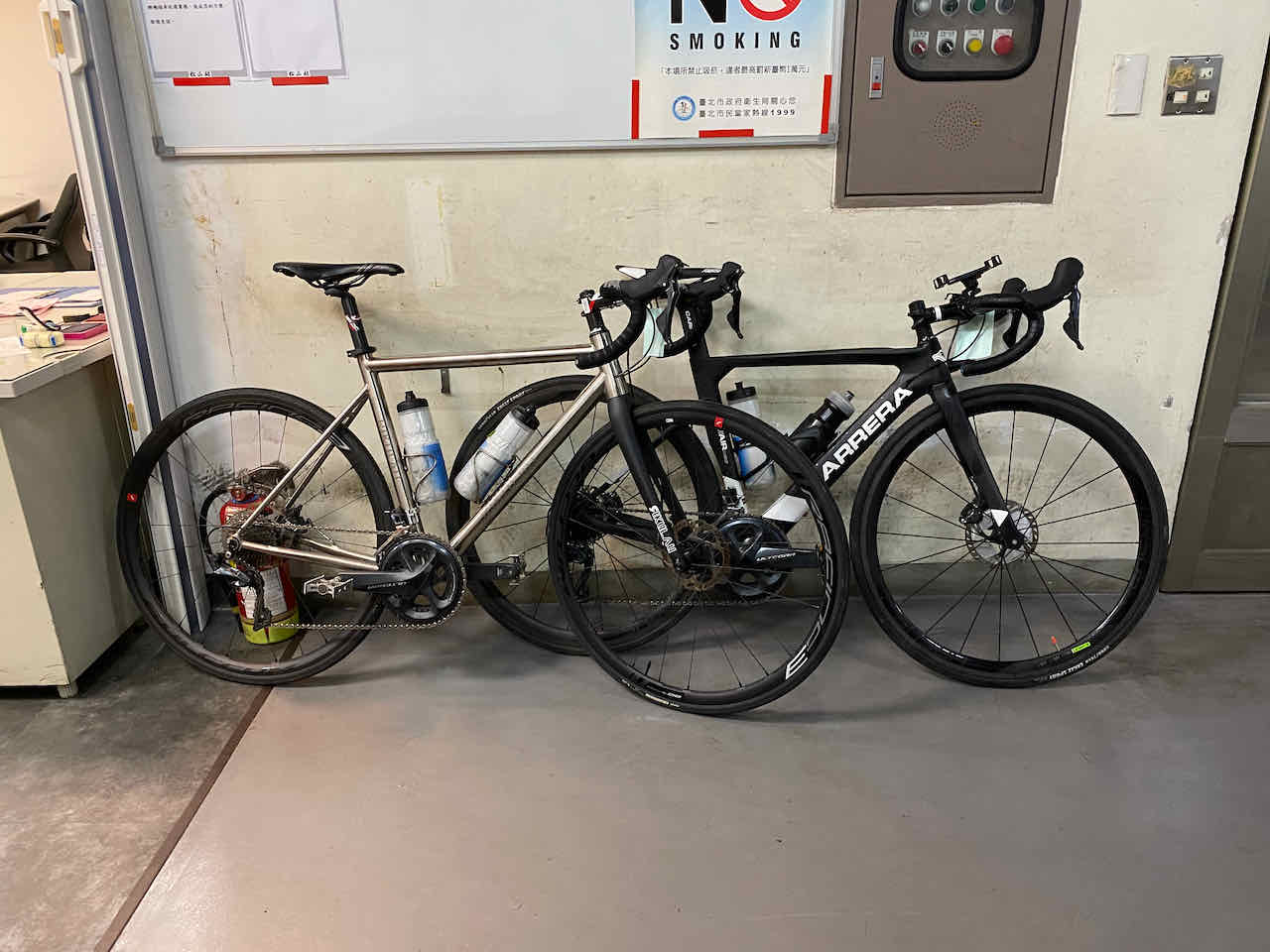
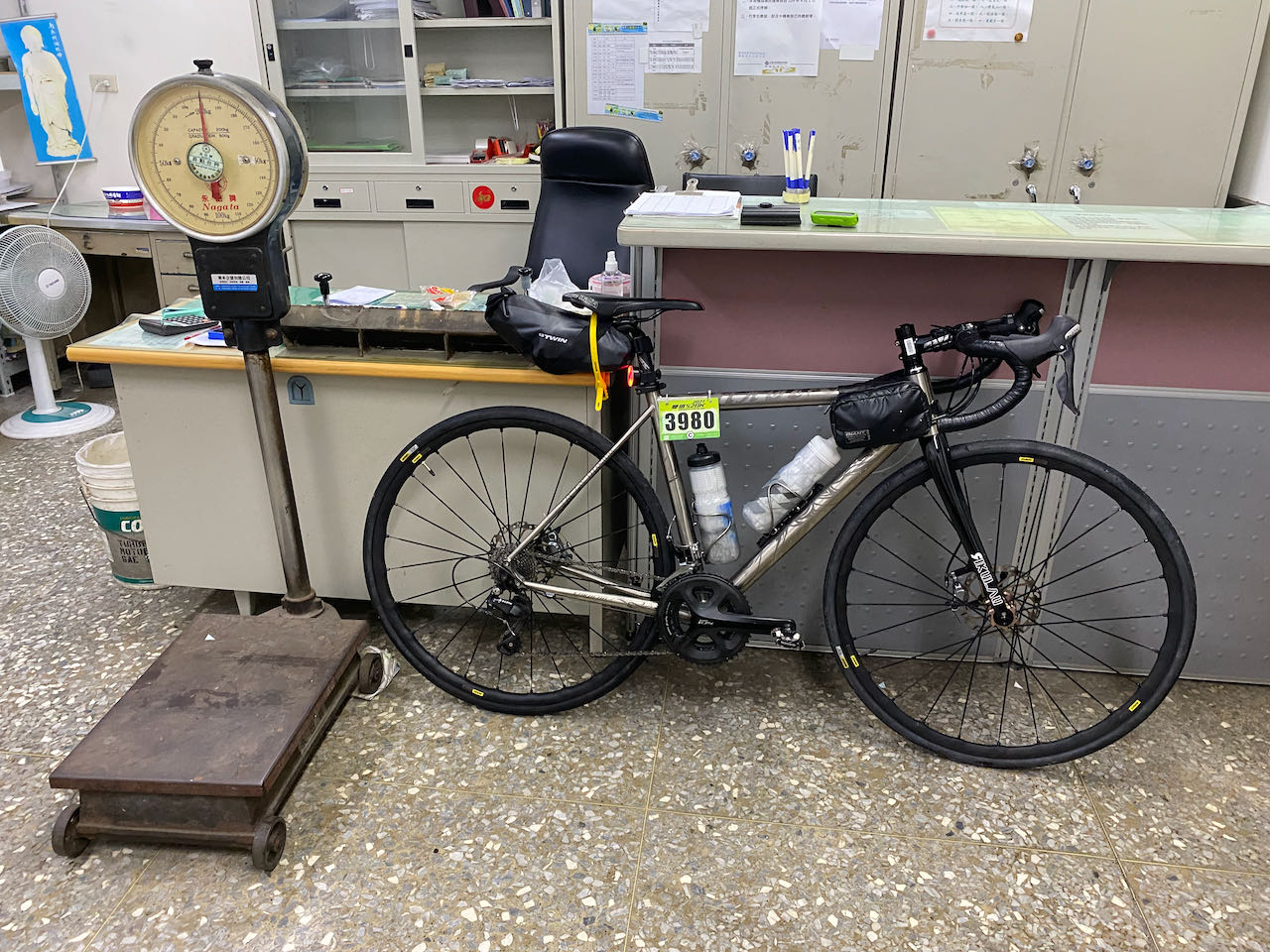
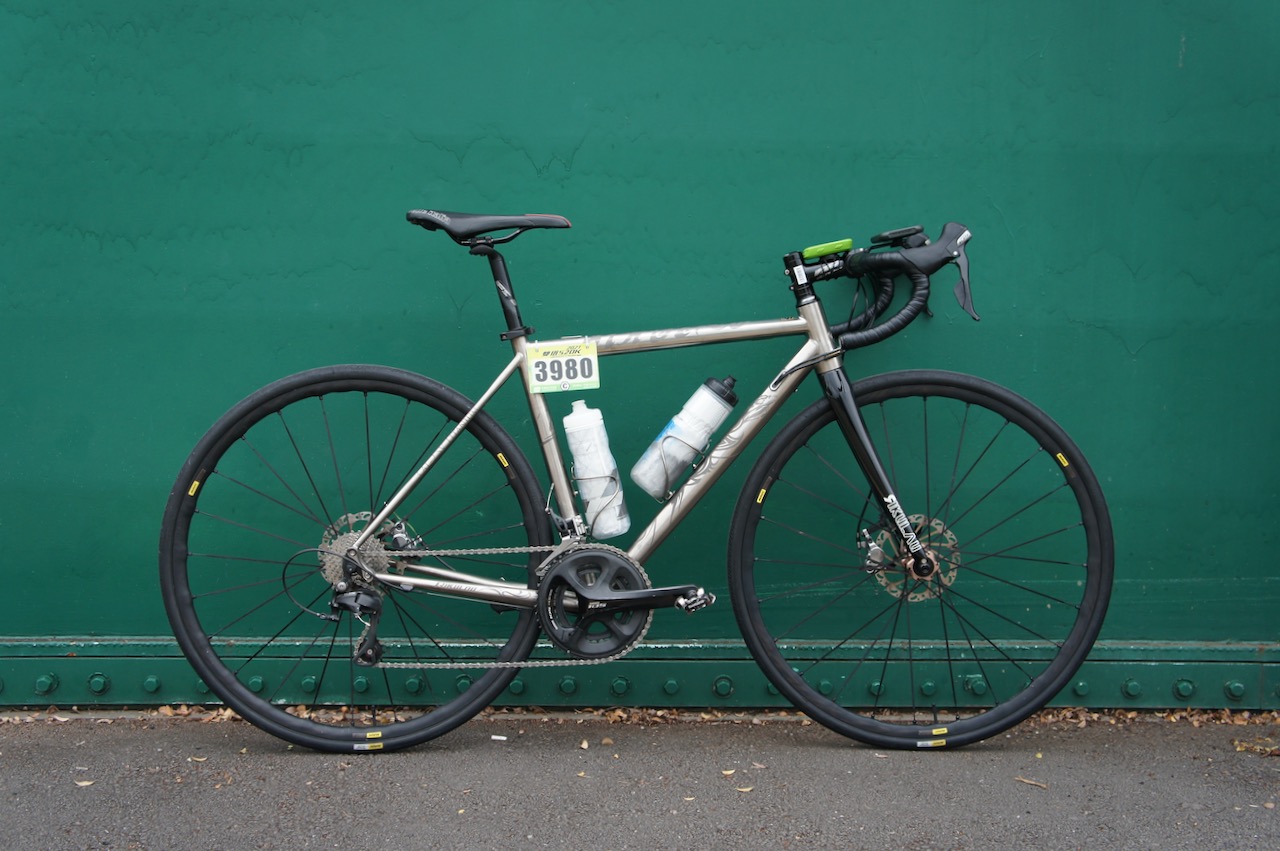
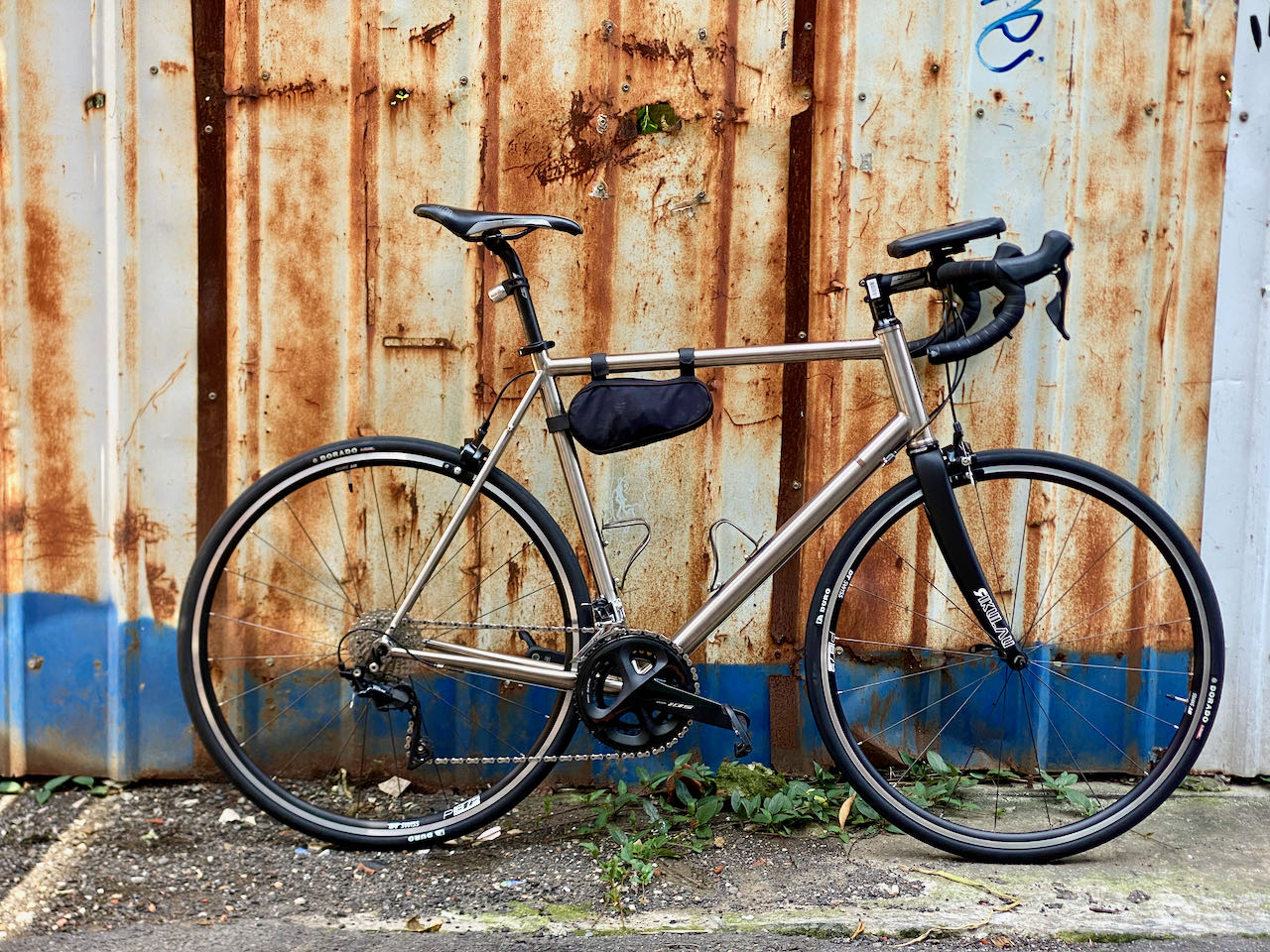
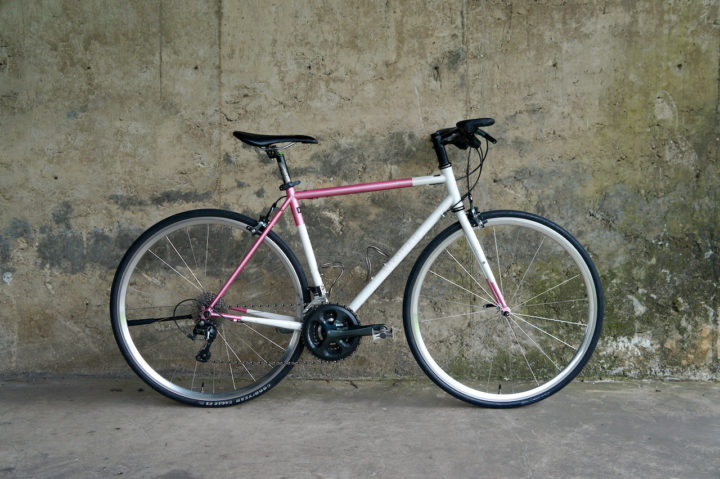
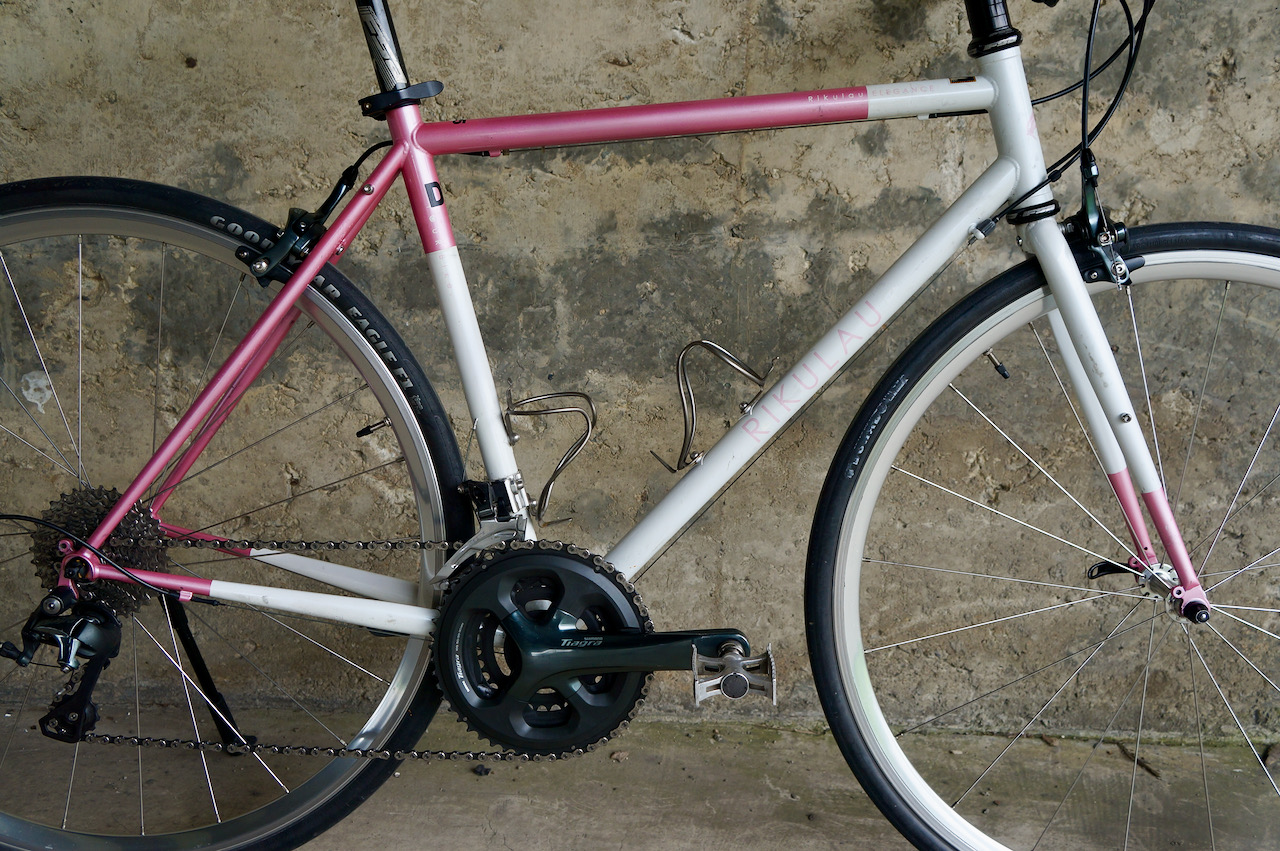
    I used a Rikulau Master 325Ti with a 11-28T, 11-speed cassette and a compact chainring (50/34T). With a narrower range of teeth numbers (instead of 11-32/34T), the 11 steps between the gears are smaller, which is easier to get an optimal gear ratio for my tired muscles to work with approaching the end of the Challenge. 

    The frame is made of Titanium alloy with 3% of Aluminum and 2.5% of Vanadium, hence the name 325Ti. Although 325Ti is considered to be less stiff than a 64Ti (6% Aluminum and 4% Vanadium), I was surprised to find it much stiffer than I had expected on my first ride. It is so light and stiff that the 28-tooth cog is enough to handle all of the climbing I usually do. I have no problem climbing with my friends who use big cogs with 32 or 34 teeth on their cassettes. This bike has boosted my confidence.

    A short chat with Chengnon Hsu, co-founder of Rikulau, gave me a better idea about how they achieved such an efficient bike. The titanium tubes were shaped by hydroforming to make them structurally stiff, strong and lightweight. Instead of being built with a simple round top tube and down tube, the Master 325Ti was built with round hexagonal tubes swaged to match the size and shape of the head tube and the bottom bracket shell for broader structural support. 

    Lights

    Lights are vitally important. There are segments with no street lamps at all and there are about 18 hours in which we need to cycle in the dark. One of my friends lent me a powerful one with 1600 lumen. I did not need such a bright light but it comes with a big big battery, which proved to be a huge benefit. During the event, I only set it to half its brightness and it went on for 6 straight hours, showing no signs of exhaustion. It could probably last through the second night if I had continued with the Challenge. 

    Pedals

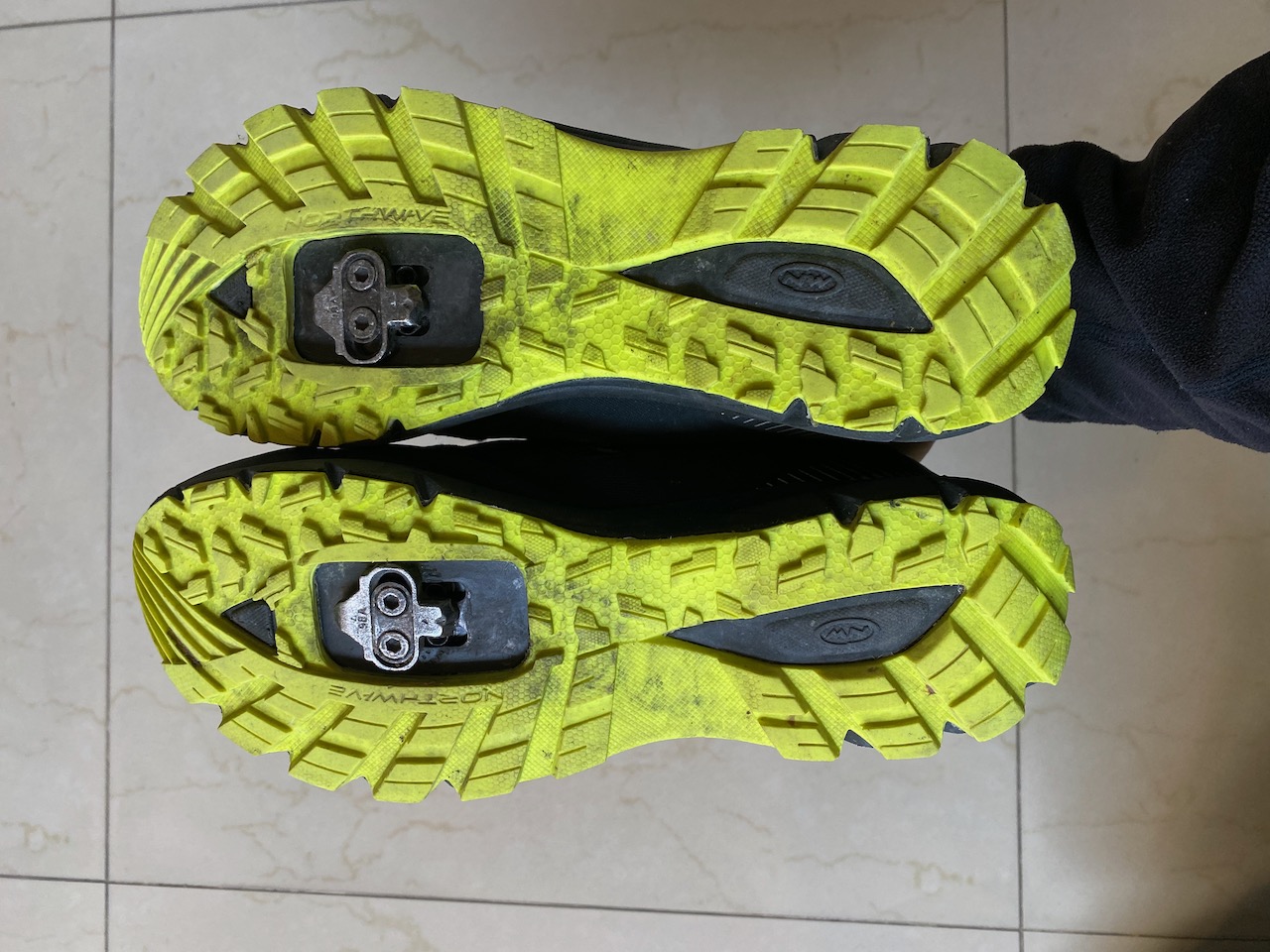
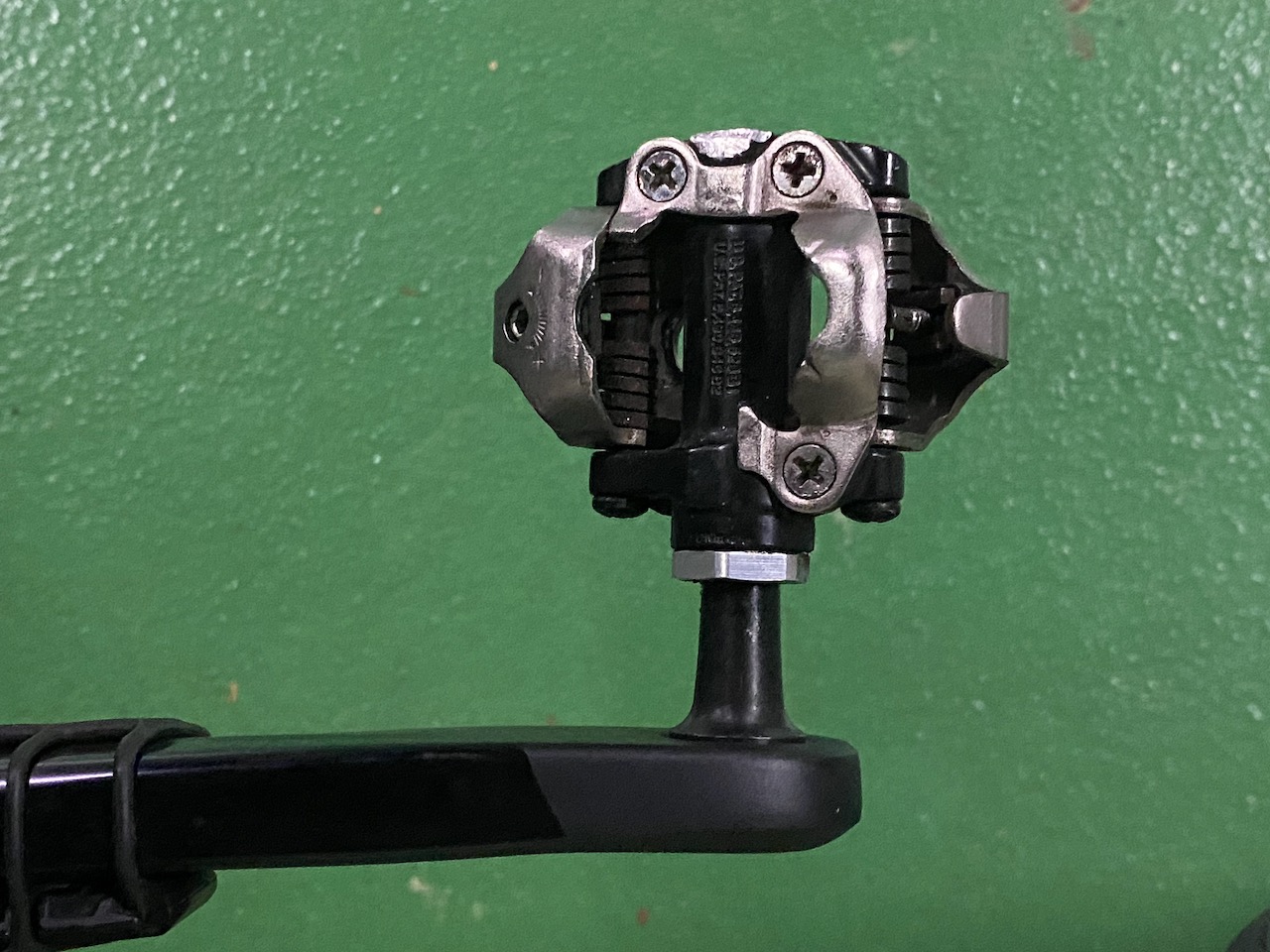
    I used Shimano SPD pedals (generally used on mountain bikes) because the cleats for these pedals are recessed into the shoe soles so that I can walk in them normally. I did not want to pack an extra pair of shoes for the return trip. Also, in case I could not ride on my bike, I could still walk.

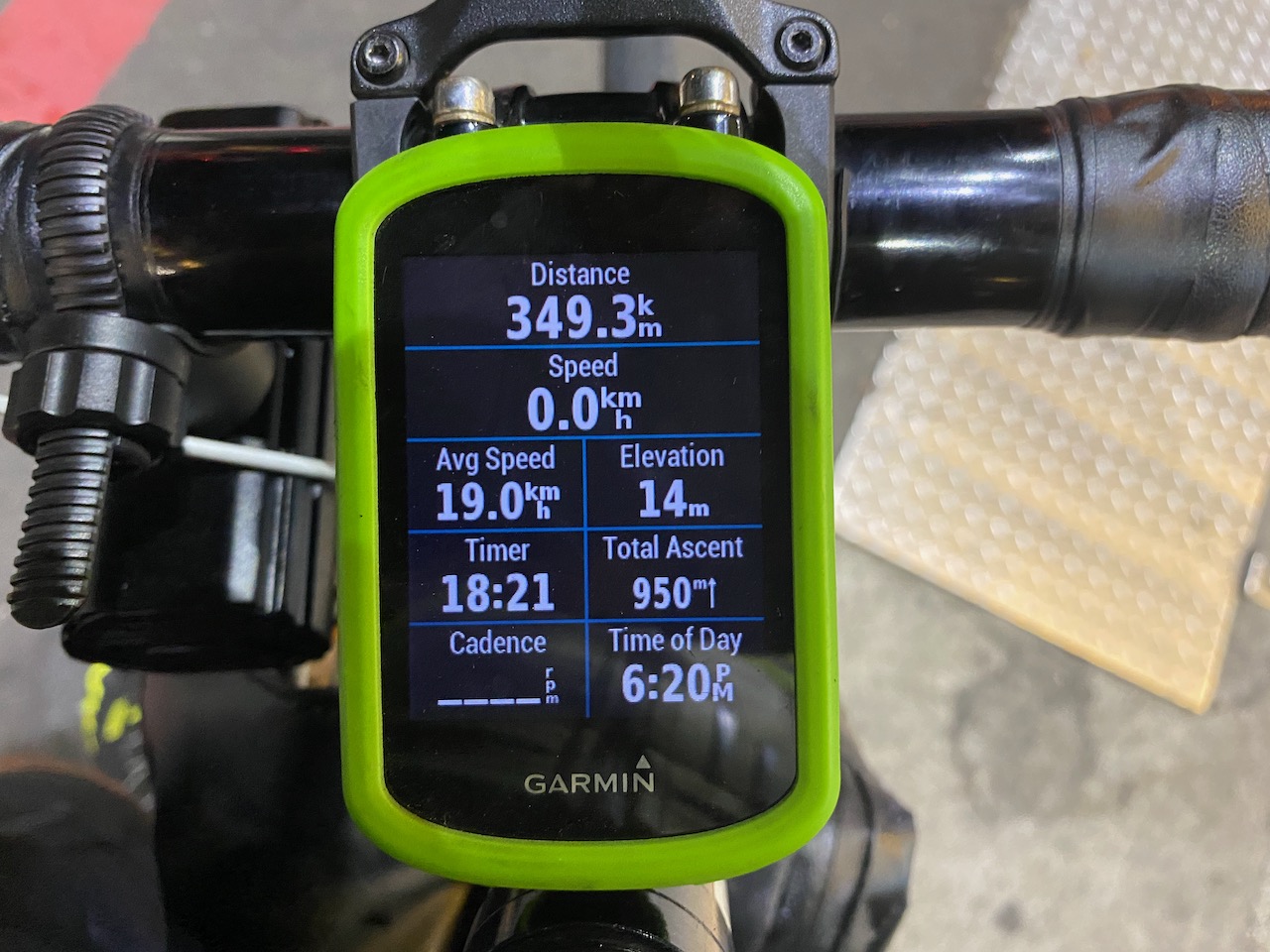
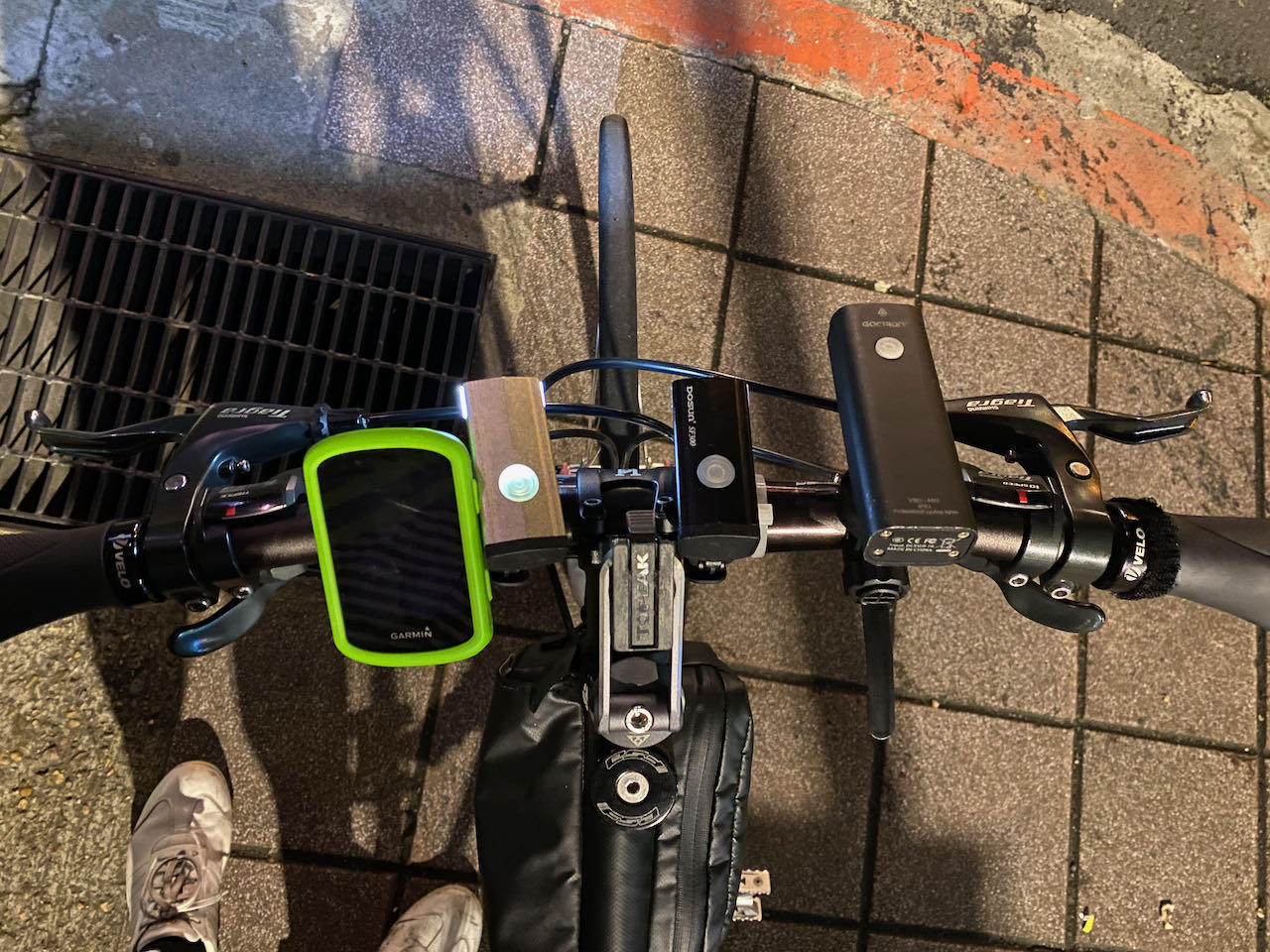
    The route is rather straightforward but it would be a waste of time and effort if I miss a turn. So I loaded the route into my Garmin Edge 530. Smartphones could do the job but they consume much more power and are vulnerable to rain and rattles.

    Water Proofing

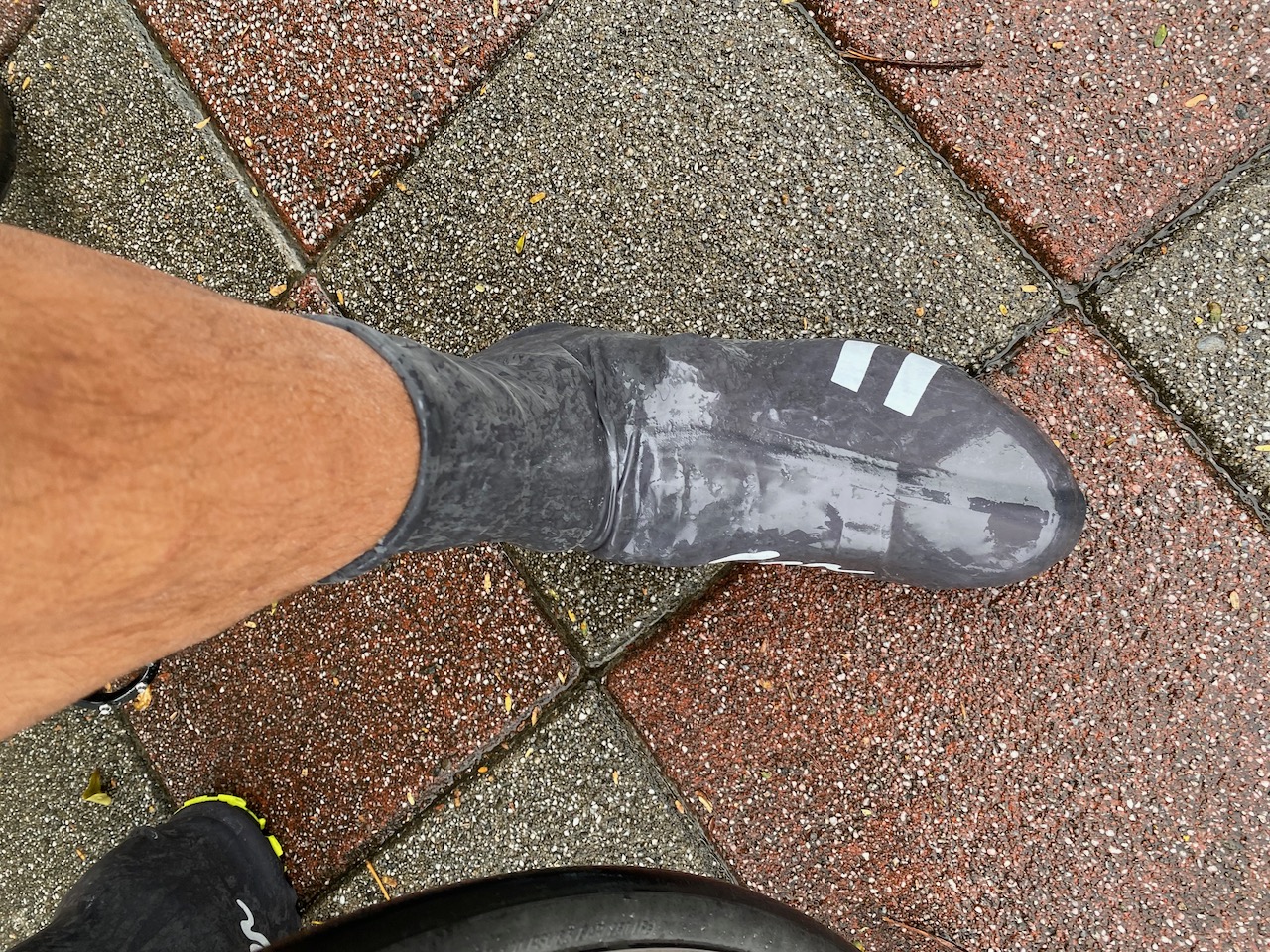
    It is likely to rain in winter in northern Taiwan. I have no problem cycling in the rain except I really hate it when my shoes are soaked. So I have got these velo Toze cycling shoe covers. They remind me of those latex swimming caps. It is really difficult to put them on but totally worth the trouble. I tested in the rain for more than an hour. My socks and shoes were as dry as they should be. 

    Electronic devices were sealed in water tight bags in case it rained.

    Repair Kits

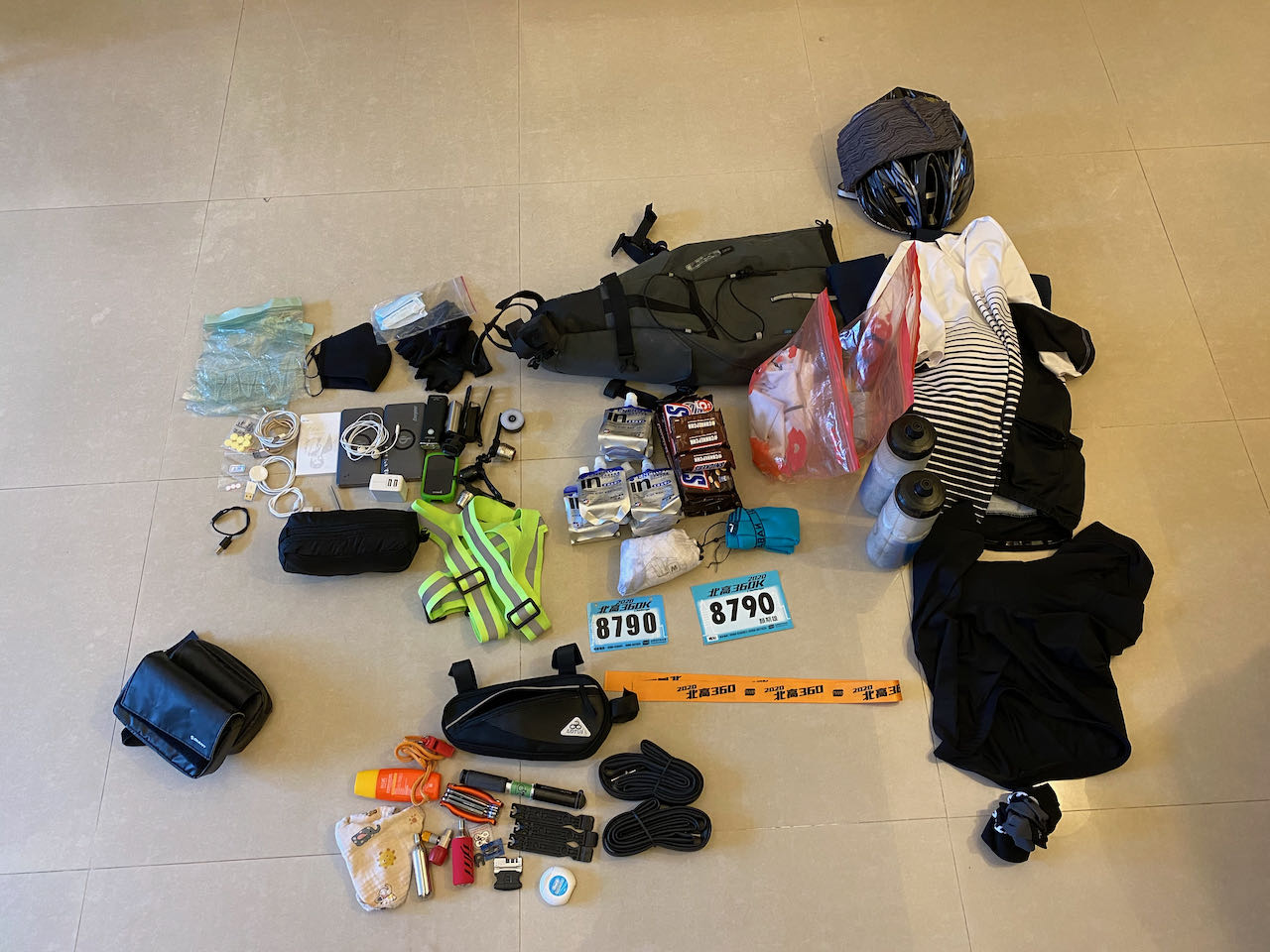
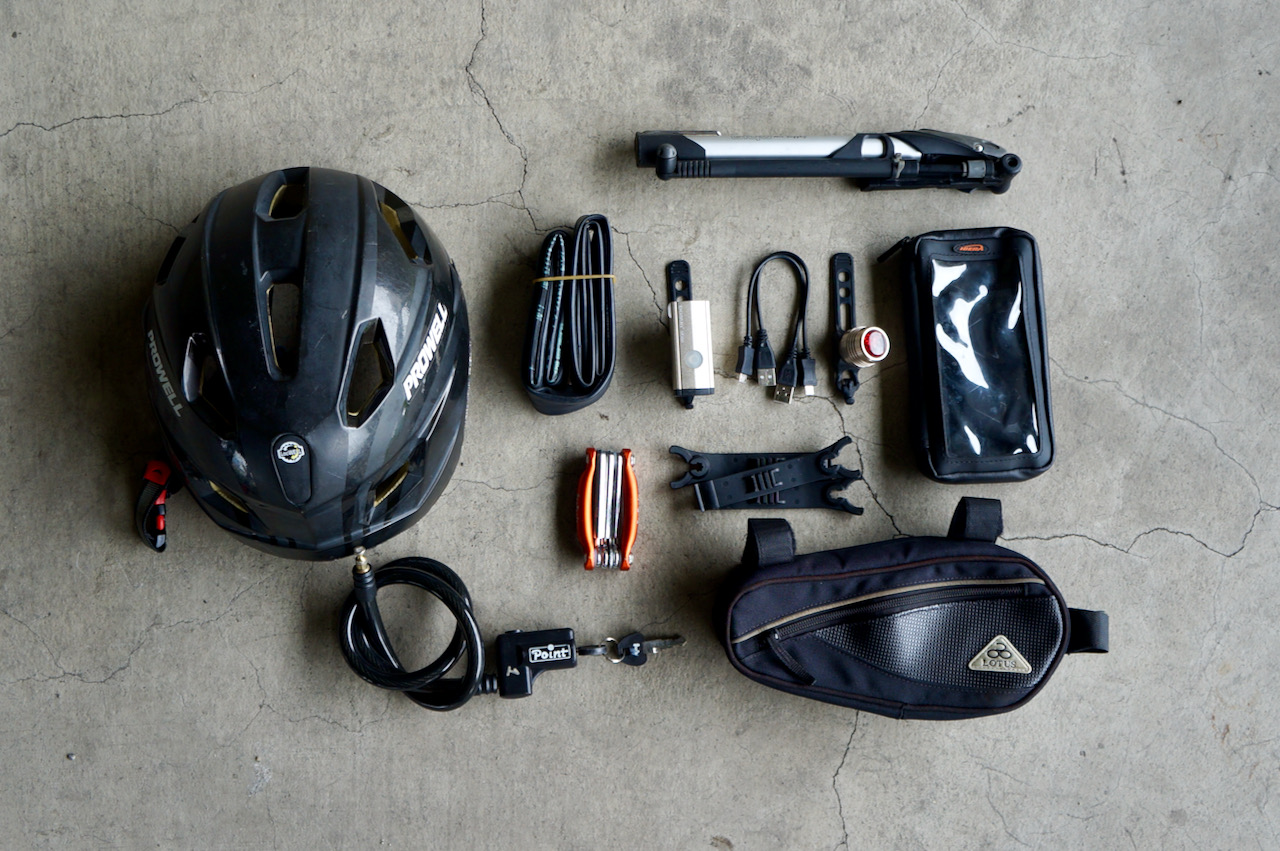
    I packed a spare inner tube, tyre patches, a tyre boot, a hand pump, a chain tool and a quick link, a multi-tool, a rim stripe. I did not pack CO2 canisters and a second inner tube because the chance of getting flat tires was not high. One insurance policy should be enough (which proved to be not quite enough).

    Training

    In the few weeks before the event, I cycled more than 35 km every morning on weekdays. I had also done some long distance training when I was preparing for the “Taipei to Kaohsiung” Challenge (Ahem
 last year). I believe it should be enough for me to complete the challenge. 

  • Cycling Route: Buddha’s Palm – Climb Training

    Cycling Route: Buddha’s Palm – Climb Training

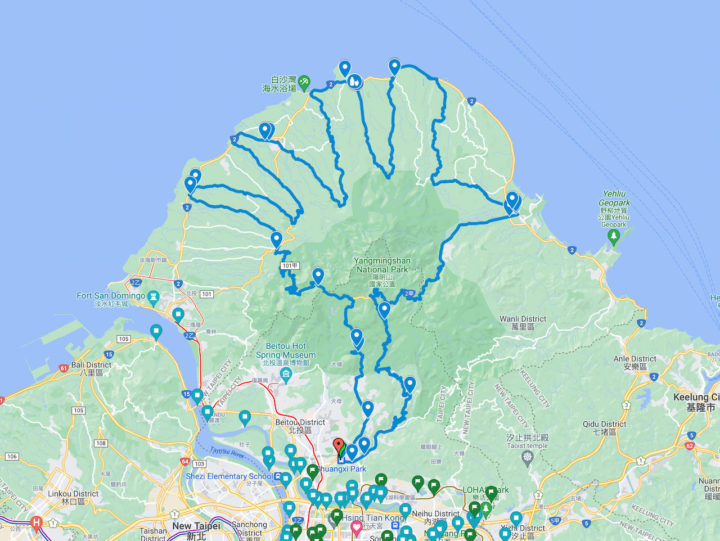
    The cycling route known as “Buddha’s Palm” ćŠ‚äŸ†ç„žæŽŒ is one of the most challenging route in Taipei and New Taipei. It consists of a total distance of 135km and an accumulated elevation gain of 3,130 metres. Those who have completed the route will find themselves climbing over the Yangmingshan twice and drawing a palm in their GPS tracking apps. In order to draw a finger, you need to climb from the north coast at 280m to the hillsides of Yangmingshan at 500m. In total, there are 6 climbs to complete. The downloadable GPX file of this cycling route is at the end of this post. 

    Recently we had a customer from Europe, a Taiwan KOM finisher, who hired a bike from us just to do this route. I did some research to provide him more information to help him achieve his goal. Might as well share it here with all of you.

    “Start as early as possible, like 5:00 a.m.” is the first advice I got from a fellow cyclist who completed this route last November. It is a long route that involves a lot of climbing and descending. We should try to finish it when we still have daylight. Descending in the dark is dangerous especially when we are tired on the last leg. Some would even start at 3:00 a.m. or 4:00 a.m. for the long climb at the very beginning and do the first descent when the sun comes out. This is particularly applicable in winter as we have only around 10.5 hours of daylight with the sun setting around 17:15.

    “Wind did not seem to be an issue. But there are some segments that could be very very steep, so be careful when descending”, my fellow cyclist gave me this advice when I was trying to figure out if we should do it clockwise or anticlockwise by taking the wind and the terrain into consideration. She recommended doing it anticlockwise. Though wind was not an important parameter,  the prevailing wind in winter coming from the north-east did make it easier in the coastal open area when doing it anticlockwise. And in summer, the prevailing wind is not strong.

    For supplies, except for the middle finger, you can find at least one convenience store (7-eleven, Family Mart or Hilife) before each climb on the forearm and the fingertips. In those convenience stores, you can find various kinds of drinks, energy gels, chocolates, bananas and even some simple microwave hot meals. At the middle fingertip, there are some small grocery stores around for you to buy water.

    Toilets can be found in most of the convenience stores but it was not open to the public due to the Coved-19 alert level 3 when my customer was to take on this challenge. Clean public toilets can be found easily in those tourist spots like LengShuiKeng ć†·æ°Žć‘, Fuguijiao (or Cape Fugui) 毌èČŽè§’ and the beginning of the GPS route available in this post. Some petrol stations will open their toilets to the public too.

    Those spots for supplies and toilets are marked on GoogleMaps for your easy reference.

    For contingency, we can use Provincial Highway No. 2 to get to Tamsui. You may also board the MRT at Hongshulin Station if the time is right. Please refer to this post for more details. Some taxis or Ubers may also be willing to take you with your bike.

    Good luck and all the best if you are planning to do the Buddah’s Palm. 

    Route:

    NOTE: To use the routes, please install the App on your smartphone. The App will launch and load the route automatically after you tap the above links on your smartphone’s browser. For Garmin Connect, you can then use the APP to send the route to your garmin device. If your Garmin device is not purchased in Taiwan, you will also need make sure you have the Taiwan map on your device. Here is our blog post on this topic.

  • Cycling Route: Guanyinshan – Climb Training

    Cycling Route: Guanyinshan – Climb Training

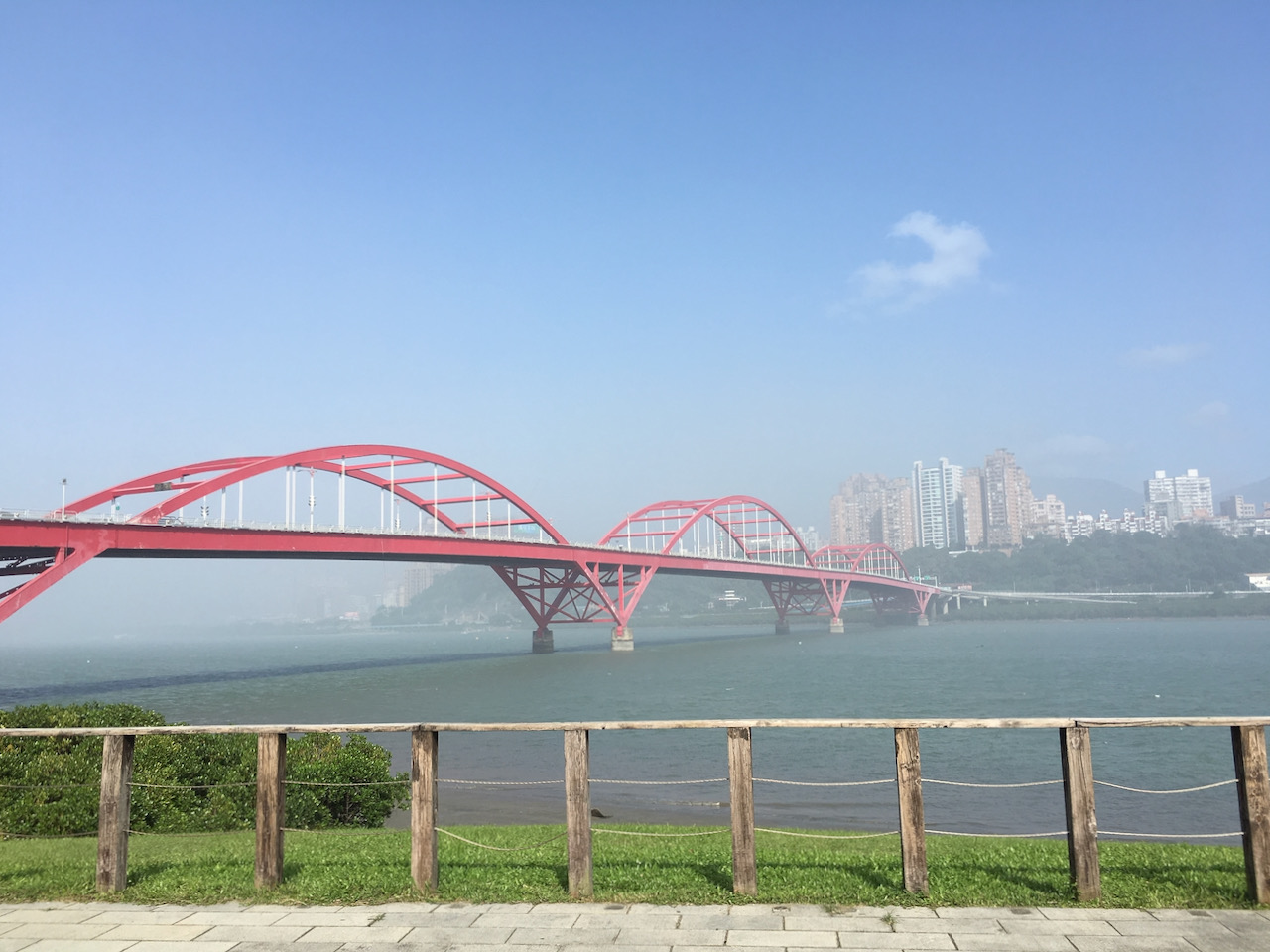
    Guanyinshan è§€éŸłć±± is another popular cycling destination for a quick climbing exercise at the north-west side of New Taipei City, right next to the the left bank of Tamsui River. It makes it easily accessible via the Riverside Bikeways. I went there for a half day cycling exercise with my friend Tom on a Sunday in December 2020. We met in the Shilin District ćŁ«æž—ć€ and used the Guandu Bridge é—œæžĄæ©‹ to get to the left bank. So, the route I plotted starts and ends at the bridge. There is a convenience store nearby on Provincial Highway No. 15 for supplies. The downloadable GPX file of this cycling route is at the end of this post. 

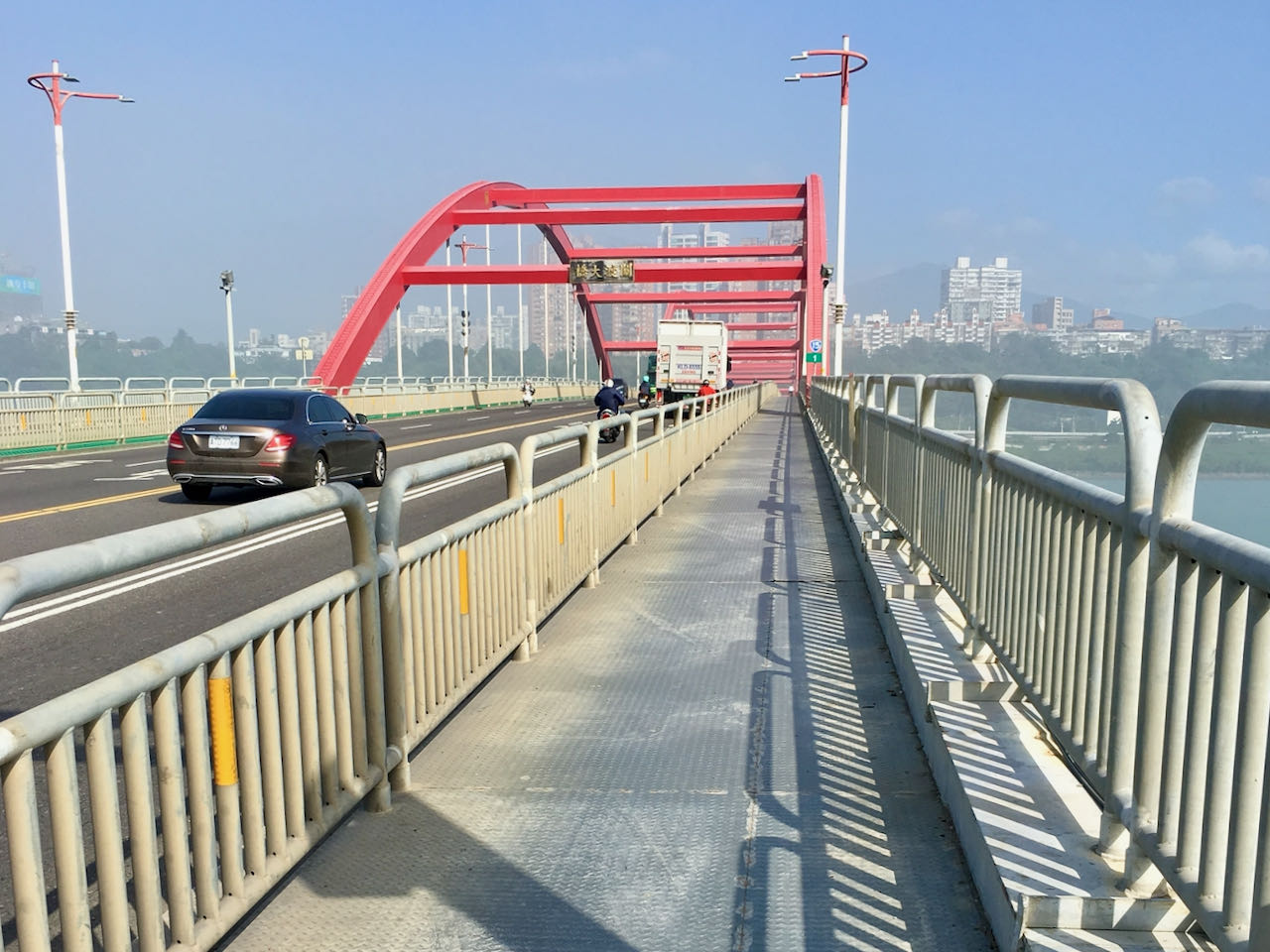
    The Guandu Bridge has a separated bike lane connecting the bikeways on the right bank to the left one. We cycled on the Bali Bikeway after leaving the bridge. Then, Tom led me into a small lane that merges with Provincial Highway No. 15. And soon we took a branch, TP50, on our left hand side. There were vehicles rushing at high speed. Be aware.

    The climbing started immediately on TP50. I managed to keep up with Tom and even chatted some with him. From my research the night before, I’d learned that this route could include Zhongzhi Road äž­ç›Žè·Ż, which is notorious for its steepness. The altitude gains 224 metres in 2.59km, meaning an average gradient of 8.65%. There is one 600-metre segment with a gradient of 19%, so steep that a gate was built to stop vehicles over 2.5 metres from using that road. Tom said he had descended on this road before. It’s no fun at all. It isn’t my cup of tea, either going up or down!

    Fortunately Tom did not lead me onto this road. We switched to TP53 for the peak and it became steeper. Tom had long disappeared into the turns ahead. I had to take a short break. After that I struggled to clip in my clipless pedal when trying to start again. The logical procedure would be to point the bike downward when starting so that the bike would move without pedalling. That way I could balance the bike easily while I was trying to clip in my other foot. But I did not want to lose an inch of altitude in that process. So I tried to start by holding on something on the roadside to clip in both feet. It didn’t work. A fellow cyclist passing by had seen my failed attempt. He told me the way I had tried to avoid doing was possibly the best and only way. I tried and voila! I was back on the pedal with both feet. All I needed to do was ease the brakes slightly to let the bike move a little. It’s so much easier to clip back in when your legs are not responsible for powering the bike. Actually the U-turn I made was so natural that I didn’t even need to think. It was a tight, swift one and I might only just go down less than a foot.

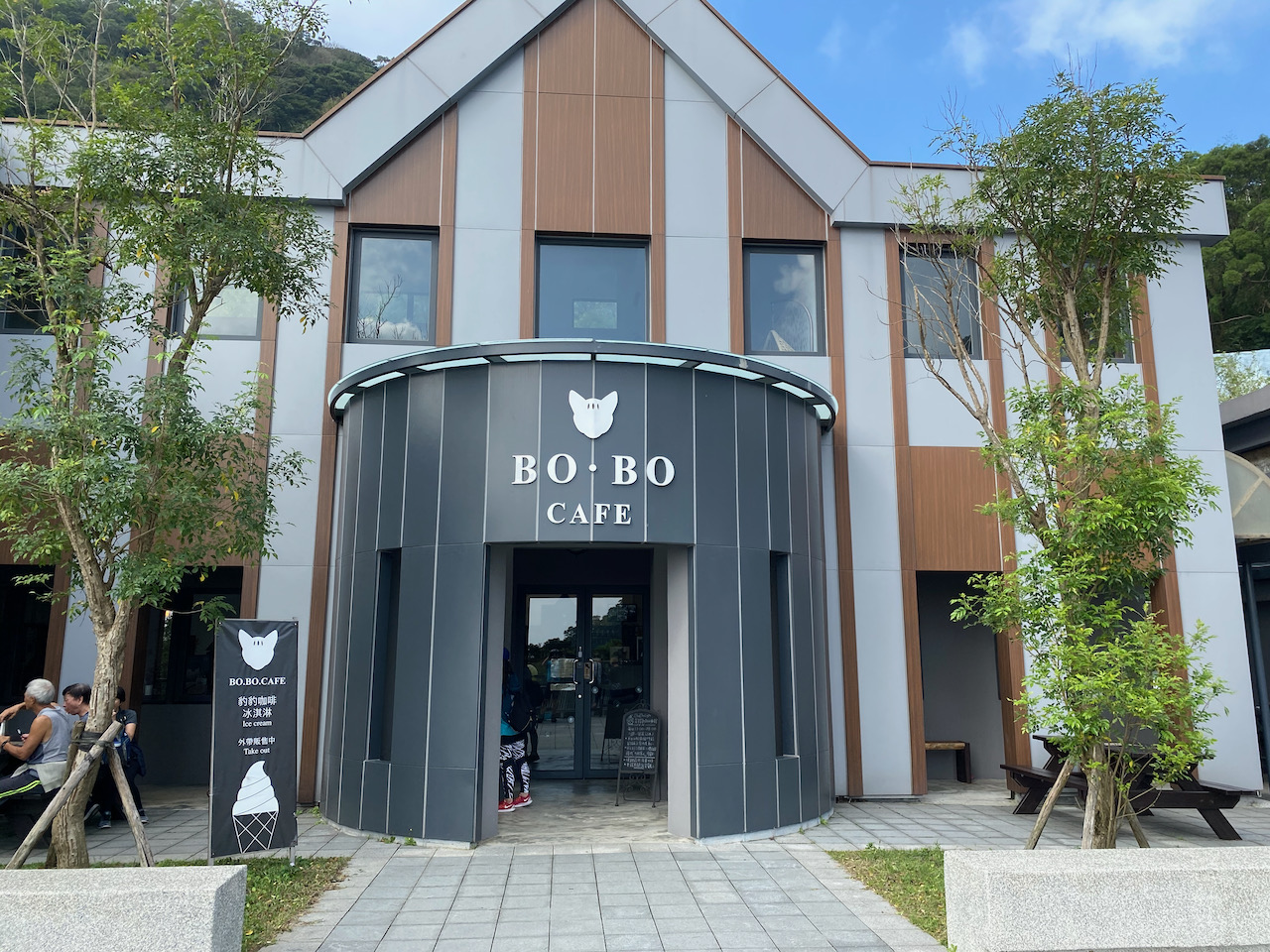
    Tom waited for me at the top at 365 metres where there is a tourist information centre and a nice cafe. It was quite busy with some hikers who drove up in their cars to climb the 1.5km of stairways for a viewing platform at 616 metres. Guanyinshan is a lonely small hill that offers a 360 degree view of the city. It’s definitely worth the effort to get to the viewing platform if you can lock your bike safely.

    Tom and I treated ourselves to coffee and cakes before starting our descent back to the Riverside Bikeways on TP55 before noon. It is a nice route for a half day ride.

    Route:

    NOTE: To use the routes, please install the App on your smartphone. The App will launch and load the route automatically after you tap the above links on your smartphone’s browser. For Garmin Connect, you can then use the APP to send the route to your garmin device. If your Garmin device is not purchased in Taiwan, you will also need make sure you have the Taiwan map on your device. Here is our blog post on this topic.

  • “Taipei to Kaohsiung in One Day” Challenge (2)

    “Taipei to Kaohsiung in One Day” Challenge (2)

    Execution

    In order to make sure I have a quiet place to sleep in the afternoon before the event, and also to welcome me at the finish line, Lois brought the kids to a resort in Kaohsiung in the morning of the event. I was left alone at home to prepare for the event. There had been a typhoon near the southern part of Taiwan but it left just in time. The event went on as planned. I had a big lunch to load up more calories before putting myself to sleep. Perfect! So I thought.

    Unfortunately, I was met with an unexpected issue. I woke up in the evening with a weird feeling in my stomach. My digestive tract must have shut down when I was asleep. It didn’t get a chance to deal with the food I ate and now the food was frozen up inside! Oh… I should not have eaten such a big meal before sleeping.

    I cycled 35km to the starting point from home. As I was approaching the gathering point, the convenience stores were getting more crowded. The weather was so fine and my stomach started to wake up. I stopped at a convenience store and ate microwave noodles to encourage my bowel movement. But instead I made it worse. My stomach froze up again. Well, anyway, now I had a full load of food inside my digestive tract. I wouldn’t need to stop to eat. 

    There were coaches and vans unloading bikes everywhere near the gathering point. Some of the participants were actually from Kaohsiung or the southern part of the island. They had already spent hours in the coaches just to get there. It must be harder for them as they had a much longer day on the road. 

    When it was about time, I pushed my bike to the starting line. There was already a long queue building up, occupying a traffic lane. But the crowd was quiet and orderly. There was no need to fight for any specific positions as individuals’ records would be taken when we passed the gates.

    The race started finally! The whole fleet moved forward slowly feeding into the starting gate. When it’s my turn to go through the gate, I heard through the PA system lots of beeping sounds and the organiser’s repeated announcements about the latest weather conditions. Then we were free to set our own pace as the road before us became wider. It was fun to have so many people doing something together. I took it easy, kept my effort constant and managed to keep up with my friends at the first stop, Yongan Fishing Harbour, at 50km. I had a full load of energy bars and energy gels in my bags but I did not eat much because I wanted to take this opportunity to burn some fat. And in any case, my digestive tract had not been moving.  
    At 100km, the 2nd stop Baishatun Gontian Temple, I could hardly keep up with my friends. I arrived just when they had taken a good rest and were about to leave. My average speed was 23km/hour. It was acceptable. But I was on my own from that moment onward.

    My energy level started to plunge and the typhoon, as it was heading west leaving the island, had driven the air to the opposite direction, making the wind blow against us on the southern part of the island. It took me longer and longer to reach my target speed again after each pause in front of the traffic lights. When I was about to cross a long bridge, a fellow cyclist, while catching up from behind, shouted to me telling me to follow tight with the group ahead to save some effort. But it was too late. The wind had nipped me away from the group. I had to press on against the wind all by myself on the bridge.

    Here is the link for the latest forecast

    Then I tried to follow those groups in double pace line. They were moving steadily ahead like a locomotive and radiating a spirit of determination. I could save myself some energy from the wind by joining them. But they were moving at a much faster pace than I could manage so I kept dropping off. I tucked myself in the wind shadows of some solo riders who were cycling slightly faster than I did. The benefit and help was noticeable. The resistance from my pedals was lower so that I could switch my gear one stop higher. I could pedal in a lower cadence with less effort. I kept scanning for other riders with speeds that suit me better, rather like a parasite jumping from rider to rider. But I felt no shame at all. I had seen others using their support vans to push away the wind for them at the front. After the challenge, I learned that not only the riders at the back could save energy as high as 30%, the riders being followed could also save 10% of power. I am glad I reciprocated their favor. 

    It began to rain. I did not bother to put on my rain jacket. It’s good to take away some heat from me. A driver in a support van at the traffic light rolled down his window and offered to give me a disposable poncho. 

    A friend of mine was running a supply stall as a way to promote their cycling App, Velodash. She invited me to get some food or drink when I was there. I asked nicely for a banana from a group of people sitting next to their banner. They enthusiastically offered everything they had. Then I realized I had mistaken them as the staff of my friend. They were actually just there to support their own friends. But they were so ready to help, like most people in Taiwan, who are always kind and generous. 

    I was not worried about my progress as my meter showed an average speed well above 23km/h. Then at around 15:00, I texted Lois to tell her about my progress. I had completed 263km already and with 97km more to go. It’s down to a two-digit figure now! But wait a minute! That meant my average speed for the 263km was only 17.3km/h instead of 23km/h! If I were to finish the whole trip within 20 hours, my average speed had to be well above 18km/h. I was misled by my meter. It was the Average Moving Speed. The timer would stop when I was not moving! 

    Just when I realized that I had to speed up, something magical happened: bowel movements. I discarded some significant weight of burden in the toilet and my body was more willing to take in energy bars and energy gels! I started to follow the experienced riders’ advice: eat before feeling powerless, at least once an hour.  

    I had packed lots of Snickers because of their high energy concentration of weight and volume. Each bar has 220kcal of energy, weighing only 47 grams. In case all the food was sold out or there were long queues in the convenience stores, I would still have enough kcal available with me. I could tear open the bag and eat it while I was cycling. Though it has to go down with lots of water, drinking water is easier to get. These are the upsides I found during the training sessions. But there are downsides. I almost choked on it when I was in a rush to finish it in front of a traffic light. And there are 10 grams of fats, corresponding to 90kcal, in each bar. I have a copious amount of fat in my body. If I wanted to burn my own fats, I should just eat pure carbohydrates, which are also essential to boost muscle power output. 

    There was no shortage of food as I was told by one of my friends who had participated in this event years ago. The convenience stores along the route are getting smarter. They knew that there would be lots of cyclists looking for supplies during the event. So they would load up much more food and energy gels in their shelves and storage. The only thing in short supply is toilets. The queue for toilets in the gas stations and temples were always shorter. They were very generous in letting the participants use their toilets.

    To my surprise, my legs were working afresh after I adopted this energy intake strategy. My speed was picking up and my legs never felt tired. Actually, they had not been tired the whole time. I had mistaken the feeling of lack of fuel as tiredness. It got dark but the rain stopped. I was cruising powerfully. No more wind shadow chasing. Instead, I was aiming at overtaking the others. I had the idea of taking a short break but shook it off my head. I knew there would be many traffic lights inside the Kaohsiung city before I reached the finishing line. I did not want to risk having the finish gate closed in front of Lois and my kids. 

    Finally, I made it to the finishing line at 19:50, 10 minutes before the cut off time of 20:00. 

    Along the way, I saw quite a number of bikes pulling over upside down, probably with flat tires. Lucky me! I had puncture resistant tyres. If there were any flat tyres, I probably would not make it in time. My Apple watch showed that my active calorie burned that day was 8319 CAL. I burned at least 415CAL per hour. So, It’s really important to keep eating to refuel the body.

    After finishing the challenge, my friends took the HSR back to Taipei right away. I went to the resort with my family for a good night’s sleep and a family day in Kaohsiung before returning to Taipei. For those who still want to cycle after finishing the challenge, how about heading to the east coast and completing the around the island? You have done half way anyway.

    Routes:

    This is a suggested route by the organizer. Participants can plot their own routes as long as they passed the gates/checkpoints.

    NOTE: To use the routes, please install the App on your smartphone. The App will launch and load the route automatically after you tap the above links on your smartphone’s browser. For Garmin Connect, you can then use the APP to send the route to your garmin device. If your Garmin device is not purchased in Taiwan, you will also need make sure you have the Taiwan map on your device. Here is our blog post on this topic.

  • “Taipei to Kaohsiung in One Day” Challenge (1)

    “Taipei to Kaohsiung in One Day” Challenge (1)

    The “Taipei to Kaohsiung in One Day” Challenge äž€æ—„ćŒ—é«˜ is one of the most popular cycling events in Taiwan, organised by Taiwan Bike Association 揰灣è‡ȘèĄŒè»Šć”æœƒ and held every November. In order to be awarded the certificate of completion, participants need to cycle from Taipei to Kaohsiung along the west coast within 20 hours. The total distance is around 360 km. There is actually another more advanced challenge held at the same time and along the same route, the “Two Towers in One Day” Challenge äž€æ—„é›™ćĄ”,  which starts at the island’s northernmost lighthouse Fuguijiao Lighthouse and ends at the southernmost lighthouse Eluanbi Lighthouse, making it a 520 km route instead. To get the certificate of completion, you have to complete the route within 28 hours. These two Challenges are so popular that on average there are more than 3,000 participants signing up for the events every year. I was one of them in 2020. It was such a wonderful experience! I have learned a lot and I would like to share with you in this post.

    Rules and Administration

    Participants can usually sign up and pay for the event online from 1 January to 30 June via the organizer’s website. Participant’s pack will be distributed 2 weeks before the event commences. A sticker with an IC chip will need to be stuck onto the helmet for the sensors at the starting point and finish line to mark your time. There are also 3 gates/checkpoints en route which the participants will have to pass by a certain time. As the roads won’t be closed for the event, participants will need to follow traffic rules like other normal road users. But there will be voluntary helpers stationed at important junctions to direct traffic.  A suggested route in GPS format is also available for download. 

    Supports

    The organiser provides essential support only, which includes transferring a small backpack for each participant from the starting point to the finishing point. No food nor drinks are served at checkpoints so you will have to prepare for your own. In case of emergency, participants can reach out to an emergency hotline for help. But everyone is responsible for arranging their own transportation home.

    The organizer recommends participating in groups so that it will become more affordable to hire support vehicles to provide services like supplies, repair and maintenance, luggage transportation, charging of phones and navigation devices, and the return trip home.

    But for a free soul like me, I prefer doing it at my own pace. I can get my own supplies from the convenience stores and small shops in the towns along the route. I am also able to fix any small issues with my bike if needed.

    Bike 

    Bikes used in this event were predominantly road bikes but there were also folding bikes like Bromptons. I think as long as your bike is comfortable for long rides, properly fitted and has enough gear ratio, it would be fine. 

    For me, I picked an Audax Hercules, a flat bar road bike from Rikulau specifically designed for long distance cycling. It is one of the most popular models in our rental fleet for multi-day rides. I could ride in a more relaxed posture on this bike for the long journey. And I wouldn’t need a drop bar for the benefit of aerodynamics as there would be prevailing winds from the north east to give me a push. 

    I supposed weight is not that important for this event as the route is mostly flat. Therefore I had packed everything I needed on the bike. 

    Accessories

    Lights were paramount. The event started at midnight and when we arrived at Kaohsiung, it would be dark again. We would need to cycle in the dark for more than 10 hours. The roads on the west coast are not well lit. Potholes and stones can ruin your bike or throw you off balance if you ride over them unexpectedly in the dark. I have a friend who crashed because of a small piece of stone when she was doing night training on that route. A big bright front light can provide you with better vision and help you go faster and safer. For safety’s sake, participants of the event are also required to wear reflective stripe vest when it’s dark.

    November is the wet season so you should prepare to cycle in the rain. Your spare clothes and electronic devices should be kept in watertight bags.

    My other advice is to load up your Easy Card for quicker transactions in the convenience stores. You may also keep some small change in hand so that you can buy water from those betel nut booths if needed. They can be found in the middle of nowhere and they have long opening hours, too.

    Training

    My goal was just to finish it within the required time. I didn’t think I needed any extra training as I had been cycling regularly and would cycle once or twice a month for routes more than 70km with elevation gain of 800 metres or so. The route of this challenge is rather flat with a short climb of 100 metres elevation gain. It shouldn’t be too difficult. Nonetheless, I did do 3 training rides on this route with my friends to see how my body would react to long rides. I had cycled from Taipei to Lukang (180km) twice, the first one during daytime to familiarize myself with the route and the second one at night just to simulate what I would need to do in the event. Then I did the second half from Taichung to Kaohsiung (200km) just to find out what to expect from the route.

    I was totally fine during those training rides except that my forefeet hurt a little bit after pedalling for numerous times. I expected that it should be easier in the event with the help of the wind in November. However, the full effect of cycling 360 km in one go was yet to be discovered. 

    After these three training sessions, I started to formulate a strategy. If my average speed was 25km/h, I would be able to cover 360km in 14.4 hours. I would then have 5.6 hours (20 – 14.4) for breaks and meals, which seemed to be quite sufficient. Even if I did it at a slower pace like 22km/h, I would still be able to cover the whole route in 16.4 hours with 3.6 hours to spare. So, I just needed to keep my speed well above 25km/h. And if It’s too hard for some parts, 22km/h was also good enough. Just take it easy lest I drive myself too hard and get hurt, this was what I had believed at the time. I would also need to keep myself awake for 20 hours. My strategy was to take a day off right before the event. I would start sleeping after lunch and then get up at 21:00 to start going to the starting point. For my friends, they planned to do it as fast as they could the first half when they still had the tail wind and then see what would happen.

  • Product Review: Audax Hercules from Rikulau Taiwan

    Product Review: Audax Hercules from Rikulau Taiwan

    Audax Hercules from Rikulau, a flat bar road bike, is the most popular model in our fleet for multi-day cycling trips in Taiwan. I have been using one for more than a year now mainly to explore cycling routes in Taiwan, and also very intensively in Nov 2020 for a 360 km within 20 hour challenge that goes from from Taipei to Kaohsiung.

    Here is an introduction of some of the features of Audax Hercules.

    Frame

    The frame is made of Rikulau’s Hercules steel tubeset, which belongs to the 4130 Chromoly family. Chromoly steel is light and strong. While it flexes well and absorbs unpleasant shocks and vibrations, it maintains its forms, making the bike durable and easily remain at its peak performance even after numerous, prolonged heavy uses. 

    According to Rikulau, The raw material of the Hercules steel tubeset is from the renowned Nippon Steel (Japan). Precision extrusion, heat treatment and all other processes are done in Taiwan to assure the precision level required by Rikulau is achieved. 

    The frame size available in our fleet ranges from XXS to XL with effective top tube length from 495mm to 570mm. If your height is 150cm or more than 185cm, you will find a bike with the correct size for you.

    The geometry of the Audax series is optimized for comfortable long distance rides, and our fleet of Audax Hercules is specifically configured to adapt to the different road surfaces and terrains in Taiwan, which makes them ideal for exploring the island.

    Wheelset

    The 700c wheelset is strong and can carry around 100kg of loading. The tyre width of 25/28c enables the bike to run efficiently on most cycling routes in Taiwan, mainly consisting of intracity and intercity roads and designated bike trails. They are usually paved with asphalt or cement, both perfect matches for road bikes. But some segments may get damaged because of weather or heavy uses, and are not always repaved in time. There are also segments of roads that are decorated with wood stripes or bricks, making them rather bumpy. That’s why we err on the wider side of the tyre width. 

    We use clincher tyres (with inner tubes) for easier and quicker roadside fixes in the case of punctures. Replacement tools and spare tubes are included in our rental package. But we hardly have any clients returning with punctured tubes because those tyres are puncture resistant. 

    The wheelsets are attached to the bike with quick release skewers so that you can remove the wheels and bag your bikes easily when boarding public transportation in Taiwan.

    Groupset

    Audax Hercules comes with Shimano Tiagra, a mid-range groupset made for endurance, sports and fitness, or Apex, its SRAM equivalence. The compact chainring on the bike (50/34, front) runs with a 11/32 cassette (rear) instead of the 11/28 cassette found on most road bikes. The 32-teeth sprocket at the rear wheel gives you more leverage to climb steeper slopes or to press against the head wind. When it is set to the gear combination of 50 teeth with 11 teeth, for each turn you made on the crankset, you turn the rear wheel by 4.54 turns and a normal fit person can usually pedal at the speed of 60 turns per minute (cadence). The groupset and the wheelset will then make you travel at 34.95km/h. Of course, you could pedal faster to race with the tail wind or add some more speed when you are diving down from the hills.

    TerrainGear SettingChainring (front)Cassette Sprocket (rear)Gear Ratio
    HillyLowest Gear30-tooth for 3x crankset32-tooth0.9375
    HillyLowest Gear34-tooth for 2x crankset32-tooth1.06
    FlatHighest Gear50-tooth11-tooth4.54

    Here’s the maths:

    50/11 (gear ratio) X 2.136 (tyre circumference) X 60 (Cadence RPM) X60 (convert to hour) = 34,952 metre/hour

    With 2 chainrings and 10 speeds at the cassette, you have 20 combinations of speed to choose from. Some of the bikes in our fleet come with three chainrings (50/39/30), which gives you an even wider range of gear ratio and more choices of speeds (30).

    After each use, the bikes are sent back to the workshop of our partner Rikulau, manufacturer of the bikes, for thorough cleaning, oiling and tuning to keep them at their peak performance. 

    One of our customers commented on our bikes:

    Honestly the bikes were way better than we had expected! You guys maintained the Tiagra groupset like a charm, I had never had such crisp shifting experience on rental bikes 🙂

    Handlebar Grips

    The Velo ergonomic grips have a broad surface to provide comfortable support to your hands. The “L” shaped grip gives you one extra position to hold the handlebar so that you can relax your wrists by rotating between different positions during long rides. 

    Saddle

    The road bike saddles that come with Audax Hercules have narrow noses to avoid chafing when pedalling for hours. The saddle position can be fine tuned to support your seat bone properly. As mentioned in the beginning of this review, I had spent close to 20 hours on an Audex Hercules in a 360km challenge and my butt did not complain.

    There is a quick release on the seat post clamp for you to adjust the height on the fly. There is also a thumb screw on the other side to adjust the pressure of the quick release so that you can make sure the desired height is firmly secured. 

    Pedal

    The pedals found on our Audax Hercules are made-in-Japan Touring lite ezy superior from MKS. According to the official website, it “features MKS’s High-Polished Cup and Cone bearing system for smooth rotation and serviceability, combined with a directional wave shape tooth profile on the step plates to keep your foot from slipping without the need for straps or toe-clips”.

    If you prefer, you can also bring your own clipless pedals.

    A versatile bike made for Taiwan 

    With the aforementioned built and configuration, Audax Hercules is a good looking, versatile bike that is easy to manage for beginners and works brilliantly for more experienced cyclists. It also stays in good shape during your multi-day cycling trips. We provide a smartphone case, a repair tool kit for inner tube replacement, an optional pannier with a pair of saddle bags.

    We have customers hiring the bike for leisure rides on the Riverside Bikeways in Taipei, for exploration of small townships in the rural areas, for the classic route of around-the-island, for sprinting along the coastlines, for bikepacking in the Huadong Valley, for climbing the mountains and enjoying the tranquilizing dive from the tops
 you name it. Audax Hercules have proved to be a great companion for all of them. Here are some examples of the configuration and the accessories with the the bike.